






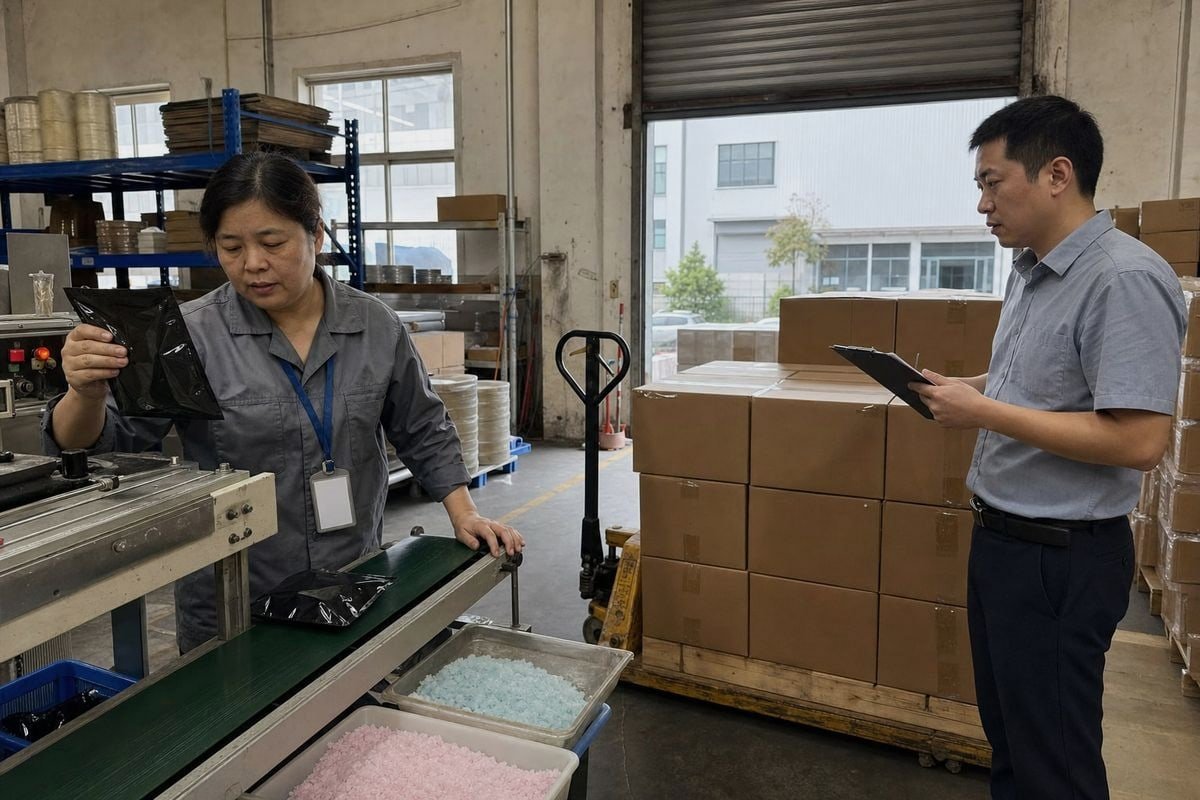
Choosing between on-site supervision and PSI worried me too, until a [delayed shipment of our Magic Fire packets](https://sunrichfire.com/how-negotiate-standing-inventory-magic-fire-powder-shorten-lead-times/) taught our team a costly lesson about catching defects too late.
On-site supervision costs more upfront but cuts rework costs by 30–50% and prevents schedule slippage by catching defects during production. PSI costs only $250–$500 per day but detects problems after goods are finished, when fixes trigger rework cycles, re-inspections, and shipment delays.
Both methods have a place. The real question is which risk you need to control, and when CE marking 1. Let me break down the numbers we see on our own production lines.
What rework costs should I expect if defects are caught only at final PSI instead of during production?
Early in our export history, a batch of foil sachets failed a final inspection over seal integrity 2. The entire order had to be repacked. That week reshaped how we run quality control 3.
Defects caught only at final PSI typically cost three to six times more to fix than defects caught during production, because the full order must be sorted, reworked, repacked, and re-inspected. Indirect costs like idle labor, missed vessel bookings, and re-inspection fees multiply the damage.
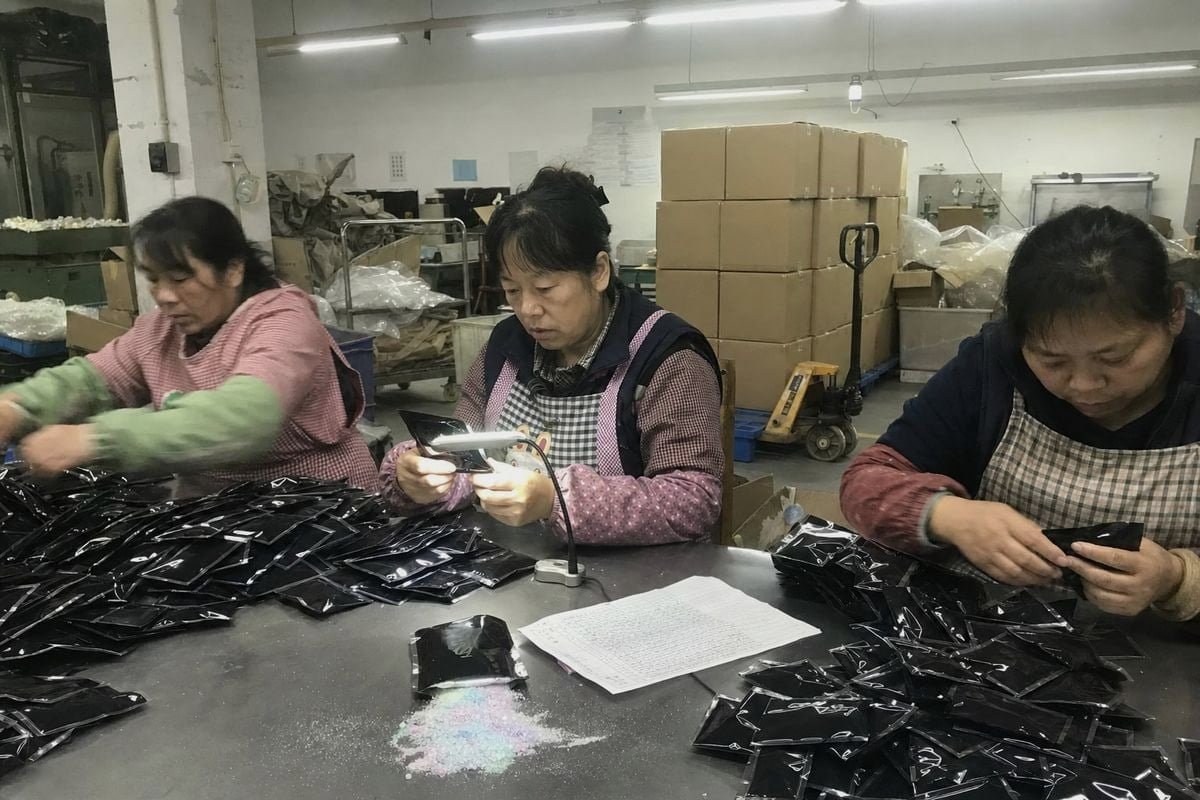
The math behind late-caught defects is unforgiving customs holds 4. Industry research on formal rework tracking puts precompletion rework at around 0.38% of contract value on average, rising to 0.76% once postcompletion corrections are counted. But broader industry estimates cite 3–6% of project value, and some sources say indirect costs can run up to six times the direct cost. These numbers are not contradictory. They measure different slices of the same problem. The low figures count only tracked, direct correction work. The high figures include everything that follows: idle workers, rescheduled operations, delayed invoicing, and repeat inspection fees.
For a product like our color-flame packets, the pattern is the same. If a sealing fault appears in the first 10–15% of a run and someone catches it, we adjust the machine and lose an hour. If nobody catches it until PSI, the whole order needs 100% re-sorting.
Where the costs stack up
| Cost item | Defect caught during production | Defect caught at final PSI |
|---|---|---|
| Correction scope | Small partial batch | Entire finished order |
| Labor | Minutes of adjustment | Days of sorting and repacking |
| Materials | Minimal waste | Packaging often scrapped |
| Re-inspection | Usually not needed | Second PSI fee, plus wait time |
| Schedule | No impact | Missed booking, rush freight risk |
One more hidden cost deserves mention: a failed PSI often triggers a rework and re-inspection cycle. Each cycle adds another inspection fee and another 24–72 hours of report turnaround. Two failed cycles can quietly consume two weeks.
How much lead time can I save by using on-site supervision to catch issues before mass production finishes?
A German distributor once asked our team why their previous supplier's orders kept slipping by two or three weeks. We reviewed their process: every quality problem surfaced at final inspection, never before.
On-site supervision typically saves one to three weeks of lead time on a problem order. It prevents batch rejections at final inspection, avoids rework and re-inspection cycles, and real-time photo and video reporting cuts 2–5 days of communication delay compared with waiting for a formal PSI report.

Lead-time damage rarely comes from one big event. It cascades. A defect found at PSI means production has to restart on some level, which means the vessel booking slips, which means the next available sailing is a week later, which means the retailer's shelf date is at risk. On-site supervision breaks that chain at the first link.
Here is how the timing usually plays out on our lines in Ningbo. PSI is conducted when production is 80–100% complete. At that point, the buffer between inspection and the shipping deadline is often just a few days. There is almost no room to correct a systemic issue. By contrast, a supervisor watching the first production runs catches a color-consistency drift or a mis-printed warning label within hours, while only a small fraction of the order is affected.
Where the days come from
- No batch rejection. Correcting a fault at 10% completion avoids reworking the other 90%. That alone can save 5–10 production days.
- No re-inspection cycle. Skipping a second PSI saves the booking wait plus 24–72 hours of report turnaround.
- Faster decisions. Live updates from the floor mean you approve or reject a fix the same day, not after a formal report lands — typically 2–5 days faster.
- Protected freight bookings. Shipping on the planned vessel avoids one to two weeks waiting for the next sailing.
The trade-off is honest: supervision adds monitoring cost during production. But that cost buys schedule insurance, and for seasonal products like firestarters heading into a Q4 retail window, missing the vessel is far more expensive than any inspection fee.
Which inspection approach helps me avoid costly reshipments when importing color-flame and firestarter products?
Compliance drives everything in our category. Our Magic Fire packets and wax-dipped firestarters ship with SGS or Intertek test reports, CE marking 6, and market-specific warning labels — and any gap there can strand a container.
A combined approach works best for color-flame and firestarter products. On-site supervision prevents systemic faults like chemical dosing errors, seal failures, and label mistakes at the source, while a final PSI verifies packaging, labeling, and documentation before shipment — the failures that most often cause reshipments and customs holds.

Fire-themed products carry risks that ordinary consumer goods do not. A reshipment here is not just freight cost. It can mean a customs rejection over labeling, a retailer chargeback for a missed shelf date, or worse, a safety complaint. So it pays to map each failure mode to the control that actually catches it.
Failure modes and the right control
| Failure mode | Best caught by | Why |
|---|---|---|
| Wrong colorant dosing (weak or off-color flames) | On-site supervision | Only visible during mixing and burn testing on the line |
| Foil pouch seal failure (moisture ingress) | On-site supervision | Machine drift appears mid-run; sample PSI may miss it |
| Missing or wrong warning label | Either, but PSI is the last gate | Label checks are fast at final inspection |
| Barcode and carton marking errors | Final PSI | Verified against the packing list before loading |
| Missing test reports or compliance docs | Pre-shipment document review | Customs and retailers check these on arrival |
| Batch-to-batch color inconsistency | On-site supervision | Requires comparison across production runs |
Notice the pattern. Product-performance defects — the ones buried inside the pouch or the wax coating — need eyes on the line while the work happens. Packaging and documentation defects are surface-level and PSI catches them efficiently. For our own OEM orders, we burn-test samples from every batch during production, then run a final check on packaging, barcodes, and warning labels 7 before goods leave the factory. One rough example from the sourcing literature makes the economics vivid: a 10% defect rate on a 5,000-unit order can generate thousands of dollars in returns, platform fees, and rework, against a few hundred dollars for the inspection that would have caught it.
Should I combine on-site supervision with PSI to balance quality control costs against my delivery deadlines?
Purchasing managers often ask our sales team to strip PSI from the budget once supervision is in place. We usually push back, and here is the trade-off we walk them through.
Yes, combining both is the most cost-effective approach for most orders. Use on-site supervision as process control to prevent rework during production, and PSI as release control to verify the final shipment. Together they cost far less than one failed batch or a missed delivery window.

The two methods are not substitutes. Supervision is a process-control tool. PSI is a release-control tool. They sit at different gates and catch different failures, so removing either one leaves a gap.
That said, budgets are real. Not every order justifies full-time supervision. The right mix depends on order value, product complexity, and how much a missed deadline costs you downstream.
Matching the control mix to the order
| Order profile | Recommended mix | Rationale |
|---|---|---|
| First order with a new supplier | Full supervision + PSI | Highest unknowns; the first run sets the quality baseline |
| Repeat order, stable product | During-production check (DPI) + PSI | Spot-check the process, verify the release |
| High-value seasonal order (Q4 retail) | Supervision + PSI | A missed vessel costs more than both controls combined |
| Small trial order, low complexity | PSI only | Fee is low; the downside of a failure is contained |
| Custom private-label with new packaging | Supervision on first runs + PSI | New artwork and labels are where errors cluster |
Two more points from experience. First, the hybrid approach — periodic during-production inspections plus a final PSI — often outperforms either method alone on both cost and lead-time protection, because DPI captures most of supervision's benefit at a fraction of the cost. Second, supervision has a compounding effect that PSI never delivers: continuous presence trains factory staff, so defect rates drop on future orders. PSI, by design, changes nothing upstream. When we host client QC teams or third-party supervisors at our Ningbo facility, the corrective actions from one season carry into the next. That is why our first sample reliably matches mass production — the process discipline is already built in, and external checks confirm it rather than create it.
Conclusion
On-site supervision prevents rework and protects your schedule during production. PSI guards the final shipment. Combined, they cost less than one failed batch — use both, at different gates.
Footnotes
1. Official EU guidance clarifies CE marking requirements referenced for compliant firestarter shipments. ↩︎
2. Explains packaging seal science relevant to sachet defect discussed in article. ↩︎
3. Background concept underpinning the article's inspection and supervision comparison. ↩︎
4. Government trade resource explaining customs procedures relevant to reshipment risks. ↩︎
5. Provides background on shipping logistics referenced in lead-time discussion. ↩︎
6. Official EU source defining compliance marking mentioned for product shipments. ↩︎
7. US consumer safety agency guidance on required labeling for consumer products. ↩︎



 English
  Spanish
  German
  French
  Arabic
  Portuguese
Join the Conversation