







Staggered delivery for wood fire starters can rescue thin margins. On our production line in Ningbo, I have watched buyers over-order, then bleed profit through Amazon storage fees for months.
To negotiate staggered delivery for wood fire starters, split one bulk purchase order into 2–4 scheduled releases, tie payment to each release, lock tiered pricing on total contract value, and hold later waves at the supplier or a 3PL until sell-through data triggers the next FBA shipment.
That is the short answer. The details matter more. Below, I walk through how to structure the schedule, what terms to expect, how to stay compliant at FBA, and which logistics points to confirm first.
How Do I Structure a Staggered Delivery Schedule With My Wood Fire Starter Supplier?
A US distributor once asked our team to hold three-quarters of his order at our warehouse after a rough Q4. That request became our standard staggered delivery template for wax-dipped wood rolls.
Structure a staggered delivery schedule by forecasting annual volume, dividing it into 2–4 production or shipment waves sized to 30–60 days of FBA sell-through, setting calendar or sales-trigger release dates, and documenting hold locations, release quantities, and invoicing in the purchase order.

The core idea is simple. Amazon charges monthly storage based on the cubic feet your inventory occupies, not on what you sell. So every extra week your wood fire starters sit in a fulfillment center costs you money. A staggered schedule keeps your days of inventory closer to 30–60 instead of 90 or more.
Here is the process I recommend to our B2B buyers:
- Forecast the full year. Commit to total annual volume so you keep bulk pricing power.
- Split the volume into waves. Two to four releases work for most fire starter SKUs.
- Size the first wave for launch or near-term demand. Cover 45–60 days at FBA.
- Set triggers, not just dates. Release wave two when sell-through hits an agreed threshold.
- Decide where later waves wait. Supplier warehouse, origin port warehouse, or a 3PL near your market.
A Simple Two-Scenario Comparison
| Factor | One Bulk Shipment | Three Staggered Waves |
|---|---|---|
| Days of inventory at FBA | 90–150+ | 30–60 |
| Monthly storage fee exposure | High, all units billed | Low, only active stock billed |
| Long-term storage fee risk | Significant | Minimal |
| Flexibility if demand shifts | None | High — pause or resize wave three |
| Operational complexity | Low | Moderate |
The trade-off is real. You accept more coordination work in exchange for lower carrying costs and a healthier inventory turnover rate. For a compact, replenishable product like wood fire starters, that trade almost always favors staggering.
What MOQ and Payment Terms Should I Expect When Negotiating Split Shipments?
Pricing conversations get tense when buyers assume split shipments mean split discounts. In our 17+ years exporting fire-starting goods to 30+ countries, the deals that work share one pattern: commitment on volume, flexibility on timing.
Expect tiered pricing based on total contract value rather than per-delivery size, a blanket purchase order with call-off releases, partial invoicing tied to each wave, a 20–30% deposit on the full order, and per-release minimums of roughly one-quarter to one-third of standard MOQ.

Let me break down what each term means in practice, because the vocabulary itself is negotiating leverage.
The Blanket Purchase Order With Call-Offs
A blanket purchase order commits you to the annual quantity. Call-off schedules let you pull finished goods in waves. This structure benefits both sides. Your supplier locks in raw material costs — wood shavings and paraffin prices do move — and plans production during quieter months. You control the timing of finished goods heading to FBA. When a German fireplace distributor proposed this structure to us, we accepted lower per-release quantities because the annual commitment was firm.
Payment Structures That Actually Work
| Term | Typical Structure | Why Suppliers Accept It |
|---|---|---|
| Deposit | 20–30% of total contract | Covers raw materials for full run |
| Release invoicing | Balance per wave at shipment | Cash flow matches production output |
| Bill-and-hold | Pay upfront, supplier stores goods | Full payment offsets storage burden |
| Off-season incentive | Small premium for early production | Fills factory capacity in slow months |
Bill-and-hold deserves special mention. If you pay for inventory upfront, many factories — ours included — will offer free or discounted warehouse storage for 60–90 days. That is far cheaper than Amazon's rates, especially in Q4. Just document liability, insurance, and packaging-ready condition in writing, so units can be pulled and shipped within days of your call-off.
One caution: do not push per-release minimums too low. Runs below a certain size force inefficient line changeovers, and quality-focused factories will resist. Reasonable waves keep batch-to-batch consistency intact.
How Can I Avoid Storage and Compliance Issues With Partial Deliveries at Amazon FBA?
Compliance is where partial deliveries either shine or fall apart. Every carton we ship carries the same barcodes, warning labels, and test-report backing — because a wave-two shipment that fails check-in stalls your whole replenishment plan.
Avoid issues by labeling every wave identically with FNSKU barcodes and compliant warning labels, monitoring your Inventory Performance Index weekly, staying within FBA storage limits, timing waves to clear long-term storage fee thresholds, and using AWD or a 3PL as an upstream buffer.
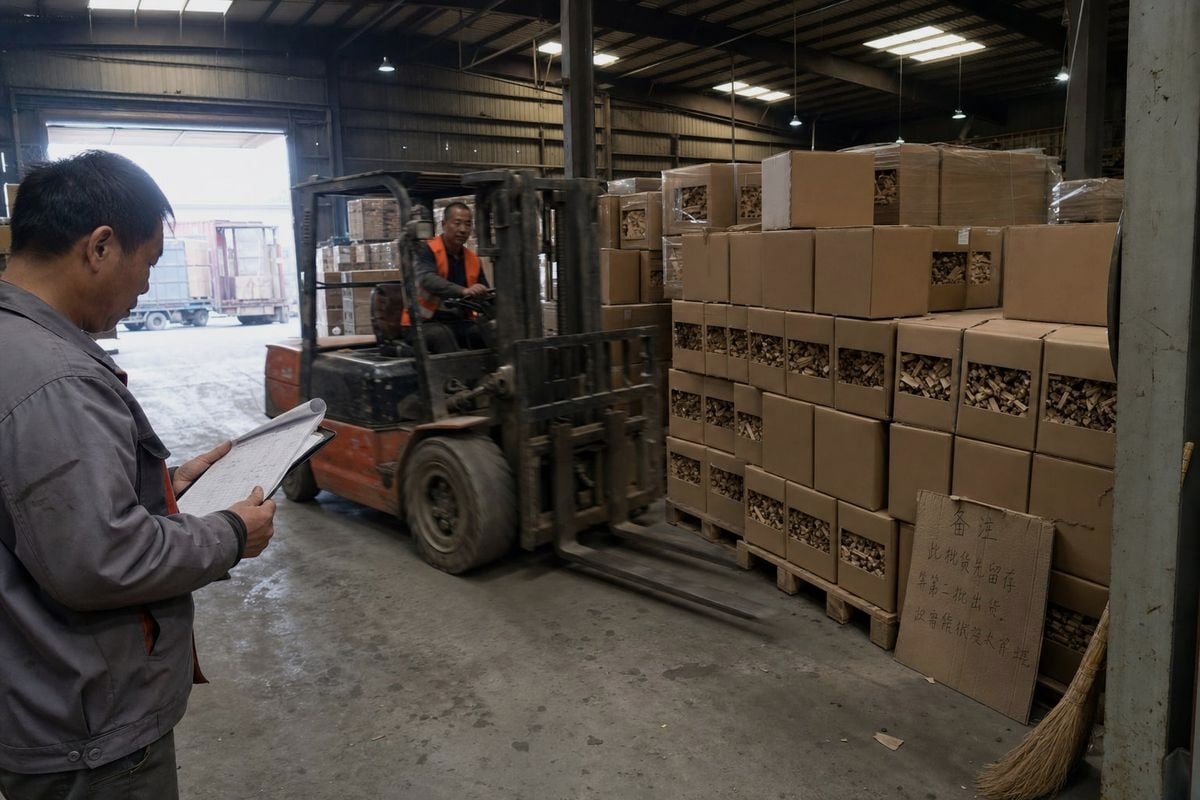
Partial deliveries introduce a new failure mode: inconsistency between waves. If wave one passes FBA check-in but wave two arrives with a different carton spec or missing labels, you face delays right when your listing is running low. So standardize everything upfront.
Compliance Consistency Across Waves
Fire starters made of wood fiber and paraffin are generally not classified as hazmat, but Amazon may still ask for documentation. Have SGS or Intertek test reports ready before wave one ships, and reference the same reports for every subsequent wave. We prepare complete labeled, barcoded, retail-ready cartons for all waves at once, then hold them. That way, nothing changes between releases except the ship date.
Managing the Fee Calendar
Three Amazon mechanics drive your timing decisions:
- Monthly storage fees rise sharply from October through December. Avoid parking slow waves in FBA during Q4 unless they will sell through.
- Long-term storage fees hit inventory that ages past the eligibility threshold. Set a calendar reminder well before the assessment date, so you can promote, remove, or delay the next wave.
- FBA storage limits tighten when your Inventory Performance Index drops. Excess aged stock lowers your IPI, which then restricts how much you can send in — a vicious cycle staggering prevents.
Amazon Warehousing 1 & Distribution (AWD) works well as a low-cost upstream buffer. It auto-replenishes FBA and removes inbound placement fees. Alternatively, third-party logistics 2 prep providers can drip-feed inventory in weekly or biweekly waves, handling cubic feet storage calculation and prep on your behalf. Either way, the principle holds: Amazon's premium space is for active sellers only.
What Lead Time and Logistics Details Do I Need to Confirm Before Splitting My Wood Fire Starter Order?
A hard lesson taught me this section. Years ago, a Canadian buyer scheduled wave two of a wood-roll order without accounting for Chinese New Year. His trigger fired in late January; goods could not move until March. He stocked out for five weeks.
Confirm production lead time per wave, factory holiday closures, ocean transit time to your market, FBA check-in delays, container versus LCL split costs, packaging-ready storage conditions at origin, and a clear communication protocol for triggering each release before signing any split-shipment agreement.

Split shipment logistics only work when every leg of the timeline is mapped honestly. Think of it as just-in-time inventory management 3 stretched across an ocean. Your trigger point must fire early enough that the next wave lands at FBA before stock runs dry.
Build Your Total Lead Time Backwards
| Stage | Typical Duration | Notes |
|---|---|---|
| Release confirmation to dispatch | 3–7 days | Only if goods are packaging-ready |
| Fresh production (if not pre-built) | 15–30 days | Avoid this for waves 2+ |
| Ocean freight 4 to US West Coast | 15–25 days | Longer to East Coast or EU |
| Customs clearance 5 | 2–7 days | Have compliance docs ready |
| FBA check-in | 3–14 days | Worst during Q4 |
Add these up and pad by 10–15%. If your total is 45 days, your reorder trigger should fire when 55–60 days of FBA stock remain.
Freight Decisions for Smaller Waves
Splitting a full container into waves usually means LCL shipments, which cost more per cubic meter. Run the math: for wood fire starters, the savings from avoided monthly and long-term storage fees typically exceed the LCL premium, but verify with your own volumes. Some buyers ship one full container to a US 3PL, then drip-feed FBA domestically. That hybrid keeps ocean freight efficient while preserving replenishment flexibility.
Finally, weave in seasonal demand forecasting 6. Fire starters peak in autumn and winter. Time your largest wave to arrive just before October, so it sells through the expensive storage months instead of sitting through them. Confirm your supplier's Q3 capacity early — everyone in our industry is busy then, and off-season production agreements booked in spring get priority.
Conclusion
Over-ordering wood fire starters feels safe until storage fees erase your margin. Staggered delivery — negotiated with clear waves, terms, and triggers — keeps inventory lean and profits intact.
Footnotes
1. Background context on Amazon's fulfillment network referenced throughout the article. ↩︎
2. Authoritative Wikipedia entry providing a comprehensive definition and overview of third-party logistics services. ↩︎
3. Explains the broader supply chain concept the article applies to staggered shipments. ↩︎
4. WTO trade resource contextualizing international ocean freight shipping in trade logistics. ↩︎
5. Official US trade authority resource explaining customs clearance procedures for imports. ↩︎
6. Wikipedia background on demand forecasting concept applied to fire starter seasonality. ↩︎



 English
  Spanish
  German
  French
  Arabic
  Portuguese
Join the Conversation