







Private label sampling fee credits for wood fire starters FBA orders confuse many first-time buyers who contact our factory Minimum Order Quantity 1. Sample invoices pile up fast, and nobody explains what is negotiable.
Negotiate private label sampling fee credits by asking the supplier, in writing, to deduct 100% of the sample invoice from your first bulk order once you meet the Minimum Order Quantity. Frame samples as a quality validation phase, compare 3–5 factories, and confirm credit terms on the quotation before paying.
That is the short answer. Below, I will break down the exact terms to request, the persuasion tactics that work, the compliance documents you need first, and how to structure a low-risk trial order.
What sample fee credit terms should I ask for when placing my first wood fire starter FBA order?
Last winter, a Dutch distributor sent us a one-line email asking for "free samples." We said no. Then he asked for credited samples, and we said yes immediately. The wording matters.
Ask for four terms in writing: the full sample fee credited against your first production invoice, a stated validity window of 60–90 days, DDP sample shipping quoted upfront, and confirmation that the credit applies once your order meets the supplier's Minimum Order Quantity.
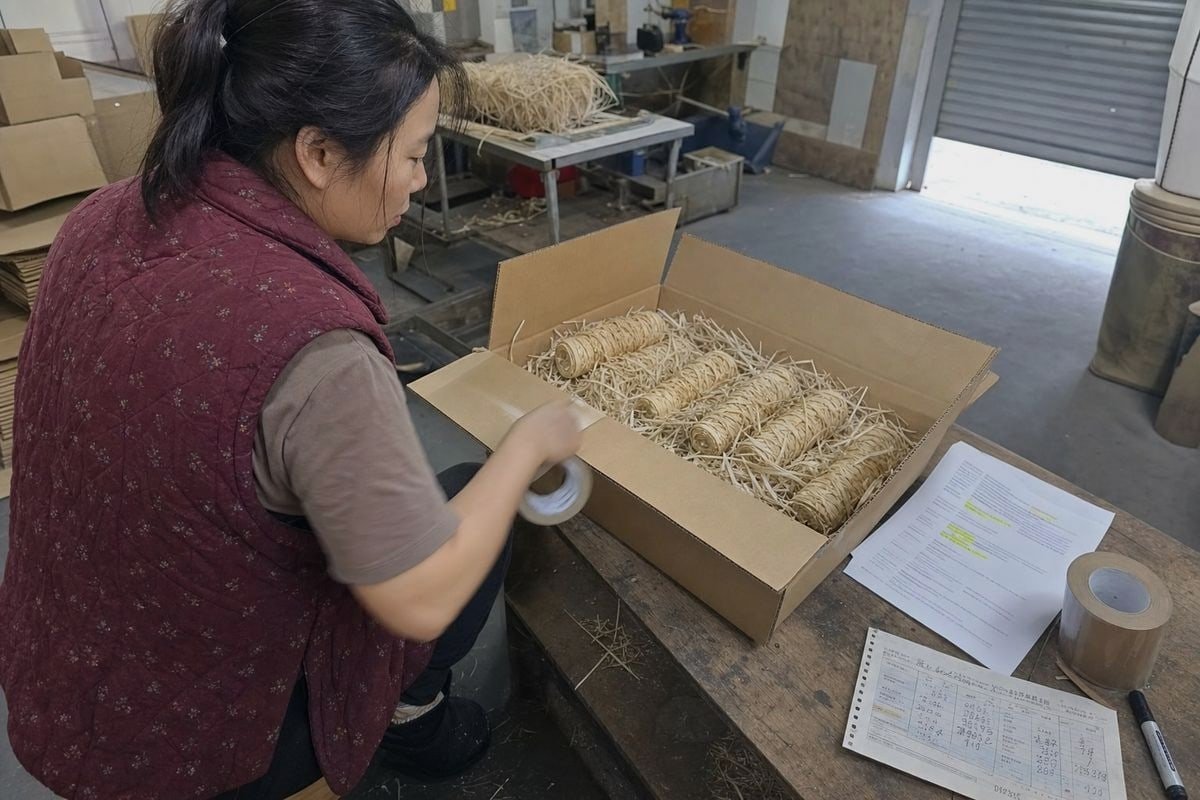
In our 17+ years exporting fire-starting goods to the US, Germany, and the UK, we have seen every version of this conversation. Buyers who ask for vague "discounts" get vague answers. Buyers who name specific credit structures get specific commitments. So learn the menu before you order.
The five credit structures suppliers actually agree to
Sample cost reimbursement comes in several forms, and each carries different value depending on your launch plan. Here is how we rank them from our side of the table:
| Credit Structure | How It Works | When to Ask for It |
|---|---|---|
| Full credit to first PO | Sample invoice deducted from first bulk order | Standard ask; most factories accept |
| Tiered credit model | Refund percentage scales with 90-day order volume | When you plan fast reorders |
| Tooling/artwork credit | Sample fee offsets custom packaging or label setup | When you need private label boxes |
| Netted into unit price | Supplier lowers bulk pricing to absorb sample cost | When comparing total landed cost |
| Freight credit | Supplier covers express sample shipping after order confirmation | When shipping exceeds the sample fee |
For wood fire starters, the tooling credit deserves special attention. Most FBA buyers need custom retail boxes, warning labels, and barcodes. Our own OEM/ODM projects usually involve packaging development, so shifting the sample fee into that budget line is a natural fit for both sides.
One more term worth requesting: a performance variance clause. Ask that the sample fee be refunded if bulk-order burn time or moisture content deviates meaningfully from the approved pre-production sample. A confident factory with real batch-to-batch quality control will not fear that clause. A trading company reselling someone else's stock usually will. That reaction alone tells you a lot.
Always get the credit terms printed on the proforma invoice, not just mentioned in a chat thread. Verbal promises do not survive staff changes.
How do I convince a manufacturer to waive or refund private label sampling costs?
A trade-off we weigh every week at our Ningbo production site: which sample requests get priority on the line? The buyers who sound like real orders always win that slot.
Convince a manufacturer by demonstrating credible order intent: share target Minimum Order Quantity, reorder frequency, and packaging specs upfront. Frame samples as a quality validation phase for a long-term brand, mention you are comparing 3–5 factories, and offer fast approval in exchange for a credited fee.

Supplier psychology drives this negotiation more than pricing math does. When our sales team reviews an inquiry, we sort buyers into two mental buckets: shoppers and builders. Shoppers collect free samples and disappear. Builders send a spec sheet, name a volume tier, and ask about pre-production sample approval workflows. Builders get credits. Shoppers pay full price.
Six negotiation levers, in order of strength
- Commitment framing. State plainly that you are sampling from three to five suppliers and the winner receives the production order. This is honest, and it creates competitive pressure without bluffing.
- Volume leverage. Ask for pricing at 500, 1,000, and 3,000 units before raising the sample credit. Once a factory sees a real quantity ladder, the sample fee becomes trivial to concede.
- Speed leverage. Offer to approve samples within five business days of receipt. Fast decisions are worth money to a factory scheduling its lines, especially for a first order.
- Seasonal leverage. Fire starter demand peaks in autumn and winter. Approach factories during the April-to-August window, when idle capacity makes managers far more flexible on credits and even unit cost reduction.
- Relationship leverage. Signal repeat seasonal orders if the launch performs. We give better terms to buyers who talk about year two, because our best accounts have run for a decade.
- Quality-control leverage. Position sampling as chargeback insurance. Rejected FBA inventory hurts both parties, so validating burn behavior upfront is a shared interest, not a buyer favor.
If you source through Alibaba supplier negotiation channels, put the credit request directly in your RFQ message and ask for Trade Assurance 2 payment terms so the credited amount is documented inside the platform. If a supplier flatly refuses any credit, ask them to reduce the fee against a larger first-order commitment instead. And watch for the quiet trick: a "waived" sample fee recovered through a padded unit price. Always compare total landed cost, never the sample line alone.
What certifications and compliance documents should I request before agreeing to sampling fees?
A German fireplace distributor once rejected a competitor's sample not for quality, but for missing test reports. He then paid our sample fee without hesitation. Documentation earned that trust.
Before paying any sampling fee, request ISO 9001 and BSCI factory certificates, SGS or Intertek third-party test reports, CE compliance documentation where applicable, material composition disclosure, and written confirmation of hazmat shipping requirements and classification for wax-and-wood-fiber products entering FBA warehouses.
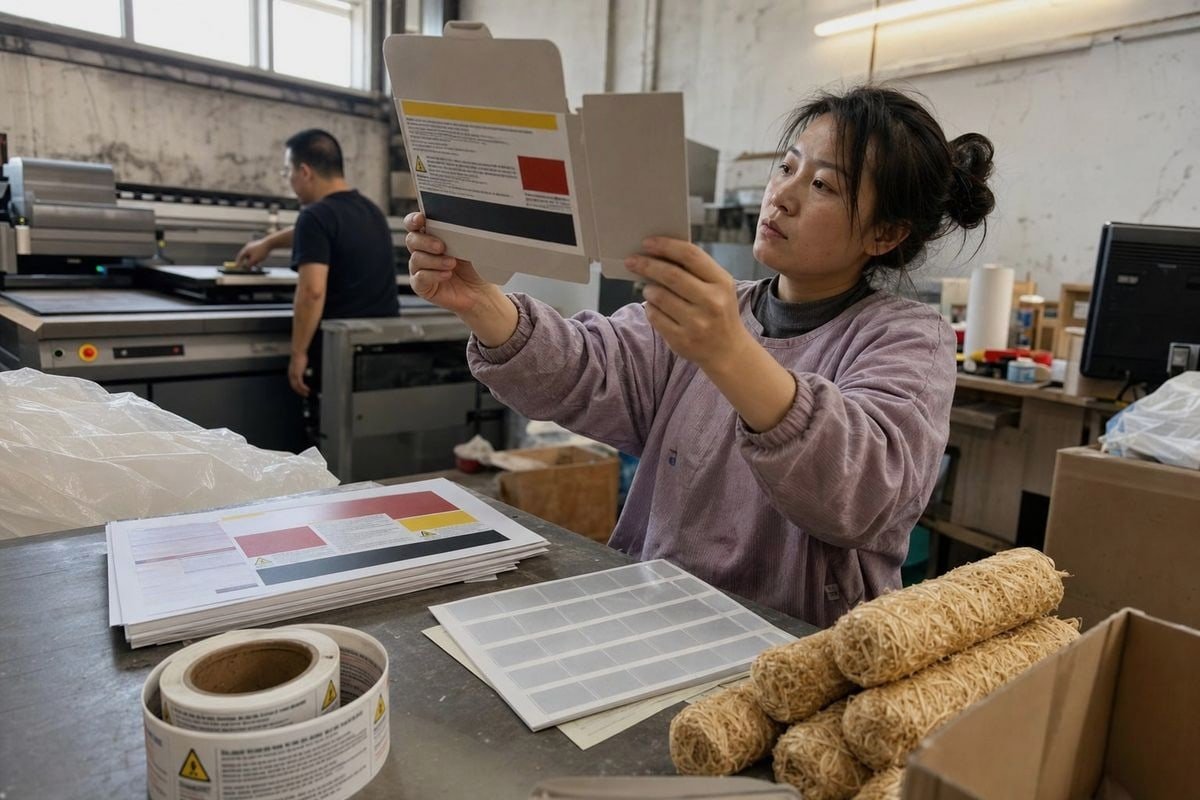
Wood fire starters are not generic kitchenware. Amazon groups them with other fire-starting and fuel-related products, which means classification, labeling, and packaging face closer scrutiny than ordinary consumer goods. Our compliance folder is often the first thing serious European buyers ask for — before they ask about price. That order of questions is correct, and I recommend you copy it.
The document checklist, mapped to what it protects
| Document | What It Proves | Risk If Missing |
|---|---|---|
| ISO 9001 certificate 3 | Factory-level quality management system | Inconsistent batches after sample approval |
| BSCI audit report 4 | Ethical and social compliance | Retail channel rejection, brand damage |
| SGS 5/Intertek test report | Independent verification of composition and safety | Failed Amazon compliance review |
| CE documentation 6 | Conformity for European market entry | Customs holds in EU destinations |
| Material composition sheet | Wax type, wood fiber ratio, no harmful chemicals | Mislabeled listings, return spikes |
| Hazmat classification 7 letter | Correct FBA dangerous-goods status | Stranded or destroyed FBA inventory |
Why this matters before the sample fee, not after
Paying a sampling fee to an uncertified supplier wastes more than the fee. You burn two to four weeks of shipping and testing time, then restart sourcing from zero. Ask for documents first, verify certificate numbers directly with the issuing body, and only then pay for samples. In fatwood fire starter sourcing and wax-dipped wood roll categories alike, a factory that hesitates on paperwork will hesitate on everything else.
Also request the composition printed on packaging artwork — for example, a wood fiber and paraffin percentage statement — plus warning labels and barcodes formatted for your market. We build these into private label packaging as standard, because FBA-ready means compliant on the shelf, not just functional in the fire pit. If you use sourcing agent services, instruct the agent to collect this documentation package before releasing any sample payment on your behalf.
How can I structure a trial order to reduce upfront costs while testing FBA-ready fire starters?
Flexible trial quantities were a lesson we learned the hard way. Years ago, rigid MOQs cost us a promising Canadian account. Today, staged trial orders are core to how we onboard new buyers.
Structure a trial order in three stages: a credited sample round from 3–5 suppliers, a reduced-MOQ pilot run of 500–1,000 units with the sample fee deducted, then a full production order with locked pricing. Negotiate DDP terms and defer custom tooling costs until stage three.
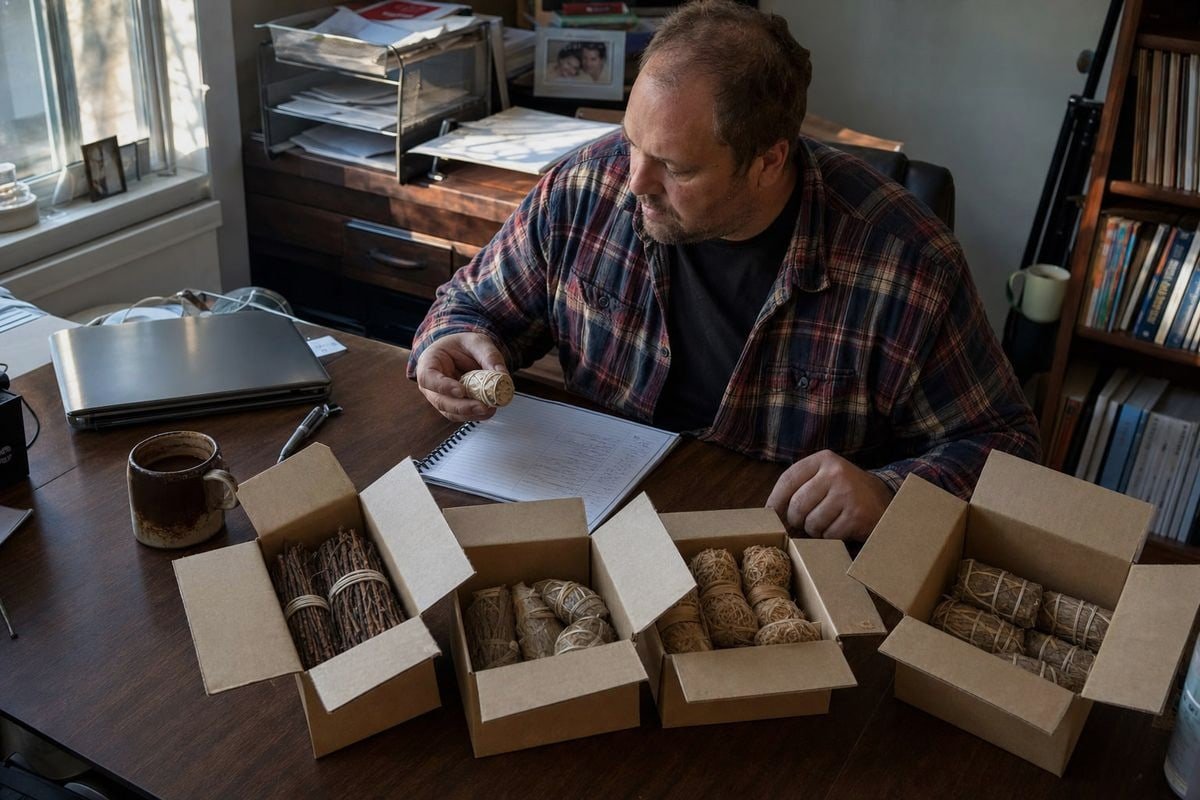
Launch economics for wood fire starters are unforgiving. The product is low-ticket, so every upfront dollar you save flows straight into your Amazon FBA 8 profit margins. A staged structure lets you validate quality, packaging, and sell-through before committing real capital.
The three-stage trial structure
| Stage | Quantity | Cost Controls | What You Validate |
|---|---|---|---|
| 1. Sampling | 5–20 units per factory | Credited fees, DDP shipping quoted all-in | Burn time, odor, moisture resistance, wax integrity |
| 2. Pilot run | 500–1,000 units | Sample credit applied, stock packaging or simple label | FBA check-in, listing conversion, review quality |
| 3. Production | 3,000+ units | Volume pricing tier, tooling amortized | Repeatability, seasonal reorder cadence |
Details that protect your cash at each stage
At stage one, send every factory the same technical specification sheet: wood wool density, wax type, target burn duration, and unit dimensions. Identical specs mean comparable samples, and they prevent a costly second prototype round. Insist on all-in DDP sample pricing so courier surcharges and customs handling never surprise you.
At stage two, keep packaging simple. Use a stock box with your label rather than fully custom printing, because grease-proof packaging still needs verification — wax-dipped rolls can stain retail boxes during hot warehouse storage, and you want to catch that with a small batch. This is also where you confirm that the pilot units match the approved pre-production sample; our own batch QC exists precisely so the first sample reliably predicts mass production.
At stage three, negotiate unit cost reduction against volume tiers and apply any remaining tooling or artwork credits. If your product carries sustainability positioning, ask whether documentation costs for certified wood sourcing can be offset against the first production run. Lock your pricing for two or three reorders so seasonal demand spikes do not reset the negotiation.
Conclusion
Sample fees drain launch budgets silently, and every wasted round delays your season. The fix is negotiation, not luck: demand written credits, verify compliance first, and stage your trial order.
Across two decades of shipping wood firestarters and color-flame products to buyers in 30+ countries, one pattern holds. The best buyers never chase free samples. They negotiate credited samples, confirm certifications before paying, and structure pilots that protect cash while proving quality. Do the same, and your sampling spend stops being a sunk cost. It becomes the down payment on your first production order — and on a supplier relationship that lasts well beyond one FBA season.
Footnotes
1. Defines a core sourcing term used throughout the negotiation article. ↩︎
2. Official Alibaba program referenced for documenting credited sample payments. ↩︎
3. Official ISO standard page explaining the quality management certification referenced. ↩︎
4. Updated official amfori URL for the BSCI social compliance program. ↩︎
5. Official page for the third-party testing and inspection company referenced for compliance. ↩︎
6. EU official page explaining CE conformity marking required for European market entry. ↩︎
7. Background concept on dangerous goods classification relevant to FBA hazmat shipping rules. ↩︎
8. Amazon's own documentation on Fulfillment by Amazon program mentioned repeatedly. ↩︎

 English
  Spanish
  German
  French
  Arabic
  Portuguese
Join the Conversation