






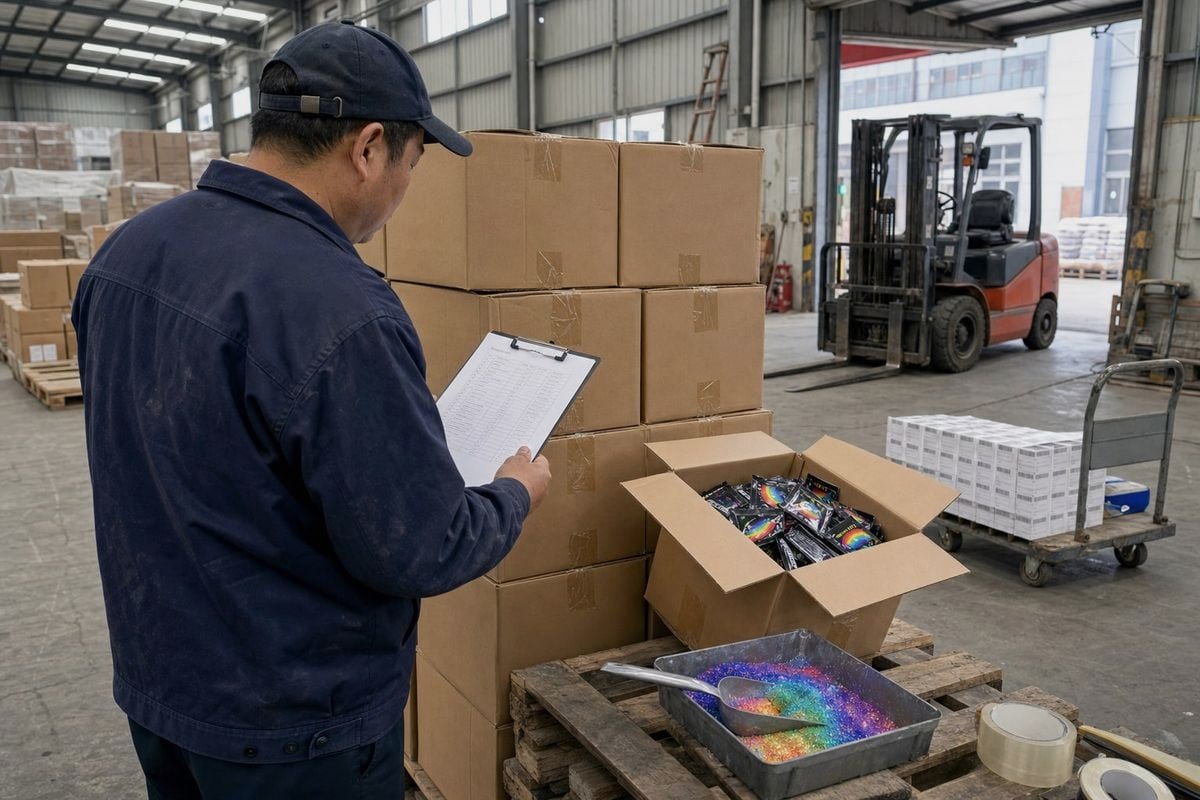
Insuring a Magic Fire Powder shipment sounds simple until a claim gets denied. On our production line in Ningbo, we have seen paperwork gaps cost buyers real money.
To insure a Magic Fire Powder shipment, first confirm its hazard classification with an SDS, then buy specialty cargo or marine cargo insurance that names the product, request written coverage confirmation, and prepare invoices, photos, and compliance certificates before shipping to keep claims payable.
Insurance is only half the job. The other half is proving your cargo was legal, well-packed, and truthfully declared. Let me walk you through both halves, step by step.
What documents do I need from my supplier to insure a Magic Fire Powder shipment?
Years ago, a German distributor asked us for "just an invoice" to insure his first container. His broker sent it back with a list of six missing documents. We now prepare that list upfront.
You need a commercial invoice, a current Safety Data Sheet (SDS), the product's UN Classification Number or non-hazardous confirmation, packing list, test reports from labs like SGS or Intertek, packaging specifications, and photos of the sealed cartons before handover.

Insurers underwrite what they can verify. If your supplier cannot hand over a clean documentation pack, no underwriter will offer meaningful terms on a color-flame powder. In our 17+ years exporting Magic Fire packets to 30+ countries, we have learned that the SDS is the single most important document. It tells the insurer exactly what the powder is, how stable it is, and whether Dangerous Goods Regulations 1 apply. Most quality color-flame additives are metal-salt blends, not pyrotechnics. But the insurer will not take your word for it. They want the SDS and a lab test report.
The core document pack
| Document | Who provides it | Why the insurer needs it |
|---|---|---|
| Commercial invoice | Supplier | Establishes declared value and proof of ownership |
| Safety Data Sheet 2 (SDS) | Manufacturer | Confirms chemical composition and hazard status |
| UN Classification Number or non-DG letter | Manufacturer | Determines eligibility and premium level |
| SGS/Intertek test report | Manufacturer via lab | Verifies the product matches its declaration |
| Packing list with lot numbers | Supplier | Links cargo to specific batches for claims |
| Pre-shipment photos | Supplier or inspector | Proves condition before transit began |
Why lot numbers matter
Every claim adjuster asks the same question: can you prove this exact batch was fine when it left the factory? Because we run strict batch-to-batch quality control, each of our packets carries a traceable lot code. Ask your supplier for the same. Photograph the product, the inner sachets, the sealed carton, and the shipping label together. Keep those images with your file. If damage or contamination appears at destination, that evidence separates a paid claim from a rejected one.
How do I confirm my cargo insurance actually covers color-flame powder classified as hazardous or restricted goods?
One trade-off we discuss with buyers constantly: cheap carrier-added insurance is easy to buy, but it often quietly excludes exactly the cargo you are trying to protect. Reading the policy is not optional.
Confirm coverage by sending the insurer your SDS and product description, asking in writing whether the specific powder is covered, checking the Dangerous Goods exclusion clause, verifying sub-limits and deductibles, and requesting a Certificate of Insurance naming the commodity.
Never rely on the phrase "All-Risk Coverage" alone. All-risk still contains carve-outs: delay, inherent vice, poor packaging, and often anything treated as hazardous. Standard parcel insurance frequently excludes or sub-limits unusual goods. A color-flame powder sits in a gray zone, so you must force the insurer to commit on paper before the container leaves.
Compare your coverage options first
| Coverage type | Best for | Watch out for |
|---|---|---|
| Carrier parcel insurance | Small sample orders | Low caps and broad exclusions for restricted goods |
| Third-party shipping protection | E-commerce parcels | Eligibility rules tied to accurate declarations |
| Marine Cargo Insurance 3 (all-risk) | Container and LCL freight | Inherent vice and packaging exclusions |
| Specialty hazmat endorsement | Powders classified as Class 4.1 or Class 9 | Higher premiums and strict packaging warranties |
Five questions to ask in writing
- Is this exact commodity, per the attached SDS, eligible for cover?
- Does coverage apply in transit only, or also during warehousing?
- Are leakage, contamination, moisture clumping, and fire-related loss included?
- What is the deductible, minimum claim amount, and per-package sub-limit?
- Will the Certificate of Insurance name the product description we ship under?
In our experience exporting to the US and Germany, buyers who complete this email exchange before booking never face the worst outcome: paying for a policy that was void from day one. Also confirm how Declared Value is treated. Most insurers reimburse actual invoice value, not projected retail resale value. If you want cover at your full sales value, say so upfront and expect the premium to reflect it.
What compliance certificates should I request to avoid claim denials on a fire-product shipment?
A UK importer once told me his previous supplier's "certificates" turned out to be expired scans from another factory. His freight insurance claims stalled for months. That lesson shaped how we hand over compliance files today.
Request current SGS or Intertek test reports, CE documentation where applicable, the manufacturer's ISO 9001 certificate, an SDS matching the shipped batch, UN-rated packaging certification if the goods are classified, and a signed non-hazardous or hazard-class declaration letter.
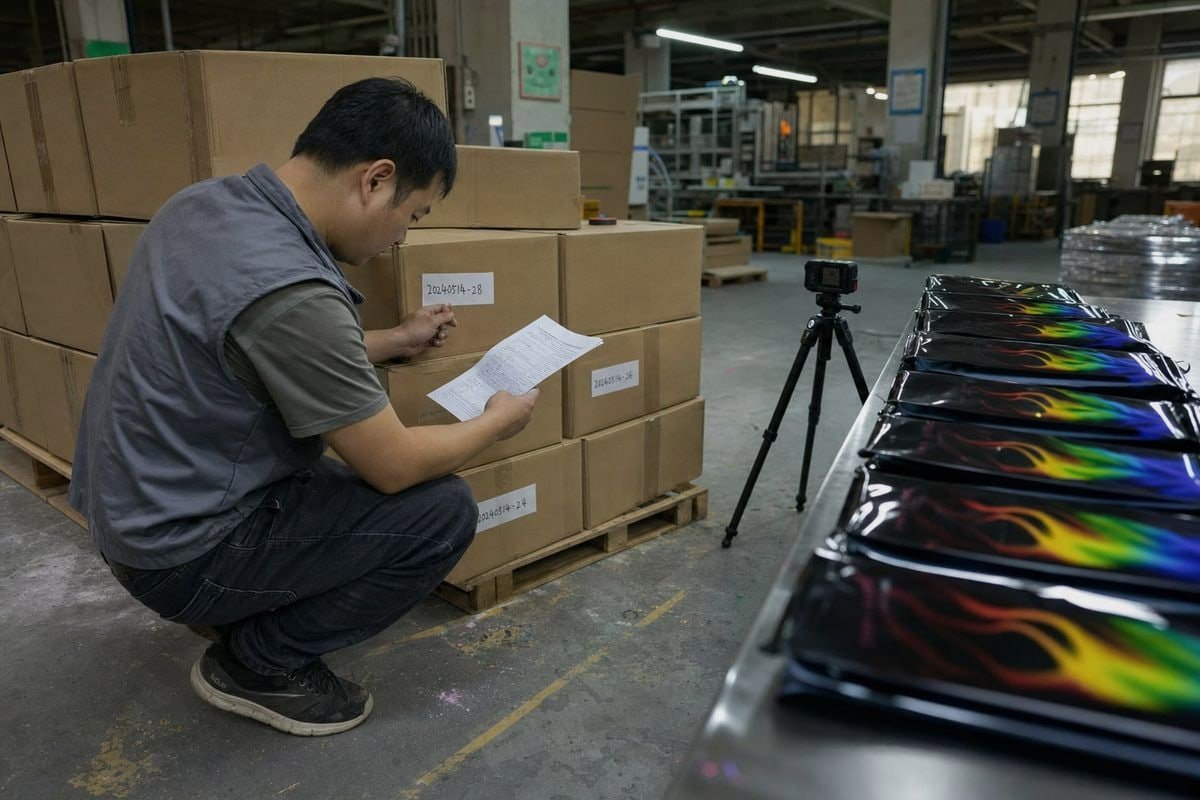
Claim denials on fire-themed products almost always trace back to one of three gaps: misdeclaration, missing test evidence, or packaging that did not meet the stated standard. Certificates close those gaps. At our factory in Liuyang, compliance is a hard requirement from our buyers, not a nice-to-have. We maintain ISO 9001 4, BSCI, CE, and SGS/Intertek documentation because insurers, customs officers, and retail sourcing teams all pull from the same file.
Match each certificate to a denial risk
| Denial reason | Certificate that prevents it |
|---|---|
| Misdeclared commodity | SDS plus third-party lab test report |
| Improper packaging exclusion | UN-rated 4G carton certification or packaging spec sheet |
| Quality inconsistency dispute | ISO 9001 certificate and batch QC records |
| Market non-conformity seizure | CE documentation for the destination market |
| Hazard classification challenge | Signed hazard-class or non-DG declaration letter |
Check dates and batch alignment
A certificate is only useful if it is current and matches the shipped goods. Verify three things. First, the test report date falls within its validity window. Second, the product name on the report matches your invoice and packing list. Third, the lot numbers align across documents. Insurers treat packaging standards as a warranty of coverage, so if your policy specifies moisture-barrier inner packaging for hygroscopic powders, get the supplier's packaging spec in writing too. Because we handle private-label packaging, warning labels, and barcodes in-house, we align every document to the buyer's brand and destination rules before loading. Ask your supplier to do the same, and refuse vague answers.
Who is liable if my Magic Fire Powder shipment is damaged, delayed, or rejected at customs?
Liability questions land in my inbox every quarter, usually after something has already gone wrong. The honest answer is that responsibility shifts along the supply chain, and your Incoterms 5 decide most of it.
Liability depends on Incoterms and cause: the supplier is liable for defects and misdeclaration, the carrier holds limited Carrier Liability for transit damage, your insurer covers insured physical loss, and the importer typically bears customs rejection unless the supplier's paperwork caused it.

Start with the cause of loss, then map it to the responsible party. Physical damage in transit usually points to the carrier first. But Carrier Liability 6 is capped by international conventions and is often far below your cargo's value. That gap is exactly why cargo insurance exists. Delay is different. Almost no standard cargo policy pays for delay itself, only for physical loss or damage. If delayed transit causes moisture clumping in a powder, expect the insurer to probe whether packaging or inherent vice was the real cause.
A simple liability walkthrough
- Damage from poor manufacturing or wrong labeling: the supplier is responsible. This is why we stand behind batch QC records and offer replacement on proven factory defects.
- Damage during handling or transport: file against the carrier within its notice window, then claim the shortfall from your cargo insurer.
- Customs rejection due to missing hazard paperwork: liability follows whoever owed the documents under your contract. Under FOB terms, import clearance risk generally sits with the buyer.
- Seizure of a prohibited product: insurance rarely helps. Coverage cannot cure an illegal shipment, so verify destination rules for hazardous materials handling 7 before booking.
Timing matters as much as fault. Notify the carrier and insurer immediately, photograph everything, and keep the damaged goods and original packaging for inspection. Some carriers require written claims within 30 days of acceptance. Late notice kills otherwise valid claims. Having shipped to the US, Germany, the UK, France, and Australia for years, we build claim-ready files with buyers before departure, because after a loss it is already too late to create evidence.
Conclusion
Insurance cannot rescue a noncompliant shipment. [Classify the powder correctly](https://sunrichfire.com/how-confirm-if-magic-fire-powder-classified-hazardous-transport/), buy coverage that names it, and build your evidence file first. Do that, and your claims stay payable.
Footnotes
1. Background on international classification rules referenced when determining insurance eligibility. ↩︎
2. Explains the standardized document format central to hazard classification and insurance underwriting. ↩︎
3. Provides background on marine cargo insurance policies and their standard exclusions. ↩︎
4. Authoritative Wikipedia entry providing a comprehensive overview of the ISO 9001 quality management standard. ↩︎
5. Official ICC source clarifying international trade terms that determine shipment liability. ↩︎
6. Explains legal frameworks capping carrier liability for cargo transit damage. ↩︎
7. EPA guidance on regulations governing hazardous materials relevant to shipment classification. ↩︎



 English
  Spanish
  German
  French
  Arabic
  Portuguese
Join the Conversation