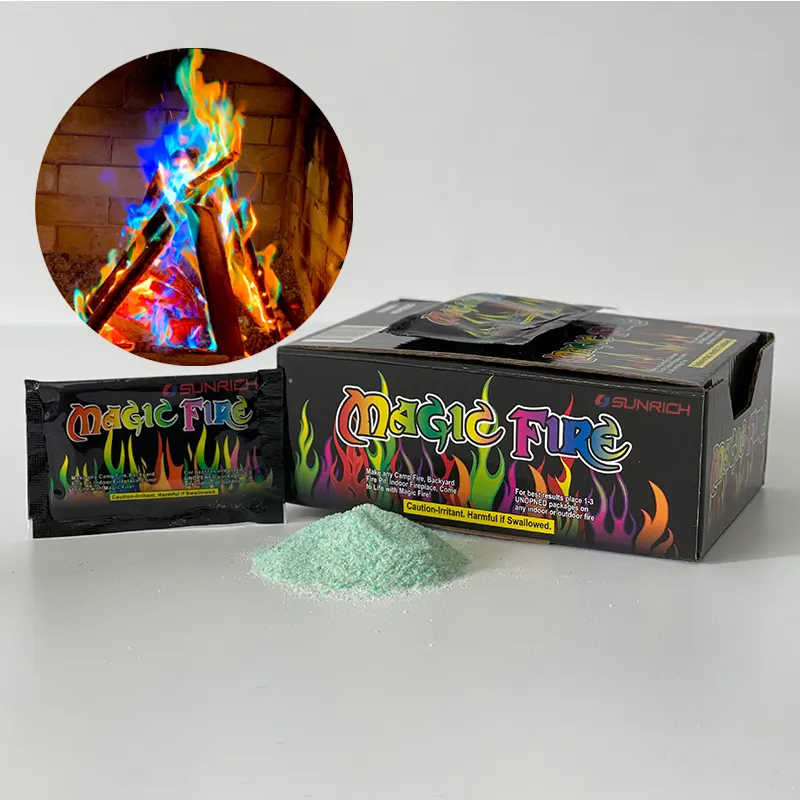


French translation of descriptive trademarks under Bill 96 1 nearly stalled one of our Canadian shipments Regulation respecting the language of commerce and business 2. Our Magic Fire color-flame packets looked perfect — until [Quebec's labeling rules](https://sunrichfire.com/how-ensure-magic-fire-powder-packaging-meets-quebec-bill-96-french-labeling-rules/) threatened the whole order.
Under Bill 96, a registered trademark like Magic Fire Powder may stay in English, but generic or descriptive words inside it — such as "Powder" — must appear in French on the product or permanently attached packaging, displayed at least as prominently, effective June 1, 2025.
That single rule changes how you design packaging for Quebec. Below, I break down exactly what the law requires, what stays exempt, and how to plan your compliance step by step.
What French translation requirements does Bill 96 impose on descriptive trademarks like Magic Fire Powder?
A Canadian distributor once asked us to reprint an entire pouch run because one English word slipped past their legal review. That word was "Powder." Our production team in Ningbo learned Quebec's rules fast.
Bill 96 requires that any generic term or description of a product embedded in a trademark appear in French on the product or a permanently attached medium. A description covers a product's characteristics; a generic term covers its nature. The French text must be at least as prominent as the English.

Let me unpack what this means in practice, because the details matter when you are printing thousands of foil pouches.
Bill 96 did not ban English trademarks in Quebec. That is the biggest myth I hear from buyers. Instead, it narrowed the old trademark exemption and added a second layer of scrutiny. Even when a mark itself is allowed to stay in English, Quebec now looks inside the mark. If the mark contains words that describe what the product is or what it does, those words trigger a French translation obligation.
How the regulation defines the key terms
The amended Regulation respecting the language of commerce and business 3, effective June 1, 2025, made the statute much more operationally specific. It defines two categories of wording that must be translated:
| Term type | Definition | Example in "Magic Fire Powder" |
|---|---|---|
| Generic term | Words describing the nature of the product | "Powder" — it names what the product physically is |
| Description | Words describing the characteristics of the product | "Fire" arguably describes function; "Magic" is more promotional |
| Excluded | Enterprise names, product names as sold, designations of origin, distinctive cultural names | The brand identity "Magic Fire" as a source identifier |
The good news: the French version does not need to be inserted into the trademark itself. It can appear elsewhere on the pouch, box, or a permanently attached label. When we run private-label jobs for Quebec-bound orders, we usually add "Poudre pour flammes colorées" as a separate descriptor line rather than redrawing the client's registered logo. That preserves trademark integrity and satisfies the regulation at the same time.
Can I keep my English trademark on Quebec packaging without translating it under Bill 96?
Registration status is the first thing I now check when a buyer sends us artwork for the Canadian market. In our 17-plus years exporting fire products to 30-plus countries, few rules have surprised clients more than this one.
Yes, you can keep an English trademark on Quebec packaging without translating it — but only if it is registered with CIPO and no French version appears on the trademark register. Unregistered marks lose the exemption entirely and require full French translation.

This is where Bill 96 tightened the old regime most sharply. Under the previous rules, a "recognized trademark" included common-law, unregistered marks. Many brands relied on that. Bill 96 closed the door. Now only marks actually registered with the Canadian Intellectual Property Office qualify for the exemption. A pending application or years of market use are not enough on their own.
Three conditions you must satisfy
- The mark is registered with CIPO. No registration, no exemption. Your entire mark then needs French treatment.
- No French version of the mark exists on the register. If you registered a French equivalent, Quebec expects you to use it.
- Descriptive and generic components are still translated. The exemption protects the mark as a source identifier, not the product-describing words inside it.
Here is the trap I flag for buyers: descriptive marks are the hardest to register. "Magic Fire Powder" leans descriptive under Canadian trademark law 5, which means CIPO may push back on registration. And if registration fails, the mark loses the Bill 96 exemption altogether. So the weaker your mark is as a trademark, the more exposed you are on Quebec labeling. That is a brand-risk problem, not just a translation problem.
One nuance worth flagging: some practitioners argue that dictionary words functioning identically in French may not need separate translation. I treat that as a gray area, not a safe harbor. When we prep artwork for Quebec, we translate anyway. Reprinting a pouch run costs far more than adding one line of French text up front.
How do I choose between translating, adapting, or registering my mark as a recognized trademark in Quebec?
There is a real trade-off we weigh with every OEM client shipping color-flame packets into Canada: redesign speed versus long-term brand protection. Neither answer fits every buyer, so I walk them through the options honestly.
Choose based on registration status and word type: keep a registered English mark and add French descriptors nearby; translate the full mark if unregistered; or register a French equivalent like Poudre de Feu Magique to future-proof compliance against tighter rules.
Each path carries different costs, timelines, and risks. Here is how I frame the comparison for purchasing managers who need to make a call quickly:
| Strategy | What it involves | Best for | Main risk |
|---|---|---|---|
| Translate descriptors only | Keep the registered English mark; add "poudre" or a full French descriptor line in immediate proximity | Brands with a CIPO-registered mark | Regulator disputes over which words count as descriptive |
| Full bilingual adaptation | Display "Magic Fire Powder / Poudre de feu magique" together on packaging | Brands without registration, or risk-averse brands | Larger label real estate; design rework |
| Register a French mark | File "Poudre de Feu Magique" with CIPO alongside the English original | Long-term Quebec players | CIPO registration takes time; descriptive marks face objections |
A word-by-word analysis of Magic Fire Powder
The smart move is to analyze your mark word by word, because Bill 96 does. "Powder" names the nature of the product — it is a strong candidate for a generic term and almost certainly needs "poudre" in French. "Fire" sits closer to the line; for a flame-coloring product, it plausibly describes function. "Magic" is promotional and suggestive, which makes it the most defensible without translation. The tighter the link between a word and what the product actually does, the more likely Quebec regulators expect a French equivalent.
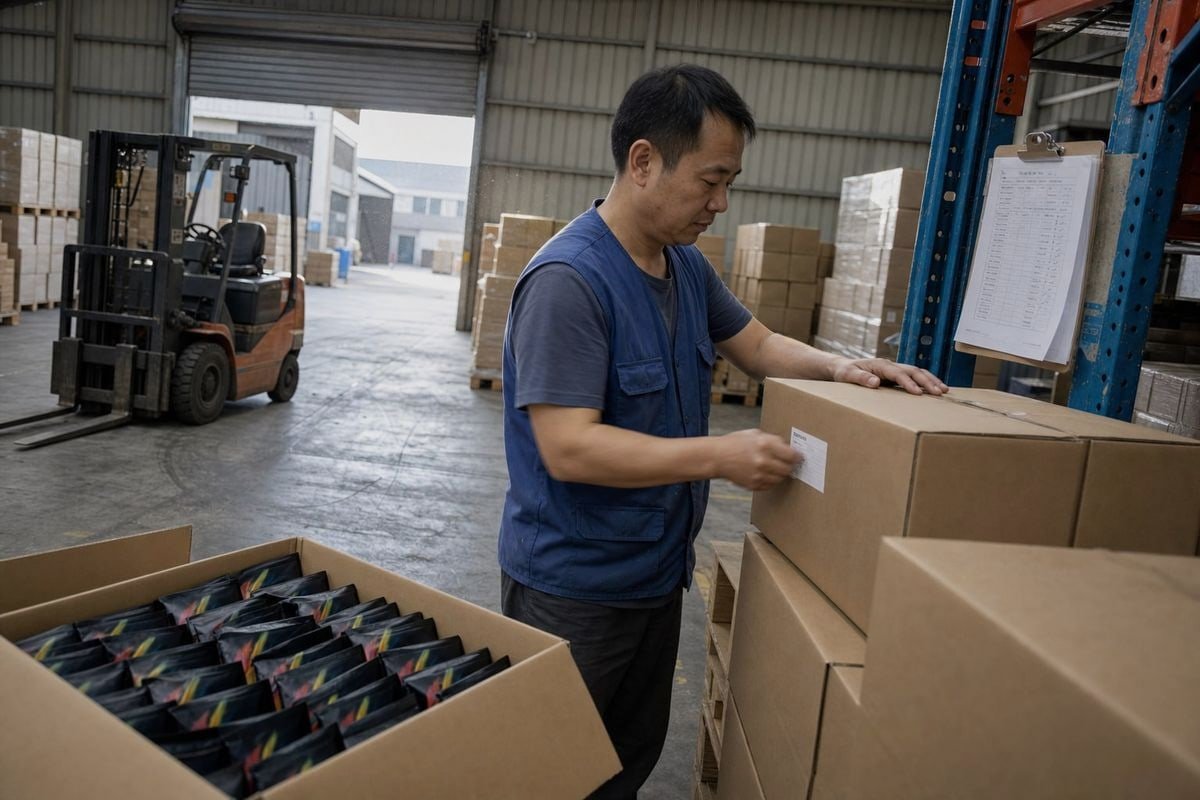
From our side of the production line, the integrated bilingual approach is usually cheapest to execute. We already print bilingual and multilingual packaging for our German, French, and Dutch markets, so adding a compliant French descriptor to a Quebec-bound pouch adds almost nothing to unit cost — as long as it is planned before plates are made, not after.
What compliance risks and deadlines should I plan for when selling Magic Fire Powder under Bill 96?
A lesson from our own compliance work: certification and labeling problems 6 never show up at a convenient time. Our buyers treat SGS and Intertek reports as hard requirements, and Quebec labeling deserves the same discipline.
Plan around the June 1, 2025 deadline for products and packaging. Key risks include losing the trademark exemption through non-registration, insufficient French prominence, non-compliant public signage, and complaints to the OQLF, which can bring fines and forced relabeling.

The transition period is over. If your Magic Fire Powder packaging still shows untranslated generic or descriptive wording on Quebec shelves, you are exposed now. Here is how I would prioritize the risks:
Your compliance risk map
| Risk | Trigger | How to control it |
|---|---|---|
| Lost exemption | Mark never registered with CIPO | File for registration early; assess distinctiveness first |
| Prominence failure | French text smaller or less favorable than English | Match or exceed font size and placement of English descriptors |
| Signage spillover | Trademark on storefront or exterior signs | Ensure French is markedly predominant on public signage |
| Enforcement action | OQLF complaint or inspection | Audit all SKUs; document your compliance rationale |
Remember that product labeling rules and signage rules are related but not identical. On packaging, the French generic or descriptive terms must be at least as prominent as the English. On public signs 7 visible from outside a premises, French must be markedly predominant when a non-French trademark appears, and digital signage can trigger separate display-time requirements. If your Magic Fire Powder appears in a retailer's window display, both regimes can apply at once.
A practical compliance checklist
- Confirm whether your mark is registered with CIPO.
- Check the register for any French version of the mark.
- Classify each word in the mark as generic, descriptive, or distinctive.
- Add French equivalents for generic and descriptive words on the product or attached medium.
- Verify the French text is not visually disadvantaged.
- Review any Quebec retail signage separately.
- Keep artwork files and legal rationale on record for every batch.
When we prepare private-label runs, we lock the bilingual artwork before mass production and hold it batch to batch, so the first approved sample matches every carton that follows. That discipline is exactly what Quebec compliance demands.
Conclusion
Bill 96 turns Magic Fire Powder labeling into a brand-risk decision: register your mark, translate the descriptive words, and give French equal prominence. Plan early, and Quebec stays open for business.
Footnotes
1. Background reference explaining the Quebec legislation central to the article's topic. ↩︎
2. Primary legal text amended in 2025 that establishes the translation obligations discussed. ↩︎
3. Official regulator reference verifies the specific Bill 96 regulation cited in the article. ↩︎
4. General background on trademark registration concepts underpinning Bill 96 exemptions. ↩︎
5. Federal Trademarks Act governs registrability of descriptive marks discussed in the article. ↩︎
6. SGS is a leading authority for product certification and labeling compliance standards. ↩︎
7. Quebec's language office defines signage predominance rules referenced for compliance. ↩︎



 English
 Spanish
 German
 French
 Arabic
 Portuguese
Join the Conversation