






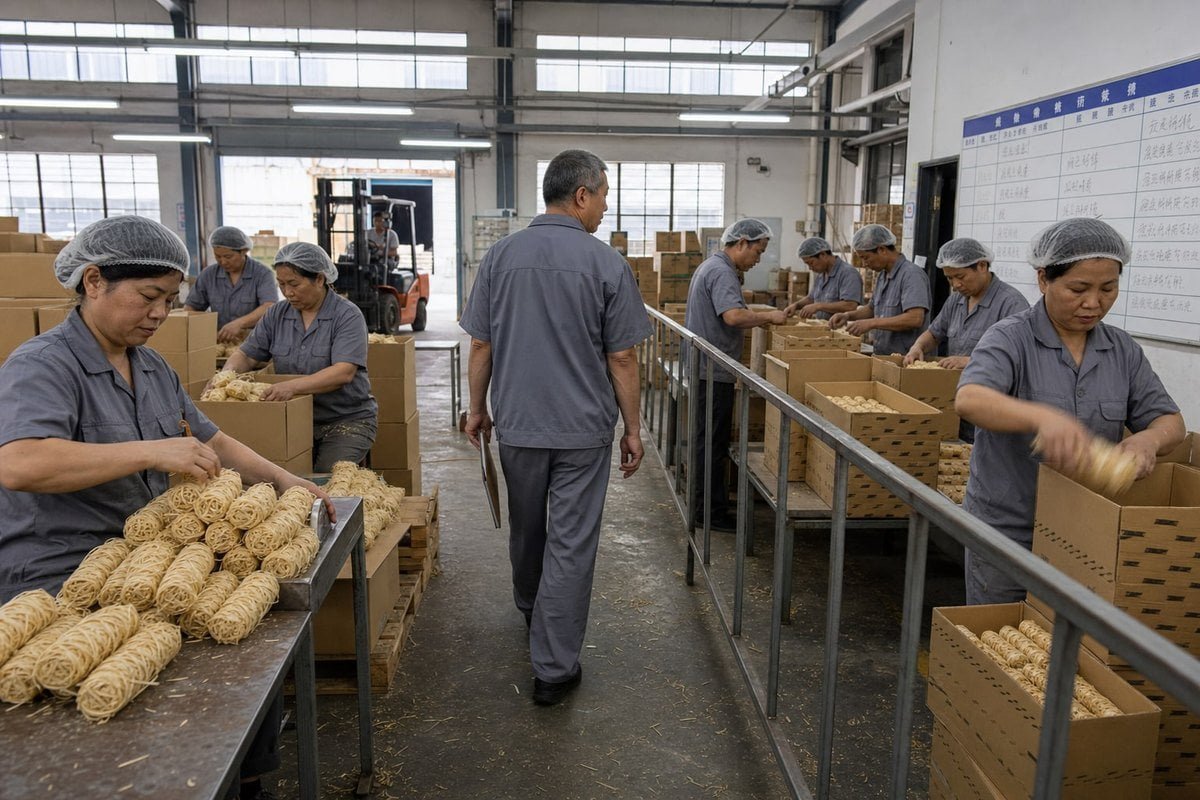
Coordinating supplier capacity for own-brand and co-branded wood fire starters is a real headache — I have watched buyers lose a full winter season because our production line was booked wrong. One late co-branded launch can starve your evergreen SKU of inventory. The fix is structured capacity planning, and after 17+ years running fire-starter lines in Ningbo, I can show you exactly how.
Coordinate supplier capacity by reserving separate production windows for own-brand and co-branded wood fire starters, sharing rolling 12-month forecasts, verifying certifications like ISO 9001 and FSC, negotiating flexible MOQs, and standardizing the core product so only packaging changes between brand runs.
That is the short answer. Now let me break it down into the four questions buyers ask us most often, with the tables and checklists we use internally.
What certifications should I verify before allocating supplier capacity across multiple brand lines?
A German distributor once asked us for our full compliance file before he would even discuss volumes. He was right to. Certifications are the first gate, because one missing document can freeze both of your brand lines at customs at the same time.
Verify ISO 9001, BSCI, CE marking, REACH and RoHS documentation, FSC certification for wood sourcing, and third-party test reports from SGS or Intertek before committing capacity. Also request Safety Data Sheets and confirm the product's hazardous goods classification for shipping.

Compliance is not a nice-to-have in this category. When you run two brand programs through one factory, the risk doubles: a documentation gap does not stall one SKU, it stalls your whole portfolio. In our experience exporting to the US, Germany, the UK, and the Netherlands, buyers who audit paperwork first almost never face shipment holds later.
The core compliance stack
Here is how I recommend structuring your verification. Group the documents by what they protect, then check each one against the specific brand line that needs it.
| Certification / Document | What It Covers | Why It Matters for Multi-Brand Lines |
|---|---|---|
| ISO 9001 1 | Quality management system | Proves batch-to-batch consistency across separate brand runs |
| BSCI | Social and ethical compliance | Required by many EU retailers before co-branded listing |
| CE + REACH 2/RoHS | Material and chemical safety (EU) | Both brand versions must comply independently |
| FSC certification 3 | Responsible wood sourcing | Increasingly demanded for eco-positioned fire starters |
| SGS / Intertek reports | Independent product testing | Third-party proof of ignition and burn performance |
| Safety Data Sheets 4 | Handling and composition data | Needed per SKU, per market, per label version |
Why co-branded lines raise the bar
A co-branded partner will often have its own compliance checklist on top of yours. Their legal team may require supply chain traceability from raw wood wool to finished carton. At our factory, we keep traceability records by batch precisely because two brand owners may audit the same production run from different angles. Ask your supplier whether documentation is maintained per SKU or per product family. If it is only per family, artwork-specific claims — like burn time printed on the box — may not be backed by SKU-level test data. That gap is where recalls start. Verify before you allocate a single production slot.
How can I ensure consistent quality when my supplier splits production between own-brand and co-branded orders?
Early in my career, we ran two nearly identical wax-dipped wood roll orders back to back. The second batch used wood wool with slightly higher moisture content, and the burn time dropped noticeably. That lesson shaped our entire QC system.
Ensure consistent quality by standardizing the core product across brands, locking material specifications like moisture content and wax ratio, setting measurable benchmarks — 98%+ ignition reliability, 5+ minute burn time, under 2% defect rate — and requiring batch-level QC reports for every run regardless of brand.
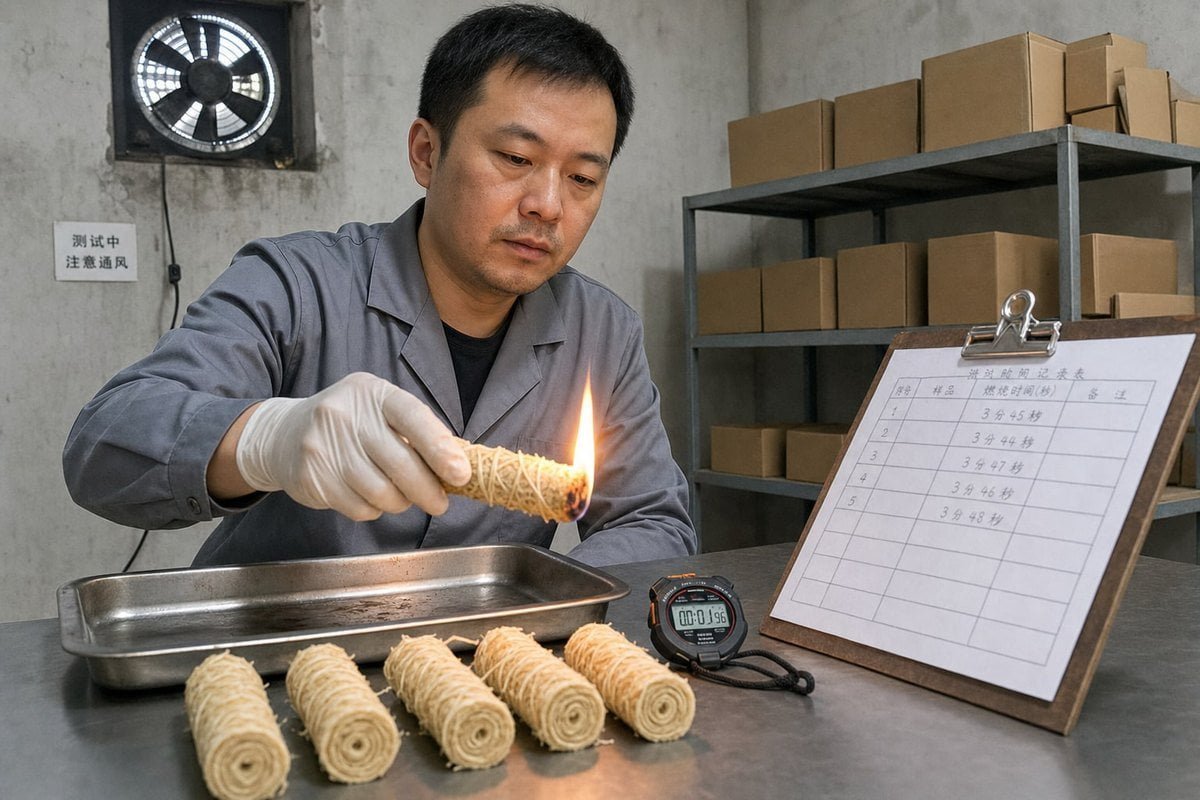
The single biggest quality risk in split production is drift. When a factory treats your own-brand run and your co-branded run as two unrelated orders, small variations creep in: a different wood supplier, a slightly different paraffin blend, a rushed dipping cycle. Each variation is minor. Together, they mean your co-branded product burns differently than the sample your partner approved.
Lock the specification, not just the sample
The fix is a shared master specification. At our production facility, both brand versions of a 50% wood fiber, 50% paraffin fire starter are made from the same kiln-dried wood, the same wax batch standards, and the same winding process. Only the packaging line changes. This is the standardization principle: identical core, differentiated shell.
Insist that your supplier documents:
- Raw material source and seasoning cycle for the wood wool.
- Target moisture content range, checked before dipping.
- Wax composition and coating weight per unit.
- Ignition and burn-time test protocol, sampled per batch.
- Defect definitions and the acceptable rate, in writing.
Quality gates before scale-up
Never allocate full capacity to a new brand version before running quality gates. Request pre-production samples, then a small pilot run, then full volume. The pilot run matters most for co-branded SKUs, because your partner's approval workflow adds time. Because we run complete production lines ourselves, our first sample reliably reflects mass-production output — but you should verify that claim with any supplier by comparing pilot-batch test data against the golden sample. If the numbers match within tolerance, scale up. If they drift, fix the process before your peak season depends on it.
What MOQ and lead time flexibility should I negotiate for running parallel private-label wood fire starter orders?
One trade-off I weigh constantly with buyers is this: a lower unit price at a high MOQ versus slightly higher pricing with flexible order sizes. For parallel brand programs, flexibility almost always wins, because your two demand streams behave very differently.
Negotiate MOQs low enough to trial each SKU separately — ideally with a lower threshold for co-branded test runs — plus 15–30 day production lead times, reserved capacity windows for peak season, and written surge terms that let one brand line scale without delaying the other.
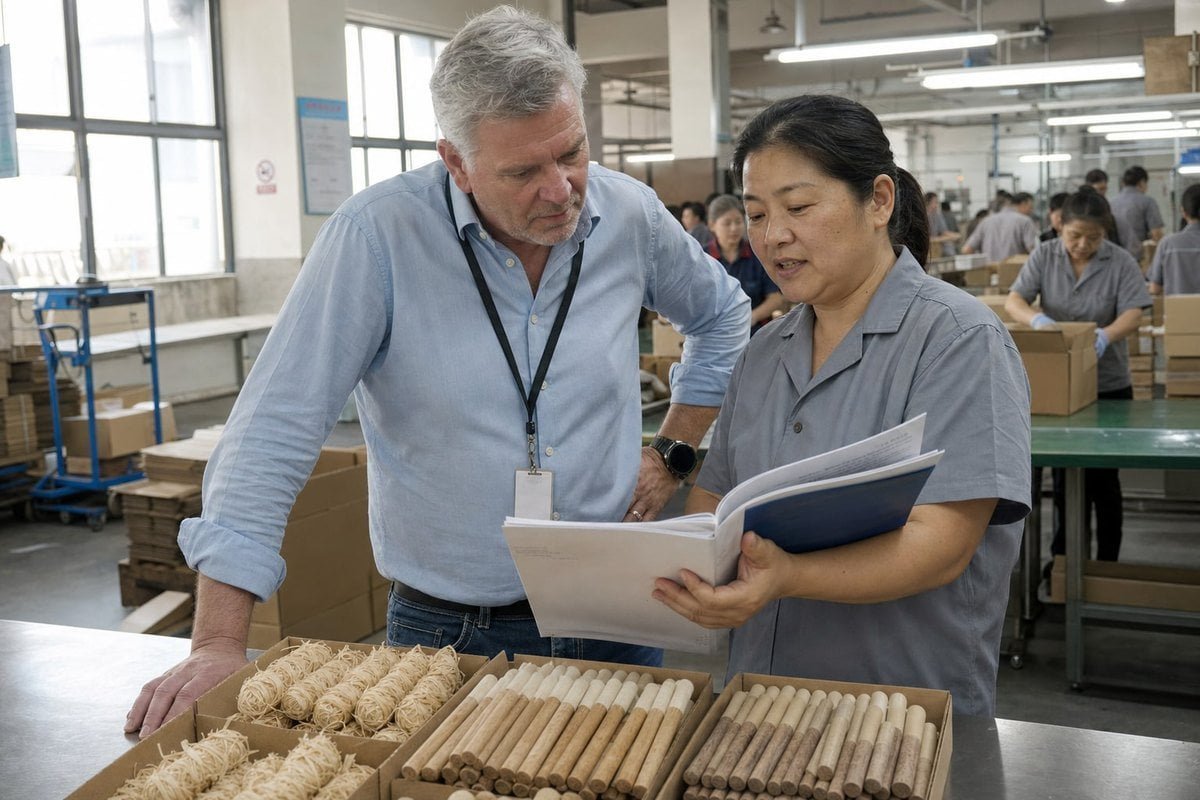
Your own-brand SKU is usually evergreen. Demand is predictable, replenishment is rhythmic, and safety stock smooths the gaps. Your co-branded SKU is campaign-driven. It spikes around a partner's launch date, a retail promotion, or a cold snap. Treating both with the same MOQ and lead time terms forces you to over-order one and under-serve the other.
A two-stream negotiation framework
In our private label production work with US and European distributors, the most resilient contracts separate the two streams explicitly:
| Term | Own-Brand Line | Co-Branded Line |
|---|---|---|
| MOQ | Standard, volume-priced | Lower trial MOQ for first runs |
| Lead time | 15–30 days, steady cadence | Fixed launch date with buffer built in |
| Forecast | Rolling 12-month, 3–4 month firm window | Campaign calendar shared 90+ days ahead |
| Safety stock | Continuous, held at factory or warehouse | Launch-specific finished-goods buffer |
| Surge capacity | Pre-agreed flex percentage | Priority slot around launch window |
Capacity reservation is the real prize
MOQ numbers get the attention, but reserved production windows matter more. Ask your supplier to bucket capacity by SKU family, so a sudden co-branded reorder cannot cannibalize your own-brand replenishment slot. A useful benchmark: suppliers running 50,000+ units of monthly output can usually absorb parallel programs; smaller shops queue everything through one line, which means one delay hits both brands at once. Also schedule high-volume own-brand runs in off-peak months. Contract manufacturing capacity is cheapest and most available in spring and summer, and the resulting buffer stock protects your winter season. Finally, put production lead times, delivery performance, and defect-replacement terms in writing. Verbal flexibility disappears exactly when you need it most.
How do I manage packaging and labeling differences when coordinating multiple brand SKUs with one manufacturer?
A UK buyer once sent us three artwork versions for the same wood fire starter — his own brand, a retailer co-brand, and a gift edition. The product inside every box was identical. The coordination challenge was entirely on the packaging side, and that is typical.
Manage packaging differences by using a postponement strategy — producing unlabeled bulk fire starters, then packaging just-in-time per brand — while maintaining separate artwork approval workflows, packaging material inventory, barcodes, and warning labels for each SKU under one master specification.
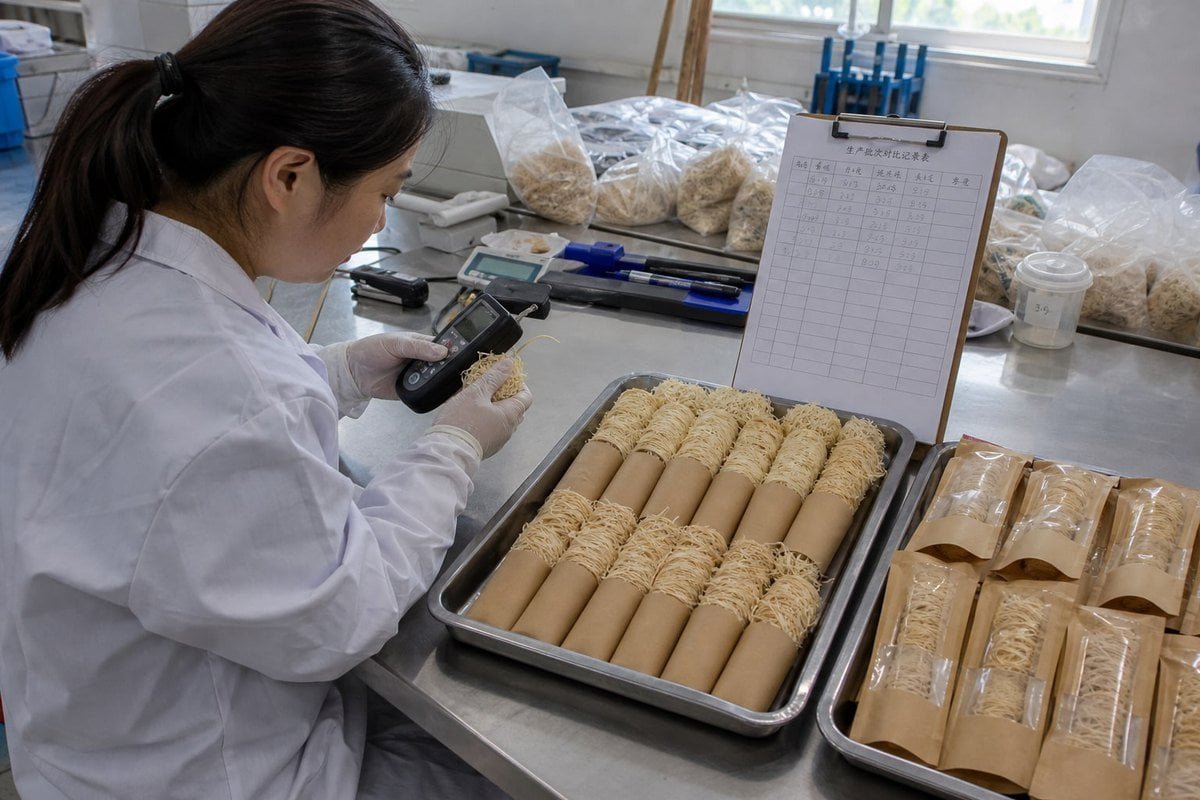
Packaging is where multi-brand programs either flow smoothly or grind to a halt. The product core can be standardized, but every brand version needs its own boxes, labels, barcodes, and legal text. Miss one element and a finished pallet sits in the warehouse, unsellable.
The postponement strategy in practice
The most effective tactic we run in our co-packing services is postponement. We produce naked, unlabeled fire starter rolls in bulk during available capacity, hold them as semi-finished inventory, and package them into specific brand SKUs only when confirmed orders arrive. This turns a long production lead time into a short packaging lead time. It also lets one shared inventory pool serve both your own-brand and co-branded demand.
Governance per SKU
Even with postponement, each SKU needs its own governance layer:
| Element | Own-Brand SKU | Co-Branded SKU |
|---|---|---|
| Artwork approval | Your team only, fast cycles | Joint sign-off, longer cycles |
| Logo usage | Full control | Contractual terms and partner review |
| Barcodes / labels | Your GS1 codes 6 | Separate codes, partner-verified |
| Warning labels | Market-specific, standard | Market-specific plus partner legal review |
| Packaging stock | Continuous replenishment | Ordered against campaign volume |
Plan the approval calendar backward
Co-branded artwork approvals routinely take two to three times longer than own-brand approvals, because two legal teams review every claim. Build that into your calendar. Work backward from the launch date: shipping time, packaging run, artwork approval, proof cycles. We ask co-brand buyers to lock artwork at least 45 days before their target ship date. Also confirm shipping paperwork per SKU — wax-based products need consistent hazardous goods classification 7 review and matching Safety Data Sheets on file, and each label version must align with what customs sees. One mismatch between box text and declared composition can hold an entire container.
Conclusion
Split capacity poorly and both brand lines suffer; coordinate it well and one factory serves both reliably. Verify certifications, lock specifications, negotiate flexible terms, and govern each SKU separately — that is how we keep our partners' shelves stocked every season.
Footnotes
1. Authoritative ISO source defining the quality management standard referenced repeatedly. ↩︎
2. Authoritative European Commission page providing a comprehensive overview of REACH regulations. ↩︎
3. Background on the forestry certification body mentioned for wood sourcing compliance. ↩︎
4. Official OSHA Hazard Communication landing page covering all Safety Data Sheet (SDS) requirements. ↩︎
5. Official EU directive page clarifying hazardous substance restrictions cited in article. ↩︎
6. Official GS1 standards page explaining barcode systems referenced for SKU governance. ↩︎
7. Background concept explaining shipping classification rules mentioned for wax-based products. ↩︎



Join the Conversation