






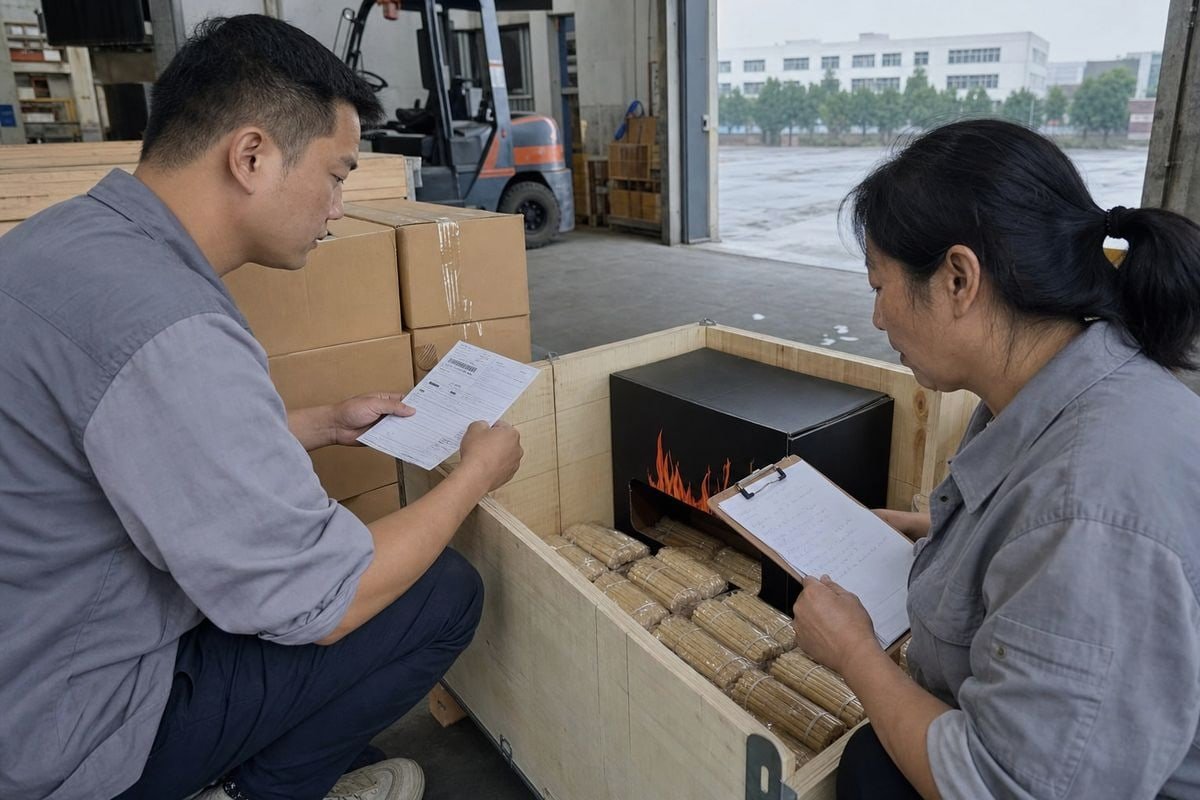
Coordinating samples and display materials with a Chinese supplier for trade shows nearly derailed one of our earliest exhibitions — the crates arrived, but the golden samples did not.
To coordinate samples and display materials with a Chinese supplier for trade shows, send a written specification sheet early, approve a golden sample before shipping, allow a 30-day lead time, ship via express courier with proper customs documents, and confirm branding, packaging, and certifications in writing.
That is the short answer. Below, I break down each stage — quality matching, lead times, branding consistency, and compliance documents — based on years of shipping fire-starter samples and booth displays to buyers across the US and Europe.
How can I make sure trade show samples match mass-production quality before the event?
A buyer in Germany once told me his biggest fear: falling in love with a perfect sample, then receiving a container of something noticeably worse. We built our sampling process around preventing exactly that.
Approve a golden sample pulled from an actual production line, not a hand-made prototype. Require batch photos, a signed specification sheet, and a pre-shipment quality control inspection report. Confirm in writing that the trade show samples and future mass production share identical materials, tooling, and processes.
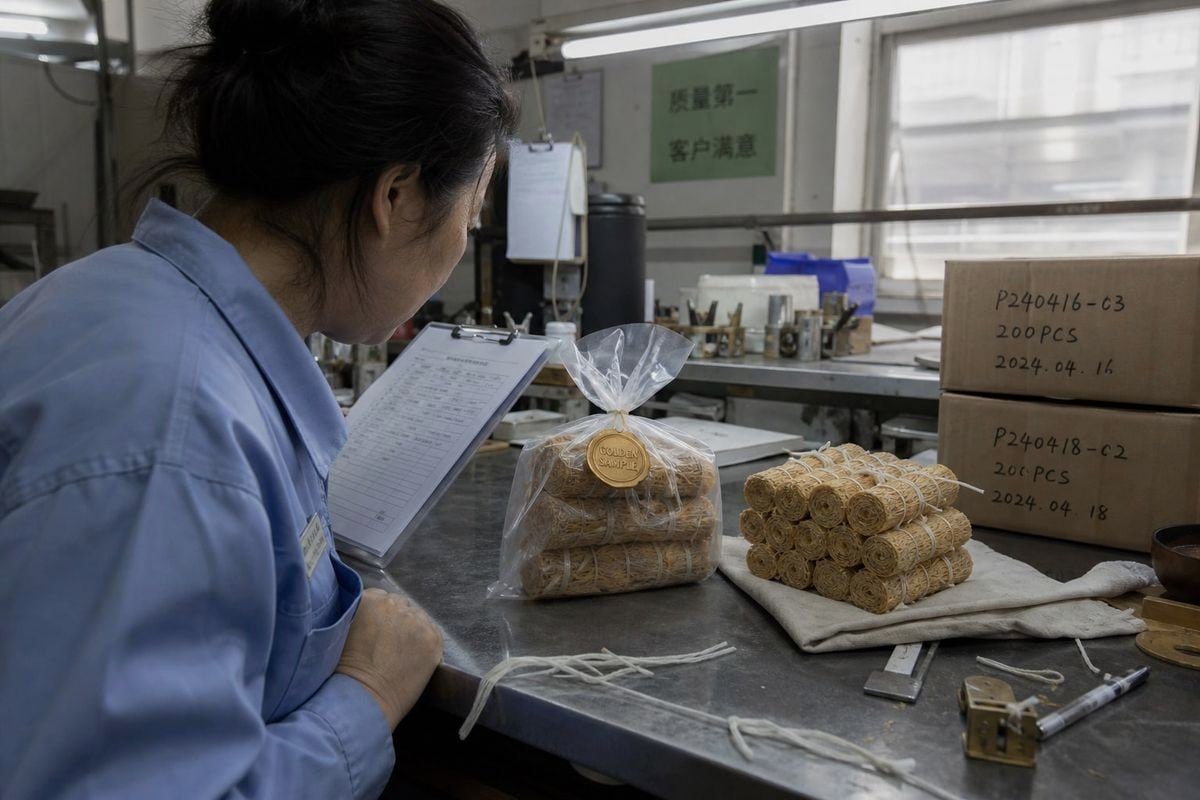
The gap between a sample and mass production usually comes from one thing: the sample was made differently. At our Ningbo facility, we pull trade show samples directly from regular production runs of our wax-dipped wood rolls and color-flame packets. A hand-finished prototype might look prettier, but it lies to the buyer. A production-line sample tells the truth.
Ask how the sample was made
Before you accept any sample, ask the supplier three direct questions. First, was this made on the same line as mass production? Second, are the raw materials — in our case, wood fiber, paraffin ratio, and wick — identical to what a bulk order would use? Third, who inspects the batch, and against what standard? A factory with real quality control inspection procedures 1 can answer in minutes. A trading company usually cannot.
Use a golden sample agreement
The golden sample is your legal and practical anchor. Both sides sign or stamp it, keep a sealed duplicate, and reference it in the purchase order. When we ship display units to a show, we photograph them next to the retained golden sample so the buyer sees the match.
| Verification step | What to request | Why it matters |
|---|---|---|
| Golden sample sign-off | Sealed duplicate kept at factory | Legal reference for disputes |
| Batch traceability | Production date and batch code | Proves line origin, not prototype |
| Pre-shipment inspection | Photo or third-party QC report | Catches defects before transit |
| Burn test record | Burn time and flame behavior data | Confirms functional performance |
For fire products specifically, insist on a documented burn test 2. We record burn time tolerances for every batch, because a fire starter that burns eight minutes at the booth but five minutes in retail packaging will destroy buyer trust instantly.
What lead time should I expect for custom display materials shipped from China?
Lead time management is where I see the most panic. Every spring, buyers contact our team three weeks before a major expo asking for custom counter displays — and physics does not negotiate.
Plan roughly 30 days total: 10–14 days for production of custom display materials, 7–10 days for express air transit, and a 5–7 day buffer for customs clearance holds. Sea freight requires 45–60 days. Book the exhibition logistics slot backward from the show's move-in date.
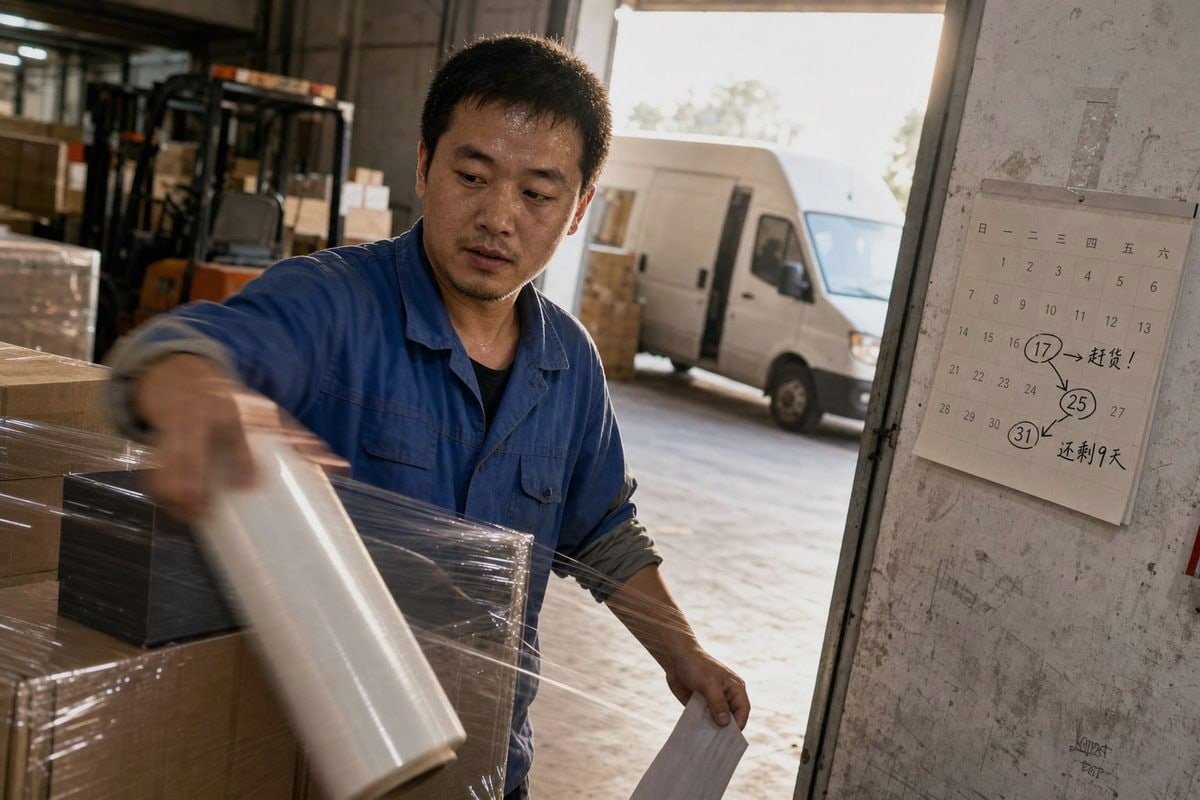
Working backward from the venue's move-in date is the only sane way to plan. We handle exhibition logistics for buyers heading to shows in the US, Germany, and the UK, and the calendar always looks tighter than expected once you add printing approvals and customs.
A realistic backward timeline
Here is the schedule I recommend to buyers ordering custom retail display boxes for our fire starters:
| Days before move-in | Milestone | Owner |
|---|---|---|
| 45–40 days | Final artwork and structural design approved | Buyer + factory |
| 40–26 days | Production of display units and samples | Factory |
| 26–24 days | Pre-shipment photo audit of crate packing | Factory |
| 24–14 days | Express air transit (DHL/FedEx) | Freight forwarding partner 3 |
| 14–7 days | Customs clearance buffer | Broker/forwarder |
| 7–0 days | Last-mile delivery to venue or hotel | Courier |
Practical choices that save the schedule
Express couriers beat sea freight for samples every time. You get real-time tracking and a simple last mile to the venue. For heavier booth hardware, consider a hybrid approach: ship durable frames from China early by consolidated shipping, but print large-format graphics locally near the venue to avoid fabric creasing in transit. Also separate durable structures from consumable giveaways on the shipping manifest — a minor classification error on giveaways should never stall your whole display shipment.
One more habit we enforce internally: a mandatory photo audit of internal crate packing before anything leaves our warehouse. Shock-absorption padding is cheap. A cracked display arriving two days before opening is not.
How do I ensure my branding and packaging stay consistent across samples and display units?
Private-label work taught us a hard lesson early on: a US client's brand orange printed slightly darker on the jar labels than on the display box, and the shelf looked wrong. Since then, we lock everything to codes.
Provide a brand asset pack with Pantone color codes, vector logo files, and a packaging dieline. Approve a printed pre-production sample of every touchpoint — sample, box, label, and display — under the same lighting, then require the supplier to reference approved codes on all future runs.
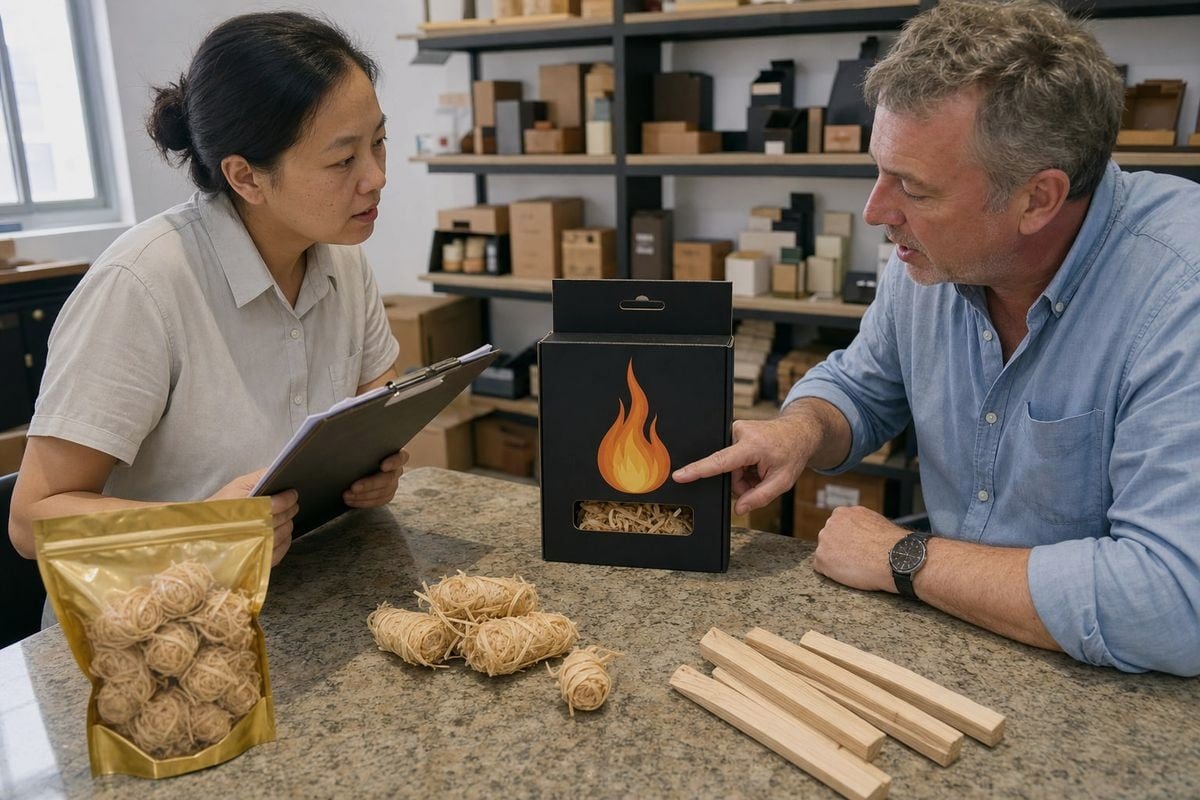
Branding consistency is not a design problem. It is a documentation problem. When our OEM team 4 builds a full retail program — kraft bags, jars, custom boxes, warning labels, barcodes — every element traces back to one approved asset pack. If the buyer sends a JPEG logo and a verbal description of "warm orange," inconsistency is guaranteed.
Build one master asset pack
Send your supplier a single folder containing vector logos, Pantone or CMYK values, approved fonts, barcode files, required warning-label text for your market, and packaging dielines. Ask for a Digital Asset Pack in return — including 3D files of display units where relevant — so you can virtually check booth layouts before anything ships.
Approve every physical touchpoint together
Never approve the retail box in March and the display unit in May from photos alone. Ask for one combined pre-production set: product, inner packaging, retail box, and counter display, photographed side by side. Screens distort color, so we also mail physical print proofs when a buyer's brand color is unforgiving.
Verify at three checkpoints
- Artwork stage: confirm color codes and dielines before printing plates are made.
- Pre-production stage: approve physical proofs of all packaging and marketing collateral together.
- Pre-shipment stage: request photos of the packed goods next to the approved proofs.
For fire products, remember that warning labels and compliance marks 5 are part of branding too. A missing CE mark or safety icon on the display unit looks careless to retail buyers walking past your booth — and they notice.
Which certifications and safety documents should accompany trade show samples for buyer trust?
Compliance paperwork opens doors at trade shows faster than pricing does. In our experience exporting fire starters and color-flame products to 30+ countries, serious buyers ask for test reports before they ask for a quote.
Bring ISO 9001 and BSCI certificates, CE documentation, third-party test reports from labs like SGS or Intertek, safety data sheets, and correct HS codes on commercial invoices. Mark sample shipments clearly, and use an ATA Carnet for reusable booth hardware entering temporarily.

For fire-related products, documentation is not decoration — it is the product. A purchasing manager from a large retail channel will not shortlist a fire starter without proof it was tested. We keep printed and digital copies of our ISO 9001, BSCI, CE, and SGS/Intertek reports at every booth, because the first question from a European distributor is almost always about compliance.
The document set buyers expect
| Document | Purpose | Format to bring |
|---|---|---|
| ISO 9001 certificate | Proves a managed quality system | Print + QR code to digital copy |
| BSCI audit report | Confirms ethical factory conditions | Digital, shared on request |
| CE documentation | Market access for the EU | Print, attached to spec sheets |
| SGS/Intertek test reports | Independent safety verification | Print + digital |
| Safety data sheet | Chemical composition and handling | Print, one per product family |
| Commercial invoice with HS codes 6 | Smooth customs clearance | Attached to every shipment |
Paperwork for the shipment itself
Mark commercial invoices for samples with "Samples: No Commercial Value" and include specific HS codes to reduce duty exposure and speed clearance. For reusable booth hardware, an ATA Carnet 7 lets you avoid paying VAT and import duties under temporary admission, provided the items are re-exported on time. Goods entering China for display can be duty-exempt if re-exported within six months, but this requires advance approval — coordinate it with your freight forwarding partner or the show organizer, not on arrival. If the supplier ships under Incoterms DDP, confirm in writing who handles brokerage, because "delivered" means nothing if the paperwork stalls at the border.
Conclusion
Trade show success is coordination, not luck. Lock the golden sample, plan 30 days of lead time, document your branding, and travel with certifications — then every booth conversation starts strong.
Footnotes
1. Authoritative Wikipedia overview of quality control and inspection processes. ↩︎
2. CPSC oversees consumer product safety standards relevant to flammable fire-starter product testing. ↩︎
3. WTO trade facilitation guidance covers the customs coordination role of freight forwarders. ↩︎
4. Defines the OEM manufacturing model referenced when describing the supplier's private-label production. ↩︎
5. Authoritative definition of product certification and compliance marks. ↩︎
6. Explains the Harmonized System used globally to classify goods for customs duties. ↩︎
7. Background on the international customs document allowing temporary duty-free import of goods. ↩︎



 English
  Spanish
  German
  French
  Arabic
  Portuguese
Join the Conversation