







Confirming wood fire starter packaging meets FBA requirements is where I see importers stumble most. One rejected shipment at an Amazon warehouse can erase an entire season's margin. After 17 years running our fire-starter production lines in Ningbo and shipping to 30+ countries, I've watched buyers lose thousands because a supplier skipped a suffocation warning label or shipped an oversized carton. The good news: a structured verification workflow prevents almost all of it.
To confirm wood fire starter packaging meets FBA requirements, verify four layers before shipment: hazmat classification with a Safety Data Sheet, unit-level FNSKU labeling and poly bag compliance, master carton size and weight limits, and documented pre-shipment inspection with photos, measurements, and test reports from your Chinese supplier.
Let me walk you through each layer in the order Amazon effectively checks them. Follow this sequence and your shipment should clear inbound receiving without delays or non-compliance fees.
What FBA packaging requirements should I check before ordering wood fire starters from China?
A German distributor once sent us a purchase order before asking a single packaging question. We stopped him. On our production floor, the packaging spec sheet gets reviewed before the wax-dipping line even starts.
Before ordering, check five FBA packaging requirements: product hazmat classification, scannable FNSKU barcodes on every unit, master cartons under 50 lb and 25 inches per side, approved cushioning materials only, and heat-treated ISPM 15 pallets if palletizing your shipment.
The first gate is classification, and this is where wood fire starters get tricky. A plain wood-wool roll and a wax-dipped roll are not the same product in Amazon's eyes. Our own firestarters are compressed wood fiber wrapped in paraffin 1 wax — roughly a 50/50 composition — and that paraffin content is exactly what triggers Amazon's hazmat review process. Some fire-starting products, like magnesium starters, are formally classified as Class 4.1 flammable solids 2. You must know where your product sits before you commit to packaging artwork, because hazmat status changes the labeling, the documentation, and sometimes the packaging structure itself.
The core FBA rules that always apply
Regardless of classification, these baseline rules apply to every inbound shipment:
| Requirement | Amazon Standard | Common Failure from China |
|---|---|---|
| Carton weight | 50 lb maximum | Dense wax-wood products overpacked to 60+ lb |
| Carton dimensions | 25 inches max on any side | Oversized "economy" export cartons |
| Barcodes | Scannable FNSKU on flat surface | FNSKU printed on curved or textured film |
| Old barcodes | Covered or removed | Factory EAN codes left exposed |
| Cushioning | Bubble wrap, air pillows, foam sheeting, full paper sheets | Packing peanuts and shredded paper |
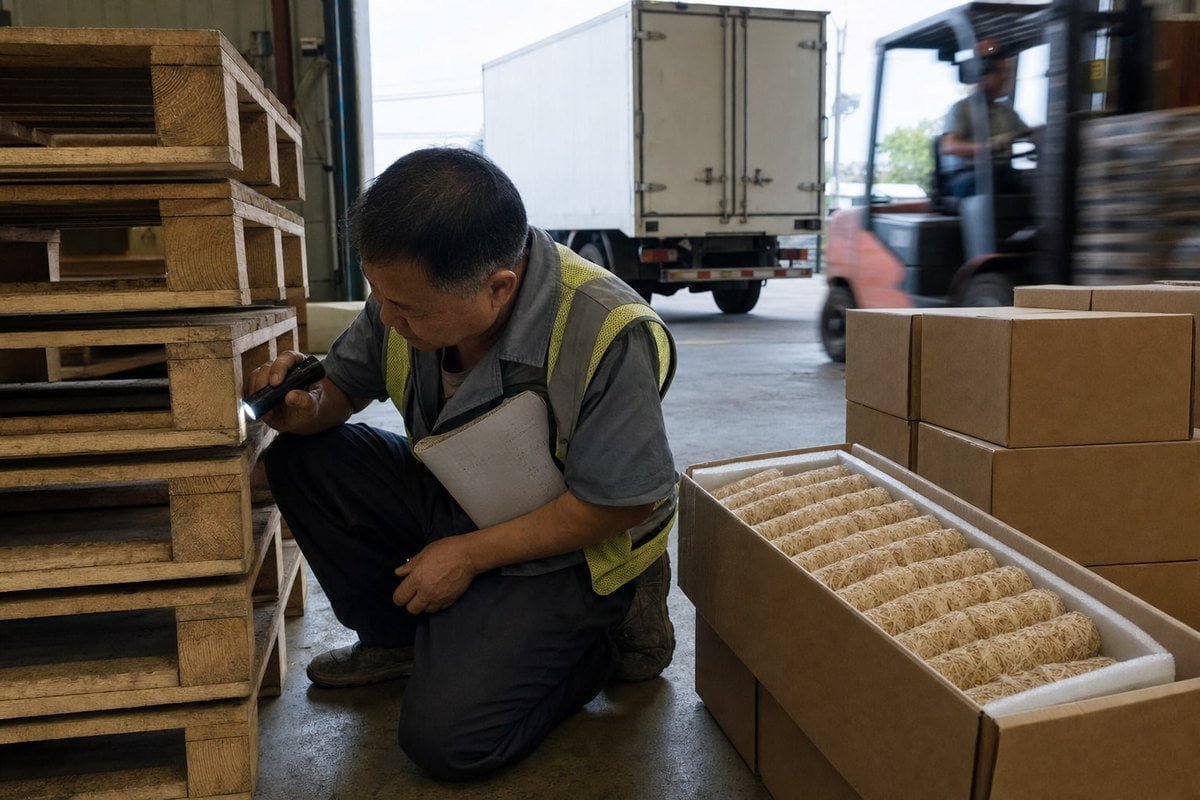
Two more items deserve attention. First, every unit needs a permanent country-of-origin mark — "Made in China" — to satisfy U.S. Customs, not just Amazon. Second, if your freight forwarder palletizes in China, the wood pallets must carry the ISPM 15 heat-treatment stamp. We've seen shipments held at port over an unstamped pallet, which is a painful way to lose two weeks. Build all of this into your quality control checklist before the deposit leaves your account.
How can I verify my supplier's packaging and labeling meet Amazon's compliance standards?
There's a trade-off I discuss with almost every new FBA client: verification costs time upfront, but skipping it costs far more later. When we prepare private-label packaging in our Ningbo facility, we send label proofs before printing a single box — because reprinting 10,000 cartons is nobody's idea of fun.
Verify compliance by requiring label mockups before printing, dated photos of actual packed units, measured carton dimensions and weights, barcode scan tests, and a third-party pre-shipment inspection. Never accept verbal supplier assurances; every claim should be backed by documents or images you can audit.
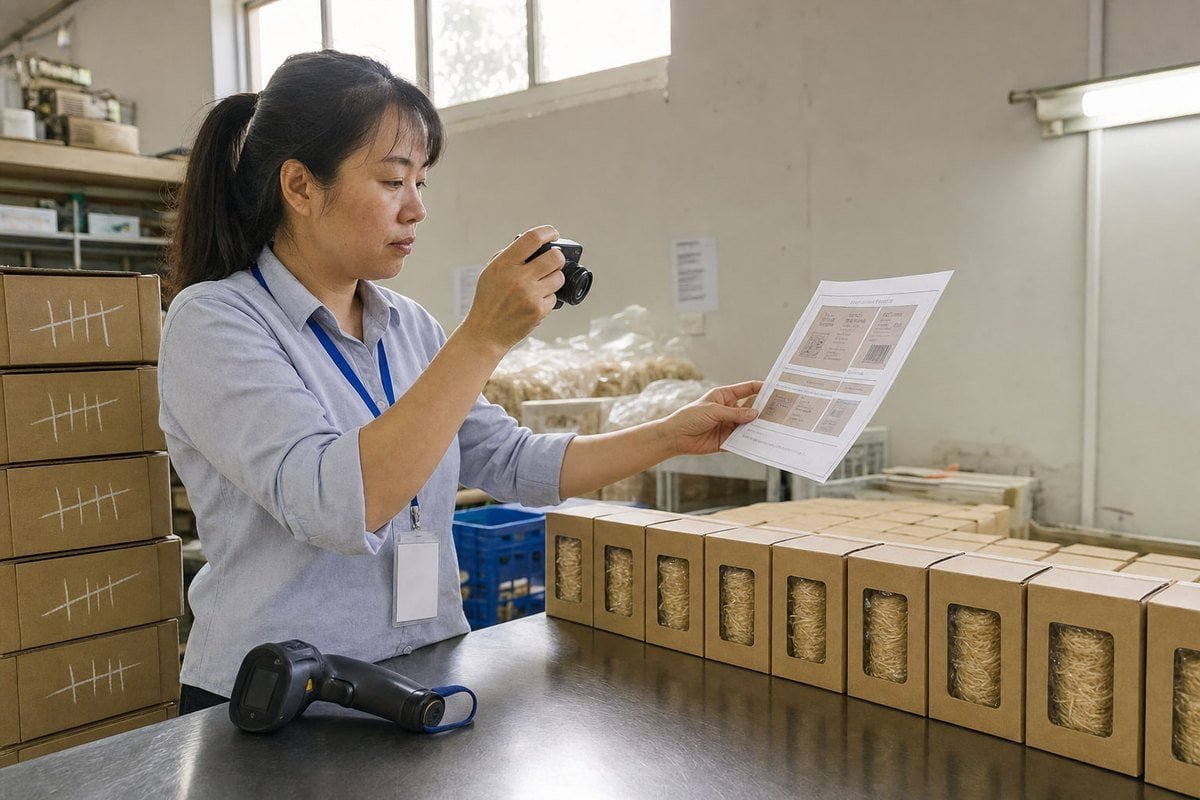
Amazon compliance today is documentation-driven. The sellers who sail through inbound receiving are the ones holding a paper trail. Here is the verification sequence we recommend, based on how we run OEM projects for US and European importers.
A five-step verification workflow
- Approve artwork digitally first. Review the retail box layout, the Amazon FNSKU labeling position, the suffocation warning text if poly bags are used, and the composition statement. Our retail boxes for wax fire starters print the wood-fiber and paraffin percentages right on the panel — Amazon and customs both want that transparency.
- Request a physical pre-production sample. Scan the FNSKU yourself with the Amazon Seller app. If it scans on your desk, it will scan in the warehouse.
- Demand packed-unit photos during production. Ask for images of the unit label, the inner packing, and the sealed master carton with shipping labels applied.
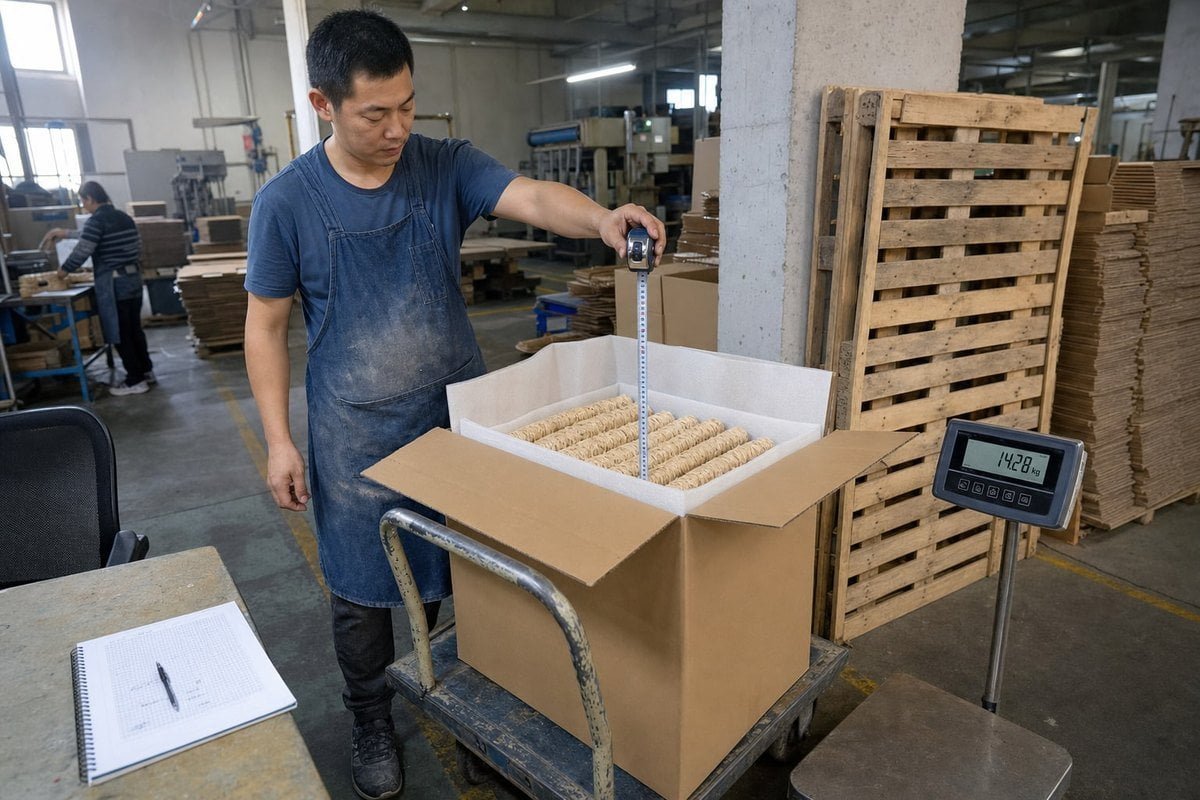
- Get measured carton data. The factory should weigh and measure five random cartons, not quote the spec sheet. Wax-dipped wood rolls are denser than they look, and actual weights drift upward.
- Book a pre-shipment inspection. A third-party inspector checks label placement, barcode scannability, carton integrity, and a basic drop test. For fibrous, wax-coated products, we also recommend the inspector confirm units survive a one-meter drop without the retail box splitting.
What "proof" actually looks like
| Supplier Claim | Acceptable Proof |
|---|---|
| "Labels are FNSKU compliant" | Scan-test video plus flat-surface placement photo |
| "Cartons meet Amazon limits" | Scale and tape-measure photos of random cartons |
| "Poly bags have warnings" | Close-up photo showing warning font size and thickness spec |
| "Packaging survives transit" | Drop-test video or inspection report |
One more practical point: verify that no readable factory barcode remains visible anywhere on the unit or carton. A stray EAN code confuses Amazon's scanners and causes receiving errors that take weeks to untangle.
What certifications and test reports should I request to avoid FBA rejections?
A US camping brand once asked us for "whatever paperwork you have." That's the wrong question. After exporting fire products through SGS and Intertek testing cycles for years, I can tell you the paperwork must match the product's risk profile — no more, no less.
Request a Safety Data Sheet for hazmat screening, third-party test reports from labs like SGS or Intertek, the supplier's ISO 9001 certificate, composition documentation for the wax and wood content, and ISPM 15 pallet treatment certificates. The SDS is mandatory for Amazon's Dangerous Goods review.
The single most important document is the Safety Data Sheet 3 (SDS). Amazon uses it to run your listing through the hazmat review process, and you cannot ship inventory until that review clears. If your wood fire starters contain paraffin, wax, or any accelerant, expect Amazon to scrutinize the flammable solids classification question. A well-prepared SDS from your manufacturer — with accurate composition percentages, flash point data 4, and transport classification — usually resolves the review quickly. A vague or copied SDS gets your ASIN stuck in limbo.
The document stack, ranked by importance
| Document | Who Issues It | Why FBA Cares |
|---|---|---|
| Safety Data Sheet (SDS) | Manufacturer, per GHS format | Required for Amazon Dangerous Goods review |
| Third-party test report | SGS, Intertek, or equivalent lab | Proves product safety claims are independently verified |
| ISO 9001 5 certificate | Accredited certification body | Signals consistent batch-to-batch quality control |
| Composition declaration | Manufacturer | Confirms wood/wax ratio; supports HTS classification |
| ISPM 15 certificate | Treatment facility | Prevents pallet rejection at the destination port |
| BSCI audit report | Audit body | Required by many large retail sourcing channels |
Remember two legal realities. First, you — not your Chinese factory — are the Importer of Record 6, so HTS code 7 accuracy and any EPA composite-wood considerations land on your desk. Second, certificates can be forged. Ask for the report number and verify it directly with the issuing lab. At our factory, we hand over report numbers without being asked, because serious buyers always check. Treat a supplier's reluctance to share verifiable documents as the red flag it is.
How do I work with my manufacturer to customize packaging that passes Amazon inspection?
The lesson that shaped how we run OEM projects came from an early wax torch order: the buyer approved beautiful artwork, but nobody had stress-tested the box under stacked container weight. The cartons arrived crushed. Since then, packaging engineering comes before packaging design on every project we take.
Work with your manufacturer in staged approvals: agree on packaging specs in writing, review structural samples before artwork, mandate double-wall ECT-44 master cartons for dense wax products, add heat-sealed inner barriers against wax seepage, and sign off on a golden sample that anchors the pre-shipment inspection.

Customization is where a genuine factory earns its keep. When we develop private-label packaging for fire starters, we treat Amazon's rules as design inputs, not afterthoughts. Here is how to structure the collaboration.
Engineer the structure before the branding
Wood fire starters are deceptively heavy. A master carton of 100-piece retail boxes concentrates real weight, and standard single-wall Chinese export cartons often collapse under container stack-loading. Specify double-wall corrugated board — ECT-44 or higher — for master carton specifications, and confirm the burst rating in writing. For wax-infused rolls like ours, also mandate a heat-sealed inner barrier film. Paraffin can migrate in summer container heat, and a "greasy box" defect can get inventory flagged as unsellable at the fulfillment center.
Decide the unit packaging format deliberately
You have three realistic options, each with compliance consequences:
- Retail box. The strongest choice. A rigid printed box supports the Ships in Product Packaging (SIPP) program, which cuts fulfillment fees by avoiding an Amazon overbox — but only if it survives last-mile handling.
- Poly bag. Workable, but poly bag requirements apply: minimum 1.5 mil thickness, and suffocation warning labels on any bag with an opening of 5 inches or more.
- Kraft or FSC-certified paper packaging. Increasingly popular with our European buyers. It matches the natural positioning of wood products and sidesteps suffocation warning requirements entirely.
Lock quality in with a golden sample
Before mass production, approve one complete packed unit — product, label, retail box, master carton — as the golden sample. Your pre-shipment inspection then compares production against it, item by item. Also ask your factory to run a moisture content test 8 on the wood fiber before sealing; wood shipped through humid South China Sea transit can develop mold if sealed too wet, and mold complaints will sink a new listing fast. One final note on timing: Amazon has wound down its in-house prep and labeling services, so everything must arrive FBA-ready. There is no safety net at the warehouse anymore — your factory in China is now your prep center.
Conclusion
Confirming wood fire starter packaging meets FBA requirements comes down to four questions: Is it hazmat? Are units labeled correctly? Do cartons comply? Can your supplier prove it all?
Get the SDS early, approve a golden sample, demand documented proof at every stage, and book a pre-shipment inspection before goods leave China. I've spent 17 years helping importers turn these steps into routine — and once the workflow is in place, FBA rejections stop being a risk and start being someone else's problem. Choose a factory that treats compliance as the starting point, not an upcharge, and your fire starters will move from container to customer without a hitch.
Footnotes
1. Background on paraffin wax composition relevant to hazmat classification of fire starters. ↩︎
2. Explains flammable solid classification relevant to hazmat wood fire starter shipments. ↩


 English
  Spanish
  German
  French
  Arabic
  Portuguese
Join the Conversation