
Confirming whether Magic Fire Powder is hazardous for transport is a question our export team answers weekly. Buyers fear [customs holds](https://sunrichfire.com/how-avoid-customs-delays-importing-wood-fire-starters/), fines, and rejected shipments—so let me walk you through it.
To confirm if Magic Fire Powder is hazardous for transport, check Section 14 of the manufacturer's Safety Data Sheet. It lists any UN Number classification, hazard class, and Packing Group assignment. If it states "not regulated for transport," the exact formulation ships as ordinary cargo.
That is the short answer. But the details matter, because two products with the same trade name can have completely different classifications. Let me break the process down step by step.
What Documents Should I Request to Verify Magic Fire Powder's Transport Classification?
A German distributor once emailed our office in a panic. His freight forwarder had asked for "hazmat papers" on a color-flame order, and he had nothing on file. We fixed it in a day—because we keep the right documents ready.
Request the current Safety Data Sheet with Section 14 (Transport Information), a composition disclosure or ingredient statement, third-party lab test reports, and a written non-hazardous transport declaration from the manufacturer. Together, these documents verify whether Magic Fire Powder is regulated as dangerous goods.

The Safety Data Sheet 1 is the anchor document, and both U.S. DOT and FAA guidance point shippers there first. But an SDS is only useful if it is current, product-specific, and complete. In our 17+ years exporting color-flame packets to the US, Germany, and beyond, we have seen buyers get burned by generic SDS files copied from another supplier's product. The formulation on the sheet must match the formulation in the box.
The Document Checklist
Here is the package I recommend every purchasing manager collect before booking freight:
| Document | What It Proves | Red Flags to Watch |
|---|---|---|
| Safety Data Sheet (all 16 sections) | Chemical identity and transport status | Missing revision date, generic product name |
| Section 14 detail | UN Number 2, Proper Shipping Name, class, Packing Group | Blank fields or "see supplier" |
| SGS or Intertek test report | Independent verification of composition | Report older than 2–3 years |
| Non-DG transport statement | Written confirmation for the forwarder | Verbal-only assurances |
| Composition disclosure | Whether classification covers the mixture or one ingredient | Ingredient-level classification presented as mixture-level |
One subtle point: some flame-colorant SDS files classify a single regulated ingredient—such as a copper compound—rather than the finished mixture. That distinction changes everything for hazardous materials compliance 3. Ask your supplier directly: does this classification apply to the mixture as sold, or to a raw ingredient? Our compliance team documents both, because a mixture can fall below regulatory thresholds even when one ingredient, in pure form, would be regulated. If the SDS is missing, outdated, or vague, do not guess. Ask for a fresh classification review before you ship.
Does Magic Fire Powder Require UN Testing or a Dangerous Goods Declaration for Shipping?
Weighing testing costs against shipping risk is a trade-off we discuss with nearly every new B2B client. Skipping a lab review saves money upfront—until one held container erases the savings ten times over.
Magic Fire Powder requires UN testing only if its composition or SDS is unclear, or if it contains reactive metals or oxidizers. A Dangerous Goods Declaration is mandatory only when the product carries a UN number; a verified non-hazardous formulation needs neither for standard freight.

Whether testing is needed comes down to what is actually in the packet. Regulators evaluate powders against defined criteria, not marketing names. OSHA guidance notes that powders designed to produce a pyrotechnic effect may be evaluated as Class 1 explosives 4, using tests for impact sensitivity, friction sensitivity, and burning behavior. UN recommendations for solids apply a burning-rate test: if a powder burns in under 45 seconds or faster than 2.2 mm/s over the test length, it can receive a flammable solid classification under Division 4.1.
When Testing Becomes Necessary
From our production experience in Liuyang and Ningbo, three situations trigger a formal classification review:
- The SDS is missing, generic, or contradicts the ingredient list.
- The formulation contains metal powders (magnesium, aluminum), strong oxidizers, or water-reactive salts.
- A carrier or destination authority challenges the non-regulated status.
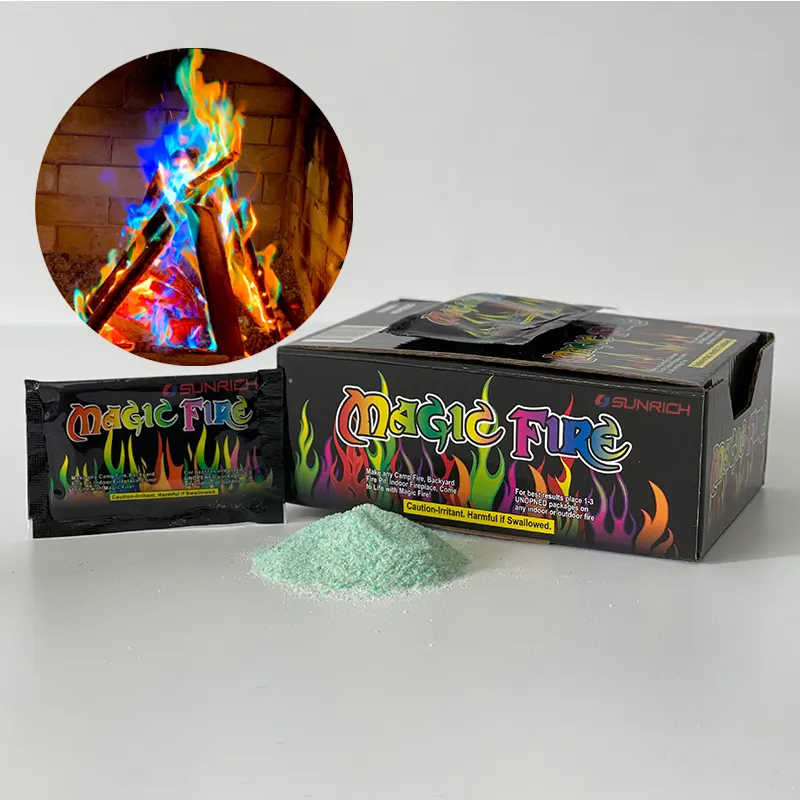
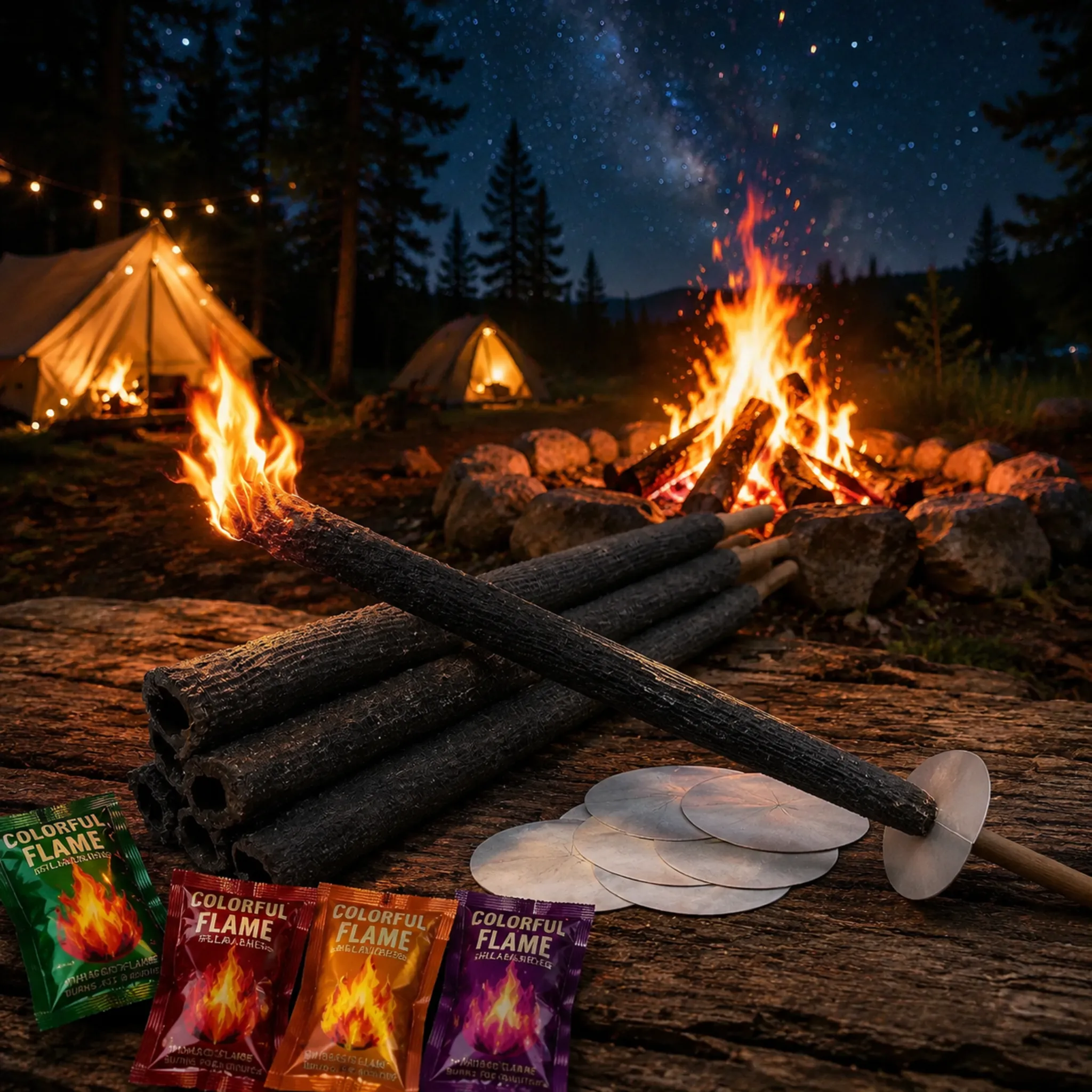
Our own Magic Fire color-flame packets use eco-friendly colorant salts without harmful chemicals, and we back that with SGS and Intertek test reports. That is the difference between claiming "not regulated" and proving it.
Declaration Requirements by Outcome
| Classification Outcome | Dangerous Goods Declaration | Typical Paperwork |
|---|---|---|
| Not regulated for transport | Not required | SDS plus non-DG statement |
| Limited Quantity shipping eligible | Usually simplified or waived | Ltd Qty marking, reduced documentation |
| Excepted Quantities (E1/E2) | Not required | EQ mark, quantity limits per package |
| Fully regulated (UN number assigned) | Required | DGD, Proper Shipping Name, labels, trained shipper |
If your product genuinely carries a UN number, a Dangerous Goods Declaration is non-negotiable, and only a trained, certified person may sign it. If it does not, keep the written proof close—forwarders ask for it constantly.
How Does Packaging Format Affect the Hazard Classification of Magic Fire Powder?
Packaging decisions come up in almost every OEM project we quote. A client in the Netherlands once switched from bulk jars to sealed sachets mid-project, and we had to re-check the entire shipping paperwork before the order left our line.
Packaging can shift Magic Fire Powder between substance and article classification, and it determines eligibility for Limited Quantity shipping or Excepted Quantities relief. Sealed throw-in packets may be treated as pyrotechnic articles, while loose powder is assessed as a chemical mixture.

Packaging does not change chemistry, but it can change the regulatory pathway. Regulators distinguish between a substance—loose powder assessed as a chemical mixture—and an article, where the chemical is sealed inside a non-removable unit designed to be used as a whole. A throw-in foil sachet, like the ones we produce in plastic bag, kraft bag, and jar formats, sits right on this boundary. Some jurisdictions treat sealed single-use flame packets differently from bulk powder, so confirm the interpretation for your destination market before printing packaging.
Quantity-Based Relief Provisions
Even when a formulation is regulated, small pack sizes open exemption doors. Limited Quantity shipping under 49 CFR 6 or IATA tables allows reduced marking and paperwork when individual inner packagings stay below defined weight thresholds. Excepted Quantities codes such as E1 or E2 go further, allowing very small volumes to move without full hazmat documentation. For a consumer sachet holding a few grams of colorant, these provisions are often decisive.
Practical Packaging Considerations
- Individual sachet weight determines whether Ltd Qty thresholds apply.
- Retail display boxes must carry warning labels matching the destination market—something we customize on every private-label run.
- Outer carton counts affect total-package limits under Excepted Quantities rules.
- Air freight under IATA shipping regulations imposes tighter limits than sea or road; carriers can also refuse items that ground transport permits.
- Moisture-proof foil sealing prevents caking, which matters for burning-behavior consistency between the tested sample and the shipped product.
One caution from our export side: do not assume packaging relief without checking mode of transport. ADR road rules, the IMDG Code 7 for sea, and IATA rules for air each define their own thresholds, and they do not always align.
Which Certifications Confirm My Supplier's Magic Fire Powder Is Compliant for International Freight?
A lesson I learned early in our export history: a beautiful sample means nothing to a customs officer. Only paperwork from recognized bodies moves cargo through ports without questions.
Look for third-party test reports from SGS or Intertek, an ISO 9001 quality certificate, CE marking where applicable, and a current product-specific SDS. Together, these confirm the supplier's Magic Fire Powder meets hazardous materials compliance standards for international freight.

Certifications serve two different purposes, and smart buyers check both. Product-level documents prove what is in the packet. System-level documents prove the factory can reproduce that formulation batch after batch. A supplier can show a clean test report from one golden sample and still ship inconsistent goods. That is why our clients audit both layers before signing annual contracts, and why we maintain strict batch-to-batch quality control so the first sample reliably reflects mass production.
Certification Layers Explained
| Certification Type | Example | What It Confirms for Freight |
|---|---|---|
| Independent lab testing | SGS, Intertek reports | Actual composition and transport status of the mixture |
| Quality management | ISO 9001 | Consistent formulation across production batches |
| Social compliance | BSCI | Factory audit legitimacy for retail sourcing channels |
| Product safety marking | CE (where applicable) | Conformity for European consumer markets |
| Transport documentation | SDS, non-DG statement | Direct evidence for forwarders and carriers |
Matching Documents to Transport Mode
Different freight modes trust different papers. Sea carriers reference the IMDG Code and will check Marine Pollutant criteria—copper-based colorants can trigger the UN3077 environmentally hazardous designation and the fish-and-tree mark even when a product is not flammable. Air carriers apply IATA rules and often demand the strictest documentation. Ground transport in North America follows DOT and Canadian TDG frameworks, which use their own schedules and exemptions.
My practical advice: ask your supplier for the full compliance file before the first trial order, not after booking. When we onboard a new distributor, we send SDS files, lab reports, and certificates upfront. Any factory that hesitates on this request is telling you something important.
Conclusion
Confusion over Magic Fire Powder's transport status causes delayed containers and lost sales. The fix is simple: verify Section 14, demand test reports, and partner with a certified factory.
Footnotes
1. Official OSHA landing page for the Hazard Communication Standard and Safety Data Sheet requirements. ↩︎
2. Background on UN numbers used to classify dangerous goods for international transport. ↩︎
3. PHMSA's hazmat program page details U.S. federal compliance standards for hazardous materials shipping. ↩︎
4. Explains dangerous goods classification categories referenced when evaluating pyrotechnic powders. ↩︎
5. IATA's official Dangerous Goods Regulations page governs air freight documentation requirements. ↩︎
6. eCFR hosts the official U.S. federal hazardous materials transport regulations under Title 49. ↩︎
7. IMO's official page governing the International Maritime Dangerous Goods Code for sea freight. ↩︎



 English
 Spanish
 German
 French
 Arabic
 Portuguese
Join the Conversation