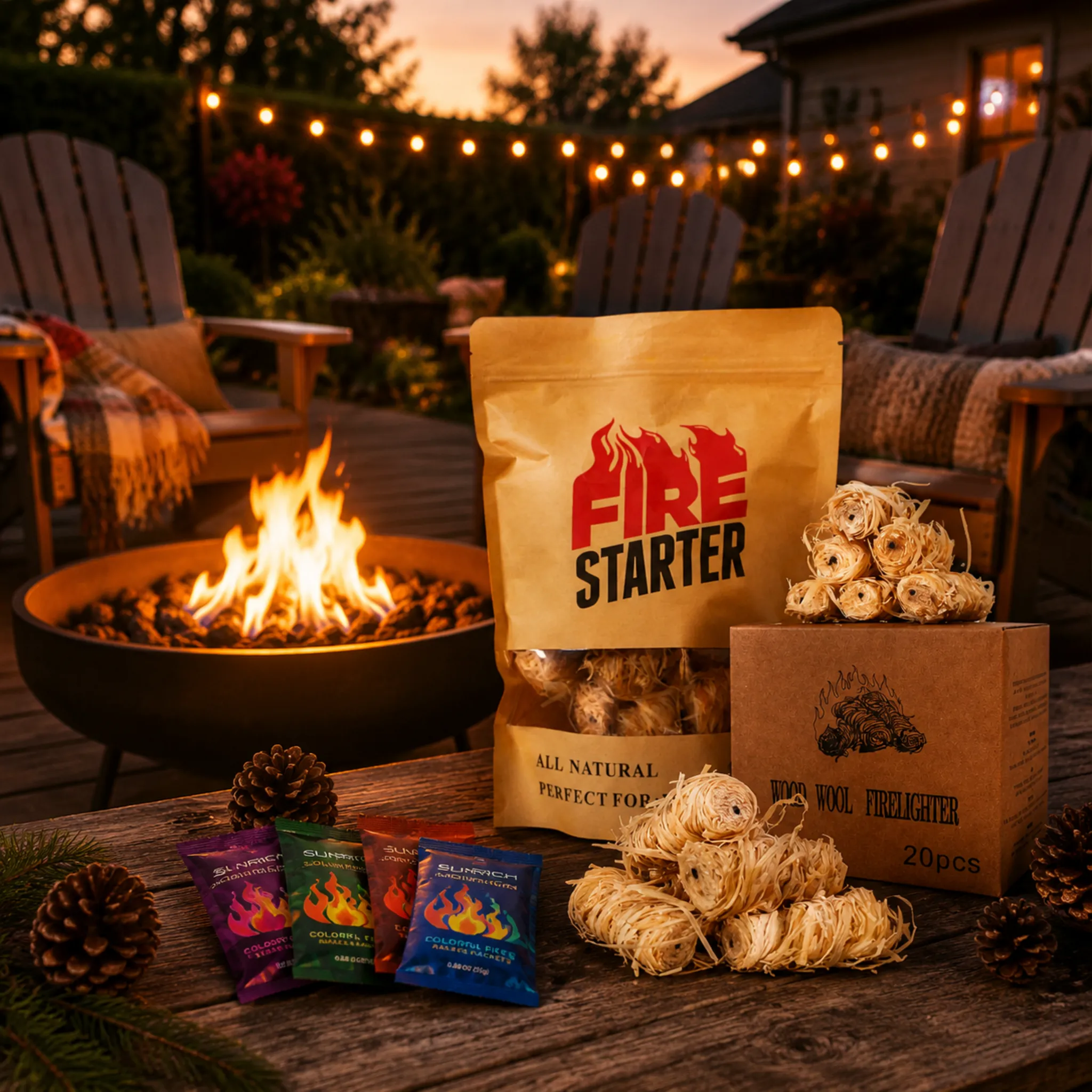
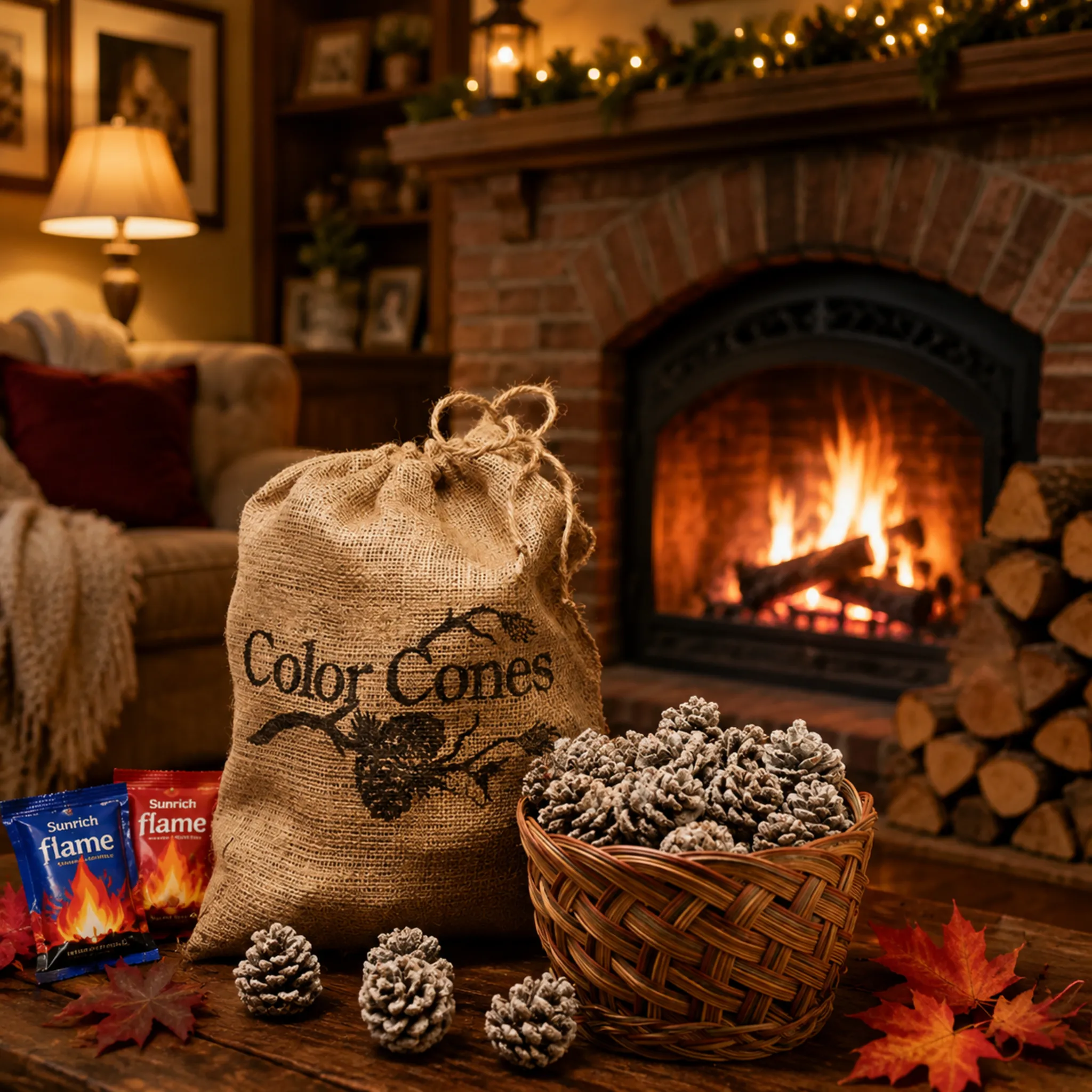


Balancing packaging vs net weight for Magic Fire Powder decides your FBA margin FNSKU label 1. On our production line, we have watched a few extra millimeters of packaging quietly destroy a buyer's profit.
To balance packaging vs net weight for Magic Fire Powder, keep the packaged sachet under 0.75 inches thick and under 16 ounces total, use flat foil pouches instead of jars, and size net weight so packaging tare never pushes the unit past a Small Standard FBA tier threshold.
Amazon charges you on the final packaged unit, not the powder inside puncture resistance 2. That single fact changes how you should design sachets, multi-packs, and retail boxes. Let me walk you through each decision, step by step.
What Packaging Formats Give Me the Best Dimensional Weight Savings for Magic Fire Powder Shipments?
A few years back, a US camping brand asked us to move their flame colorant packets from plastic jars to flat sachets. Their FBA fulfillment fee dropped by nearly a third overnight.
Flat, heat-sealed foil sachets deliver the best dimensional weight savings for Magic Fire Powder because they lay under 0.75 inches thick, qualify for the Small Standard tier, and eliminate the dead air that jars and rigid boxes carry into Amazon's dimensional weight formula.

Amazon calculates dimensional weight 3 as length × width × height divided by 139. Your billable weight is the greater of actual weight or dimensional weight. For a light powder product, that "greater of" rule is the trap. The powder itself is dense enough, but the moment you wrap it in a bulky container, the dimensions take over and inflate your Amazon fulfillment costs.
Here is how the common formats compare for a typical 25g flame colorant packet, based on what we produce for FBA sellers across the US and Europe:
| Packaging Format | Typical Packed Height | Dead Air Risk | FBA Size Tier Likely | Dimensional Weight Risk |
|---|---|---|---|---|
| Flat foil sachet | 0.3–0.5 in | Very low | Small Standard | Very low |
| Kraft stand-up pouch | 1.5–2.5 in | Moderate | Large Standard | Moderate |
| Plastic jar | 3–4 in | High | Large Standard | High |
| Retail flip-top box (12 sachets) | 2–3 in | High if loose | Large Standard | Moderate–High |
Why Flat Beats Round Every Time
A jar is mostly headspace. That empty air still gets measured. A sachet, by contrast, conforms to the powder inside. On our lines in Ningbo, we heat-seal foil pouches so the crystalline powder settles flat, and we spec the seal margins tight so the finished packet stays well under the Small Standard height limit.
Watch the Multi-Pack Puff
One thing our engineers flag often: when you bundle multiple sachets into a poly bag packaging sleeve, trapped air between packets can push total height past 0.75 inches. We recommend vacuum-compression or a shingled sachet layout inside the outer bag. Small detail, real money. Re-measure the complete packed unit after every change, because tier boundaries are hard cutoffs, not gradients.
How Do I Choose the Right Net Weight Per Unit to Avoid FBA Oversize and Bulky Fees?
The trade-off I weigh most often with buyers is simple: more powder per unit means better perceived value, but it also means heavier shipping weight and a possible tier jump.
Choose a net weight that keeps the total packaged weight — powder, foil pouch, FNSKU label, and poly bag — safely below 16 ounces for Small Standard eligibility. In practice, calibrate net fill around 15.0 to 15.3 ounces to leave room for packaging tare weight.

Net weight is what your customer buys. Billable packaged weight is what Amazon charges you for. Confusing the two is one of the most common mistakes we see when new FBA buyers send us a spec sheet. They quote us a 16 oz net fill, forgetting that the foil sachet, label, and outer bag add tare — and the finished unit lands just over the 16-ounce Small Standard cap. The fee difference at that boundary is sharp, and it repeats on every single order.
A Simple Unit Weight Optimization Process
Here is the process we run with buyers before we lock a fill weight:
- Decide the target FBA size tier first, not the fill weight.
- Weigh a complete dummy unit: pouch, seal, label, insert, and tape.
- Subtract that packaging tare weight from the tier ceiling.
- Set net fill 3–5% below the remainder as a safety buffer for scale variance.
- Verify with a batch sample, because powder density varies slightly lot to lot.
Our batch-to-batch quality control 4 matters here. If fill weight drifts between production runs, a unit that measured safe in sampling can cross the line in mass production. That is exactly why we hold tight fill tolerances on every run — the first sample must reflect what ships at scale.
Standard Size vs Oversize: Know Your Ceilings
| Threshold to Watch | Why It Matters for Powder Products |
|---|---|
| 16 oz packaged weight | Upper limit for Small Standard; most single sachets should sit far below this |
| 0.75 in packed height | The Small Standard thickness cap; multi-packs are the usual offenders |
| Standard size vs oversize dimension limits | A large retail display box of sachets can accidentally tip into oversize |
| Low-Price FBA threshold (under $10) | Single sachets priced low may qualify for a discounted fulfillment fee |
Run your profit margin calculation 5 at each tier, not just at your current spec. Often, shaving one ounce of fill saves more per year than any negotiation on unit cost ever will.
Can I Reduce Packaging Materials Without Compromising Compliance and Safety Labeling Requirements?
A German distributor once asked us to strip the sachet down to a bare minimum to save weight. We said yes to thinner — but no to removing the barrier layer or the caution panel.
Yes, you can reduce packaging materials by switching to thinner high-barrier foil and tighter seal margins, but you must retain moisture protection, puncture resistance, and all required warning labels, caution text, and compliance markings, since these are non-negotiable for flame colorant products.
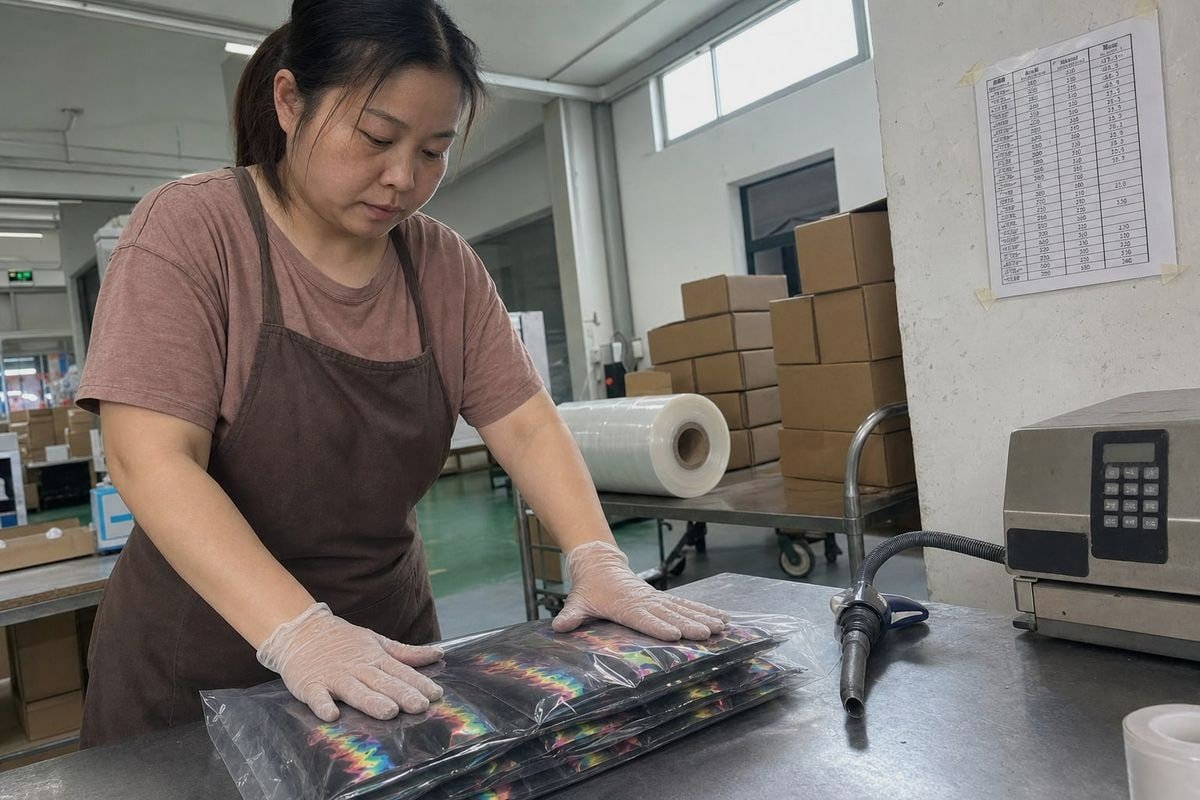
Some sellers push packaging reduction too aggressively. I understand the instinct — every gram of tare is billable shipping weight. But a color-flame powder is not a t-shirt. It needs containment, moisture barrier 6, and clear safety communication. A leaked sachet at an Amazon fulfillment center can trigger unsellable inventory, disposal fees, and account health issues that dwarf any fee savings. So the real question is not "how little packaging can I use?" It is "what is the lightest structure that still passes receiving, protects the powder, and satisfies regulators?"
What You Can Safely Cut
In our seventeen-plus years producing Magic Fire color-flame packets, these reductions have proven safe:
- Move from rigid jars to flexible foil sachets — the biggest single saving.
- Reduce seal margins from wide decorative borders to functional widths.
- Drop paper inserts and print instructions directly on the pouch.
- Replace heavy cartons with lighter board grades for retail boxes.
- Remove loose void fill by sizing the outer pack to the sachets exactly.
What You Must Never Cut
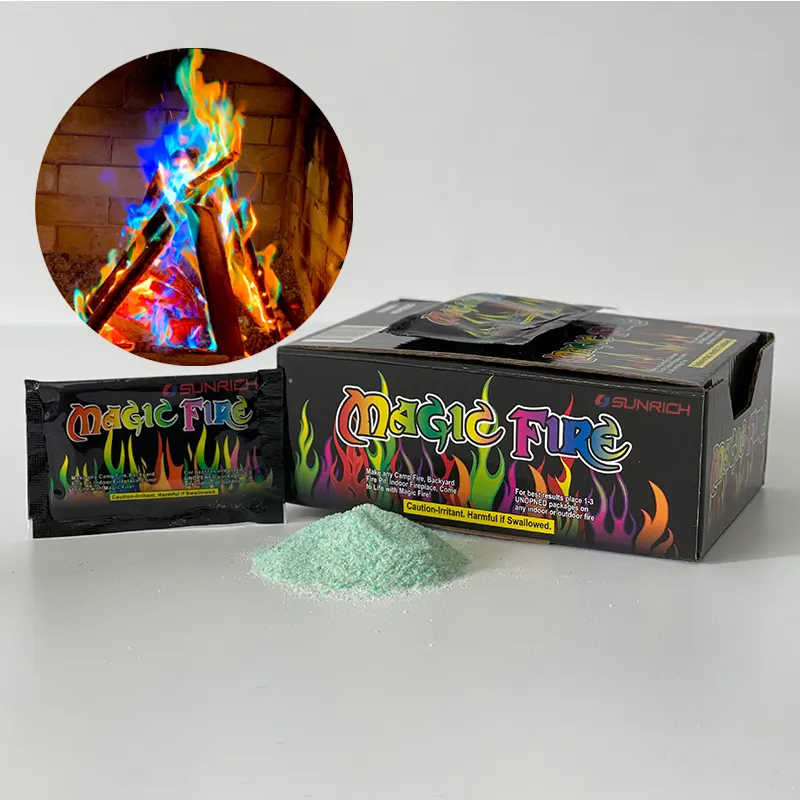
Our products are made from eco-friendly materials 7 with no harmful chemicals, and they carry CE marking 8 with SGS and Intertek test reports. Even so, every unit still needs its caution label, usage instructions, and market-specific warning text. US and EU buyers treat this as a hard requirement, and so do we. The yellow caution panel on our sachets weighs essentially nothing. Removing it saves you zero meaningful fee money and exposes you to listing suppression, returns, and liability. Keep the compliance layer intact, and cut weight everywhere else.
One more practical note: thinner foil must still be puncture-resistant. Crystalline powder has sharp granules. We test film gauges against abrasion before approving any material change, because a downgrade that leaks in transit erases every cent of savings.
What Private-Label Packaging Options Help Me Optimize Both Shelf Appeal and FBA Shipping Costs?
When buyers visit our Liuyang headquarters, the conversation usually starts with branding and ends with freight math. The two are not in conflict if you design them together.
The best private-label options are custom-printed flat foil sachets for single units, shingled multi-sachet kraft pouches for value packs, and SIPP-certified retail boxes that ship in their own packaging — each combining strong branding with Small Standard tiering and minimal dimensional weight.

Shelf appeal and shipping cost pull in different directions only when the packaging is designed as an afterthought. Our OEM and ODM team designs both at once: the artwork, the barcode placement, the warning labels, and the exact packed dimensions that determine your FBA size tiers. Here is how the main private-label formats stack up:
| Private-Label Format | Shelf Appeal | FBA Cost Profile | Best For |
|---|---|---|---|
| Glossy printed foil sachet | High — vibrant flame graphics pop | Lowest; flat profile, Small Standard | Single-unit low-price listings |
| Kraft resealable pouch (multi-sachet) | High — natural outdoor aesthetic | Low if sachets are shingled flat | Camping and BBQ multi-packs |
| Flip-top display box | Highest for retail shelves | Moderate; watch box height | Bundles and gift-oriented listings |
| SIPP-ready mailer-style box | Moderate–High | Low; ships without Amazon's box | Sellers enrolled in Ships in Product Packaging |
Design Moves That Pay for Themselves
The Ships in Product Packaging program deserves special attention. If your retail box is durable enough to ship as-is, Amazon skips its own outer box, and you avoid that added weight and dimension entirely. We build SIPP-capable boxes with reinforced board and tamper-evident closures, printed with your brand, barcode, and required markings — one structure serving both shelf and shipment.
For multi-packs, bundling spreads the per-order fulfillment fee across more net weight, which improves your effective cost per ounce. But only if the bundle stays inside a favorable tier. A 12-sachet pack laid flat in a slim printed pouch often ships cheaper per unit than four 3-packs. We model these scenarios with buyers before tooling: current packaging, lighter packaging, smaller packaging. Then we compare fee savings against damage risk and prep cost. The winner is rarely the prettiest or the lightest option. It is the one that lands in the right tier while still looking sharp on a product page and surviving the journey.
Conclusion
The cheapest FBA package is not the lightest one — it is the compliant, compact unit that lands in the best fee tier while protecting your Magic Fire Powder.
Every ounce of tare and every millimeter of dead air is a recurring tax on your listings. Left unmanaged, that tax compounds across thousands of orders and quietly erodes the margin you negotiated so carefully. The fix is straightforward: design flat foil sachets under the 0.75-inch limit, calibrate net fill below tier ceilings with tare included, keep all safety labeling intact, and choose private-label formats that serve both the shelf and the shipping scale. At Sunrich, we build exactly these packaging systems for FBA sellers every day — certified,



 English
 Spanish
 German
 French
 Arabic
 Portuguese
Join the Conversation