






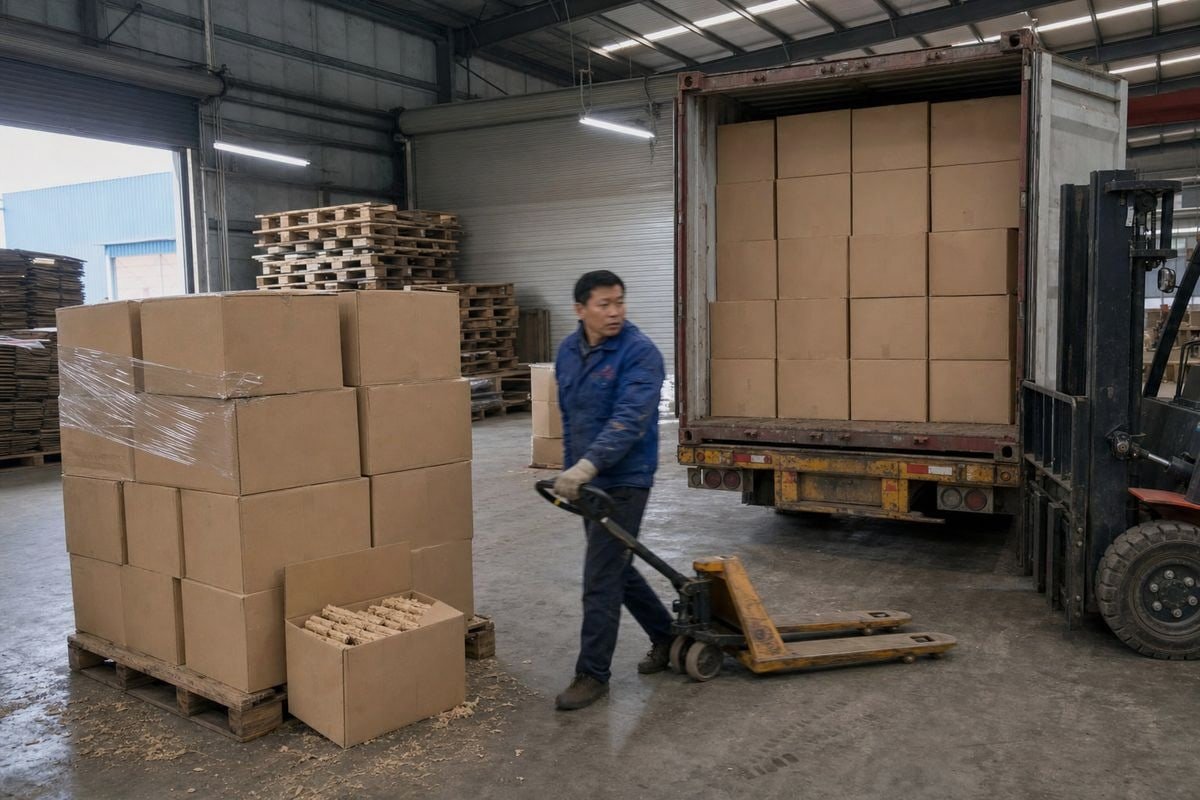
Choosing between FCL vs LCL for wood fire starters can quietly destroy your margin MSDS sheets 1. I have watched buyers pick the wrong mode from our Ningbo production line, and their landed cost jumped overnight while retail prices stayed flat. The fix is simpler than most importers think: match the shipping mode to your real cubic volume and sales cycle.
To balance cost and lead time when shipping wood fire starters from China, use LCL for orders under roughly 10–12 CBM and FCL once volume reaches about 15 CBM. Between 8–15 CBM, request both quotes, because destination fees and consolidation delays shift the true break-even point.
That is the short answer. But wood fire starters are bulky, low-value, and seasonal, so the details matter. Let me walk you through how I help our buyers decide.
How do I decide between FCL and LCL for my wood fire starter order volume?
A German distributor once asked me to quote 8 CBM of our wax-dipped wood rolls both ways. The LCL quote looked cheaper on paper. The all-in FCL total was only marginally higher — and two weeks faster.
Decide based on cubic volume: below about 8–10 CBM, LCL is almost always cheaper; above 15 CBM, FCL wins on both cost per unit and speed. In the 8–15 CBM middle band, always request side-by-side all-in quotes before booking, since fees vary by lane and season.

Here is the quick comparison I share with new buyers before we go deeper:
| Factor | LCL (shared container) | FCL (full container) |
|---|---|---|
| Billing basis | Per CBM or weight (whichever is greater) | Flat rate per container |
| Best for | Under 8–12 CBM | 15 CBM and above |
| Handling touchpoints | Many (consolidation + deconsolidation) | Few (sealed door to door) |
| Transit predictability | Lower | Higher |
| Upfront cash needed | Lower | Higher |
Why volume, not weight, drives the decision
Wood fire starters are volumetric cargo. Our wax-dipped wood rolls and excelsior bundles are light, but the master cartons take up real space. Ocean freight 2 for LCL is billed by CBM or weight — whichever is greater — and for this product, CBM wins every time. So the first thing I ask any buyer is not "how many pieces?" but "what is your total cubic volume?"
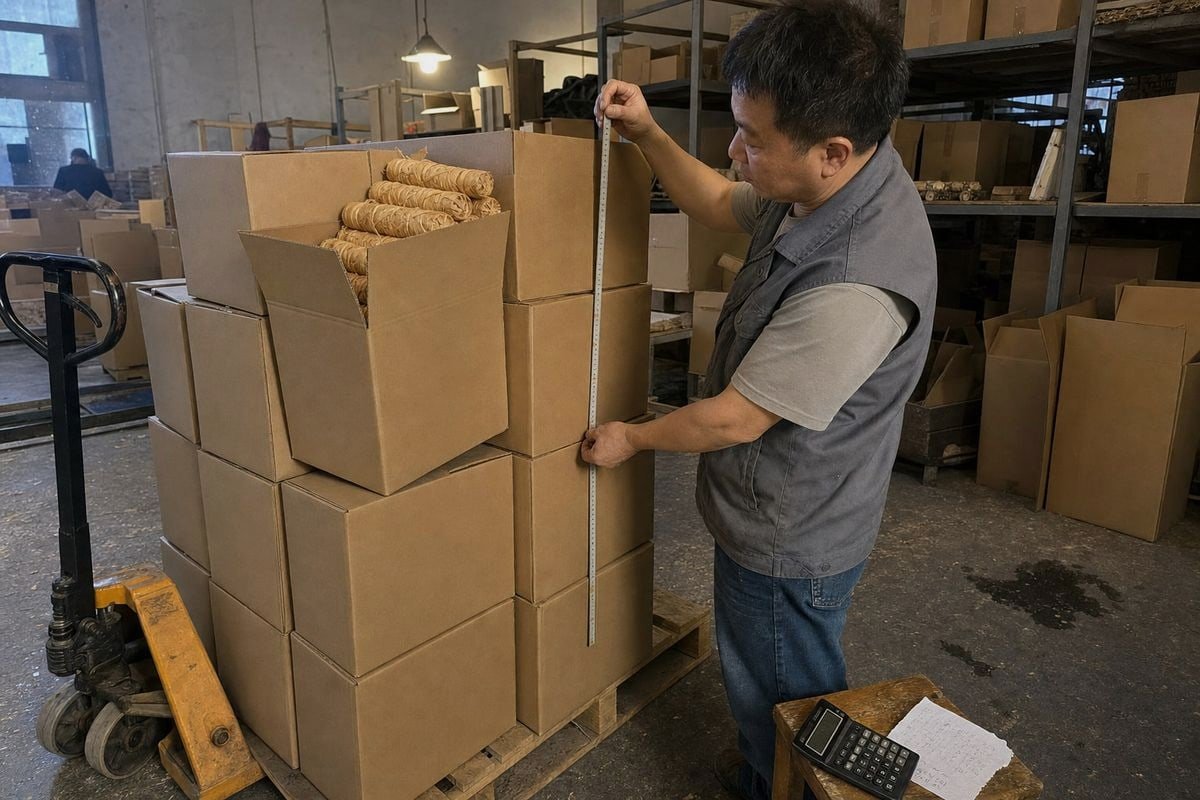
Before we quote, our packing team measures the exact master carton dimensions and pallet configuration for the buyer's chosen retail pack. A 100-piece display box configuration produces a different CBM than bulk-packed rolls, even at the same unit count. That single measurement step often changes the FCL-versus-LCL answer.
The practical decision rule
After 17+ years of exporting to the US, Germany, the UK, and beyond, my rule of thumb is simple. Under 8 CBM, book LCL and accept the longer transit. From 8 to 15 CBM, quote both and compare all-in totals, not headline rates. Above 15 CBM, book a 20ft container 3. Above roughly 28–30 CBM of loadable volume, move to a 40HQ, because the flat rate spreads over far more units and your per-unit freight cost drops sharply.
What lead time differences should I expect between FCL and LCL shipments from China?
Every autumn, I remind our fireplace and BBQ distributor clients of the same thing: fire starter demand peaks exactly when Chinese export lanes are busiest. Timing mistakes hurt twice in this category.
FCL from China to the US typically takes 15–30 days port to port, while LCL runs 20–40 days. Expect LCL to add roughly 5–20 extra days due to consolidation at origin and deconsolidation at destination, with delays worsening during Q3–Q4 peak season.
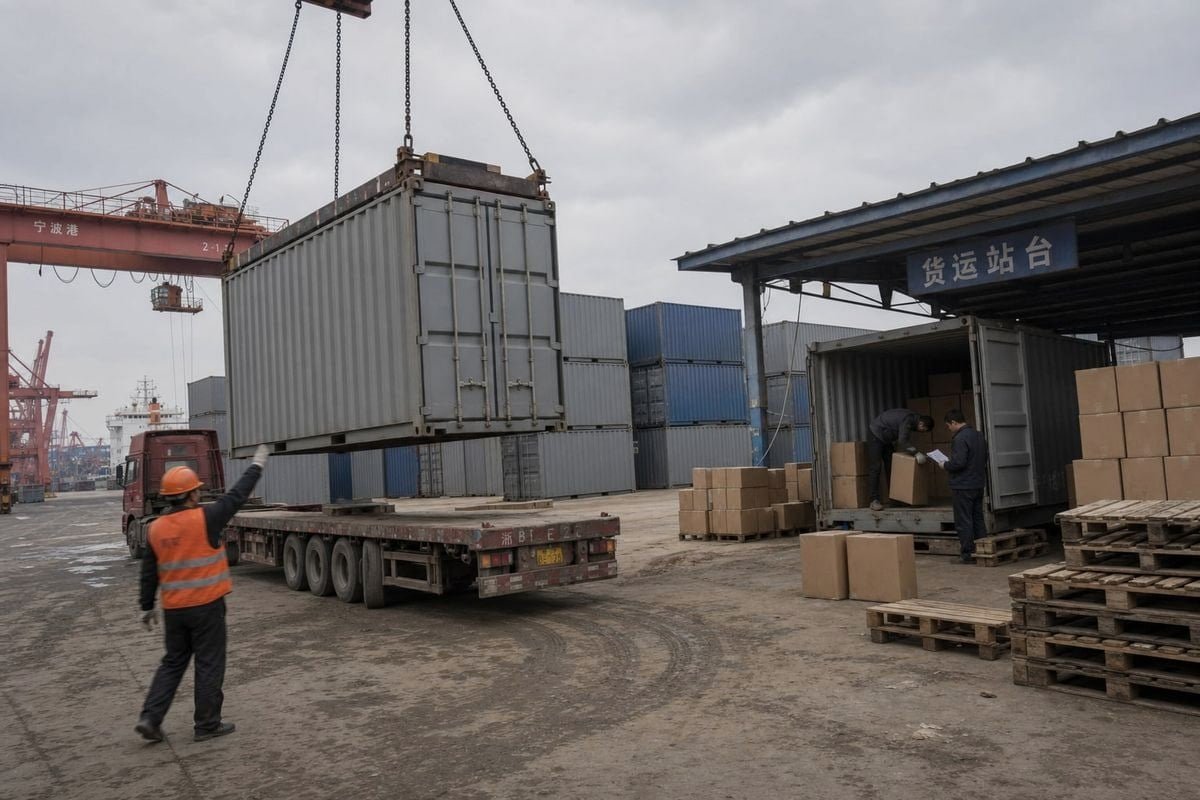
The gap comes from handling steps, not ship speed. Both modes ride the same vessels. The difference is what happens before loading and after arrival.
Where LCL loses time
An LCL shipment leaves our Ningbo facility and goes to a container freight station 4. There it waits until the consolidator fills a shared container with other shippers' cargo. That wait alone can add several days. On arrival, the container must be deconsolidated, and your cartons wait for customs clearance alongside everyone else's goods. If another shipper in the same container has a documentation problem, your cargo can sit while the whole box is held.
FCL skips all of that. We load and seal the container at origin, and it moves directly to the port. Fewer handoffs mean fewer chances for delay — and fewer chances for crushed cartons.
Seasonal timing for fire starters
This product has a hard seasonal deadline. If your winter stock misses the shelf window, you carry it for a year. Here is the planning framework I use with our long-term buyers:
| Shipping window | Congestion risk | My recommendation |
|---|---|---|
| Q1–Q2 (off-peak) | Low | LCL acceptable for trial and top-up orders |
| Early Q3 | Rising | Book FCL early for winter stock builds |
| Late Q3–Q4 (peak) | High | Avoid LCL for critical inventory; CFS backlogs compound delays |
| Chinese New Year window | Very high | Confirm production and booking 6–8 weeks ahead |
One more practical point: fire starters containing paraffin can face extra scrutiny or dangerous-goods questions 5 from some consolidators. LCL consolidators are stricter, because one flagged shipment affects the whole shared container. With FCL, acceptance is more straightforward. Our team supplies MSDS documentation and test reports as standard, which keeps both modes moving, but the paperwork buffer matters more on LCL.
How can I calculate the true cost trade-offs between FCL and LCL for my import budget?
The trade-off I weigh most often with buyers is headline rate versus all-in landed cost. LCL's per-CBM price looks friendly. The invoice that arrives at destination often does not.
Compare all-in totals, not base rates: recent guides put China–US FCL at roughly $1,800–$3,950 for a 20ft and $2,800–$5,500 for a 40HQ, versus LCL at about $60–$140 per CBM plus $150–$300 in extra handling fees. Break-even usually falls near 12–15 CBM.
Let me show you a worked example using indicative market ranges. Treat these as directional numbers, not guaranteed rates — real quotes vary by lane, port pair, and season. West Coast lanes generally run cheaper than East Coast for both modes.
A worked example at four volume levels
Assume mid-range indicative pricing: LCL at $100 per CBM plus $250 in extra consolidation, documentation, and terminal fees; a 20ft FCL at $2,800 all-in.
| Shipment volume | LCL estimated total | FCL 20ft estimated total | Better option |
|---|---|---|---|
| 5 CBM | ~$750 | ~$2,800 | LCL, clearly |
| 10 CBM | ~$1,250 | ~$2,800 | LCL, but quote both |
| 15 CBM | ~$1,750 | ~$2,800 | Close — compare all-in quotes |
| 20+ CBM | ~$2,250+ | ~$2,800 | FCL, once speed and risk are priced in |
Notice something. At 20 CBM the raw LCL number still looks lower. But FCL delivers faster transit, fewer handling touchpoints, lower damage risk, and no surprise destination fees. On an expensive East Coast lane, or during peak season 6, LCL per-CBM rates climb and the crossover moves down toward 12–13 CBM. That is why some guides say the break-even is 15 CBM and others say 12 — both are right, depending on whether the quote includes only ocean freight or the full all-in cost.
The hidden fees that flip the math
LCL passes through container freight stations at both ends. Each pass adds warehouse handling, terminal charges, and documentation fees. When our buyers show me a suspiciously cheap LCL quote, I ask one question: does it include destination CFS charges? Very often it does not. For a low-value product like fire starters, a few hundred dollars of surprise fees can wipe out the entire freight saving. Always ask for the all-in figure in writing before you book.
What MOQ and shipping strategy should I use when trialing a new wood fire starter supplier?
A US camping brand approached us last year wanting to test our wax-dipped wood rolls before committing to a container program. We built their trial plan around a deliberately small first shipment — and it is the same plan I recommend to every new buyer.
Start with a trial order of 3–8 CBM shipped LCL to validate quality, packaging, and sell-through with minimal cash exposure. After two or three successful LCL cycles, switch to FCL once your order volume consistently reaches 10–15 CBM, locking in lower per-unit freight.
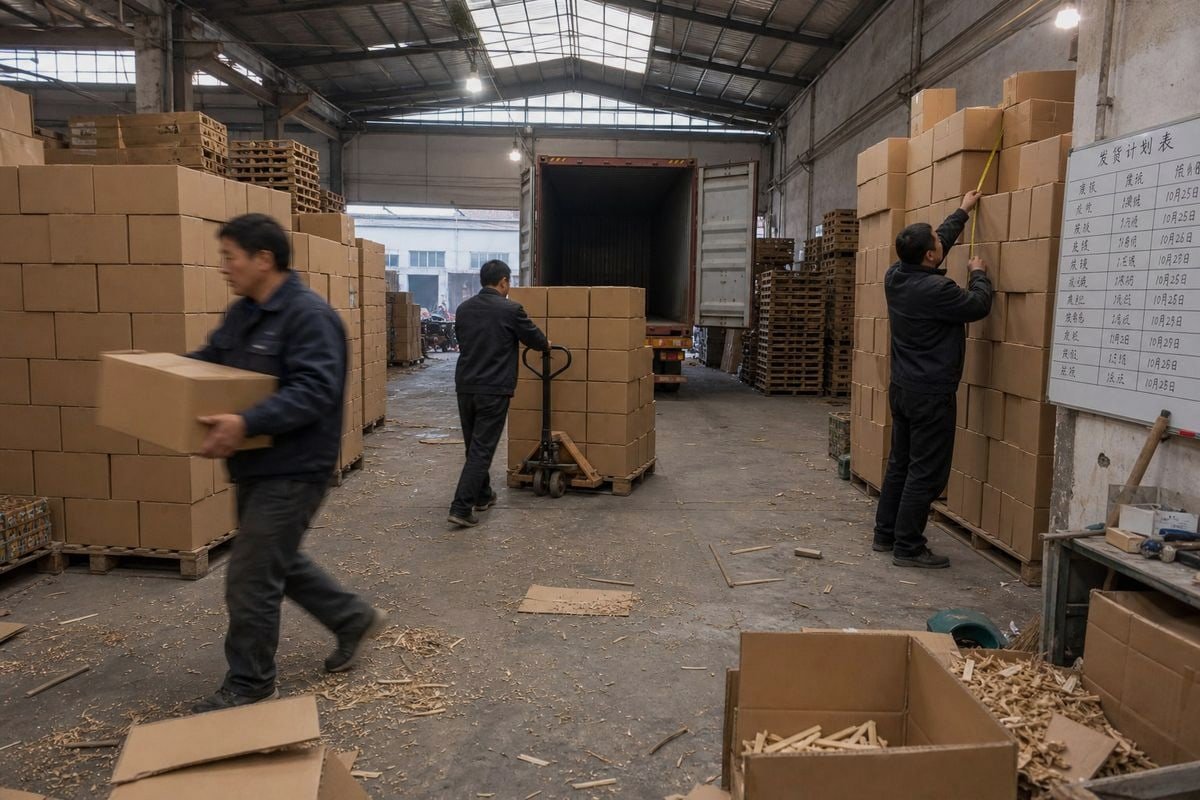
This hybrid strategy solves the real problem behind the FCL-versus-LCL question: uncertainty. You do not know your sell-through rate yet. Tying up cash in a full container of an unproven SKU is a bigger risk than paying a temporary LCL premium.
The three-phase ramp I recommend
First, validate. Order at or near the supplier's flexible MOQ and ship LCL. At our factory, we deliberately keep trial MOQs workable for exactly this reason — a first order should test the relationship, not strain your budget. Check that the production sample matches the shipment. With our batch-to-batch quality control, the sample you approve is what lands in your warehouse, and that consistency is precisely what a trial order should confirm before you scale.
Second, repeat. Run one or two more LCL replenishment orders. Watch your sell-through, your damage rate on arrival, and the supplier's communication under real deadlines. This is also when you finalize private-label details — custom boxes, warning labels, barcodes — so your FCL orders arrive fully shelf-ready.
Third, consolidate. Once monthly demand supports 10–12 CBM or more, move to a 20ft container. Your per-unit freight cost drops, your transit becomes predictable, and your retail cartons stop sharing space with strangers' cargo.
What to verify during the trial phase
Use the trial order to test more than the product. Confirm the supplier holds real certifications — for compliance-driven markets like the US and EU, ISO 9001 7, BSCI, and third-party test reports from labs like SGS or Intertek are hard requirements, not extras. Confirm they can supply MSDS sheets 8 promptly, because customs and consolidators will ask. And confirm they can advise on carton dimensions and pallet plans, because a supplier who optimizes your CBM is directly lowering your freight bill on every future order.
Conclusion
Getting freight mode wrong on a bulky, low-value product like fire starters silently erodes margin and can cost you the winter selling window. The solution is a volume-based rule: LCL below 10 CBM, FCL above 15 CBM, and side-by-side all-in quotes in between. Start small with LCL to validate a new supplier, then consolidate into containers as demand proves out. If you want carton dimensions, CBM calculations, and both freight scenarios prepared alongside your quote, our team does this for every buyer as standard — it is the fastest way to make your first order a low-risk one.
Footnotes
1. OSHA's hazard communication page explains MSDS documentation required for paraffin-based fire starter shipments. ↩︎
2. US Federal Maritime Commission regulates ocean freight pricing practices discussed for LCL billing. ↩︎
3. Wikipedia background on standard intermodal container sizes referenced in the FCL booking rule. ↩︎
4. Background explanation of container freight stations, central to the LCL consolidation delay discussion. ↩︎
5. US DOT hazardous materials authority clarifies regulations behind dangerous-goods scrutiny for paraffin cargo. ↩︎
6. IMO provides context on shipping congestion and scheduling



 English
  Spanish
  German
  French
  Arabic
  Portuguese
Join the Conversation