






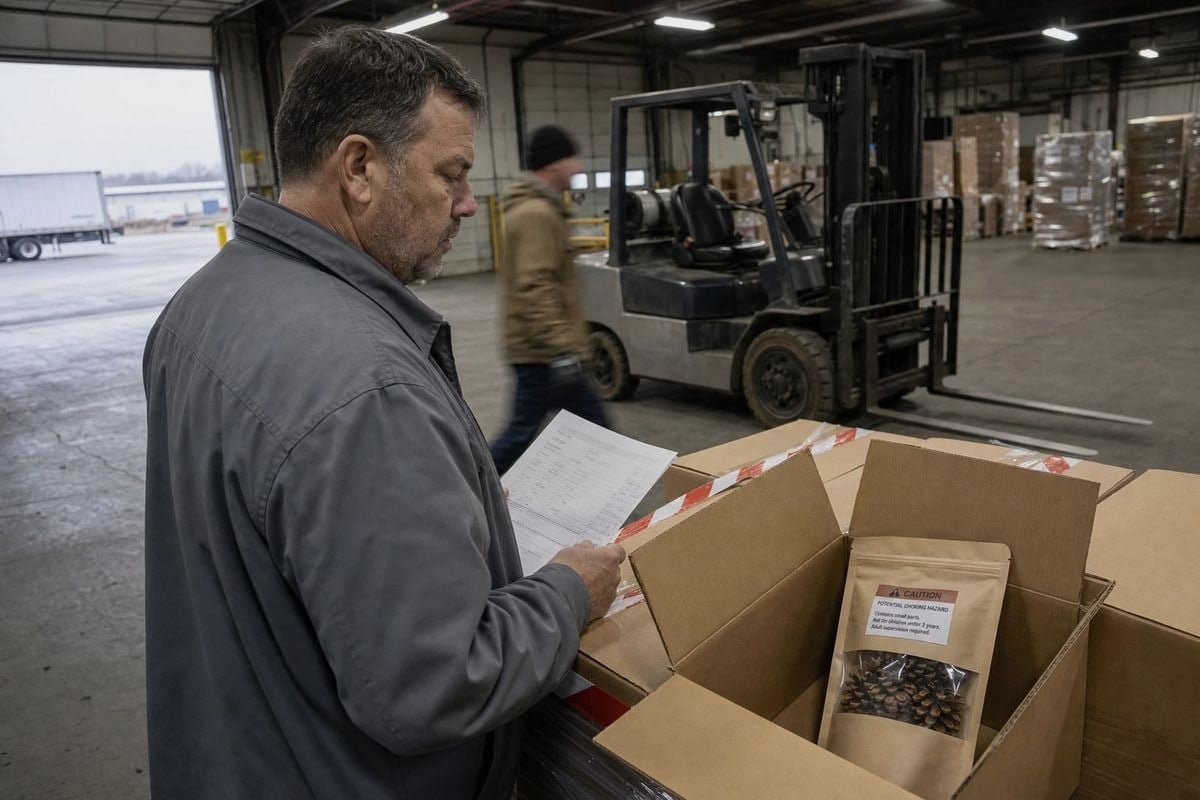
FHSA labeling and recall duties trip up many private label fireplace pine cone importers. On our color-flame pinecone production line, we see mislabeled shipments seized at US customs every season.
Private label fireplace pine cone importers must determine if their treated pine cones are hazardous substances under FHSA, apply full cautionary labeling with signal words and business identification, issue a General Certificate of Conformity where required, and report defects to the CPSC under Section 15.
Let me walk you through each duty step by step. I will cover labels, recalls, documents, and legal responsibility, in that order.
What FHSA Labels Must I Put on My Private Label Fire Pine Cones Before Import?
A buyer in Ohio once sent us his old supplier's label for review. It had no signal word, no chemical name, and no US business address. Our compliance team rejected it in ten minutes.
If your fire pine cones contain flammable coatings or metal salt colorants, FHSA labels must show a signal word, principal hazard statement, chemical name of the hazardous substance, precautionary measures, first-aid instructions, storage directions, a "Keep Out of Reach of Children" statement, and your business name and address.

The first question is whether FHSA covers your product at all. FHSA does not regulate pine cones as a category. It regulates hazardous substances 1 used in or around the home. A plain decorative pine cone with no treatment usually falls outside the rule. A pine cone treated with sulfate de cuivre 2 or other metal salts for color-flame effects is a different story. Hazardous substance classification depends on the actual formulation, not the marketing name.
The Four Product Types and Their Label Risk
| Type de produit | FHSA Trigger Likely? | Pourquoi |
|---|---|---|
| Natural decorative pine cones | Non | No hazardous substance present |
| Painted or scented craft cones | Maybe | Depends on coating flammability and toxicity |
| Color-flame fireplace pine cones | Oui | Metal salt colorants and fire-enhancing treatment |
| Fire-starter cones with wax or fuel | Oui | Flammable solid intended for ignition |
If FHSA applies, the label must carry every required element. The signal word matters most. Use "DANGER" for extremely flammable or highly toxic products. Use "WARNING" or "CAUTION" for lesser hazards. The principal hazard statement must be affirmative, such as "FLAMMABLE" or "HARMFUL IF SWALLOWED." You must also name the hazardous substance by its common or chemical name. For color-changing cones, that often means listing the specific metal salt so medical staff can respond to an exposure.
Placement rules matter too. Under 16 CFR 1500.121 3, cautionary labeling requirements demand prominent, conspicuous, and legible statements on the principal display panel, in contrast with other printed matter. The label must appear on the immediate container. If your kraft pouch sits inside a shipper box that hides it, the outer packaging needs the warnings as well. When we run private label packaging for US buyers, we pre-print all FHSA elements on the pouch itself, so nothing depends on the outer carton surviving transit.
How Do I Handle a Product Recall If My Fireplace Pine Cones Fail Compliance Testing?
Years back, a European distributor asked us what would happen if a batch failed post-shipment testing. That conversation shaped how we now build recall readiness into every OEM contract we sign.
If your fireplace pine cones fail compliance testing, stop distribution immediately, report to the CPSC under Section 15(b) within 24 hours of learning of a possible substantial hazard, quarantine remaining inventory, and consider the Fast Track Recall program to negotiate a corrective action plan quickly.
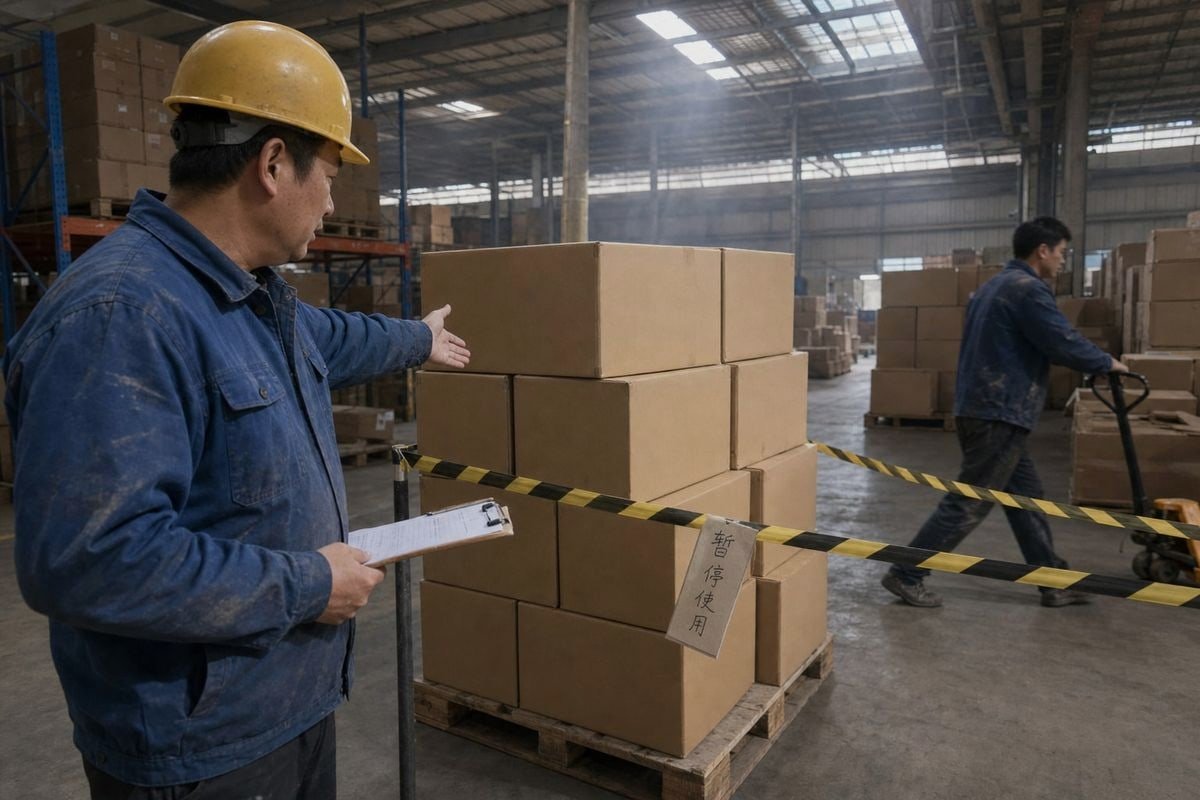
Here is an important distinction most importers miss. FHSA itself creates the labeling duty. The recall machinery comes from the broader Consumer Product Safety Act 4 enforcement framework. So a mislabeled hazardous pine cone exposes you two ways. First, the product is misbranded under FHSA. Second, the defect or hazard can trigger corrective action duties under the CPSA. You cannot treat these as separate problems. The CPSC treats them as one case.
The Recall Response Sequence
- Stop sales and shipments. Freeze the affected SKU across all channels, including marketplace listings and 3PL warehouses.
- Assess the hazard. Compare the test failure against the FHSA definition. A label defect and a toxicity failure are different severity levels.
- File your Section 15 report. The duty to report attaches within 24 hours of obtaining information that reasonably supports a substantial product hazard 5 or unreasonable risk of serious injury. Do not wait for certainty.
- Choose your recall path. The Fast Track Recall program lets you propose a corrective action plan upfront and usually avoids a preliminary hazard determination.
- Execute and document. Track return rates, consumer notices, and destruction records. The CPSC will ask for monthly progress reports.
Under-reporting is the costly mistake. Civil penalties for late Section 15 reporting can dwarf the cost of the recall itself. In our experience exporting to 30+ countries, the buyers who survive a compliance failure are the ones with traceable batch records. Our factory keeps batch-to-batch QC logs precisely so an importer can isolate one production run instead of recalling a full year of inventory.
What Compliance Documents Should I Request From My Manufacturer to Prove FHSA Compliance?
One document gap sinks more shipments than any other issue we see. When new buyers audit our Ningbo facility, they always start with the paperwork trail, not the machines, and that instinct is correct.
Request third-party test reports covering flammability and toxicity, a full ingredient and formulation disclosure with safety data sheets, a General Certificate of Conformity where a consumer product safety rule applies, factory certifications like ISO 9001 and BSCI, and batch-level QC records with traceability.

Documents are your evidence that the label matches the actual product. Without them, you are certifying blind. Here is the core document set we prepare for our US and EU pine cone buyers.
Essential Compliance Document Checklist
| Document | Ce qu'il prouve | Qui le délivre |
|---|---|---|
| Rapport de test SGS ou Intertek | Toxicity and flammability results against applicable standards | Laboratoire tiers accrédité |
| Formulation disclosure and SDS | Exact chemicals used, enabling hazardous substance classification | Fabricant |
| General Certificate of Conformity 6 | Certification of compliance with applicable safety rules | Importer, based on testing |
| Certificats ISO 9001 / BSCI | Quality system and factory social compliance | Certification bodies |
| Dossiers de contrôle qualité des lots | Traceability for recall scoping | Fabricant |
| Label artwork approval file | Documented label review against FHSA elements | Manufacturer and importer jointly |
A note on the GCC. FHSA labeling alone does not automatically require a General Certificate of Conformity. But if any consumer product safety rule applies to your specific product, you as the importer must issue the GCC based on a test of each product or a reasonable testing program. And the compliance window is tightening. The CPSC's eFiling requirement means certificate data must be submitted electronically through the CBP Risk Assessment Methodology system at the time of entry starting in 2026. If your manufacturer cannot supply structured test data now, your customs clearance will slow down later.
One more angle. Demand a toxicological risk assessment for the specific colorant blend, not a generic report for "pine cones." We learned this over 17 years of making color-flame products: labs test formulations, and a formulation change as small as a new fragrance oil can invalidate an old report. Ask your factory to confirm in writing that the tested sample matches the shipped batch formulation.
Who Is Legally Responsible for FHSA Violations—My Brand or My Overseas Supplier?
The hardest email I send buyers is the one explaining that our test reports help them, but do not replace their own legal duties. Some appreciate the honesty. All of them need it.
Your brand bears primary legal responsibility. Under FHSA and CPSC enforcement practice, private label importers are treated as the manufacturer, and importer of record liability means your company answers for misbranding, banned hazardous substances, and reporting failures, regardless of who physically made the pine cones.

This is the tension at the heart of private labeling. Many buyers see the goods as "factory-made" and assume the factory carries the risk. The CPSC looks at the product as sold to US consumers. It asks whose name is on the label and whether the warning is adequate. FHSA requires the name and place of business of the manufacturer, packer, distributor, or seller. On a private label pouch, that name is yours. "We just relabeled it" is not a defense if the label is inaccurate or incomplete.
How Responsibility Splits in Practice
| Duty | Overseas Supplier | Private Label Importer |
|---|---|---|
| Accurate formulation and consistent production | Oui | Verifies through testing |
| FHSA label content and accuracy | Assists | Legally owns |
| GCC issuance | Provides test basis | Legally owns |
| Section 15 reporting to CPSC | No US duty | Legally owns |
| Recall execution and consumer notice | Supports logistics | Legally owns |
The "virtual importer" trap deserves special mention. E-commerce brands using drop-shipping or 3PL fulfillment are still the importer of record. Never touching the inventory does not reduce liability. It often increases it, because the brand skips physical inspection entirely.
Watch your marketing claims too. Labeling treated cones as "100% Natural" while they contain inorganic metal salts can render the product misbranded under FHSA, because the claim creates a false sense of safety about chemical exposure. And go beyond the statutory minimum where the hazard justifies it. Pine has high resin content that accelerates l'accumulation de créosote 7 in chimneys. We advise our fireplace-channel buyers to add a warning that the cones are an accent product, not a primary fuel source. Federal preemption generally blocks states from adding different cautionary labeling for the same risk, so one well-built FHSA label serves the whole US market. Your best protection is a supplier that treats CPSC compliance requirements as a shared deliverable, with contracts that specify testing, indemnification, and batch traceability.
Conclusion
Private label fireplace pine cone importers own FHSA labeling, GCC documentation, and Section 15 recall duties. Verify the formulation, build the label right, and partner with a certified, traceable factory.
Notes de bas de page
1. Defines the federal statute governing hazardous substance labeling referenced throughout the article. ↩︎
2. Background on the metal salt colorant used in color-flame pine cone treatments. ↩︎
3. Official regulation text specifying cautionary labeling placement rules cited in the article. ↩︎
4. Official statute source for the recall and enforcement framework discussed in the article. ↩︎
5. CPSC guidance on the 24-hour Section 15 reporting duty for substantial product hazards. ↩︎
6. Explains CPSC certificate requirements importers must issue for regulated consumer products. ↩︎
7. Explains the chimney residue hazard mentioned regarding pine resin content. ↩︎



 English
  Spanish
  German
  French
  Arabic
  Portuguese
Rejoignez la conversation