







Wax-coated vs non-waxed pine cones is the question buyers ask me most. On our Ningbo production line, we burn-test both types weekly, and the differences surprise people.
Wax-coated pine cones burn longer, ignite more reliably, and deliver more consistent flame performance than non-waxed cones. Typical waxed cones burn 8–20 minutes; plain dry cones burn faster and less predictably. Wax also improves moisture resistance, shelf life, and batch-to-batch color-flame consistency for commercial products.
That is the short answer. But if you are sourcing pine cone fire products for retail, the details matter. Let me walk you through what our testing and export experience show.
What burn time difference can I expect between wax-coated and non-waxed pine cones?
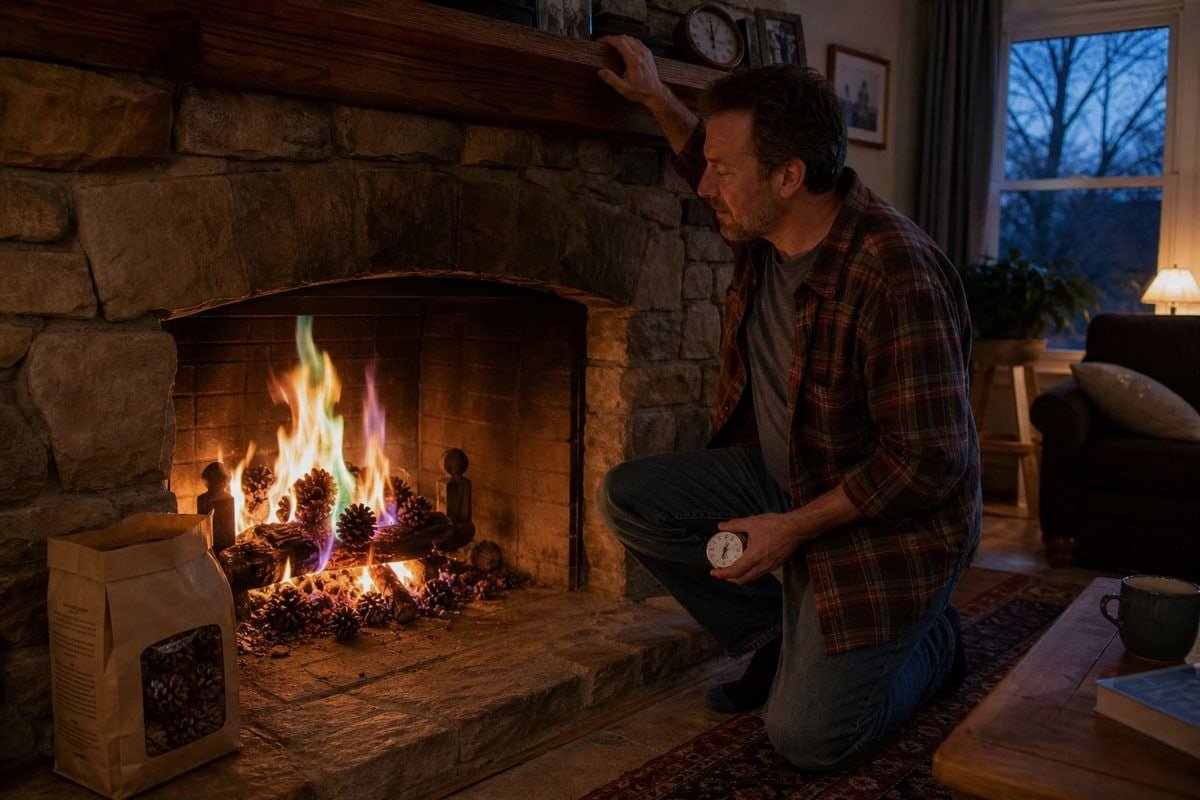
During a QC session last winter, our team timed forty cones from one batch. The waxed cones clustered tightly around twelve minutes. The bare cones scattered everywhere.
Expect wax-coated pine cones to burn roughly 8–20 minutes each, depending on cone size and wax loading. Non-waxed dry cones typically burn 3–8 minutes with wider variation. The wax acts as slow-burning fuel, roughly doubling or tripling usable burn time per cone.

Burn time is the single biggest performance gap between the two types. Here is why the difference exists, and why it varies so much in practice.
Why wax extends burn time
Wax is a dense, slow-burning fuel. When we dip a cone, the wax soaks into the scales and fills the gaps between them. During burning, the flame consumes the wax first and steadily. The cone itself becomes a wick structure 1. A plain cone, by contrast, relies only on its own resin and dry woody material. It flares up fast and burns out fast.
What our factory testing shows
We run burn tests on every production batch before it ships. The pattern is stable across thousands of tests. Here are the typical ranges we see:
| Cone type | Durée de combustion typique | Variation across a batch | Meilleur cas d'utilisation |
|---|---|---|---|
| Non-waxed, fully dried | 3–8 minutes | High (species and size dependent) | Quick kindling ignition |
| Light wax coat | 8–12 minutes | Modéré | Fire starters, campfires |
| Standard wax dip | 10–20 minutes | Faible | Retail fire starters, color-flame cones |
| Heavy wax dip | 15–30 minutes | Low, but slower ignition | Long-burn fireplace products |
One nuance we learned the hard way: more wax is not always better. A very thick coat can smother the initial flame and frustrate the end user. Thinner, controlled coats light faster. That is why we calibrate wax pickup by weight on our lines, not by eye. For OEM buyers, we can tune burn time to your spec — some European fireplace brands want 15+ minutes, while camping brands often prefer faster ignition around 8–10 minutes.
DIY sources report similar numbers, but treat those as informal observations. Controlled dipping and weight checks are what make the numbers repeatable at commercial scale.
Which option gives me more consistent color-flame results across production batches?
A German distributor once returned a competitor's sample to us with a note: "Half the cones showed no color." That complaint shaped how we engineer our color-flame pinecones today.
Wax-coated pine cones deliver far more consistent color-flame results across batches. The wax binds mineral colorants evenly to every cone and controls burn rate, so each cone releases color at a steady pace. Non-waxed cones vary by resin, moisture, and size, producing unpredictable color effects.

Consistency is where the manufacturing story really matters for B2B buyers. A retail customer who buys a bag of color-flame cones expects every cone to perform. One dud cone means a bad review. Here is how the two types compare on the factors that drive consistency.
The variables that break consistency
Natural pine cones vary enormously. Species matters: resin-rich cones sustain flame far longer than low-resin types like white pine. Size matters. Moisture matters most of all — a cone that reabsorbed humidity in a warehouse burns cooler and smokier. On bare cones, colorant applied as a surface treatment can flake off during shipping or burn off in the first flare, before the fire is hot enough to show color.
How wax solves the problem
Wax fixes three variables at once:
- It locks the colorant in place. The mineral salts are suspended in the wax layer, so they cannot rub off in transit or wash out in humidity.
- It normalizes burn rate. A fast-flaring cone and a slow cone become similar once wax dominates the fuel load.
- It seals out moisture. Warehouse humidity in Rotterdam or Houston no longer changes performance.
| Consistency factor | Non-waxed cones | Wax-coated cones |
|---|---|---|
| Colorant retention in transit | Poor to moderate | Excellente |
| Burn rate uniformity | Variable by cone | Tightly controlled |
| Humidity sensitivity | Élevé | Faible |
| Batch-to-batch repeatability | Hard to guarantee | Controllable by wax weight |
On our lines in Ningbo, we control wax temperature, dip duration, and colorant dosing per batch, then burn-test samples against a reference flame chart. After 17+ years of this, our position is simple: the first sample you approve should look exactly like container number ten. Wax coating is what makes that promise physically possible for color-flame products.
How does wax coating affect shipping safety and shelf life for my inventory?
Shipping fire products across 30+ countries has taught us that the container journey is often harder on a product than the fireplace. Salt air, condensation, and heat cycles all attack inventory.
Wax coating significantly improves shipping safety and shelf life. It seals cones against humidity, prevents mold and colorant degradation, and keeps products stable for two to three years in normal storage. Non-waxed cones absorb moisture, can grow mold in transit, and lose burning performance within months.
Let me break down what actually happens to pine cone products between our factory floor and your customer's shopping cart.
The moisture problem in transit
A sea container from Ningbo to Hamburg or Los Angeles takes three to six weeks. Inside, temperature swings from cool nights to hot days create condensation cycles. Bare pine cones are hygroscopic — they soak up that moisture. By the time they reach your warehouse, non-waxed cones may have regained enough moisture to smoke heavily and burn poorly. In bad cases, we have seen competitor product arrive with visible mold 2. Wax-coated cones shrug this off. The wax layer is a physical moisture barrier, so the cone that leaves our drying room arrives in the same condition.
Shelf life in your warehouse and on the shelf
Retail inventory can sit for a full season or longer. Here is what we advise buyers to expect:
| Storage factor | Non-waxed cones | Wax-coated cones |
|---|---|---|
| Practical shelf life | 3–6 months in dry storage | 2–3 years |
| Mold risk in humid climates | Real risk | Minimal |
| Colorant stability | Degrades with humidity | Protected in wax |
| Packaging requirement | Needs desiccants, sealed bags | Standard resealable pouch is enough |
Safety in classification and handling
Both waxed and non-waxed cones ship as ordinary goods, not des marchandises dangereuses 3, which keeps freight simple. But wax coating adds a practical safety margin: coated cones do not shed dry, highly flammable resin dust inside packaging. We pair this with proper warning labels, barcodes, and retail-ready pouches — the kraft stand-up bags and burlap sacks 4 we produce are designed to protect the product and present it well on shelf. For buyers, that means fewer claims, fewer returns, and inventory you can carry over to the next season without write-offs.
Will wax-coated pine cones meet international safety and compliance standards for my market?
The first question a US big-box sourcing team ever asked us was not about price. It was "show me the test reports." That conversation set our compliance roadmap for the next decade.
Yes — properly manufactured wax-coated pine cones can meet international standards. Compliant products use eco-friendly waxes and heavy-metal-free colorants, verified through SGS or Intertek testing, CE marking where applicable, and ISO 9001 production controls. Uncertified products, waxed or not, are the real compliance risk.

Compliance is not a feature of wax versus no wax. It is a feature of how the product is formulated, tested, and documented. But the wax question does intersect with compliance in ways buyers should understand.
Where wax type matters for compliance
Not all waxes are equal in regulators' eyes or in consumers' lungs. Paraffin is petroleum-derived and can produce more soot and odor. Cleaner-burning wax blends and natural options like beeswax produce lower soot and fewer volatile emissions 5, which matters for indoor fireplace products and for buyers marketing to households with respiratory sensitivities. Colorants matter even more. Color-flame effects come from mineral salts, and the compliant path is formulations free of harmful métaux lourds 6, verified by third-party lab tests. This is exactly why we hold SGS and Intertek test reports on our color-flame pinecones and Magic Fire packets — our US and EU buyers treat those reports as a hard gate, not a nice-to-have.
The compliance checklist we prepare for buyers
When we onboard a new distributor, we typically supply:
- Rapports de test par des tiers (SGS or Intertek) covering the finished product.
- documentation CE where the market requires it.
- ISO 9001 quality-system certification covering our production sites.
- résultats d'audit BSCI for buyers with social-compliance requirements.
- Market-appropriate warning labels in the right languages, plus barcodes and retail packaging artwork under your private label.
One practical note from our export experience: customs and retail compliance teams 7 in Germany, the UK, and the US each emphasize different documents. A partner who has shipped to those markets for years will pre-empt those requests. A cheap supplier without paperwork will leave you holding a container you cannot clear. Wax-coated pine cones are fully compliant products when they are built to be — the coating itself is not the risk; undocumented sourcing is.
Conclusion
Wax-coated pine cones outperform non-waxed cones on burn time, consistency, shelf life, and retail readiness. Choose a certified factory partner, and your product performs identically from sample to final container.
Notes de bas de page
1. Background on wick mechanics explaining how wax fuels sustained combustion in coated cones. ↩︎
2. EPA resource on mold growth and risks, relevant to moisture damage during shipping. ↩︎
3. Background on shipping classification standards relevant to freight and export regulations. ↩︎
4. Major trade platform for sourcing retail packaging materials mentioned for product presentation. ↩︎
5. EPA guidance on volatile organic compound emissions relevant to fireplace product air quality concerns. ↩︎
6. Background on heavy metal compounds relevant to colorant safety and compliance formulations. ↩︎
7. International trade body overseeing customs procedures and compliance documentation referenced for export markets. ↩︎



 English
  Spanish
  German
  French
  Arabic
  Portuguese
Rejoignez la conversation