







Regulatory differences when exporting pine cones to the US vs Europe trip up many buyers Plant Health Regulation 2016/2031 1. I have watched [shipments from our Ningbo lines](https://sunrichfire.com/how-ship-colored-pine-cones-europe-sea-freight-vs-china-europe-railway/) get delayed simply because paperwork followed the wrong market's logic.
The US regulates pine cones through USDA/APHIS commodity-specific admissibility rules, Lacey Act declarations, and state-level checks, while the EU uses a certificate-first system under Plant Health Regulation 2016/2031, requiring phytosanitary certificates, TRACES NT e-certification, and first-entry inspections before free single-market movement.
That is the short answer. But treated, painted, or chemically infused cones — like our color-flame pinecones — add another compliance layer. Let me walk you through both markets, step by step.
What Certifications Do I Need to Sell Color-Flame Pinecones in the US Versus the EU?
A German distributor once asked us for CE documentation before he would even review samples. His US counterpart, weeks later, asked first about Loi Lacey 2 paperwork. Same product, completely different certification logic.
For the EU, you need a phytosanitary certificate, CE-relevant conformity documentation, REACH chemical compliance, and CLP-compliant labeling. For the US, you need USDA/APHIS admissibility clearance, a Lacey Act declaration (PPQ Form 505), CPSC-aligned safety data, and often state-level agricultural permits.

The core distinction is simple. The EU asks whether your product category is regulated and demands documents before shipment. The US asks what exactly your commodity is, where it came from, and what risk it carries — then decides case by case.
Why Processing Level Changes Everything
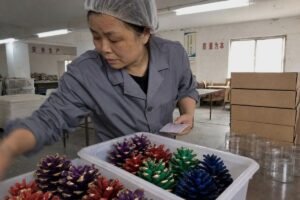
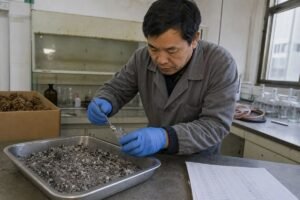
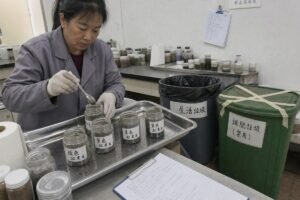
Raw, uncleaned pine cones with bark residue sit in the highest-risk category in both markets. They can carry bark beetles, pinewood nematode, and Sirex woodwasp larvae. Our color-flame pinecones go through cleaning, heat treatment, and a chemical infusion process, which shifts them toward a treated, processed product. That reduces — but does not eliminate — the plant-health burden. Do not assume "decorative" means "unregulated." That assumption fails in both systems whenever plant-health risk is present.
Certification Comparison at a Glance
| Exigence | UE | États-Unis |
|---|---|---|
| Plant-health document | Phytosanitary certificate (usually mandatory) | APHIS admissibility review; permit if required |
| Déclaration d'espèce | Included in phyto documentation | Lacey Act PPQ Form 505 |
| Conformité chimique | Enregistrement REACH 3/screening | CPSC / state ch |
Notes de bas de page
1. Official EU source explaining the regulation governing phytosanitary certificates and TRACES NT. ↩︎
2. Provides background on the US wildlife and plant trade law referenced repeatedly in the article. ↩︎
3. ECHA's official REACH guidance clarifies chemical compliance requirements mentioned for treated pinecones. ↩︎
 English
  Spanish
  German
  French
  Arabic
  Portuguese
Rejoignez la conversation