







Every October, buyers ask us the same question: what should they do with leftover fireplace colored pine cones once camping season winds down and shelf turnover slows?
Plan for leftover fireplace colored pine cones by sorting inventory first, storing dry unsold stock in sealed containers with desiccants, running targeted end-of-season discounts on near-dated packaging, holding pristine stock for winter fireplace demand, and locking in a supplier with consistent batch quality.
That answer covers the framework. Now let me walk through each decision in detail, from disposal and storage to pricing and supplier selection.
What Should I Do With Unsold Colored Pine Cones Once Camping Season Ends?
Last September, a Canadian distributor called our Ningbo plant in a mild panic. He had four pallets of unsold color-flame pinecones and no clear plan. We built one together.
Sort unsold colored pine cones into three groups: sealed retail-ready stock for winter fireplace sales, opened or damaged units for discounted bundles, and compromised product for compliant disposal. Never mix damaged treated cones with garden compost or standard yard waste without checking local rules.
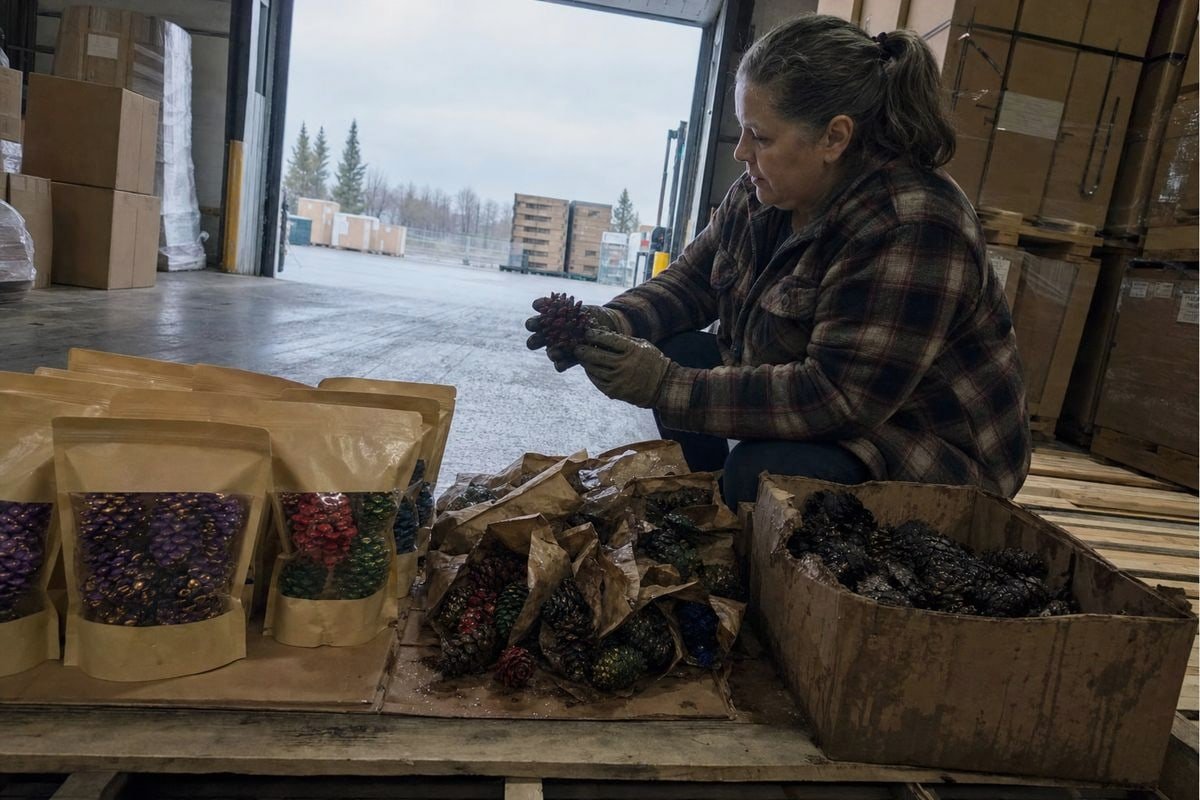
The first thing I tell buyers is this: camping season ending does not mean demand ending. It means demand shifting. The same product that sold at campgrounds in July sells at fireplace retailers in December. So your first job is triage, not liquidation.
Step One: Audit the Physical Condition
Open a sample from each pallet. Check for moisture damage, crushed cones, and torn pouches. Cones treated with chemical flame colorants are hygroscopic. That means the mineral salts pull moisture from the air. Damp stock burns poorly and produces weak color. It should not go back on a shelf.
Step Two: Handle Disposal the Right Way
Some stock will not be sellable. Here is where buyers get careless. Treated cones are not ordinary yard waste. Depending on the colorant chemistry, ash disposal safety and even hazardous waste regulations 1 can apply. Cheap products made with copper sulfate residue raise real concerns about toxicité des métaux lourds 2 et soil contamination if dumped carelessly. Ash from burned colored cones should also stay out of garden compost, because concentrated metal salts can be phytotoxic to sensitive plants.
This is exactly why our factory formulates with eco-friendly materials and no harmful chemicals, backed by SGS and Intertek test reports. Compliant products make end-of-season disposal simple. Non-compliant ones can turn leftover pallets into a liability.
| Stock Condition | Recommended Action | Risk If Ignored |
|---|---|---|
| Sealed, dry, undamaged | Hold for winter fireplace channel | Minimal |
| Opened or dented packaging | Discount bundle or repack | Slow bleed on margin |
| Moisture-damaged or crushed | Compliant disposal per local rules | Returns, complaints, liability |
How Can I Store Leftover Fire Pinecones Without Losing Their Color Effect?
During product development at our Liuyang headquarters, we ran twelve-month shelf-life tests on treated cones. Humidity, not time, turned out to be the real enemy of flame color.
Store leftover fire pinecones in sealed, resealable containers with silica gel desiccant packs, kept in a cool, dry space below 60% humidity. Keep them off concrete floors, away from food and cooking fuel, and never crush or stack pallets more than two high.

The color effect in these products comes from mineral salts absorbed into the cone. Those salts are hygroscopic. When they absorb atmospheric moisture, two things happen. First, the cone becomes hard to ignite. Second, the salts can leach out and migrate onto packaging or nearby goods. Fine salt dust can even attract enough moisture to corrode metal shelving during humid off-season months. Good storage prevents all of this.
The Storage Setup That Works
Here is the routine I recommend to our distributors, based on how we store finished goods before container loading:
- Keep cones in their original sealed pouches. Our stand-up resealable kraft pouches exist for exactly this reason.
- Place pouches inside plastic bins layered with brown craft paper to cushion the cones and prevent brittleness.
- Ajouter silica gel desiccant 3 packs to each bin. Replace them when the indicator changes color.
- Store bins on shelving, not directly on concrete, since concrete wicks moisture upward.
- Segregate colored pine cones from cooking fuel and food goods. Color-flame products are for visual effect only, never for cooking fires.
| Storage Factor | Cible | Pourquoi c'est important |
|---|---|---|
| Humidité | En dessous de 60% HR | Prevents salt migration and damp cones |
| Température | 10–25°C, stable | Avoids condensation cycles inside packaging |
| Stacking | Max two pallets high | Prevents crushed cones and torn pouches |
| Desiccant | Silica gel per bin | Absorbs residual moisture in sealed containers |
| Emplacement | Off floor, away from fuel | Blocks moisture wicking and cross-contamination |
One more point. Some consumer craft guides suggest baking loose natural cones at 200°F to open the scales and glaze the sap. That advice applies to raw decorative cones, not to factory-treated color-flame products. Never oven-treat cones already soaked in chemical flame colorants. Proper sealed storage keeps the color performance intact without any reprocessing.
Should I Offer End-of-Season Discounts or Hold Inventory for Next Year?
A German importer we have supplied for six years once discounted his entire leftover stock at 40% off in September. By December, he was air-freighting an emergency reorder. That lesson stuck with both of us.
Hold most sealed, well-stored inventory for winter fireplace demand and next season, since properly packaged colored pine cones keep their effect for over a year. Discount only damaged units, dated packaging designs, or stock exceeding roughly one season of forward demand.
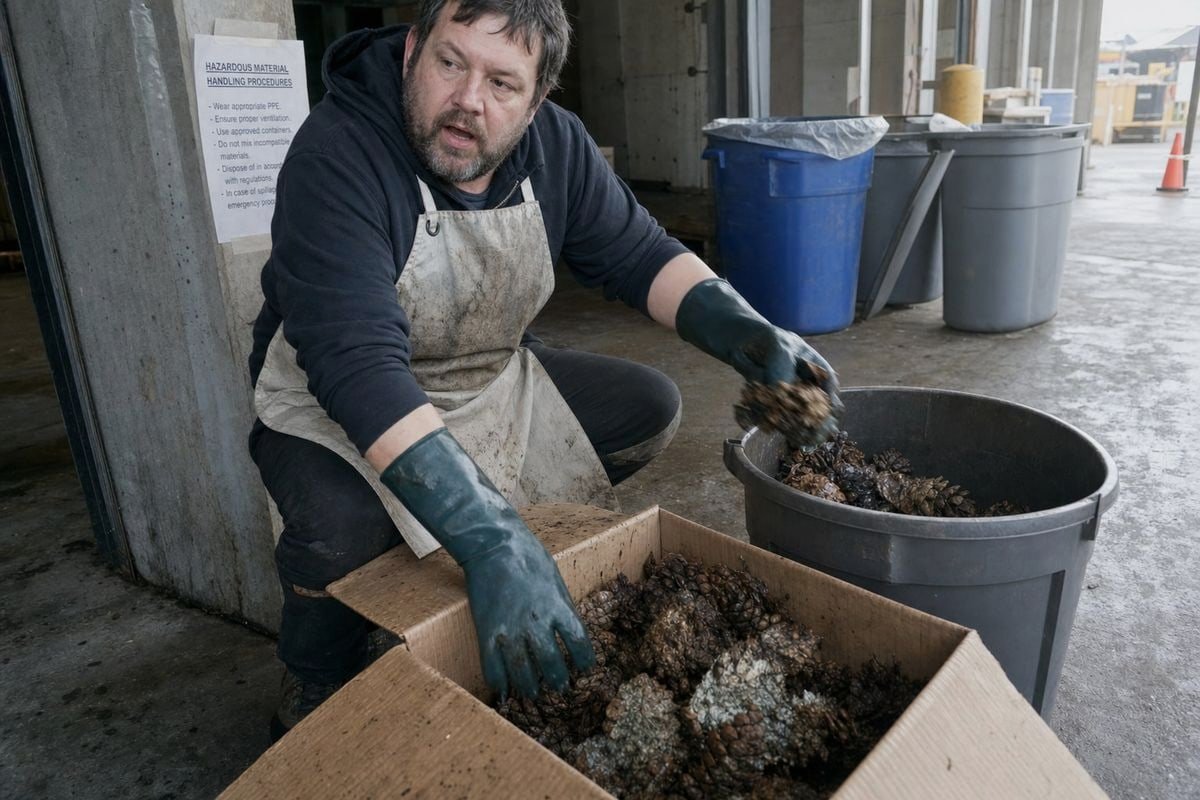
This is fundamentally a cash-versus-margin decision, and the right answer depends on your channel mix. Let me break down how I coach buyers through it.
When Discounting Makes Sense
Discount when the product cannot wait. Torn pouches, faded print, an old private-label design you are replacing, or barcodes tied to a discontinued SKU all lose value while sitting in a warehouse. Move them fast through outlet channels, bundle deals, or festival gift traders. Discounting also makes sense if storage costs exceed the margin you would protect by holding.
When Holding Makes Sense
Hold when the product has a second season ahead of it. Color-flame pinecones are not a summer-only item. In our export data across the US, Germany, and the UK, fireplace-channel demand from November through February often rivals the camping peak. If your stock is sealed, dry, and stored with desiccants, its retail value in December equals its value in July. Selling it at 40% off in September is simply donating margin.
| Scénario | Discount or Hold? | Reasoning |
|---|---|---|
| Sealed stock, winter fireplace channel available | Hold | Full-margin second season ahead |
| Old packaging design being phased out | Remise | Value declines as rebrand rolls out |
| More than one season of forward stock | Partial discount | Free up cash, keep core inventory |
| Damaged or moisture-exposed units | Deep discount or dispose | Cannot risk returns or complaints |
| Tight warehouse space, high storage cost | Discount overflow | Storage cost eats holding margin |
One caution on holding: only hold product you trust. If your supplier's batches vary, last year's leftover stock may perform differently from this year's reorder, and mixed shelf performance damages your brand. That risk leads directly to the next question.
How Do I Choose a Supplier Whose Batch Quality Stays Consistent Year After Year?
Batch consistency is the metric we obsess over on our production line in Ningbo. Every run of color-flame pinecones gets checked against a retained reference sample from the approved first order, because a buyer's carryover stock must match the new season's delivery.
Choose a supplier with real factory ownership, ISO 9001 quality systems, third-party test reports from labs like SGS or Intertek, documented batch QC records, and retained reference samples. Verify that mass production matches the approved sample before committing to multi-year programs.
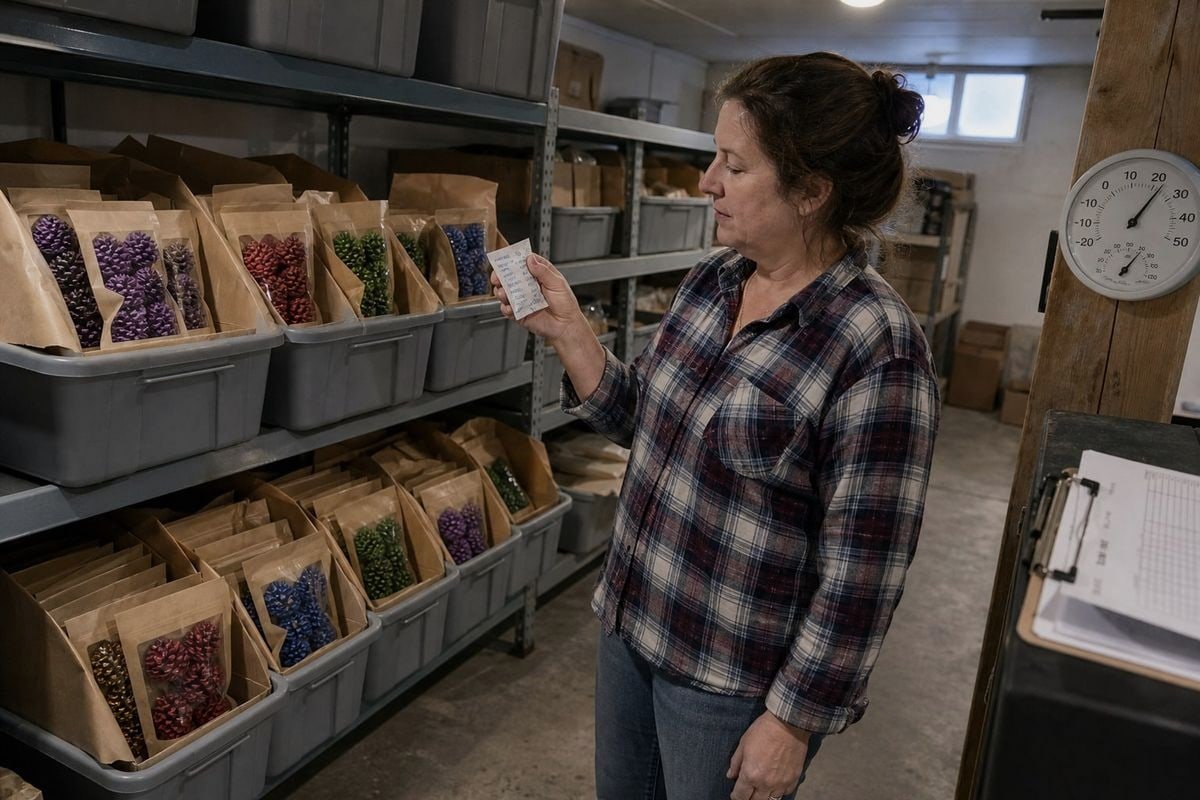
Why does this matter for seasonal clearing? Simple. Your whole hold-versus-discount strategy assumes that stock from last year and stock from next year perform identically. If flame color, burn time, or residue behavior drifts between batches, holding inventory becomes a gamble. Consumers who loved last year's purple flames and get weak green ones this year will blame your brand, not the factory.
What Consistency Actually Requires
In our 17+ years supplying outdoor brands and fireplace distributors across 30+ countries, I have seen three things separate consistent suppliers from unpredictable ones:
- Controlled formulation. The colorant recipe, soak concentration, and drying time must be locked and documented. Traders who source from rotating workshops cannot guarantee this. A real factory can.
- Compliance as a system, not a certificate. ISO 9001 4 and BSCI audits force documented process control. CE marking and SGS or Intertek test reports confirm the chemistry is free of heavy metal toxicity concerns, protects la qualité de l'air intérieur 5 when burned in fireplaces, and will not create hazardous waste headaches for your customers at disposal time.
- Sample-to-mass-production fidelity. Ask any prospective supplier one question: will container number ten match the first sample? Then ask how they prove it. We keep golden samples and batch burn-test logs so the answer is verifiable, not a promise.
Questions Worth Asking Before You Commit
Ask whether the supplier owns its production line or brokers from others. Ask for test reports covering flame colorant chemistry, not just packaging. Ask about residue behavior, because low-quality colorants can accelerate l'accumulation de créosote 6 and force customers into an early chimney sweep inspection, which turns into negative reviews. Ask whether the product supports principes "Leave No Trace" (Ne laisser aucune trace) 7 for the camping channel, since outdoor retailers increasingly demand it. Finally, ask about OEM support: private-label pouches, étiquettes d'avertissement, barcodes, and display packaging determine whether carryover stock still fits your shelf plan next year.
Conclusion
Clearing leftover fireplace colored pine cones is a planning problem, not a fire sale. Sort stock, store it dry, discount selectively, hold quality inventory, and partner with a certified factory whose batches never drift.
Notes de bas de page
1. EPA guidance clarifies compliance requirements for disposing chemically treated waste products. ↩︎
2. WHO fact sheet explains health risks from heavy metal exposure relevant to colorant chemistry. ↩︎
3. Wikipedia explains how silica gel absorbs moisture, supporting the storage recommendation. ↩︎
4. Authoritative .gov source from NIST explaining ISO 9001 quality management and implementation. ↩︎
5. EPA resource on indoor air quality supports claims about safe fireplace burning chemistry. ↩︎
6. Wikipedia explains creosote formation, relevant to chimney safety concerns from residue. ↩︎
7. Wikipedia background on the outdoor ethics framework referenced for camping retail channels. ↩︎



 English
  Spanish
  German
  French
  Arabic
  Portuguese
Rejoignez la conversation