






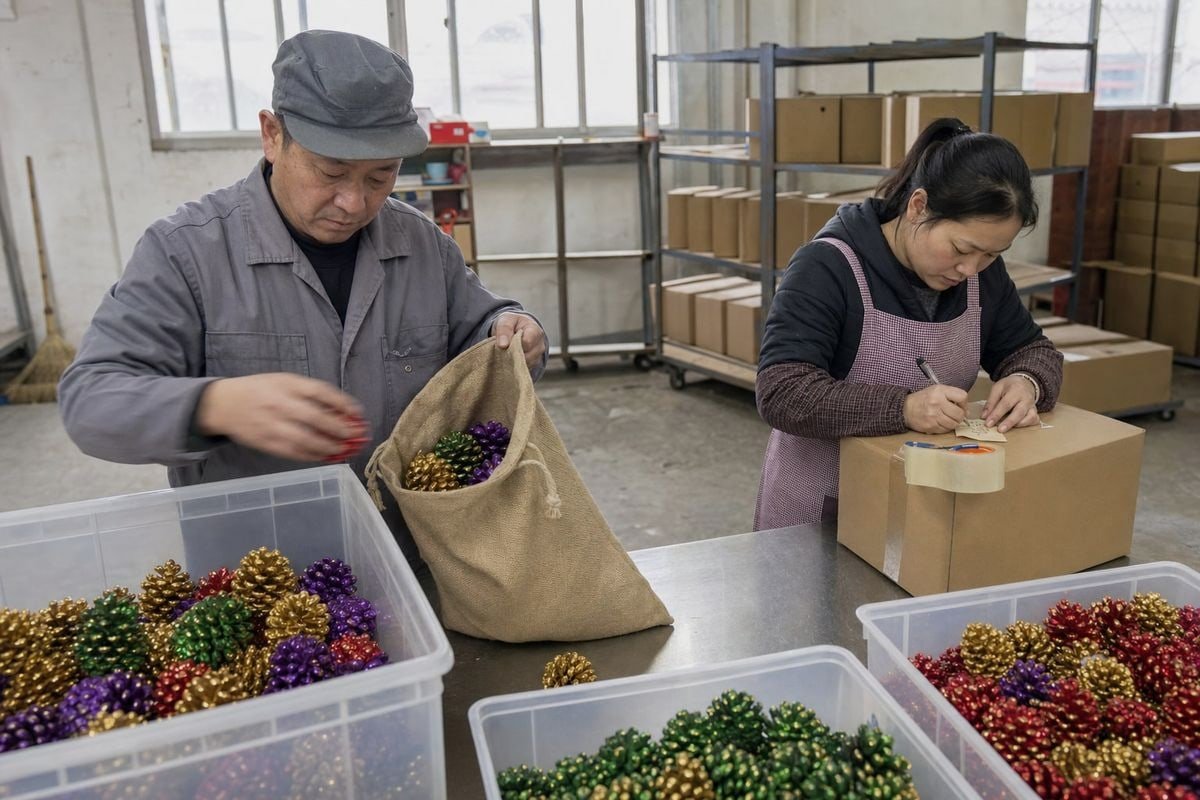
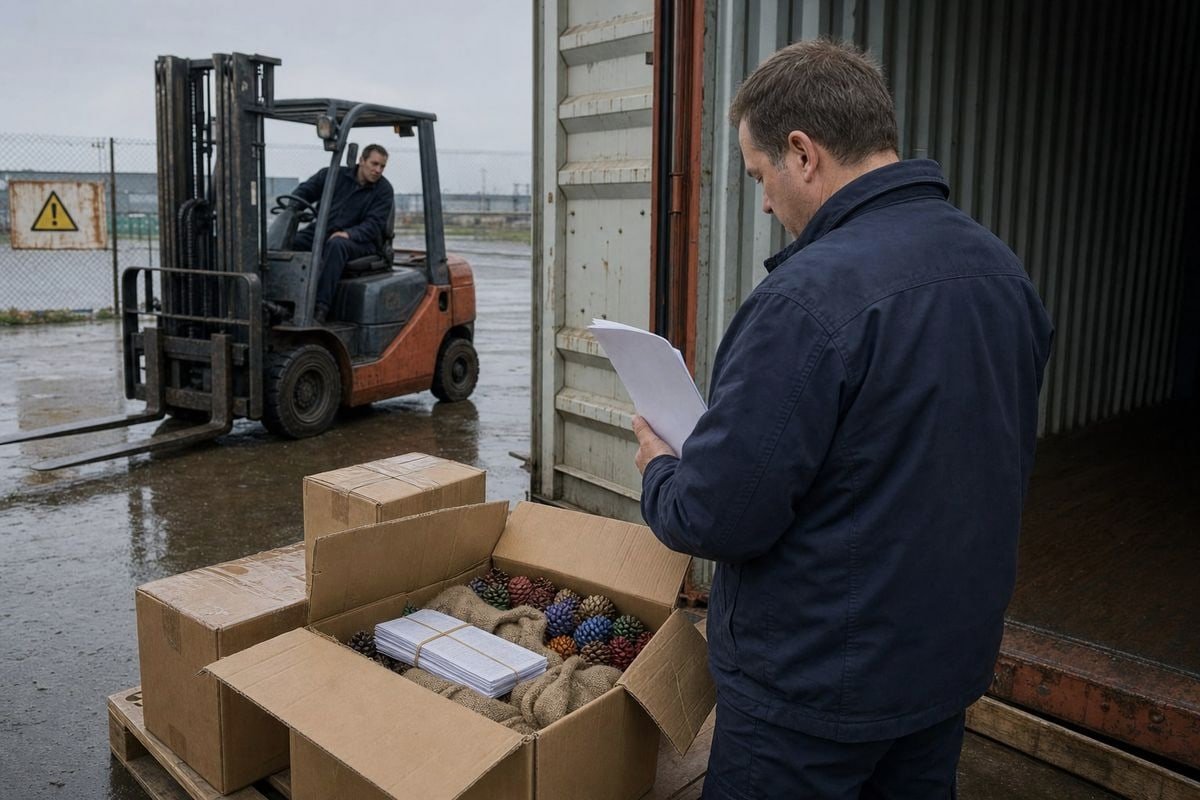
Wood fuel import bans can stop a shipment of colored pine cones at the border. I have watched buyers lose entire holiday seasons because one document was missing. Our factory learned the fix early: classify first, document second, ship third.
To handle wood fuel import bans when buying colored pine cones, classify the cones as treated ornamental products rather than firewood, then secure a phytosanitary certificate, heat treatment certification, and seed-free, bark-free documentation from a supplier registered for your destination market before ordering.
That answer sounds simple. In practice, every step hides a trap. Below, I walk through the documents, the country rules, the supplier checks, and the backup plans — in that order.
What documentation do I need to prove my colored pine cones are exempt from wood fuel import restrictions?
Years ago, one of our German distributors had a container held for eleven days because the treatment certificate listed the wrong kiln temperature. Since then, our export team treats paperwork as part of the product itself.
You need a phytosanitary certificate from the exporting country's plant protection organization, a heat treatment or fumigation certificate showing 56°C for 30 minutes or methyl bromide treatment, a seed-free and bark-free declaration, and commercial documents classifying the cones as ornamental goods, not fuel.
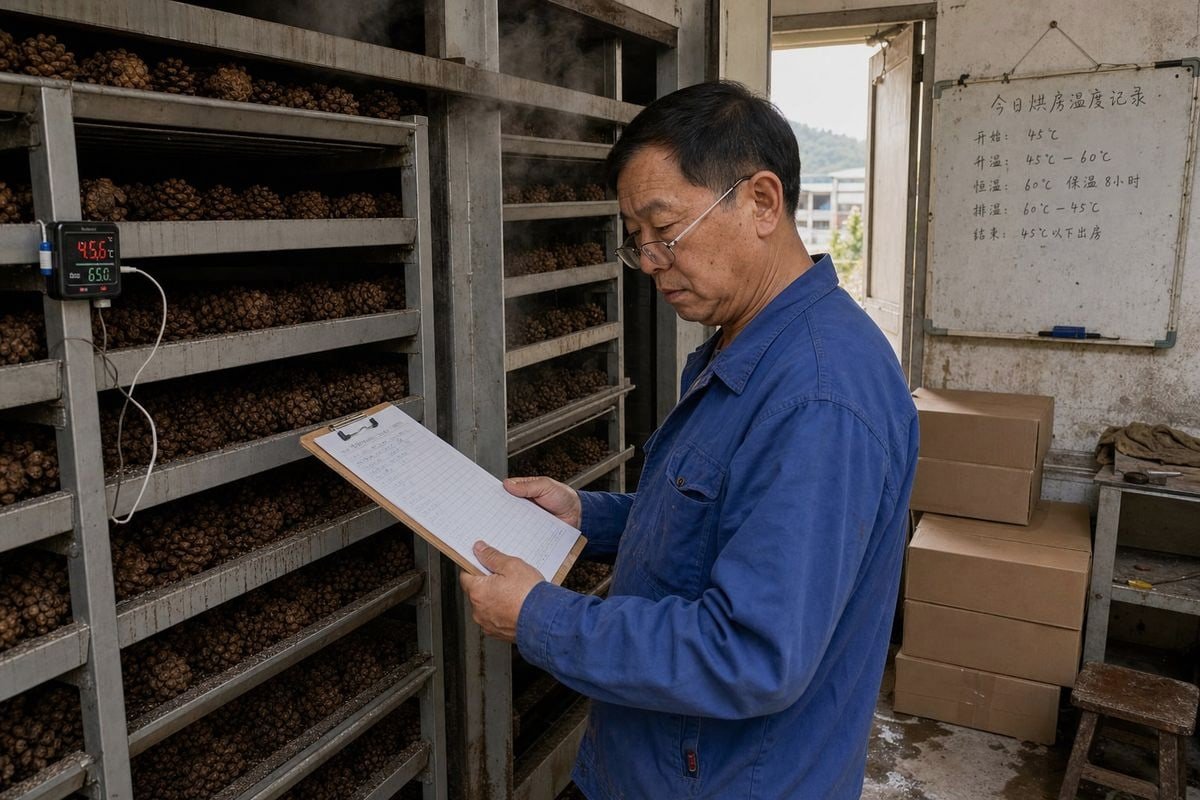
The core issue is not the color coating. Customs officers care about three things: what the product is botanically, how it was treated, and how it is classified on paper. Get those three aligned, and most wood fuel restrictions no longer apply to your consignment.
The document stack, layer by layer
Think of your paperwork as a stack. Each layer answers one question a border officer will ask.
| Document | Ce qu'elle prouve | Qui le délivre |
|---|---|---|
| Certificat phytosanitaire 1 | Cones are free of invasive pests and diseases | Exporting country's plant protection organization |
| Heat treatment certification | Cones were kiln-dried at 56°C for at least 30 minutes | Approved treatment facility, endorsed officially |
| Fumigation certificate (alternative) | Methyl bromide treatment was applied | Licensed fumigation provider |
| Seed-free declaration | No viable seeds remain in the cones | Supplier, backed by inspection records |
| Bark-free certification | No bark fragments that harbor boring insects | Supplier or inspection body |
| facture commerciale avec code SH correct | Product is ornamental, not solid fuelwood | Exportateur |
The classification line matters most. Ornamental dried plant articles sit in a completely different tariff family than wood fuel. If your invoice, packaging, and marketing all say "fire starter fuel," you invite firewood controls. If they say "decorative treated pine cones, seed-free, kiln-dried," you are describing a processed ornamental item. In our experience shipping color-flame pinecones to 30+ countries, we align the invoice wording, the treatment certificate, and the retail packaging copy before anything leaves Ningbo. Mismatched wording between documents is the single most common trigger for a manual inspection.
One more point. The color treatment itself can help you. The metal-salt saturation process changes the cone from raw plant material into a chemically processed article. Documented properly, that processing supports your ornamental classification. But it never replaces the phytosanitary certificate — biosecurity import requirements 2 still apply to the botanical base material.
Which countries currently restrict wood-based fire products, and how does this affect my sourcing plans?
The hardest lesson from our first decade of exporting was that identical products face completely different rules in Canada, the UK, and Australia. A pallet that clears Rotterdam without comment can be destroyed on arrival in Sydney.
Canada, the UK, the EU, the US, and Australia all restrict wood-based fire products, with rules ranging from mandatory kiln-drying and importer registration to near-total bans on untreated conifer material. Your sourcing plan must match the strictest requirement of your destination, not the average.
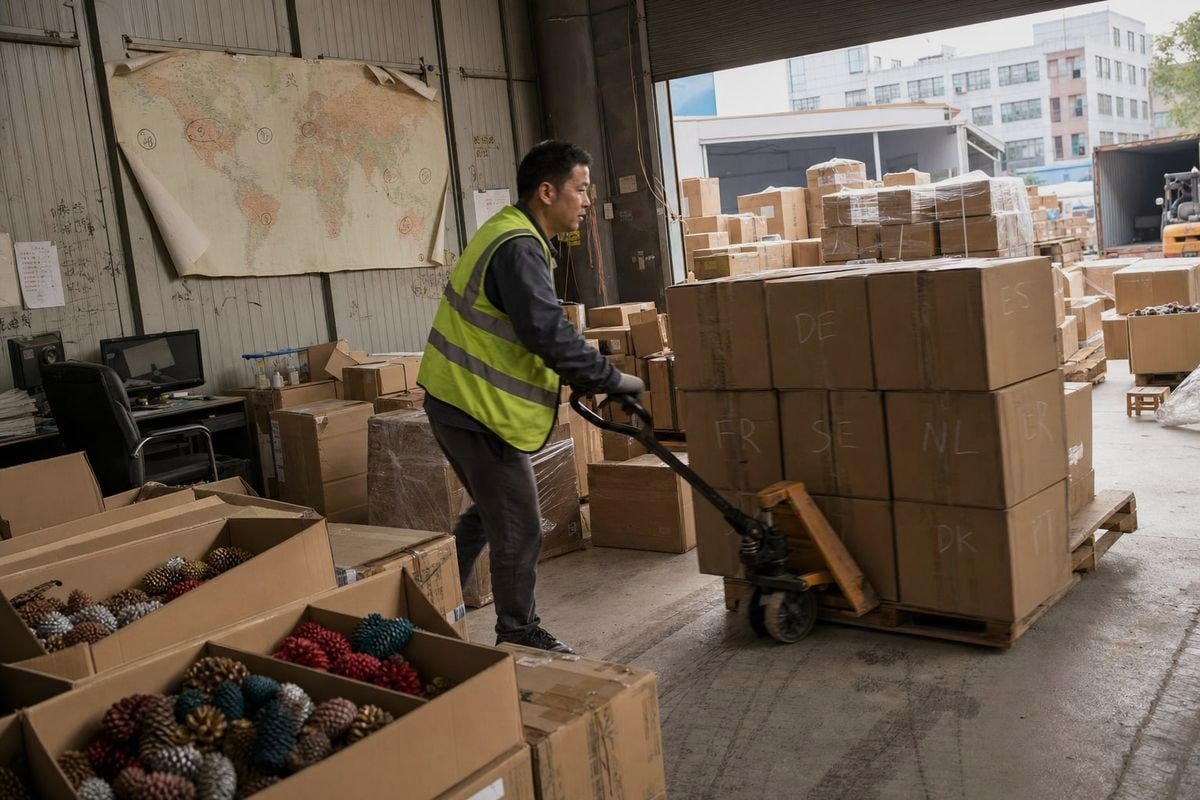
Here is the practical picture, market by market. I have grouped requirements the way our compliance team briefs new buyers.
| Destination | Key restriction | What it means for buyers |
|---|---|---|
| Canada | Dried cones allowed only if seed-free and fumigated or kiln-dried, with official certification | Insist on seed removal and documented treatment |
| Royaume-Uni | Regulated conifer fuel wood must be bark-free or kiln-dried below 20% moisture; importers must register with the Forestry Commission 3 | Register before you ship, not after |
| Union européenne | Bark-free compliance and pest-based prohibitions on high-risk origins | Verify the origin region, not just the origin country |
| États-Unis | USDA APHIS regulations govern plant material entry; Douanes et protection des frontières 4 reviews classification and Lacey Act declarations | File accurate declarations; classification is scrutinized |
| Australie | Explicit biosecurity warnings on pine cones carrying pests, diseases, and viable prohibited seeds | Expect the toughest inspection regime; budget extra lead time |
How this reshapes sourcing decisions
Three consequences follow. First, origin matters as much as treatment. Regions with endemic pests like the règles concernant le nématode du pin 5 or pine processionary moth can face total prohibitions regardless of kiln-drying 6. Ask your supplier where the raw cones were harvested, not just where they were packed. Second, importer registration is a buyer-side task. UK Forestry Commission registration and plant protection permits in some markets cannot be delegated to your Chinese factory — we can prepare the documents, but you must hold the registration. Third, timing shifts. Australia-bound orders from our line get roughly two extra weeks built into the schedule for inspection risk. If your holiday reset date is fixed, work backward from the strictest market first.
The pattern behind all of this is stricter biosecurity enforcement year over year. Regulators are not targeting decorative products specifically. They are targeting conifer material as a pest pathway. Your cones just happen to be conifer material.
How can I verify a supplier's compliance before placing a bulk order for color-flame pine cones?
A purchasing manager from the Netherlands once asked us for our SGS reports before he even asked for pricing. That call changed how I think about supplier vetting — the serious buyers audit first and negotiate second.
Verify a supplier by requesting current phytosanitary and heat treatment certificates, third-party test reports from SGS or Intertek, ISO 9001 and BSCI audits, proof of prior clearances into your specific market, and a factory inspection confirming seed removal and kiln-drying happen in-house.
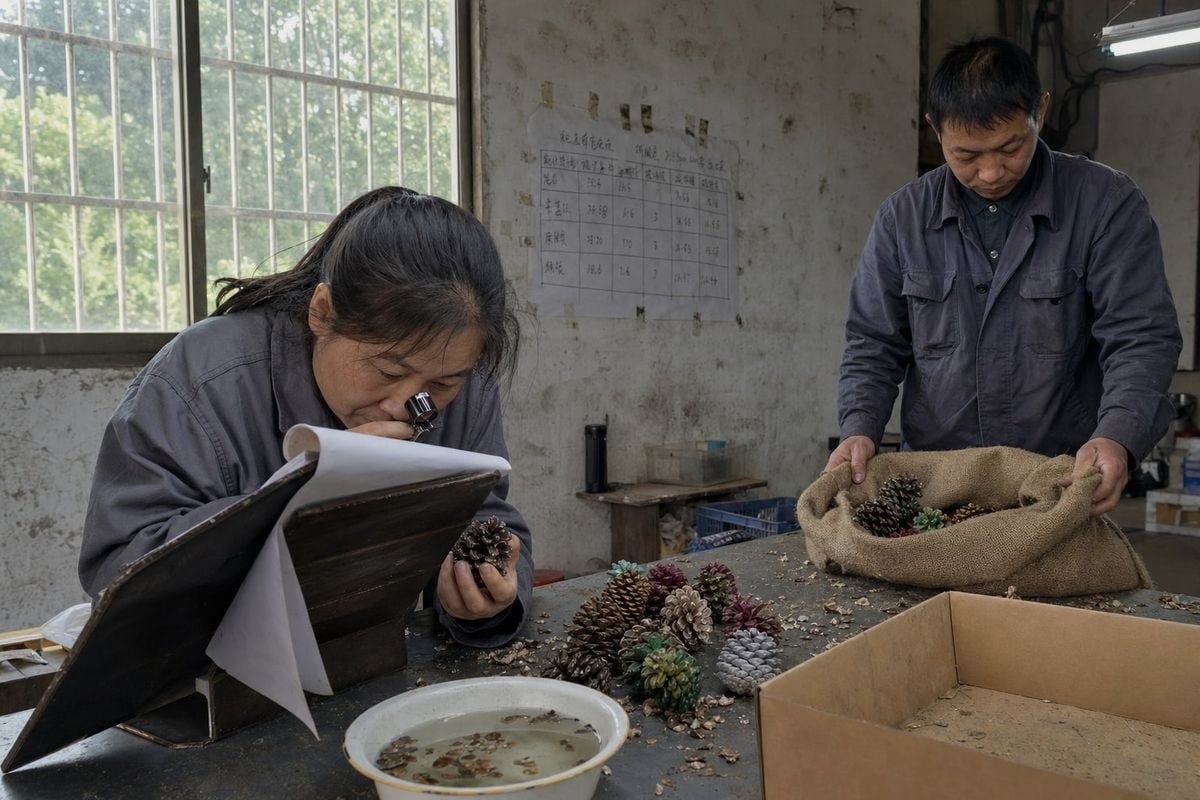
Documents can be forged. Processes cannot be faked as easily. So verify both, in this order.
Un processus de vérification en cinq étapes
- Request the certificate set for a recent shipment, not a template. Ask for a redacted phytosanitary certificate and heat treatment certification from an actual consignment to your region within the last twelve months. A supplier who has cleared UK or Australian customs recently will produce these in a day. Our team keeps clearance records precisely because buyers ask.
- Cross-check treatment claims against les normes ISPM 15 logic. The recurring benchmark is 56°C core temperature for 30 minutes. Ask which facility performed the kiln-drying, and whether it is officially approved. Vague answers like "our cones are dried naturally" are a red flag — sun-drying is not heat treatment.
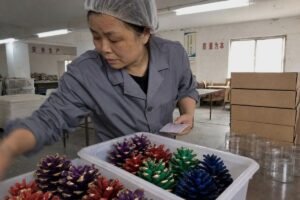
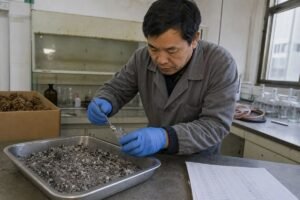
- Confirm seed and bark removal is a controlled process. Seed-free status materially changes admissibility in markets like Canada. Ask how seeds are removed, at what production stage, and how batches are inspected. In our lines, this happens before the color-salt saturation, and QC samples every batch.
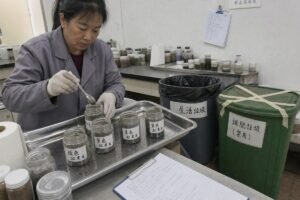
- Validate third-party audits. ISO 9001 7, BSCI, CE marking where applicable, and SGS or Intertek test reports should carry verifiable report numbers. Call the testing body if the order value justifies it.
- Test with a trial order. A small first order tells you two things: whether the paperwork clears your customs, and whether mass production matches the sample. Batch-to-batch consistency is where trading companies stumble and real factories hold steady.
One caution on the classification question. Some intermediaries will suggest labeling everything as "holiday ornaments" to dodge scrutiny. Deliberate misdeclaration to Customs and Border Protection or any EU authority risks seizure, penalties, and a flagged importer record. The right move is accurate classification supported by genuine processing — not creative labeling.
Are there alternative materials or product formats I should consider if wood fuel bans tighten further?
When we developed our Magic Fire color-flame packets, the original goal was simply a mess-free product. It turned out to be our best answer to tightening biosecurity rules, because a paper packet of mineral salts carries no plant material at all.
Yes. Color-flame packets in kraft or plastic sachets, wax-based firestarters, mineral or ceramic cone replicas, and locally sourced cones treated domestically all deliver colored-flame effects while avoiding the phytosanitary certificates and kiln-dried wood product rules that govern imported pine cones.
If your market's rules tighten, you do not have to abandon the colored-flame category. You have four realistic paths, each with trade-offs.
| Alternative | Regulatory exposure | Aesthetic match | Meilleur ajustement |
|---|---|---|---|
| Color-flame packets (kraft bag, jar, or sachet) | Minimal — no wood, no plant material | Full color effect, no cone visual | Camping brands, mass retail |
| Wax-dipped wood firestarters | Low — processed, kiln-dried wood products with wax coating | Rustic look, standard flame | Distributeurs de foyers et de barbecues |
| Ceramic or cast-mineral cone replicas | None — fully inert | Cone shape, reusable in gas fires | Premium home décor lines |
| Domestically sourced cones, treated locally | Domestic rules only — no import controls | Identical to imported cones | Markets with strong local pine supply |
How to weigh the trade-off
The decision usually comes down to what your customer is actually buying. If they want the campfire moment — rainbow flames rising over the fire pit — the packet format delivers that with none of the invasive pests risk and much simpler logistics. Our kraft-pouch packets ship as ordinary consumer goods. If your customer wants the object itself — a purple, gold-tipped cone in a burlap sack on a hearth — then the cone format is the product, and you manage compliance rather than avoid it.
There is also a hybrid strategy I recommend to distributors facing uncertain rules: run both SKUs. Keep colored pinecones for markets where your documentation pipeline is proven, and lead with color-flame packets in markets where biosecurity import requirements are volatile. Private-label packaging makes both feel like one product family, and it de-risks your seasonal buy. Because our lines produce both formats, buyers can shift the mix mid-season without switching suppliers — which is exactly the flexibility that matters when a regulation changes three months before Christmas.
Conclusion
Wood fuel import bans are manageable when you classify colored pine cones correctly, secure treatment and phytosanitary documentation, verify your supplier's real compliance record, and keep packet-based alternatives ready as insurance.
Notes de bas de page
1. IPPC issues international standards governing phytosanitary certification for traded plant products. ↩︎
2. General background on biosecurity concepts underlying the import controls discussed throughout. ↩︎
3. Official UK government page for the Forestry Commission and its importer registration requirements. ↩︎
4. Official U.S. government directory page for the Customs and Border Protection agency. ↩︎
5. Background on the pest driving many conifer import restrictions cited in the article. ↩︎
6. Background on kiln-drying technology referenced as the key heat treatment method. ↩︎
7. Authoritative Wikipedia overview of the international standard for quality management systems. ↩︎
 English
  Spanish
  German
  French
  Arabic
  Portuguese
Rejoignez la conversation