






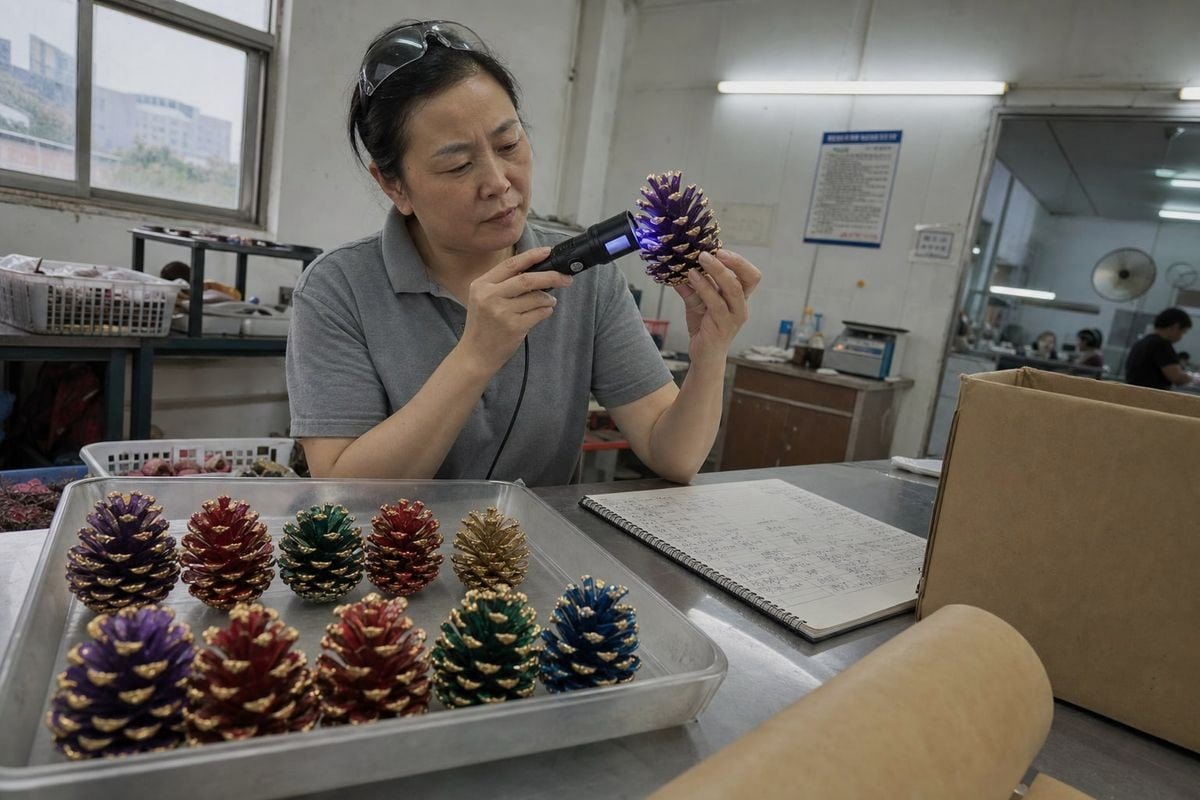
Sur notre gamme de pommes de pin colorées à la flamme, les acheteurs demandent sans cesse si l'agent de coloration à la flamme sur les pommes de pin déclenche les règles REACH et SVHC. Si vous vous trompez, les douanes de l'UE vous le rappelleront.
Oui, un agent de coloration ignifuge sur des pommes de pin peut déclencher des obligations REACH et SVHC si la pomme de pin traitée est mise sur le marché de l'UE et contient une substance restreinte ou une SVHC de la liste candidate au-dessus de 0,1 % en poids. La conformité dépend du produit chimique exact, et non de la pomme de pin elle-même.
La pomme de pin n'est pas le problème juridique. La chimie qui la recouvre l'est. Dans cet article, je vais vous guider à travers les documents, les substances à risque, les rapports de test et les risques douaniers — la même liste de contrôle que nous utilisons avec chaque nouvel acheteur européen.
Quelle documentation dois-je demander pour confirmer la conformité REACH de mon fournisseur de pommes de pin ?
Un distributeur allemand m'a un jour envoyé un e-mail à minuit demandant "le certificat REACH". J'ai dû expliquer gentiment : il n'existe pas de certificat REACH unique. La conformité est une piste documentaire, pas un tampon unique.
Demandez une divulgation complète des ingrédients de l'agent de coloration ignifuge, une déclaration de conformité REACH faisant référence aux restrictions de l'annexe XVII et à la liste candidate de l'ECHA, des rapports de dépistage SVHC par des tiers de SGS ou Intertek, des fiches de données de sécurité pour le colorant, et une confirmation du soutien à la notification de la base de données SCIP le cas échéant.

Une fois que l'agent de coloration à la flamme sèche sur la pomme de pin, la loi européenne traite généralement la pomme de pin finie comme un article. Cela déplace l'attention sur ce que l'article contient et ce que le fournisseur peut prouver. Au cours de nos plus de dix-sept années d'exportation de produits de feu en Allemagne, au Royaume-Uni, en France, aux Pays-Bas et en Pologne, nous avons appris que les acheteurs sérieux demandent cinq choses — et les fournisseurs vagues échouent sur au moins trois d'entre elles.
L'ensemble documentaire de base
| Document | Ce qu'il doit montrer | Signal d'alarme en cas d'absence |
|---|---|---|
| Divulgation des ingrédients | L'exact colorants à base de sels métalliques 1 utilisé et leurs concentrations | Le fournisseur dit que la formule est "secrète" sans preuve par un tiers |
| Déclaration REACH | Déclaration contre les restrictions de l'Annexe XVII et la dernière Liste candidate de l'ECHA 2 version | La déclaration cite une liste candidate obsolète |
| Rapport SVHC SGS/Intertek | Résultats de dépistage inférieurs au seuil de concentration de 0,11 % en poids | Le rapport teste un produit ou un lot différent |
| Fiche de données de sécurité (FDS) | Classification des dangers du colorant selon le CLP | Aucun FDS disponible du tout |
| Lettre de support SCIP | Volonté de fournir des données pour Notification de la base de données SCIP 3 si un SVHC est jamais présent | Le fournisseur n'a jamais entendu parler de SCIP |
Pourquoi la date de la liste candidate est importante
La liste candidate de l'ECHA est mise à jour environ deux fois par an. Une déclaration rédigée sur la base de la liste de 2022 peut manquer des substances ajoutées depuis. Nous vérifions à nouveau nos pommes de pin colorées à la flamme après chaque mise à jour, car une formule qui était conforme la saison dernière peut créer de nouveaux obligations de communication de l'article 33 4 cette saison. Telle est la réalité de la conformité des produits saisonniers : le produit ne change pas, mais la loi change. Demandez à votre fournisseur quelle version de la liste sa déclaration référence, et demandez comment il gère les mises à jour entre les commandes. Un fournisseur avec un véritable processus de conformité répondra en un e-mail. Une société commerciale revendant des marchandises non testées devient généralement silencieuse.
Quelles substances SVHC sont les plus susceptibles d'apparaître dans les agents de coloration ignifuges que je dois dépister ?
Lorsque nous développions notre formule Magic Fire il y a des années, la première chose que nos chimistes ont faite a été de retirer les composés de bore de la liste des ingrédients — bien avant que la plupart des acheteurs ne les demandent.
L'acide borique et le borax (tétraborate de sodium), utilisés pour les flammes vertes, sont les substances les plus risquées car les deux figurent sur la liste candidate de l'ECHA en tant que toxiques pour la reproduction. Le sulfate de cuivre n'est pas une substance extrêmement préoccupante (SVHC) mais entraîne des obligations de classification, d'étiquetage et d'emballage (CLP) en matière de toxicité aquatique. Chaque colorant à base de sel métallique doit être évalué individuellement.

Les colorants à flamme sont des colorants à base de sels métalliques qui fonctionnent par chimie de combustion : le strontium donne le rouge, le cuivre donne le bleu-vert, le potassium donne le violet. Les couleurs se ressemblent d'une marque à l'autre, mais les résultats de conformité diffèrent considérablement selon le sel qui les produit. Certains acheteurs supposent que tous les colorants sont dangereux ; d'autres supposent qu'aucun ne l'est. Les deux hypothèses sont fausses. La formule doit être vérifiée ingrédient par ingrédient.
Classement des risques des colorants à flamme courants
| Substance | Couleur de la flamme | Statut réglementaire | Priorité de dépistage |
|---|---|---|---|
| Acide borique | Vert | SVHC sur la liste candidate (toxicité pour la reproduction) | Critique |
| Borax (tétraborate de sodium) | Vert | SVHC sur la liste candidate (toxicité pour la reproduction) | Critique |
| Sulfate de cuivre | Bleu-vert | Pas un SVHC ; la classification CLP de toxicité aquatique s'applique | Élevé |
| Chlorure de cuivre | Bleu | Pas un SVHC ; les obligations de danger CLP s'appliquent | Élevé |
| Chlorure de strontium | Rouge | Pas actuellement répertorié | Modéré |
| Chlorure de potassium | Violet | Pas actuellement répertorié | Faible |
Trois obligations qui s'additionnent
Si un SVHC dépasse le seuil de concentration de 0,11 % en poids dans l'article, trois obligations peuvent s'appliquer simultanément. Premièrement, l'obligation de communication de l'article 33 : vous devez informer les clients professionnels, et les consommateurs sur demande, de l'utilisation sûre. Deuxièmement, la notification à la base de données SCIP, obligatoire depuis le 5 janvier 2021 pour les articles concernés. Troisièmement, la notification à l'ECHA si le SVHC dans tous les articles importés dépasse une tonne par an. Il existe également un piège plus subtil soulevé dans Article 7(1) du règlement REACH 5: parce que le colorant est destiné à être libéré pendant la combustion, les obligations d'enregistrement de "libération intentionnelle" peuvent s'appliquer indépendamment du statut SVHC. Et si un sel de cuivre agit également comme un agent de conservation de la moisissure sur le cône naturel, le Règlement sur les produits biocides 6 peut entrer en jeu pour les articles traités. C'est pourquoi notre usine conserve une évaluation documentée de la sécurité chimique pour chaque colorant que nous utilisons — il est plus rapide de prouver la conformité à l'avance que de la contester à une frontière.
Comment vérifier les rapports de test SGS ou Intertek d'une usine avant de passer une commande en gros ?
Un compromis que nous évaluons pour chaque nouveau SKU est le coût des tests par rapport à l'accès au marché. Un dépistage complet en laboratoire n'est pas bon marché, mais un conteneur rejeté coûte dix fois plus cher.
Vérifiez le numéro de rapport directement sur le portail de vérification en ligne SGS ou Intertek, confirmez que le nom du produit testé et le lot correspondent à votre devis, vérifiez que la portée des tests couvre les entrées SVHC actuelles et les restrictions de l'annexe XVII, et confirmez que la date du rapport est récente — idéalement moins de deux ans.
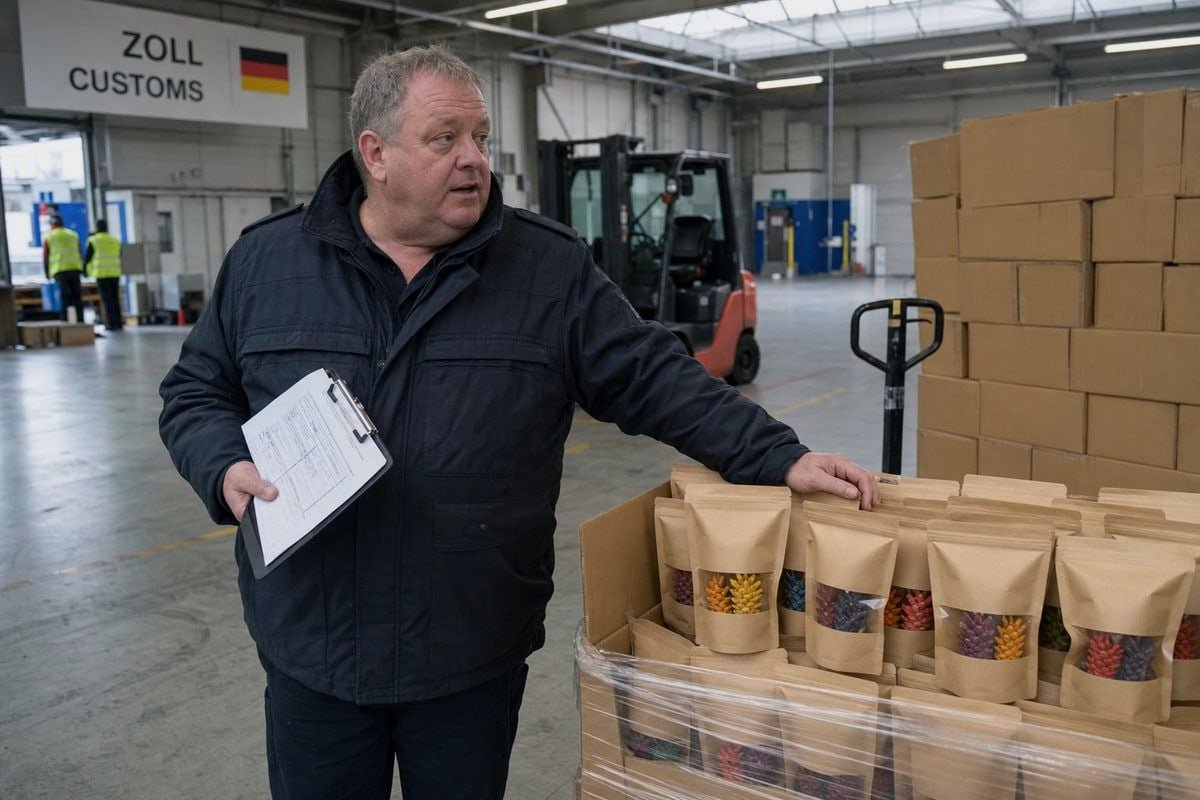
Les faux rapports de test ou les rapports de test recyclés sont un vrai problème dans le commerce des produits d'allumage. Nous avons vu des concurrents distribuer des rapports délivrés pour un produit différent, ou des rapports si anciens qu'ils sont antérieurs à plusieurs mises à jour de la liste des candidats. Parce que nos propres produits portent des rapports SGS et Intertek aux côtés de la documentation ISO 9001, BSCI et CE, nous disons aux acheteurs exactement comment vérifier les documents de n'importe qui — y compris les nôtres.
Un processus de vérification en cinq étapes
- Authentifiez le rapport lui-même. SGS et Intertek proposent tous deux des portails de vérification en ligne et des services de vérification par e-mail. Entrez le numéro de rapport et confirmez que le laboratoire émetteur l'a réellement produit.
- Faites correspondre la description du produit. L'article testé doit être le cône de pin traité ou la formule de colorant que vous achetez — pas un cône non revêtu, pas un produit "similaire".
- Vérifiez la portée du test. Le rapport doit faire référence au dépistage SVHC actuel par rapport à la dernière liste des candidats et aux restrictions pertinentes de l'annexe XVII, pas seulement aux métaux lourds seuls.
- Vérifiez la date et la logique des lots. Demandez comment la cohérence d'un lot à l'autre est contrôlée. Notre chaîne de production à Ningbo effectue un contrôle qualité strict des lots précisément pour que l'échantillon testé reflète le conteneur expédié. Un fournisseur sans cette discipline peut réussir un test une fois et échouer pour toujours par la suite.
- Croisez avec un contre-échantillon. Pour les grosses commandes, envoyez un échantillon scellé de votre envoi d'essai à un laboratoire de votre choix. Les services de dépistage de laboratoire réputés peuvent effectuer rapidement un panel SVHC, et une usine honnête ne s'y opposera jamais.
Faites ces cinq choses et vous éliminez la plupart des mauvais acteurs avant que l'argent ne change de mains. Sautez-les, et vous faites confiance à un PDF.
Les pommes de pin non conformes colorées peuvent-elles faire arrêter mon envoi à la douane de l'UE ?
Un importateur néerlandais m'a dit une fois que l'expédition de son précédent fournisseur était restée bloquée à Rotterdam pendant six semaines en raison d'un manque de documentation chimique. Cette conversation est à l'origine de notre partenariat.
Oui. Les autorités douanières et de surveillance du marché de l'UE peuvent détenir, tester et rejeter des pommes de pin colorées à la flamme contenant des substances restreintes ou des SVHC non déclarées supérieures à 0,1 % en poids. En tant qu'importateur de l'UE, vous assumez l'entière responsabilité légale de la conformité REACH, des rappels de produits et des alertes Safety Gate.
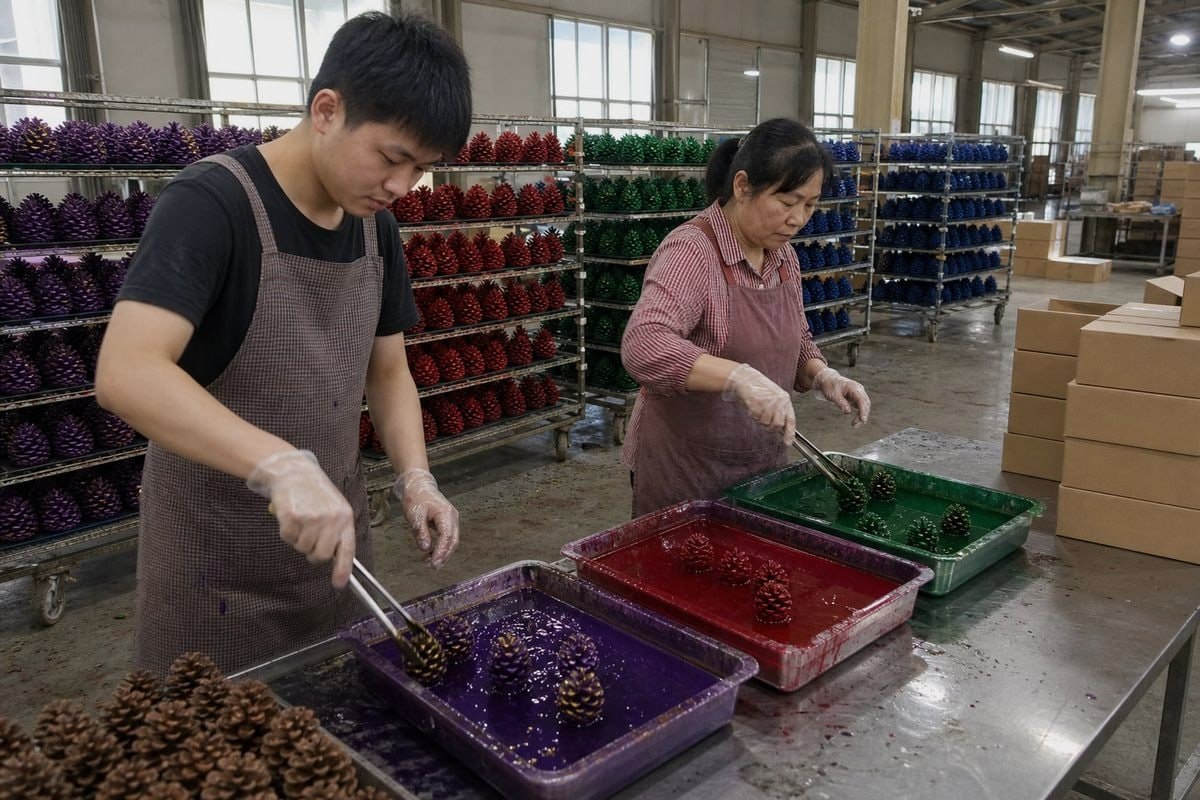
Voici la dure vérité que la plupart des fournisseurs non européens ne vous diront pas : l'importateur enregistré porte le fardeau légal. Si vos cônes de pin traités arrivent d'un atelier en Asie — ou d'un "micro-artisan" utilisant des produits chimiques ménagers de qualité commerciale — c'est vous qui êtes tenu responsable par REACH, pas eux. C'est la lacune de conformité dans le commerce de la décoration saisonnière. Le traitement à petite échelle avec du borax du commerce déclenche toujours une divulgation SVHC de niveau industriel et des obligations SCIP dès que ces cônes sont vendus commercialement dans l'UE.
Ce qui peut réellement mal tourner à la frontière et après
| Scénario | Point de risque | Qui paie |
|---|---|---|
| Un test chimique aléatoire des douanes trouve de l'acide borique supérieur à 0,11 TP3T en poids | Détention, test forcé, destruction possible | Importateur |
| Balayage de surveillance du marché sur les produits saisonniers | Retrait du produit et alerte Safety Gate (RAPEX) | Importateur et détaillant |
| Notification manquante à la base de données SCIP pour un article contenant des SVHC | Sanctions nationales, dépôt rétroactif obligatoire | Importateur |
| La demande de l'article 33 du consommateur reste sans réponse dans les 45 jours | Action d'application, atteinte à la réputation | Vendeur |
| Plainte concernant la fumée toxique ou les vapeurs de métaux lourds dans le domicile d'un consommateur | Responsabilité GPSR en plus des obligations REACH | Vendeur et importateur |
Pourquoi l'angle de la cheminée augmente les enjeux
Certains acheteurs soutiennent qu'il ne s'agit que d'articles décoratifs, donc les règles chimiques semblent sans importance. Cette hypothèse échoue dès qu'un revêtement existe. Pire encore, ce produit est conçu pour brûler à l'intérieur. Sous le Règlement Général sur la Sécurité des Produits 7, les vendeurs sont responsables de la toxicité de la fumée libérée dans le salon d'un consommateur — une couche de risque qui s'ajoute à REACH. Notre approche consiste à éliminer le problème au stade de la formulation : sels métalliques écologiques, pas de composés de bore, pas de substances de la liste des candidats, documentés et testés avant que tout conteneur ne quitte Ningbo. Pour un responsable des achats, cela signifie que le dossier de conformité est expédié avec les marchandises, et non après l'avis de saisie.
Conclusion
Les cônes de pin colorés par la flamme peuvent absolument déclencher des obligations REACH et SVHC — mais seule la chimie décide. Testez, vérifiez, documentez et collaborez avec une usine qui prouve la conformité avant l'expédition.
Notes de bas de page
Explique la chimie de la combustion derrière les couleurs des flammes des sels métalliques mentionnées dans l'article. ↩︎
La liste officielle de l'ECHA définit les substances SVHC référencées tout au long de la discussion sur la conformité. ↩︎
La page officielle de la base de données SCIP de l'ECHA clarifie les obligations de notification obligatoires pour les articles contenant des SVHC. ↩︎
La page de l'ECHA explique les obligations légales de divulgation pour les SVHC au-dessus du seuil dans les articles. ↩︎
L'aperçu REACH de l'ECHA clarifie les obligations d'enregistrement de libération intentionnelle citées dans l'article. ↩︎
La page officielle du règlement de l'ECHA explique quand les agents de conservation de la moisissure au cuivre déclenchent les règles biocides. ↩︎
Contexte sur la loi européenne sur la sécurité régissant la responsabilité de la toxicité de la fumée pour les produits brûlés à l'intérieur. ↩︎


 English
  Spanish
  German
  French
  Arabic
  Portuguese
Rejoignez la conversation