







Every week, buyers ask our export team the same question about FOB and CIF when sourcing colored pine cones Documentación CE 1. Pick the wrong term, and your landed cost quietly balloons.
FOB and CIF differ mainly in who pays for ocean freight and insurance when sourcing colored pine cones. Under FOB, the buyer arranges and pays freight from the origin port. Under CIF, the seller pays freight and minimum insurance to the destination port, yet risk still transfers at loading.
That last point surprises most first-time importers. Let me break down what each term really covers, what it costs, and which one fits your order size.
What Does FOB Actually Include When I Import Colored Pine Cones From China?
A purchasing manager from Germany once asked me why our FOB Ningbo quote looked "incomplete." It was not incomplete. It simply ended where FOB ends — at the ship's rail.
Under FOB, the seller covers production, export packaging, inland transport to the origin port, export customs clearance, and loading onto the vessel. Once colored pine cones are on board, the buyer pays ocean freight, marine insurance, destination charges, import duties, and inland delivery.
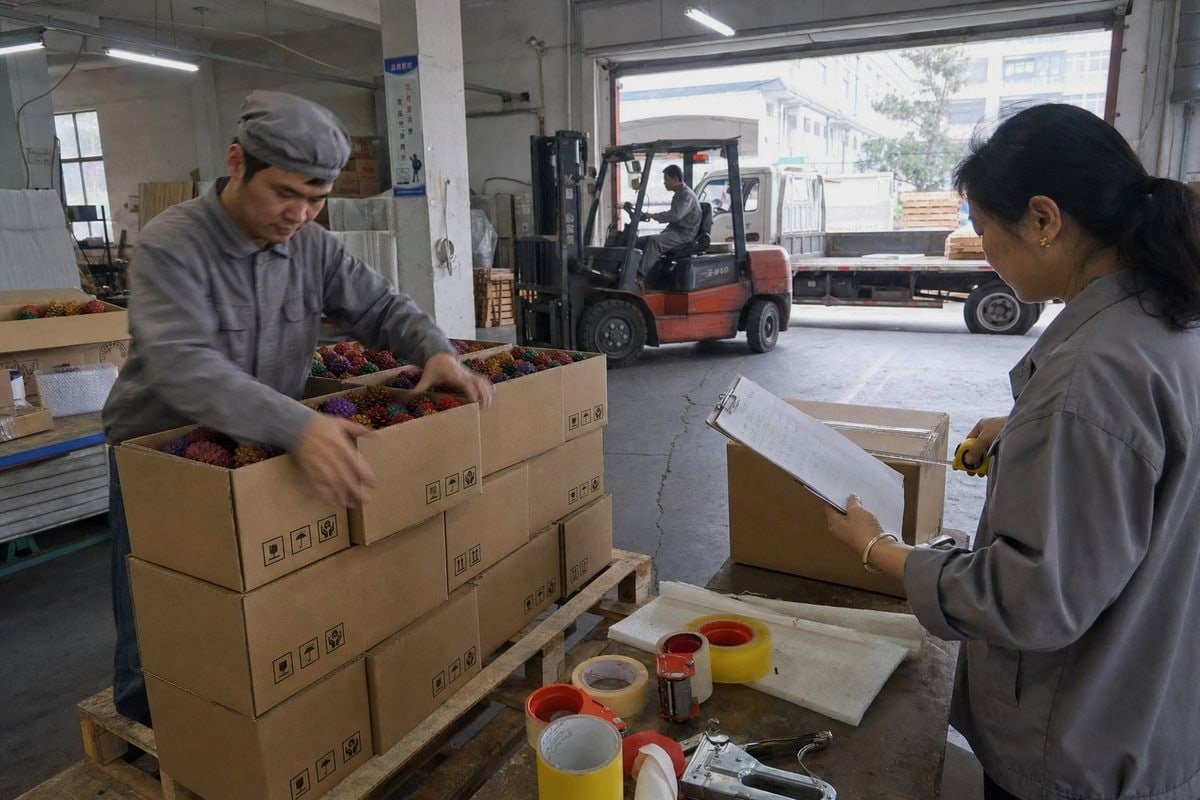
FOB stands for Free On Board 2. In plain terms, our job as the factory ends when your cartons of color-flame pinecones are safely loaded onto the vessel at the named Chinese port. For us, that port is usually Ningbo, because our production lines sit in Ningbo, Zhejiang. Everything before that loading point is our responsibility and is built into the FOB price.
What Sunrich Handles Under FOB
Here is what our FOB Ningbo quote includes for a typical order of colored pine cones:
| Artículo de costo | Included in FOB? | Quién paga |
|---|---|---|
| Manufacturing and QC | Sí | Seller (Sunrich) |
| Export packaging and cartons | Sí | Vendedor |
| Inland trucking to Ningbo port | Sí | Vendedor |
| Despacho de aduanas de exportación | Sí | Vendedor |
| Carga a bordo del buque | Sí | Vendedor |
| Flete marítimo | No | Comprador |
| Marine insurance | No | Comprador |
| Destination port fees and duties | No | Comprador |
One detail matters a lot for this product. Colored pine cones are light but bulky. A container fills up by volume long before it hits any weight limit. So freight efficiency depends on carton design and pallet layout. Under FOB, we still control export packaging, so we optimize carton dimensions to maximize utilización del contenedor 3 before handing over to your forwarder. We also include documentos de cumplimiento — our SGS e Intertek 4 test reports and CE documentation — with every FOB shipment, because treated decorative goods often get questions at destination customs. That paperwork travels with the goods regardless of the Incoterm.
How Does CIF Pricing Affect My Total Landed Cost and Risk Exposure?
The trickiest support case I handled last season involved a CIF buyer who assumed we carried the cargo risk until his port. He was shocked to learn the truth about where risk actually sits.
CIF bundles product cost, ocean freight, and minimum insurance into one seller quote, which simplifies budgeting. However, risk still transfers to the buyer at loading in China, and CIF excludes destination port fees, customs duties, and inland delivery, so your landed cost is always higher than the CIF price.
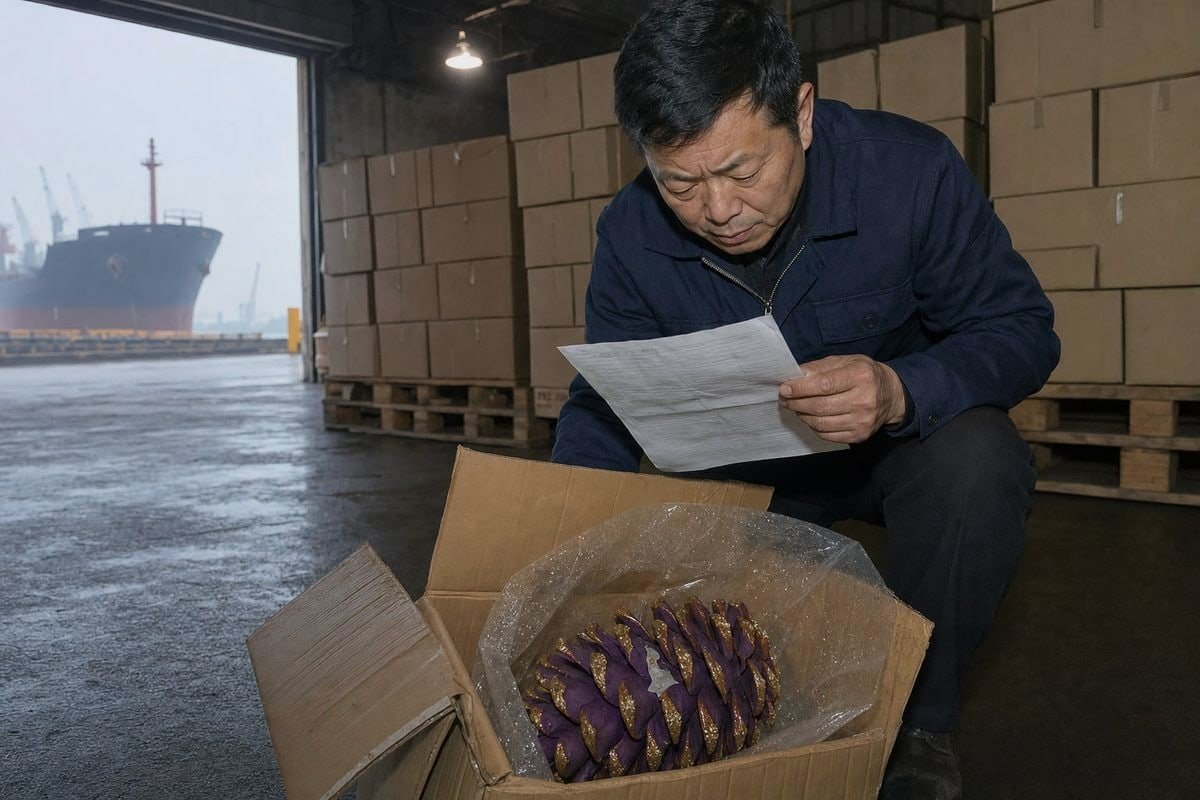
The biggest misunderstanding in this whole topic sits right here. Many buyers believe CIF means the seller bears risk until the destination port. It does not. Under CIF, we pay for freight and insurance to your port, but the risk of loss or damage 5 transfers to you the moment the goods are loaded on the vessel in Ningbo. That is why the insurance exists — it protects you, not us, during the ocean voyage.
The Minimum Insurance Trap
CIF only requires the seller to buy minimum cover, typically 110% of invoice value under Institute Cargo Clauses C 6. That is thin protection. For colored pine cones, this matters more than for hardened industrial goods. Pine cones are fragile in bulk and sensitive to moisture. Crushed scales, chipped paint, or mold from container condensation may not be covered under Clauses C. When we quote CIF, we tell buyers this openly and offer to arrange broader Clauses A cover at a small premium. Not every supplier will.
A Sample Landed-Cost Comparison
Here is a simplified hypothetical for one 20-foot container of colored pine cones to a US port:
| Componente de costo | FOB Approach | CIF Approach |
|---|---|---|
| Product (FOB Ningbo value) | $18,000 | Embedded in CIF price |
| Flete marítimo | $2,200 (buyer negotiates) | Included, marked up |
| Seguro | $150 (buyer chooses cover) | Included, minimum cover only |
| CIF quote total | — | $21,000 |
| Destination port and handling fees | $800 | $800 |
| Duties and customs clearance | $1,100 | $1,100 |
| Transporte interior | $900 | $900 |
| Estimated landed cost | $23,150 | $23,800 |
The numbers are illustrative, but the pattern is real. CIF simplicity carries a hidden margin, and destination charges still land on you either way.
Which Incoterm Gives Me Better Control Over Freight and Delivery Timelines?
Seasonality drives everything in our business. Colored pine cones sell for autumn and holiday décor, which means our export calendar peaks exactly when ocean freight rates and port congestion peak too.
FOB gives buyers clearly better control over freight and timelines. You choose the forwarder, negotiate rates, select the carrier and route, and can switch providers fast during disruptions. Under CIF, the seller's logistics chain controls your shipment, limiting your visibility and flexibility.

Control matters most when things go wrong. During peak season, vessels roll bookings, ports congest, and transit times slip. Under FOB, your own forwarder works for you. You can push for an earlier sailing, reroute through a different port, or pay for a premium service when a retail deadline is at stake. Under CIF, you are locked into whatever chain we or our forwarder selected. If a shipment gets stuck, you resolve it through us, which adds a communication layer and costs you days.
Where Each Term Wins on Control
- Carrier and route selection: FOB wins. You pick the shipping line and transit path.
- Freight rate negotiation: FOB wins. You shop rates directly, which matters for bulky, lightweight cargo like pine cones where volume drives cost.
- Consolidation flexibility: FOB wins. Many of our buyers consolidate colored pine cones with our Magic Fire packets, wax torches, and firestarters — or with goods from other suppliers — into one seasonal container.
- Coordination effort: CIF wins. One quote, one contact, fewer moving parts.
- Access to supplier freight relationships: CIF can win on smaller LCL shipments, where our long-standing consolidation channels out of Ningbo sometimes beat what a small buyer can source alone.
Timeline Visibility
In our 17-plus years shipping to more than 30 countries, buyers who manage freight under FOB consistently have better tracking visibility. Their forwarder reports to them directly. CIF buyers depend on our updates, and while we respond quickly in English, no relay is as fast as a direct line. For seasonal décor with hard shelf dates, that difference can decide whether your product hits stores in October or November.
Should I Choose FOB or CIF for My First Trial Order With Sunrich?
Trial orders teach us a lot about our buyers. Over the years, our team in Liuyang has guided hundreds of first-time importers through this exact decision, and the answer follows a clear pattern.
Choose CIF for your first trial order if you lack a freight forwarder and want one simple quote. Choose FOB if you already have a forwarder, plan to consolidate products, or want full rate transparency. Many buyers start CIF, then switch to FOB as volumes grow.

There is no universally correct answer, only the right fit for your situation. A first trial order of colored pine cones is usually small — often a few pallets shipped LCL rather than a full container. At that scale, the freight savings you might capture under FOB shrink, while the coordination burden stays the same. That is why we often suggest CIF for genuine first-timers. You get one number, one contract, and one point of contact while you evaluate our product quality, our packaging, and how the goods sell in your market.
Una guía de decisión sencilla
| Su situación | Término recomendado | Por qué |
|---|---|---|
| First import ever, no forwarder | CIF | Simplest path; we handle freight and insurance |
| Small LCL trial order | CIF | Our consolidation channels from Ningbo are often cheaper |
| You have a trusted forwarder | FOB | Your rates, your control, full transparency |
| Consolidating multiple products or suppliers | FOB | You control the container plan |
| Repeat container volumes | FOB | Rate negotiation power grows with volume |
| Tight seasonal retail deadline | FOB | Direct control to fix delays fast |
Questions to Ask Before You Confirm Either Term
- Which exact port is named in the quote?
- Is the CIF insurance minimum Clauses C cover, or broader Clauses A?
- Are any destination charges included, or all excluded?
- Who handles export clearance and provides compliance documents for treated decorative goods?
- How are the colored pine cones packed to prevent crushing, moisture, and paint damage in transit?
Whichever term you pick, our side of the deal stays constant. Your trial sample reflects mass-production quality because the same lines and the same batch QC produce both. Our ISO 9001, BSCI, CE, and SGS/Intertek documentation ships with every order, FOB or CIF. And if you later want private-label pouches, display boxes, or barcoded retail packaging, we build that into the same quote structure without changing the Incoterm logic 7.
Conclusión
FOB and CIF split freight and insurance duties differently, but both transfer risk at origin loading. Match the term to your logistics capability, then verify insurance, packaging, and destination costs before ordering.
Notas al pie
1. Explains the EU conformity marking behind the compliance documentation mentioned. ↩︎
2. Explains the Incoterm definition underlying the seller's shipping responsibility discussed. ↩︎
3. ISO sets container and packaging standards relevant to shipping efficiency discussed. ↩︎
4. SGS is a leading third-party inspection body referenced for compliance testing. ↩︎
5. Background on Incoterms rules governing when cargo risk transfers between parties. ↩︎
6. Defines the marine insurance standard referenced as CIF's minimum coverage level. ↩︎
7. Official ICC source defining Incoterms rules governing FOB and CIF obligations. ↩︎



 English
  Spanish
  German
  French
  Arabic
  Portuguese
Únete a la conversación