






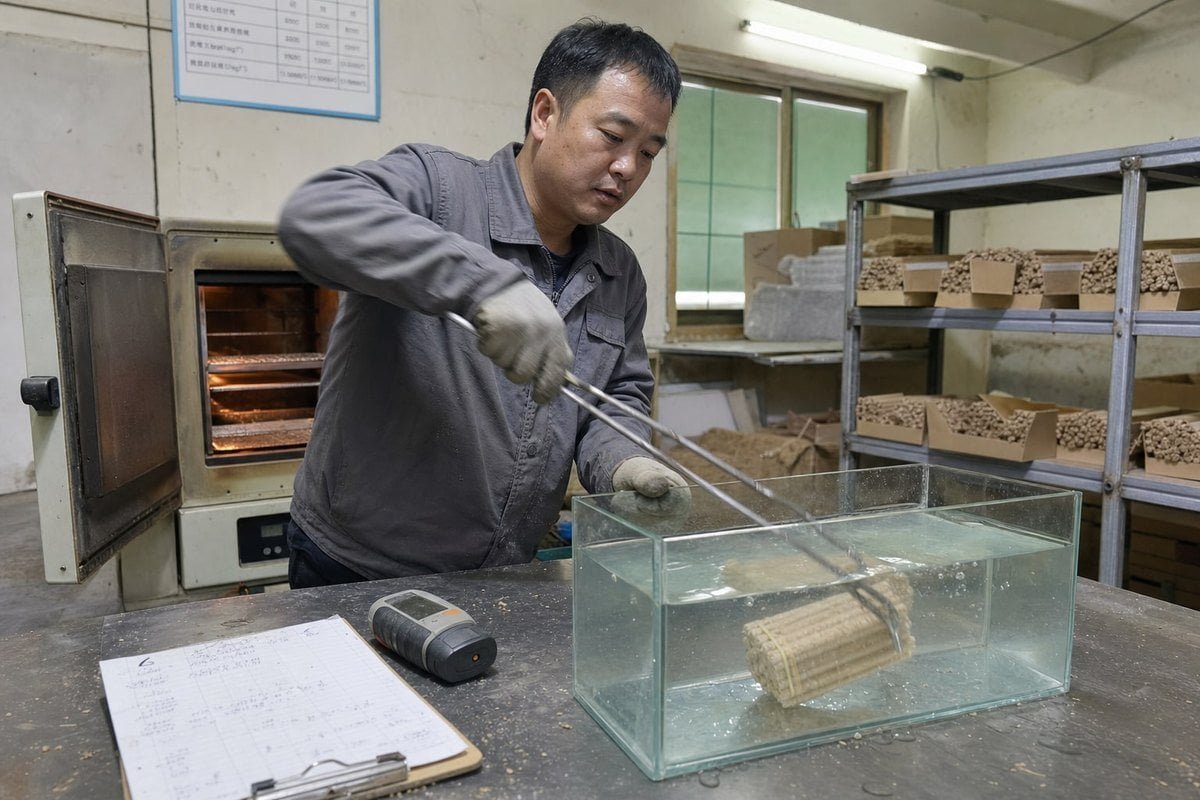
Waterproof and moisture resistance of wood fire starters is a question I hear weekly from buyers, because one soggy container of returns can wipe out a season's margin on our production line.
Waterproof and moisture resistance of wood fire starters is measured through moisture content percentage tests like ASTM D4442 oven-drying, water absorption rate after immersion, relative humidity conditioning, contact angle checks on wax coatings, and practical submersion testing followed by ignition reliability verification.
Those methods sound technical. They are actually simple to understand once you break them down auditorías sociales BSCI 1. Let me walk you through how each one works, and how to use them when you source.
What Certifications or Test Reports Confirm the Waterproof Rating I Need for My Market?
A German distributor once asked me for "the waterproof certificate" for our wax-dipped wood rolls 2. There is no single certificate. What exists is a stack of test reports, and knowing which ones matter saves you real money.
No single certification covers waterproofing for fire starters. Instead, buyers rely on SGS or Intertek test reports covering moisture content percentage, water absorption rate, and post-submersion ignition, supported by ISO 9001 quality systems, CE conformity, and ASTM D4442-based moisture verification.
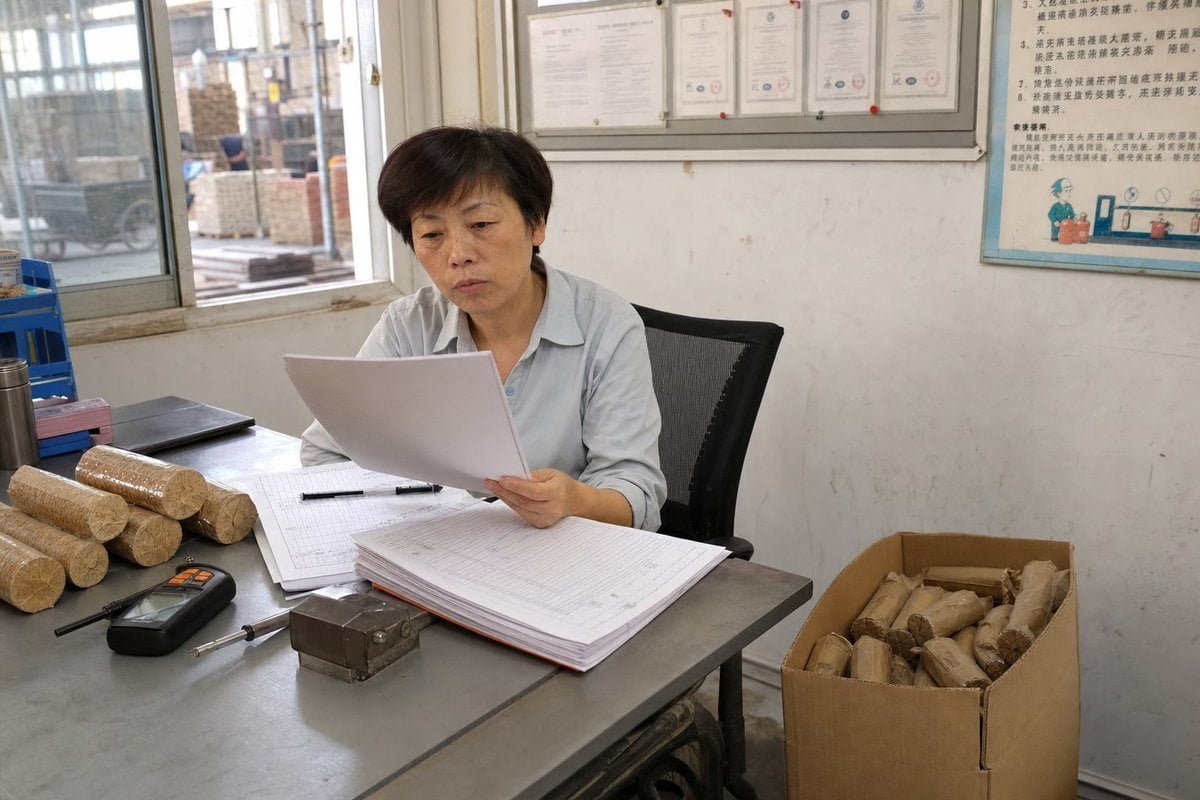
Here is the honest picture. "Waterproof" is a marketing word, not a regulated rating for fire starters. What third-party labs 3 actually test are measurable proxies. In our seventeen-plus years exporting to the US, Germany, the UK, and beyond, we have learned that serious buyers ask for the underlying data, not the label.
The Reports That Actually Matter
Labs like SGS e Intertek 4 can run defined protocols on request. The most useful ones for wood-based starters are:
| Test / Standard | What It Measures | Por qué le importa |
|---|---|---|
| ASTM D4442 oven-drying | Absolute moisture content percentage of the wood fiber | Confirms the core material shipped dry (typically under 20%) |
| Water absorption rate test | Mass gain after timed immersion | Shows how well the paraffin wax coating seals the fibers |
| Relative humidity exposure (e.g., 90% RH conditioning) | Moisture regain from humid air | Predicts warehouse and retail-shelf behavior |
| Post-submersion ignition test | Whether the starter lights after soaking | The real-world question your customer cares about |
| Burn time consistency check | Flame duration before and after wetting | Verifies performance, not just water repellency |
Coincidencia de informes con su mercado
Different markets weigh these differently. US retail sourcing channels usually want SGS or Intertek reports plus proper warning labels and barcodes. EU buyers add Conformidad CE 5 and often BSCI social audits on the factory itself. We keep all of these current precisely because our buyers treat compliance as a hard requirement, not a nice-to-have. My advice: request the actual lab report PDF, check the test date, and confirm the tested sample matches the product spec you are ordering. A report from three years ago on a different wax formula tells you very little.
How Does Sunrich’s Manufacturing Process Ensure Consistent Moisture Resistance Across Every Batch I Order?
There is a trade-off we weigh on every production run in Ningbo: dip the wood rolls in wax longer for a thicker seal, or keep cycle times short for cost. We choose the seal, and we control it batch by batch.
Sunrich controls moisture resistance through incoming wood fiber moisture checks, controlled drying below a set moisture content percentage, temperature-controlled paraffin wax dipping with verified coating weight, and per-batch sampling for water absorption rate and ignition reliability before any container ships.
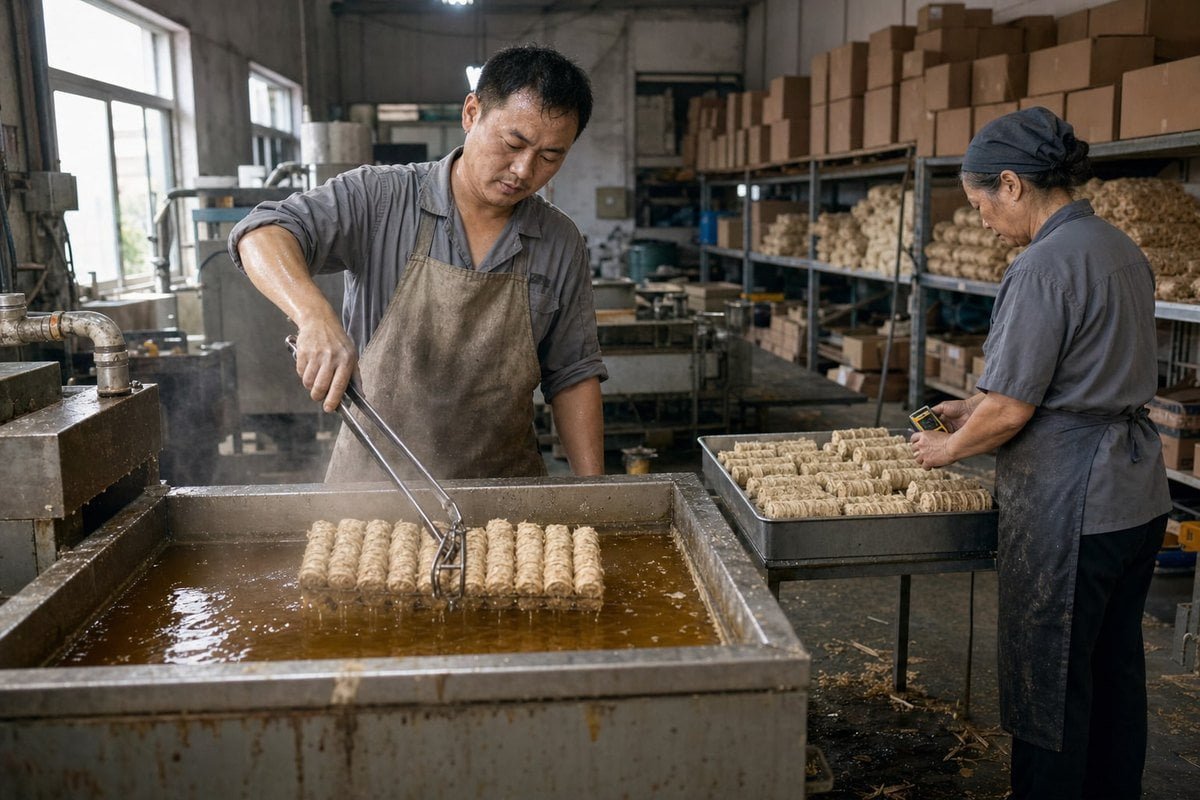
Consistency is the whole game in B2B. A buyer does not judge us on our best batch. They judge us on our worst one. That is why our process is built around checkpoints, not hope.
Our Batch Control Sequence
- Incoming material check. Wood wool and excelsior fibers are hygroscopic by nature. We measure incoming moisture with pin-type meters and reject material above our internal threshold.
- Controlled drying. Fibers are dried to a stable, low moisture content percentage before wrapping. Wet fibers under wax create trapped moisture that ruins ignition later.
- Wax bath control. Our paraffin wax coating is applied at a monitored temperature range. Too hot, and the coating is thin. Too cool, and coverage is uneven. We weigh sample pieces before and after dipping to confirm coating weight.
- End-grain attention. The exposed roll ends are the weak point where capillary wicking starts. Our dipping method ensures the ends are sealed, not just the sides.
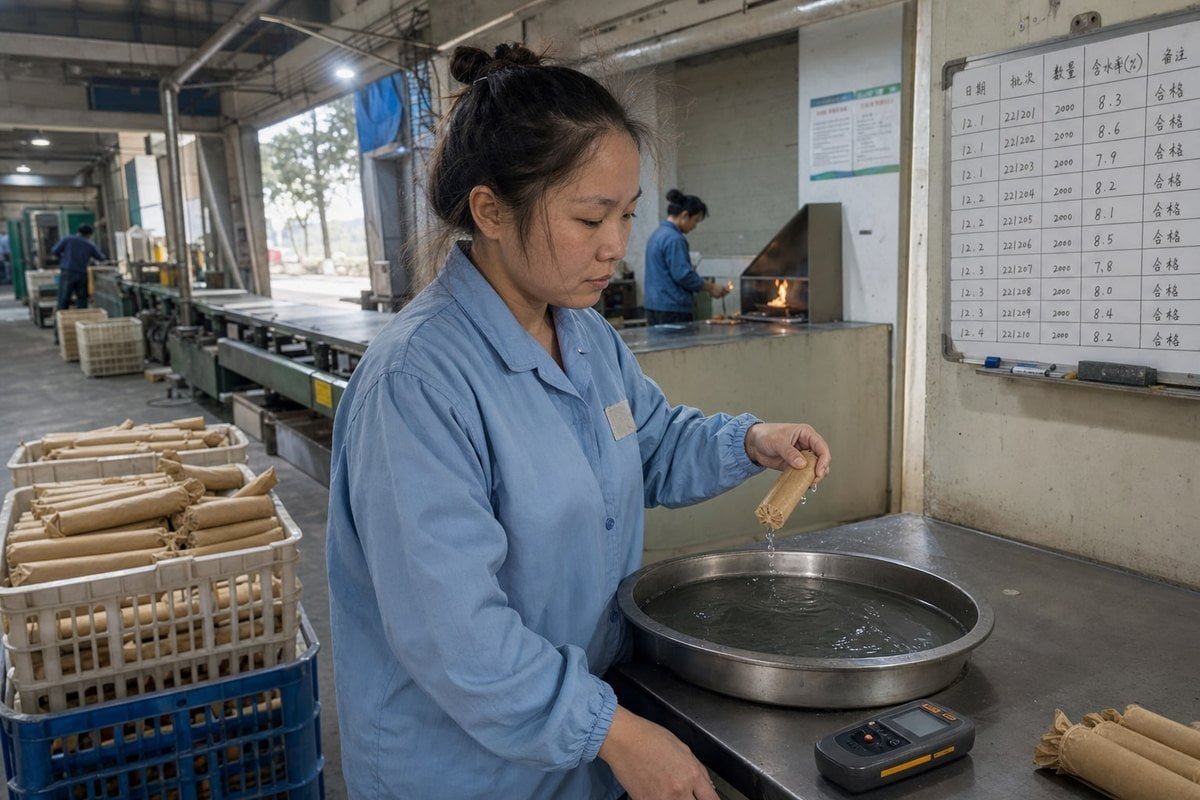
- Per-batch verification. From each batch, QC pulls samples for a timed water immersion, then attempts ignition and records burn time consistency against spec.
- Pre-shipment documentation. Batch records are kept so any question from a buyer can be traced back to a specific run.
Why the First Sample Matches Mass Production
Because these checkpoints are the same for a sample run and a full container run, the sample you approve reliably reflects what arrives at your warehouse. That is the practical meaning of manufacturing depth. A trading company cannot show you a wax bath temperature log. We can, because we run the lines ourselves.
What Should I Look for When Evaluating Wood Fire Starter Samples for Water and Humidity Resistance?
A Canadian buyer once told me he approved samples by lighting one on his desk. Six months later, humidity in his warehouse taught him a harder lesson. Now he tests the way we recommend below, and so should you.
Evaluate samples with a five-minute submersion test followed by ignition, a mass gain check for water absorption rate, a water droplet test on the wax surface, a high-humidity exposure over several days, and a burn time comparison between dry and wetted pieces.

You do not need a laboratory to run a meaningful evaluation. You need a kitchen scale, a bowl of water, a lighter, and a timer. The trick is testing the right things in the right order.
A Practical Sample Test Plan
| Paso | Método | Pass Signal |
|---|---|---|
| 1. Dry baseline | Light one starter as received; time the burn | Fast ignition, steady flame matching claimed burn time |
| 2. Droplet check | Place water drops on the coated surface | Water beads up instead of soaking in, indicating good hydrophobicity |
| 3. Submersion testing | Fully submerge a starter for 5–7 minutes | Starter still ignites within a reasonable number of attempts |
| 4. Absorption weight | Weigh before and after immersion | Low mass gain shows the coating limits the water absorption rate |
| 5. Humidity soak | Leave a starter in a bathroom or humid room for 3–5 days | It still lights promptly, proving resistance to relative humidity exposure |
| 6. Wet-vs-dry burn | Compare flame duration of wet and dry pieces | Similar burn times mean real performance, not just surface repellency |
Reading the Results Critically
Separate three outcomes in your notes. Truly waterproof means the starter ignites directly after submersion. Water-resistant means it survives splashes and humidity but fails a full soak. Recovers-after-drying means it works only once it dries out. Each level can be acceptable, but your packaging claims must match the real level. In our experience, a 50% wood fiber and 50% paraffin 6 composition, properly applied, delivers reliable post-soak ignition. Plain uncoated wood wool does not. Also check the end grain closely. If water wicks visibly into the roll ends within seconds, the coating process cut corners. That is the single fastest tell I know when I examine a competitor's sample.
Will the Waterproof Performance Hold Up During Long-Distance Shipping and Storage Before It Reaches My Customers?
Ocean freight taught us more about moisture than any lab ever did. A container crossing from Ningbo to Rotterdam or Los Angeles cycles through heat, cold, and condensation for weeks, and the product must arrive ready to sell.
Yes, when three layers work together: a stable paraffin wax coating that resists hygroscopic regain, sealed retail packaging that blocks humidity, and container-level protection like desiccants and dry stowage. Sunrich validates all three so ignition reliability survives months of transit and warehouse storage.
Waterproofing is a system, not a single feature. A perfectly coated starter inside a flimsy box can still fail if the box collapses and the product sits against a damp container wall. So we think in layers.
The Three Layers of Transit Protection
| Capa | Riesgo que aborda | What We Do |
|---|---|---|
| Nivel de producto | Humidity regain into the fiber core | Verified wax coverage that keeps the water absorption rate low over time |
| : etiquetas de advertencia, texto de precaución, códigos QR de lote y códigos de barras colocados para cumplir con las normas de etiquetado de la UE y EE. UU. | Condensation and humid retail stockrooms | Sealed or lined boxes, with custom private-label options that protect as well as sell |
| Container level | Ocean transit condensation ("container rain") | Desiccant placement, pallet clearance from container walls, moisture-checked cartons |
Storage Advice We Give Every Buyer
Once the goods land, storage habits matter. We advise buyers to keep pallets off concrete floors, avoid unheated metal warehouses in coastal climates where possible, and rotate stock first-in, first-out. Wax-coated starters are far more stable than resin-impregnated wood or untreated kindling, but no wood product is immune to years of extreme relative humidity 7 exposure. Realistically, our wax-dipped rolls hold their performance through normal shipping timelines plus a full retail season without measurable loss in ignition reliability. If your market involves very long warehouse holds, tell us upfront. We can adjust packaging specs, add inner liners, or tighten the coating weight for that scenario. That kind of adjustment is exactly what one-stop OEM support is for, and it is far cheaper than handling returns.
Conclusión
Waterproof claims without data are a liability. Measured moisture content, real submersion testing, batch-level QC, and layered packaging turn that risk into a product your customers trust. Ask us for the reports.
Notas al pie
1. The amfori BSCI audit is the leading global supply chain management system for social compliance in factories. ↩︎
2. Wikipedia entry for wood wool, the technical term for the fibers used to create wood fire starter rolls. ↩︎
3. ISO provides the international standards for how third-party labs conduct conformity assessments and product testing. ↩︎
4. SGS and Intertek are the primary global authorities for consumer product testing and moisture verification reports. ↩︎
5. Official European Commission guidance on CE marking requirements for products sold within the European Single Market. ↩︎
6. Technical background on paraffin wax, the hydrocarbon used to provide waterproof coatings for wood-based fire starters. ↩︎
7. National Weather Service explanation of relative humidity and its physical effects on hygroscopic materials like wood. ↩︎



 English
  Spanish
  German
  French
  Arabic
  Portuguese
Únete a la conversación