






¿terco?
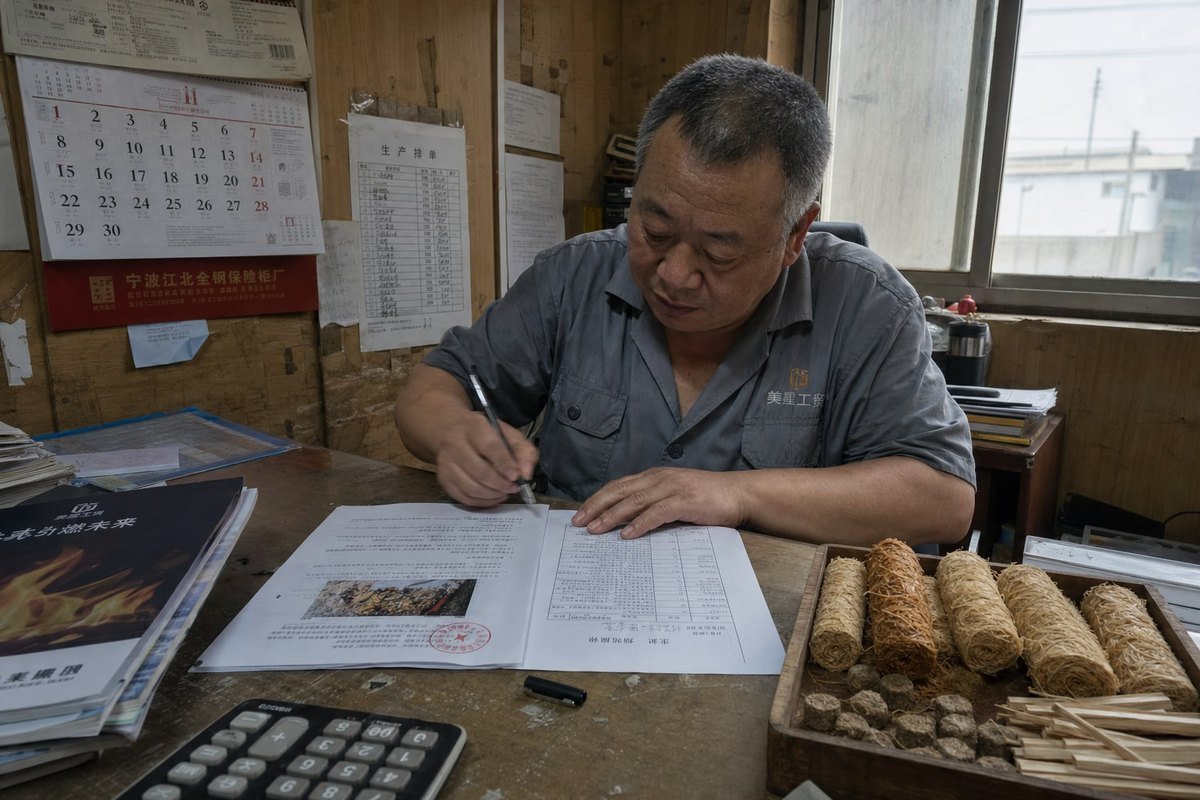
Especificaciones vagas del producto para encendedores de fuego de leña causan la mayoría de las disputas de importación que veo. En nuestros 17 años produciendo rollos de leña sumergidos en cera, las especificaciones poco claras han costado a los compradores temporadas enteras.
Para especificar claramente los encendedores de fuego de leña, defina la composición del material, el tipo de cera y la proporción de recubrimiento, el tiempo de combustión mínimo, las dimensiones de la unidad, la cantidad por paquete, el formato del embalaje, el etiquetado de seguridad y las certificaciones requeridas como los informes de prueba SGS y el cumplimiento de MSDS, todo en una hoja de especificaciones escrita que el proveedor firma antes de la producción.
Una [hoja de especificaciones precisa](https://sunrichfire.com/how-define-product-specifications-purchasing-wood-fire-starters/) protege su presupuesto, sus relaciones con los minoristas y su marca. A continuación, detallo exactamente qué escribir, qué medir y qué verificar.
¿Qué especificaciones debería incluir en mi orden de compra de iniciadores de fuego de madera?
Un distribuidor alemán nos envió una vez una orden de compra que simplemente decía "encendedores de fuego naturales, 100 unidades por caja". Nuestro equipo envió un cuestionario de dos páginas antes de cotizar.
Una orden de compra completa debe especificar el material base, el tipo de cera, el tamaño de la unidad y el peso, el tiempo promedio mínimo de combustión, el porcentaje de contenido de humedad, las piezas por paquete, el formato del embalaje minorista, los requisitos de código de barras, las advertencias de seguridad y los documentos de cumplimiento que necesita para su mercado objetivo.
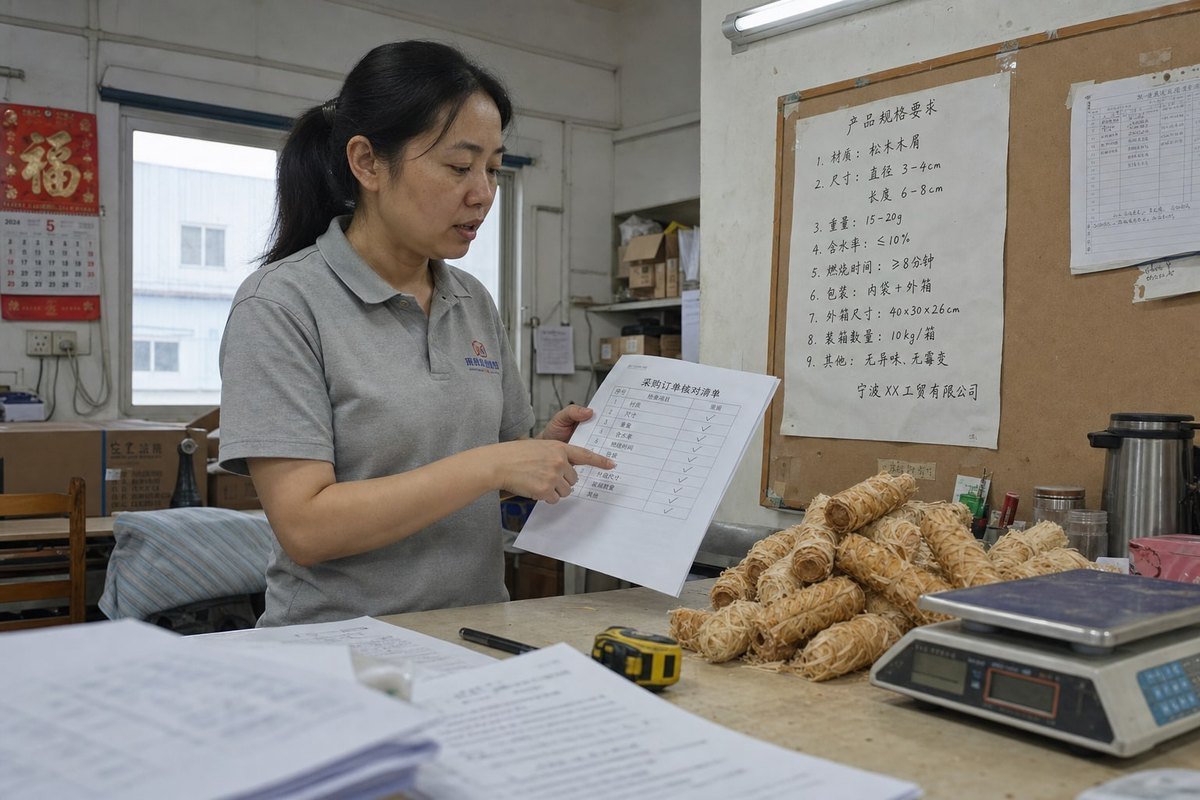
La mayoría de los problemas de especificaciones comienzan con la definición del producto en sí. "Encendedor de fuego de leña" puede significar palos de fatwood, manojos de lana de madera, discos de serrín comprimido o rollos sumergidos en cera. Cada uno se comporta de manera diferente. Su orden de compra debe eliminar esa ambigüedad por escrito.
Comience con la identidad del producto y el caso de uso
Indique primero el uso previsto: chimenea, estufa de leña, fogata, parrilla de carbón o kit de campamento. Esta única línea da forma a todo lo demás. Un encendedor de barbacoa debe ser inodoro y no tóxico para que nunca contamine los alimentos. Un producto para chimenea interior necesita poco humo. Un producto de campamento necesita una fuerte resistencia a la humedad. Ajustamos nuestros niveles de infusión de cera de parafina según el caso de uso que el comprador nombre.
Los campos de especificación principales
Aquí está la estructura que recomiendo que cada comprador ponga en la primera página de la orden de compra:
| Categoría de especificación | Qué definir | Entrada de ejemplo |
|---|---|---|
| Material | Tipo de madera, tipo de cera, aditivos | Lana de madera secada en horno, parafina de grado alimenticio, sin acelerantes químicos |
| Rendimiento | Tiempo de combustión promedio, fiabilidad de ignición | Mínimo 8 minutos, se enciende con una sola cerilla |
| Dimensiones | Tamaño de la unidad, peso por pieza | Rollo de 50 mm x 30 mm, 18 g ±2 g |
| Cantidad | Piezas por paquete, paquetes por cartón | 100 unidades por caja, 12 cajas por cartón |
| Empaquetado | Caja minorista, texto de la etiqueta, código de barras | Caja a todo color, código de barras EAN, advertencias en inglés/alemán |
| Cumplimiento | Documentos requeridos | MSDS, informe SGS, CE donde corresponda |
Separar el rendimiento de las afirmaciones de marketing
No acepte "fácil de encender" o "quema prolongada" como lenguaje de especificación. Esas son afirmaciones de marketing. Reemplácelas con números: tiempo de combustión en minutos, intentos de ignición permitidos, porcentaje de contenido de humedad 1 después del acondicionamiento. En nuestra experiencia con la adquisición mayorista a granel, los compradores que escriben especificaciones medibles reciben cotizaciones que pueden comparar y envíos que pueden inspeccionar.
¿Cómo confirmo que el tiempo de combustión y las proporciones del recubrimiento de cera coinciden con mis requisitos?
El tiempo de combustión es donde dedicamos el mayor esfuerzo de calibración en nuestra línea de producción en Ningbo. Unos pocos gramos de cera, más o menos, cambian notablemente el rendimiento en el mundo real.
Confirmar el tiempo de combustión exigiendo un protocolo de prueba escrito: tamaño de la muestra, método de ignición, condiciones ambientales y umbral de aprobación. Confirmar la relación de cera especificando el peso de la cera como un porcentaje del peso total de la unidad, y luego verificar ambos mediante pruebas de laboratorio de terceros antes de la producción en masa.
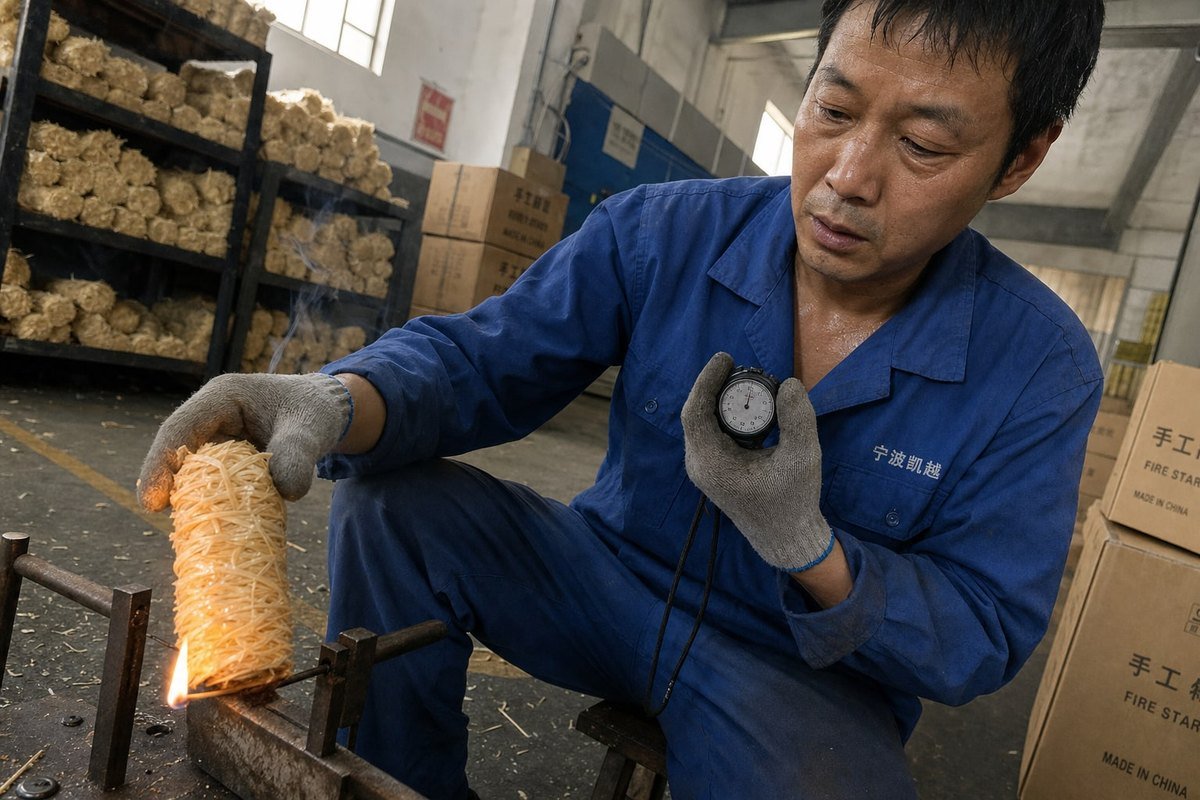
Las afirmaciones de tiempo de combustión no tienen sentido sin condiciones de prueba. Un rollo de lana de madera arde de manera diferente en aire interior quieto que en una fogata ventosa. Por lo tanto, su especificación debe definir cómo se mide el tiempo de combustión, no solo el número.
Defina el protocolo de prueba, no solo el número
Una cláusula de tiempo de combustión viable se ve así: "El tiempo de combustión promedio de 10 unidades seleccionadas al azar no será inferior a 8 minutos, encendidas con una sola cerilla, probadas en interiores a temperatura ambiente". Ahora ambas partes pueden realizar la misma prueba y obtener resultados comparables. Muchas guías de proveedores sugieren 8 minutos o más como punto de referencia, pero trate esto como un punto de partida, no como un estándar universal; su caso de uso puede necesitar más.
Por qué la proporción de cera importa tanto
El nivel de infusión de cera de parafina controla tres cosas a la vez:
| Efecto de la proporción de cera | Muy poca cera | Demasiada cera |
|---|---|---|
| Tiempo de combustión | Corto, inconsistente | Largo pero lento para encender |
| Resistencia a la humedad | Pobre en almacenamiento húmedo | Excelente |
| Velocidad de ignición | Rápido pero frágil | Puede requerir múltiples cerillas |
| Costo unitario | Más bajo | Más alto |
Especifique la cera como un porcentaje del peso de la unidad terminada, con una tolerancia. Por ejemplo: "Contenido de cera 45% ±5% del peso total de la unidad". También especifique el punto de fusión de la cera o el rango de temperatura del punto de inflamación si sus productos permanecerán en almacenes calientes o cruzarán el ecuador. La cera blanda que se derrite en tránsito arruina embalaje minorista.
Verifique antes de comprometerse
Solicite un informe de prueba de lote. En nuestras líneas, pesamos los rollos antes y después de sumergirlos, por lo que la proporción de cera se documenta por lote. Cualquier fábrica seria puede mostrarle estos datos. Si un proveedor no puede explicar cómo controla el peso del recubrimiento, su tiempo de combustión variará entre envíos y sus reseñas de clientes lo reflejarán.
¿Qué certificaciones debería solicitar para garantizar el cumplimiento en mi mercado objetivo?
Las preguntas de cumplimiento surgen en casi todas las primeras llamadas que tenemos con compradores de EE. UU. y la UE. Para los importadores establecidos, la documentación es una puerta dura: sin papeles, sin orden de compra.
Solicite una FDS/SDS en el formato GHS de 16 secciones, informes de pruebas de terceros de laboratorios como SGS o Intertek, certificaciones de fábrica como ISO 9001 y BSCI, y artículos específicos del mercado como marcado CE, declaraciones de madera certificada FSC, o evaluación de la Proposición 65 de California cuando sea relevante.
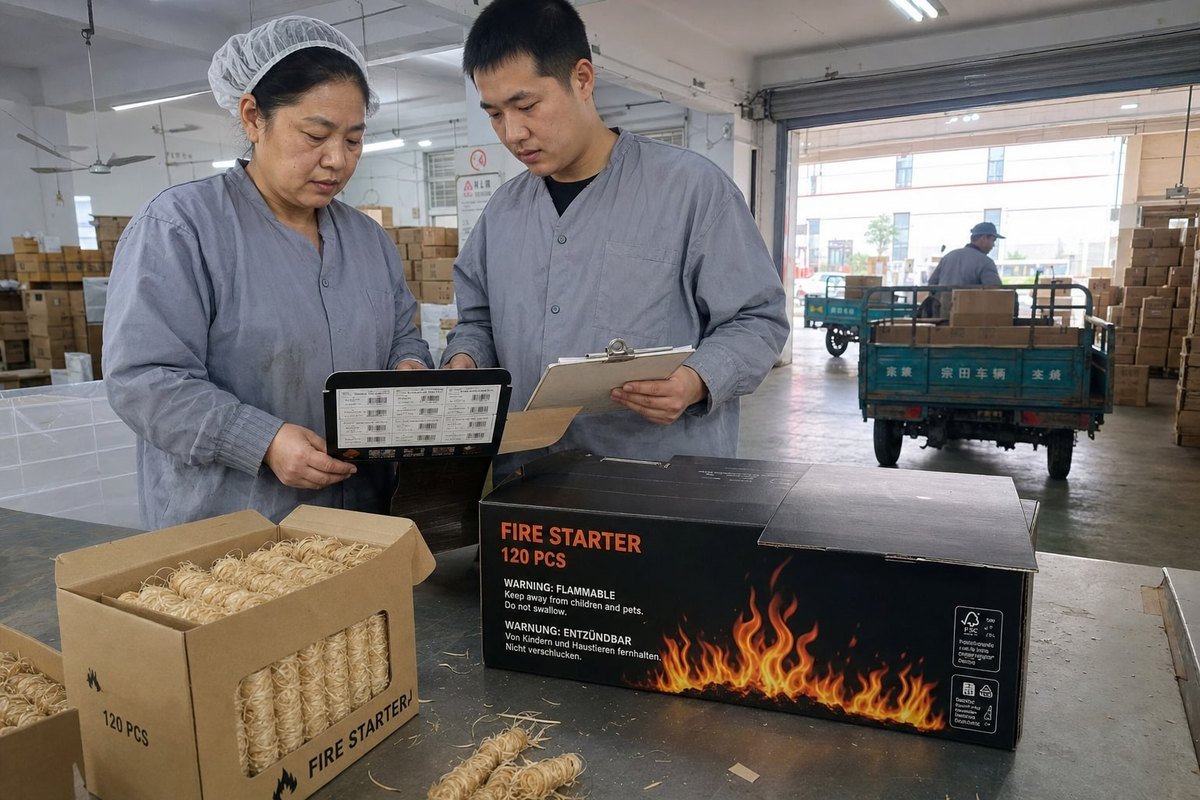
Diferentes mercados exigen diferentes trámites, y los minoristas añaden su propia capa adicional. En nuestra experiencia de exportación en más de 30 países, los compradores que enumeran los documentos requeridos en la orden de compra pasan la aduana y la incorporación del minorista sin problemas. Los que preguntan después a menudo enfrentan retrasos medidos en meses.
La pila de documentos, capa por capa
Piense en el cumplimiento en tres capas:
- Documentos a nivel de producto. Una SDS/MSDS en la sección 16 adecuada Formato GHS 2 es la base. Agregue informes de pruebas de inflamabilidad o ignición de un laboratorio acreditado. Si hace afirmaciones de ignición sin químicos o anuncia un producto como inodoro y no tóxico, solicite datos de prueba que respalden la afirmación.
- Certificaciones a nivel de fábrica. ISO 9001 3 muestra un sistema de calidad funcional. BSCI cubre el cumplimiento social, que muchos minoristas europeos ahora exigen a todos los proveedores. Solicite certificados actuales con fechas válidas, no escaneos caducados.
- Requisitos a nivel de mercado. EE. UU. puede activar Evaluación Prop 65 4 si están presentes los productos químicos enumerados. La UE espera una evaluación relevante para la CE y un etiquetado multilingüe. Minoristas como Walmart requieren GTIN registrados en GS1 5; la mayoría de los canales de grandes almacenes requieren códigos de barras UPC o EAN más advertencias de seguridad impresas en el embalaje minorista.
Las afirmaciones de sostenibilidad también necesitan papeles
Si el posicionamiento de su marca depende de mensajes ecológicos — madera certificada FSC 6, pino rico en resina de bosques gestionados, o contenido de base biológica verificado bajo estándares como ASTM D6866 7 — escriba esos requisitos en la especificación. "Natural" no es un término definido. Los certificados sí lo son. Suministramos documentación de respaldo para nuestras afirmaciones de materiales ecológicos porque aprendimos temprano que los compradores europeos preguntarán, y verificarán.
¿Cómo puedo verificar que las especificaciones de la muestra coincidan con la calidad de la producción en masa?
La brecha entre una muestra dorada y una caja de producción en masa es donde la mayoría de las relaciones de abastecimiento se rompen. He visto a compradores aprobar una muestra hermosa, y luego abrir contenedores de algo visiblemente diferente.
Verificar la consistencia de la muestra a la producción exigiendo una muestra de referencia firmada, registros de control de calidad a nivel de lote, límites de defectos AQL definidos, una inspección previa al envío con pruebas de quemado y evidencia de controles en proceso como registros de peso de cera por lote y verificaciones de humedad.

Una muestra demuestra que una fábrica puede hacer una unidad buena. No demuestra que puedan hacer 200.000 idénticas. Su trabajo es probar el sistema de producción, no solo el producto.
Pregunte cómo la fábrica controla la consistencia
La consistencia real proviene de los controles de proceso, no solo de la inspección final. Haga preguntas específicas al proveedor: ¿Cómo controla el porcentaje de contenido de humedad antes de sumergir en cera? ¿Cómo pesa la absorción de cera por lote? ¿Cómo prueba por muestreo el tiempo de combustión durante una corrida? En nuestra fábrica, el control de calidad lote a lote es la razón por la que la primera muestra refleja de manera confiable la producción en masa: cada lote tiene un registro de peso y un registro de prueba de combustión. Una empresa comercial que revende de talleres desconocidos generalmente no puede responder a estas preguntas, y ese silencio le dice todo.
Una secuencia de verificación práctica
| Paso | Lo que usted hace | Lo Que Demuestra |
|---|---|---|
| Muestra de oro | Ambas partes firman y conservan muestras selladas | Referencia física fija para disputas |
| Aprobación de especificaciones | El proveedor firma la hoja de especificaciones completa por escrito | Compromiso contractual con los números |
| Lote piloto | Ordene una primera corrida pequeña, pruebe aleatoriamente | El proceso de producción coincide con la muestra |
| Acuerdo AQL | Establezca clases de defectos y límites de aceptación | Aprobación/rechazo objetivo en la inspección |
| Inspección previa al envío | Inspector de terceros quema unidades aleatorias | Los productos finales cumplen con las especificaciones de tiempo de combustión y embalaje |
Incluya pruebas funcionales en las inspecciones
La mayoría de las inspecciones previas al envío solo verifican la apariencia, la cantidad y el embalaje. Para los iniciadores de fuego, eso no es suficiente. Indique al inspector que encienda una muestra aleatoria de unidades y mida el tiempo promedio de combustión según su especificación. También pídale que verifique la cobertura de cera, la integridad del rollo fibroso y el etiquetado de la caja. Esto agrega un costo mínimo y detecta los fallos que realmente generan devoluciones. Para pedidos de prueba, negocie un MOQ flexible para que pueda ejecutar esta secuencia completa una vez con bajo riesgo antes de comprometerse con volúmenes de adquisición al por mayor completos.
Conclusión
Las especificaciones claras para encendedores de leña evitan disputas de calidad, fallos de cumplimiento y rechazos en tiendas. Defina por escrito los materiales, el tiempo de combustión, la proporción de cera, el embalaje y las certificaciones, y luego verifique todo antes del envío.
Notas al pie
Antecedentes generales sobre la medición del contenido de humedad relevante para el control de calidad de los encendedores de leña. ↩︎
Explicación de los antecedentes de la norma de etiquetado químico GHS a la que se hace referencia para la documentación de MSDS. ↩︎
Entrada autorizada de Wikipedia que proporciona una descripción general estable y accesible de la norma ISO 9001. ↩︎
Sitio oficial de California que explica los requisitos de advertencia de productos químicos de la Proposición 65 a los que se hace referencia para el cumplimiento en el mercado estadounidense. ↩︎
GS1 es el organismo autoritario que define los números de artículo comercial global requeridos por los principales minoristas. ↩︎
El Forest Stewardship Council es la fuente autorizada para verificar las afirmaciones de certificación de madera sostenible. ↩︎
ASTM es el organismo de estándares que publica la norma D6866 para probar las afirmaciones de contenido de base biológica. ↩︎

 English
  Spanish
  German
  French
  Arabic
  Portuguese
Únete a la conversación