






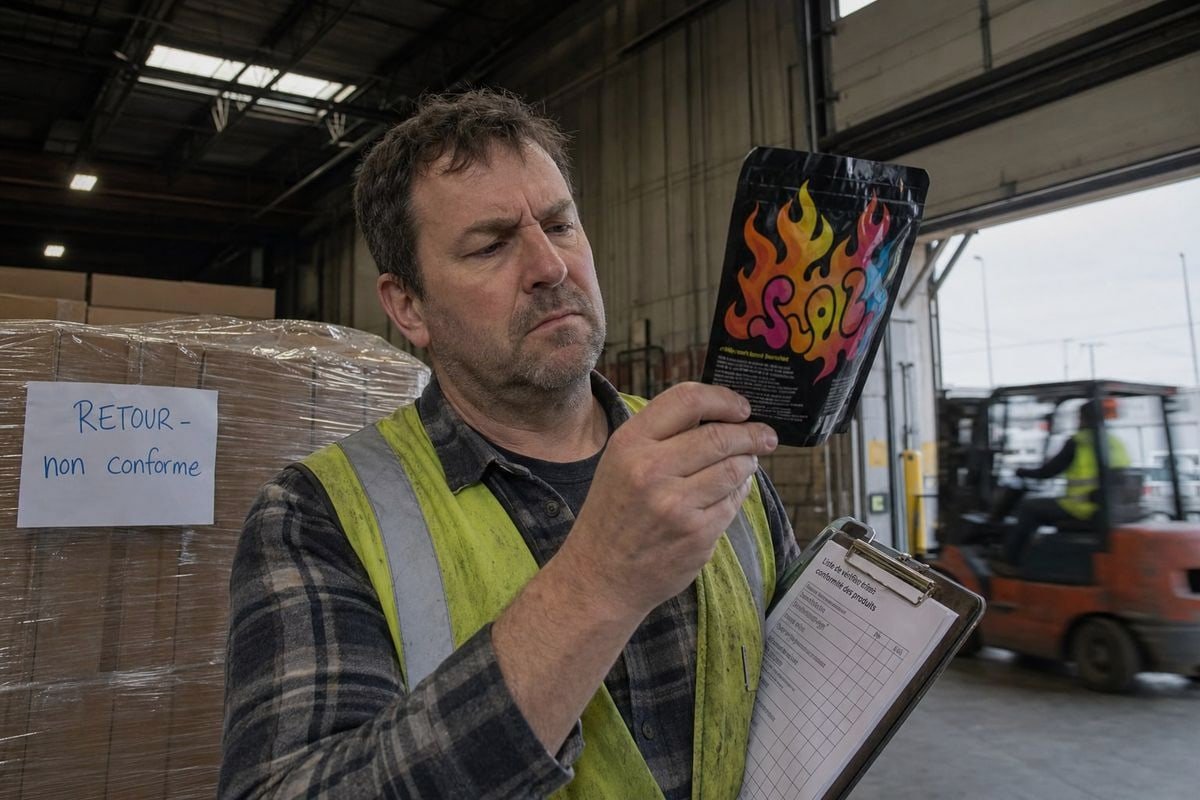
Empaque de polvo de fuego mágico que ignora Proyecto de ley 96 1 Las reglas de etiquetado en francés se retiran de los estantes de Quebec. He visto a compradores perder temporadas enteras por una traducción faltante en nuestras bolsas de llama de colores.
Para cumplir con la Ley 96 de Quebec, el empaque de Magic Fire Powder debe mostrar toda la información del producto, advertencias e instrucciones en francés, con el francés al menos tan prominente como el inglés. Las marcas registradas pueden permanecer en inglés, pero los términos descriptivos genéricos dentro de ellas ahora requieren traducción al francés a partir del 1 de junio de 2025.
Las reglas suenan simples. En la práctica, afectan el nombre de su marca, su etiqueta de advertencia, su tarjeta de inserción e incluso su listado en línea Certificaciones BSCI 2. Permítame guiarlo a través de cada paso.
¿Cómo identifico qué requisitos de etiquetado de la Ley 96 se aplican al empaque de mi Polvo Magic Fire?
Un distribuidor canadiense una vez nos devolvió nuestra bolsa de aluminio con notas adhesivas cubriendo la mitad del panel. Cada nota marcaba texto que necesitaba francés. Esa auditoría nos enseñó dónde muerde realmente la Ley 96.
El proyecto de ley 96 se aplica a cada elemento de texto en el empaque de Magic Fire Powder: nombre del producto, descripciones, advertencias de peligro, instrucciones de uso, información de ingredientes, folletos y tarjetas de garantía. Todos deben aparecer en francés, con el francés al menos tan visible como cualquier otro idioma en el empaque.

El primer error que cometen la mayoría de los compradores es tratar la Ley 96 como un problema del panel frontal. No lo es. La ley cubre todo el empaque. Eso significa el contenedor, el envoltorio, el inserto impreso, la hoja de instrucciones y cualquier documento suministrado con el producto. En nuestras bolsas Magic Fire, eso incluye el pequeño texto instructivo blanco cerca de la parte inferior, la etiqueta de precaución amarilla y la caja de exhibición abatible en la que se envían los sobres.
El segundo error es confundir la regla de empaque con la regla de señalización 3. La señalización en Quebec debe hacer que el francés sea "marcadamente predominante". El empaque funciona de manera diferente. En el empaque, el francés debe ser al menos tan prominente como otros idiomas. El inglés no puede dominar. Puede estar junto al francés en tamaño igual, pero nunca por encima en visibilidad.
Divida el texto de su empaque en categorías de cumplimiento
Cuando realizamos una auditoría de cumplimiento de Quebec para un cliente de marca privada, clasificamos cada elemento de texto en cubos. Cada cubo recibe un tratamiento legal diferente.
| Elemento de texto | Tratamiento Ley 96 | Ejemplo en una bolsa de polvo de fuego |
|---|---|---|
| Marca registrada | Puede permanecer en inglés | Leologotipo estilizado "Magic Fire" |
| Descriptor genérico en la marca | Debe traducirse desde el 1 de junio de 2025 | "Polvo", "Colorante de fuego" |
| Descripción del producto | Francés completo requerido | "Crea llamas coloridas" |
| Advertencias de peligro | Francés completo requerido, prominente | "Mantener alejado de los niños" |
| Instrucciones de uso | Francés completo requerido | "Vierta un paquete sobre las llamas" |
| Inserciones y texto de garantía | Francés completo requerido | Tarjetas de instrucciones, páginas enlazadas por QR |
La fecha del 1 de junio de 2025 es importante. Antes de esa fecha, una marca registrada podía proteger las palabras descriptivas dentro de ella. Ahora la exención es limitada. Si "Fire Powder" se lee como una descripción del producto en lugar de una marca pura, Quebec espera una versión en francés en el empaque. Dado que nuestro producto es un bien de consumo combustible, siempre les digo a los compradores que traduzcan primero el texto de seguridad. Las advertencias, la guía de almacenamiento, las restricciones de edad y las instrucciones de uso conllevan el mayor riesgo de aplicación. Los reguladores miran allí antes de mirar su logotipo.
¿Puedo obtener etiquetas bilingües francés-inglés que cumplan con la normativa sin rediseñar todo mi embalaje?
El costo de rediseño es el compromiso que más discuto con compradores europeos y canadienses. Una reconstrucción completa del arte parece costosa. Sin embargo, una pegatina francesa simbólica a menudo cuesta más cuando llega la aplicación.
Sí. La mayoría de los envases de Magic Fire Powder pueden cumplir con el Proyecto de Ley 96 reestructurando los paneles existentes: conservar la marca denominativa registrada en inglés, añadir un descriptor genérico en francés junto a ella y convertir las instrucciones y advertencias del panel posterior en un diseño bilingüe con predominio del francés, con igual o mayor prominencia.

Nuestro equipo de OEM ha convertido docenas de diseños de bolsas con predominio del inglés en versiones listas para Quebec sin tocar la identidad central de la marca. La clave es comprender qué partes del diseño están protegidas y cuáles deben cambiarse. El leologotipo "Magic Fire" con letras de burbujas arcoíris en nuestra bolsa negra brillante generalmente puede permanecer, siempre que la marca esté registrada o reconocida en Canadá. Lo que cambia es la arquitectura que la rodea.
Un enfoque práctico de tres zonas
Dividimos la bolsa en tres zonas y tratamos cada una de manera diferente.
- Zona de marca (parte superior frontal). El leologotipo registrado permanece en inglés. Directamente debajo, agregamos un descriptor genérico en francés como "Poudre à flammes colorées" en una tipografía clara y legible. Esto cumple con la regla de que una descripción en francés debe acompañar a una marca que no sea en francés.
- Zona de función (parte inferior y lateral frontal). Las afirmaciones de uso cortas se vuelven bilingües, primero en francés. "Ajouter au feu / Add to fire." El francés no debe ser más pequeño, más claro o estar oculto.
- Zona de seguridad (panel trasero). Las advertencias, instrucciones, guía de almacenamiento e información de contacto aparecen en francés completo, con el inglés como columna secundaria.
Dos decisiones de diseño más ahorran dinero. Primero, use pictogramas de peligro 4. estandarizados. Los símbolos no necesitan traducción, por lo que reducen el texto traducible y al mismo tiempo satisfacen las expectativas de seguridad de estilo WHMIS y la Ley 96. Segundo, evite las pegatinas removibles como solución permanente. La guía de Quebec espera que las traducciones se adjunten permanentemente al producto. Una superposición de pegatinas puede servir como un puente corto para el stock existente, pero las nuevas series de producción deben imprimir el francés en el arte. En nuestra línea en Ningbo, agregar un panel trasero bilingüe a un troquel de bolsa existente cuesta una fracción de un rediseño completo, y se envía con el mismo tiempo de entrega una vez que se aprueba el arte.
¿Mi proveedor proporcionará informes de prueba y documentación para probar el cumplimiento de la Ley 96 antes del envío?
Un gerente de compras de Ontario me hizo una pregunta directa una vez: "¿Puedes probar esto antes de que salga de tu muelle?" Esa pregunta dio forma a cómo ahora empaquetamos nuestra documentación para pedidos canadienses.
Un proveedor cualificado debe proporcionar pruebas de arte previas al envío que muestren la prominencia francesa, informes de prueba SGS o Intertek sobre la seguridad del producto, registros de verificación de traducción, documentación de marca registrada y evidencia fotográfica del embalaje impreso. Solicite estos documentos en su acuerdo de compra antes de que comience la producción.

La documentación es donde las fábricas se diferencian de las empresas comerciales. Una empresa comercial reenvía lo que sea que envíe la imprenta. Una fábrica real controla el arte, la tirada de impresión y el control de calidad, por lo que puede certificar lo que realmente se envió. Con más de 17 años de exportación de productos con temática de fuego a más de 30 países, hemos aprendido que los compradores canadienses necesitan una pila de documentos específica para los productos destinados a Quebec.
La pila de documentos a exigir
| Documento | Lo Que Demuestra | Cuándo debe recibirlo |
|---|---|---|
| Prueba de arte bilingüe | Texto en francés presente y al menos tan prominente | Antes de la aprobación de la producción |
| Verificación de traducción | Copia en francés revisada por un traductor calificado | Con prueba de arte |
| Informe de prueba SGS/Intertek | Seguridad del producto y composición del material | Antes del envío |
| Registro de registro de marca comercial | El nombre de marca en inglés califica para la exención | Durante la incorporación |
| Fotos de inspección previas al envío | El embalaje impreso coincide con la prueba aprobada | Antes del pago del saldo |
| Registros de control de calidad del lote | Cada cartón coincide con la versión conforme | Con los documentos de envío |
Tenga en cuenta un matiz. No existe un "certificado de la Ley 96" emitido por el gobierno. El cumplimiento se demuestra a través del arte en sí, más la evidencia de respaldo. Es por eso que la etapa de prueba de arte es la más importante. En nuestra fábrica, ningún pedido destinado a Quebec entra en producción en masa hasta que el comprador firma una prueba que muestra la ubicación del francés, el tamaño de la fuente y el diseño del panel. Sostenemos ISO 9001 5 y Certificaciones BSCI, y nuestro control de calidad lote a lote significa que la bolsa que aprobó en el muestreo es la bolsa que llega a Montreal. Si su proveedor actual duda en alguna línea de la tabla anterior, considérelo una señal de riesgo, no un retraso en el papeleo.
¿Cómo evito retrasos en aduanas o el rechazo del minorista al exportar Polvo Mágico de Fuego a Quebec?
La lección más difícil que aprendimos provino de un envío que pasó la aduana limpiamente, luego permaneció en el almacén de un minorista durante seis semanas. El equipo de cumplimiento de la tienda rechazó la etiqueta, no el agente fronterizo.
Prevenir retrasos finalizando el material gráfico que cumple con la Ley 96 antes de la producción, asegurando la aprobación por escrito de la etiqueta del minorista, garantizando que los documentos de datos de seguridad estén disponibles en francés, verificando las reglas de inventario de transición para existencias anteriores a 2025 y alineando las listas de comercio electrónico con el mismo estándar predominante en francés.

La aduana y los minoristas verifican cosas diferentes, por lo que debe pasar dos puertas separadas. Controles fronterizos federales 6 se centran en etiquetado general canadiense y documentación de seguridad. Minoristas de Quebec 7, enfrentando su propia responsabilidad, verifican los detalles de la Ley 96 de cerca. Los minoristas en Quebec pueden rechazar existencias no conformes de inmediato, y muchos ahora auditan las etiquetas entrantes porque las sanciones son reales: las multas van desde $3,000 hasta $30,000 por una primera infracción corporativa, con reincidencias que ascienden hasta $90,000 por día. Ningún minorista absorberá ese riesgo por un colorante de llama novedoso.
Dos puertas, dos listas de verificación
| Puerta | Quién verifica | Qué buscan | Su paso de prevención |
|---|---|---|---|
| Entrada fronteriza | ACIA / federal | Etiquetado bilingüe para el consumidor, documentos de seguridad, clasificación HS | Envíe embalaje bilingüe francés primero con la documentación completa |
| Aceptación minorista | Equipo de cumplimiento de minoristas de Quebec | Prominencia del francés, descriptores traducidos, texto permanente en francés | Obtenga la aprobación escrita de la etiqueta del minorista antes de la producción |
También hay una capa de mercancías peligrosas que las guías de etiquetado genéricas no cubren. Los polvos iniciadores de fuego y colorantes de llama se encuentran cerca del territorio WHMIS/GHS, donde las reglas federales ya esperan datos de seguridad bilingües. La Ley 96 agrega una capa de prominencia del francés encima. Reconcilie ambos haciendo del francés el idioma principal en todo el texto de seguridad; eso satisface automáticamente el estándar más estricto.
Vigile también las fechas de inventario. Los productos empaquetados antes del 1 de junio de 2025 pueden calificar para una ventana de venta hasta junio de 2027 si cumplen condiciones específicas. No extienda esto a una excusa general. Cualquier cosa producida después de la fecha límite necesita cumplimiento inmediato. Finalmente, recuerde que sus listados de comercio electrónico, descripciones de productos y páginas de instrucciones vinculadas por QR dirigidos a Quebec deben reflejar el estándar francés aplicado a la bolsa física. Construimos la copia digital en francés al mismo tiempo que el arte, para que toda la cadena se lance junta.
Conclusión
Quebec no cederá en el etiquetado en francés, y un palé rechazado borra su margen. Audite cada elemento de texto, traduzca primero la copia de seguridad, exija la documentación del proveedor y lance en francés desde el primer día.
Notas al pie
Fuente oficial del gobierno de Quebec que explica la Carta de la lengua francesa y la Ley 96. ↩︎
Antecedentes de la certificación de la Iniciativa de Cumplimiento Social Empresarial citada como credencial de proveedor. ↩︎
La Oficina Quebequense de la Lengua Francesa aclara cómo las reglas de empaque difieren de las reglas de señalización. ↩︎
Antecedentes sobre los pictogramas de peligro GHS estandarizados utilizados para reducir el texto traducible del empaque. ↩︎
Página oficial de la ISO que explica el estándar de gestión de calidad ISO 9001 mencionado como certificación de proveedor. ↩︎
Sitio oficial de la Agencia de Servicios Fronterizos de Canadá relevante para los controles federales de etiquetado aduanero descritos. ↩︎
Oficina oficial de idiomas de Quebec que supervisa la aplicación de las reglas de etiquetado en francés para los minoristas. ↩︎



 English
  Spanish
  German
  French
  Arabic
  Portuguese
Únete a la conversación