







TDG classification for Magic Fire powder trips up many sellers accredited third-party laboratories 1. On our production line, we have watched buyers lose entire shipments at Canadian customs over one wrong label. That risk is avoidable.
To meet TDG rules when shipping Magic Fire powder to Amazon Canada, first classify the powder by its actual chemistry, assign the correct UN number and hazard class, apply bilingual TDG marks, use UN-certified packaging, and complete Amazon's Hazmat Compliance Review with a current SDS before shipping.
The product name tells regulators nothing. The chemistry decides everything. Below, I walk through classification, labeling, supplier test reports, and customs logistics step by step.
What TDG Classification Applies to Magic Fire Color-Flame Powder Shipments?
A buyer from Toronto once asked me why our color-flame packets shipped smoothly while a competitor's identical-looking pouches got seized Informes de prueba SGS/Intertek 2. The answer was classification done before production, not after.
Magic Fire color-flame powders typically classify under TDG Class 4.1 (Flammable Solid) or Class 5.1 (Oxidizing Substance), depending on the metal salt formulation. Pyrotechnic compositions may fall under Class 1. The consignor must determine the exact UN number, shipping name, and packing group from the actual chemistry.

Under Canada's Transportation of Dangerous Goods Regulations 3, classification is the consignor's legal duty. That means you, the shipper, own this step. You cannot borrow it from a product name, and you cannot skip it because the retail box says "novelty item."
Here is the practical logic I share with our distributors. First, ask what the powder does. If it produces a pyrotechnic effect through a self-sustaining exothermic reaction, it fits the Explosivos de Clase 1 4 definition in TDG Part 2. Canadian guidance lists fireworks, flash powder, and black powder as Class 1 examples. UN0333 FIREWORKS is even listed as Class 1.1G, Packing Group II, with passenger road and rail marked "Forbidden." That shows how restrictive Class 1 can get.
Most color-flame powders are not pyrotechnics, though. They are metal salt mixtures that color an existing flame. Their classification depends on whether the oxidizing or flammable character 5 dominates.
Likely Classification Outcomes
| Tipo de Formulación | Likely TDG Class | Consecuencia típica |
|---|---|---|
| Pyrotechnic composition (self-sustaining reaction) | Class 1 (e.g., 1.4G) | Explosives Act framework, NRCan authorization, strict mode limits |
| Copper/strontium salt with oxidizer-dominant mix | Clase 5.1 Oxidante | UN packaging, oxidizer diamond, carrier restrictions |
| Flammable metal salt blend | Class 4.1 Flammable Solid | UN packaging, flammable solid diamond |
| Non-reactive additive passing all tests | Not regulated | Standard shipping, but keep proof on file |
If your powder is not listed by name in Schedule 1, laboratory testing determines the class. Guessing is not an option. Our Liuyang team learned this over 17 years in China's fireworks cluster: the classification follows the chemistry, and the label follows the classification.
Which Labeling and Documentation Do I Need for Amazon Canada Compliance?
The trade-off we weigh on every Canadian order is simple: bilingual TDG transport marks add cost and lead time, but skipping them guarantees a rejected shipment. We always choose compliance.
You need the hazard class diamond, UN number, and proper shipping name displayed in English and French per TDG Part 4, a TDG shipping document prepared before pickup, a current SDS, and Amazon's completed Hazmat Compliance Review approval for the specific ASIN.
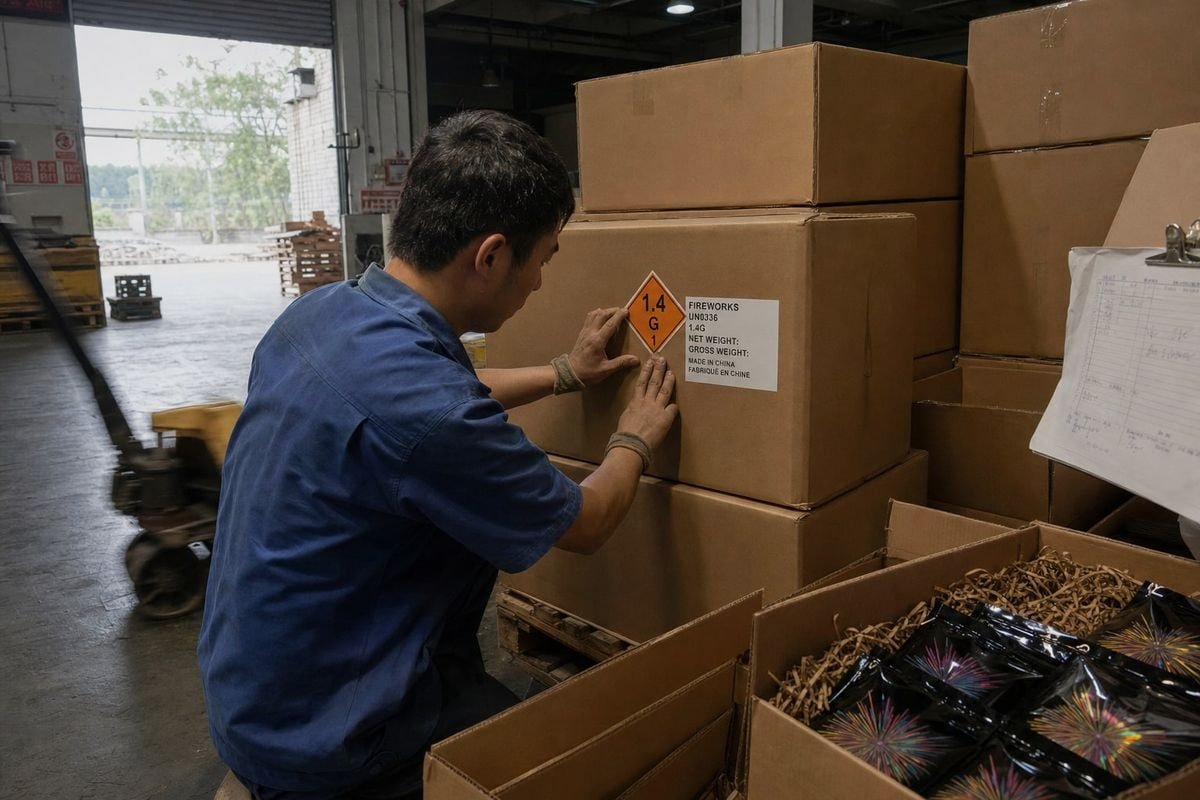
Retail labels and transport marks are two different systems. Many sellers confuse them. The colorful pouch artwork, warning icons, and usage instructions belong to consumer labeling. TDG transport marks belong on the means of containment — the outer shipping carton or drum — and they must match the classification exactly.
At our factory, we print retail warning labels and prepare transport-mark artwork as separate deliverables for private-label clients. That separation prevents the most common error: a beautifully branded box with no legal transport identity.
The Documentation Stack, In Order
- Classification record — shipping name, UN number, class, packing group, and any subsidiary risk, determined by a competent person.
- TDG shipping document — prepared and handed to the carrier before pickup, listing quantities and emergency contact details.
- Hoja de datos de seguridad — current, formulation-accurate, and matching the classification.
- Amazon Hazmat Compliance Review — SDS submission through Seller Central; Amazon must approve the ASIN before inbound shipments.
- Transport marks — class diamond, UN number, and shipping name, sized and positioned per TDG Part 4, bilingual where required.
One more point buyers often miss: anyone handling or offering the goods for transport in Canada must hold valid TDG training certification under Part 6. Your Canadian broker or 3PL should confirm this. Also remember that Amazon's rules sit on top of TDG, not instead of it. Amazon Canada frequently declines FBA storage for oxidizing or flammable novelty powders. If that happens, Seller-Fulfilled Prime or Merchant Fulfilled Network becomes the workable route — but the TDG obligations stay identical.
How Can I Confirm My Supplier's Test Reports Meet TDG and Amazon Requirements?
Early in our export history, a German distributor rejected a rival supplier's "certificate" because it named a different formulation than the goods shipped. That lesson shaped how we document every batch today.
Verify that test reports come from accredited labs like SGS or Intertek, name the exact formulation and product being shipped, are dated within validity, and state the transport classification tested. Cross-check the SDS composition against the report, and confirm batch-level consistency.
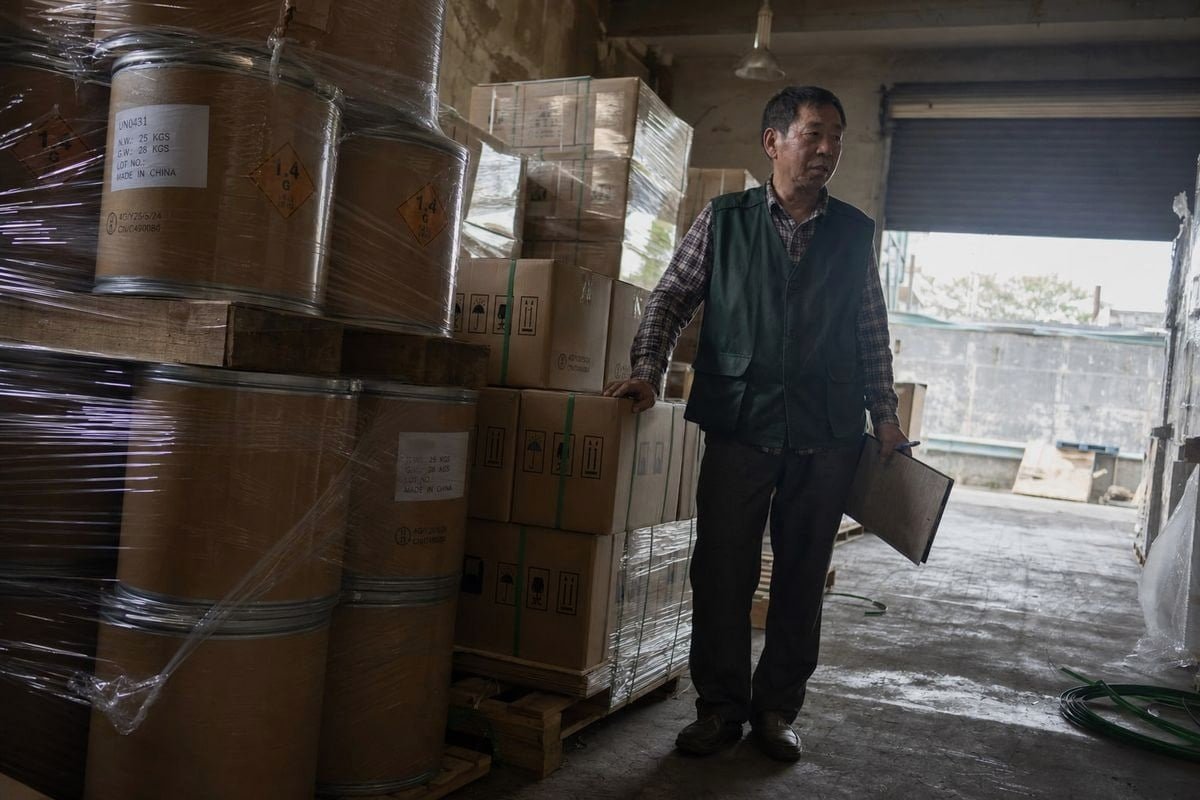
An SDS alone is not enough. This surprises many Amazon sellers. The SDS supports classification, but it does not replace the consignor's TDG classification obligation. A supplier who hands you only an SDS and says "you're covered" is transferring risk to you, not removing it.
Our own compliance stack includes ISO 9001 6, BSCI, CE, and SGS/Intertek test reports, because our B2B buyers in Canada, the US, and the EU treat these as hard requirements. When you audit any supplier's paperwork, use the same standard we hold ourselves to.
Test Report Verification Checklist
| Punto de control | What to Confirm | Señal de alerta |
|---|---|---|
| Lab accreditation | Recognized third party (SGS, Intertek, or equivalent) | In-house "certificate" with no lab identity |
| Product match | Report names your exact SKU and formulation | Generic product description |
| Classification data | Transport class, UN number tested and stated | Report silent on transport classification |
| Date validity | Recent report reflecting current formulation | Report older than the current recipe |
| Preguntas que vale la pena hacerle a cualquier proveedor | QC records linking report to production batches | Sample tested once, never re-verified |
Watch for reformulation risk especially. Switching between strontium, copper, or barium-based colorants can change the hazard classification entirely. If your supplier "improves" the recipe, previous TDG documentation and UN packaging certification become invalid. At our Ningbo facility, any formulation change triggers re-testing before the next shipment leaves — and we notify buyers first. Demand the same discipline from any partner. Ask directly: "If the formulation changes, will you re-test and tell me before shipping?" The answer reveals whether you have a manufacturing partner or a liability.
What Packaging and Logistics Steps Ensure My Shipment Clears Canadian Customs Smoothly?
Optimizing global logistics for fire-themed goods taught us one rule above all: customs officers clear paperwork, not promises. Every carton we ship to Canada is packed with that in mind.
Use UN-certified packaging matched to the assigned packing group, apply all TDG marks before carrier pickup, align documentation across US 49 CFR and Canadian TDG if transiting the US, consider the Limited Quantity exemption for small units, and pre-confirm carrier and Amazon acceptance.

Packaging is where classification becomes physical. UN-certified containers 7 must pass drop, stacking, and pressure differential tests matched to Packing Group I, II, or III. A Class 5.1 powder in Packing Group II needs different containment than a non-regulated additive in a kraft pouch. Buying certified packaging for the wrong packing group wastes money twice — once on the packaging, once on the rejected shipment.
The Limited Quantity exemption deserves attention. If your Magic Fire powder ships in small enough inner units, TDG allows reduced marking and documentation burdens. Many sellers overlook this when scaling to bulk Amazon shipments. Our compact single-use foil sachets were designed partly with this pathway in mind, though eligibility always depends on the final classification and quantities.
A Logistics Sequence That Works
| Paso | Acción | Temporización |
|---|---|---|
| 1 | Lock classification and packing group | Before production |
| 2 | Order UN-certified packaging to match | Antes del embalaje |
| 3 | Apply TDG transport marks | Before carrier pickup |
| 4 | Prepare TDG shipping document and SDS | Before carrier pickup |
| 5 | Confirm carrier dangerous-goods acceptance | Before booking |
| 6 | Verify Amazon Hazmat approval for the ASIN | Before inbound creation |
| 7 | Cross-check US 49 CFR if transiting the US | Before border crossing |
That last row matters for sellers routing through US warehouses. A shipment moving from a US facility into Amazon Canada must satisfy both PHMSA's 49 CFR and Canadian TDG at once, because classification details and documentation can differ between frameworks during transit. The costliest mistake I see is producing and labeling inventory first, then discovering the carrier refuses it. Classification must happen before inventory moves — every time.
Conclusión
Shipping Magic Fire powder to Amazon Canada is a compliance workflow: classify by chemistry, mark bilingually, verify accredited test reports, pack to UN standards, and clear Amazon's review first.
Notas al pie
1. Establishes credibility of accredited testing labs referenced for verifying supplier reports. ↩︎
2. Official site of accredited testing lab used to verify supplier hazard classification claims. ↩︎
3. Official Canadian federal regulation text defining consignor classification duties for dangerous goods. ↩︎
4. General reference explaining explosive material properties underlying TDG Class 1 categorization. ↩︎
5. Background concept explaining oxidizing agents that determine hazard class assignment for metal salt powders. ↩︎
6. Official ISO standard page explaining the quality management certification referenced as compliance proof. ↩︎
7. Background on internationally recognized dangerous goods packaging standards and testing requirements. ↩︎



 English
  Spanish
  German
  French
  Arabic
  Portuguese
Únete a la conversación