







Certification marks on magic fire powder packaging confuse many importers OSHA's Hazard Communication 1. I see this weekly at our Liuyang headquarters, where buyers send us photos of competitor sachets asking, "Is this mark even real?" The risk is serious: one wrong mark, and customs seizes your entire container. Worse, your retail buyers walk away. After 17+ years shipping color-flame products to 30+ countries, we have learned to read these marks like a second language — and I want to share that decoder with you.
Certification marks on magic fire powder packaging indicate the product was tested against a specific safety, quality, or market-access standard. Common marks include CE for EU conformity, SGS or Intertek test seals, ISO 9001 quality management, and UN/DOT transport classifications. Each mark's meaning depends on the issuing body and jurisdiction.
That is the short version. But not all marks mean the same thing, and some are outright fake. Let me walk you through how to verify them, which ones to demand, and why they matter to your buyers.
How Do I Verify That Magic Fire Powder Certifications Are Genuine and Not Falsified?
A buyer from Germany once forwarded us a rival's "CE certificate" that listed a notified body that did not exist. Our compliance team spotted it in five minutes. That moment shaped how we now train every client to check documents before wiring a deposit.
To verify magic fire powder certifications, request the full certificate PDF, check the certificate number on the issuing body's public database, confirm the product name and manufacturer match exactly, verify validity dates, and cross-check the testing lab's accreditation number. Genuine marks always trace back to a searchable record.

Verification is not complicated, but most importers skip it because they assume a printed logo equals a real approval. That assumption is exactly what counterfeiters exploit. A logo costs nothing to print. A traceable certificate number does not.
Follow a Five-Step Verification Process
Here is the process we recommend to every new buyer, whether they source from us or anyone else:
- Ask for the full certificate, not a screenshot. A genuine SGS, Intertek, or CE-related document includes a certificate number, issue date, scope of testing, and the applicant's legal name.
- Search the number in the certifier's online database. SGS e Intertek 2 both maintain public verification portals. If the number returns nothing, stop.
- Match the details. The product description on the certificate must match the actual product form — a color-flame powder sachet, not a "similar" pyrotechnic item. Mismatched scope is the most common trick we see.
- Check the dates. Many certificates carry validity periods tied to batch testing. An expired certificate on new stock is a red flag, because formulations and suppliers change over time.
- Verify the lab itself. Third-party lab certification 3 carries far more regulatory weight than a manufacturer's self-declaration. Look for the lab's accreditation number, and confirm the lab is recognized in your target market.
Red Flags We Have Seen in the Field
| Señal de alerta | Lo que generalmente significa |
|---|---|
| Certificate provided only as a low-resolution image | Details were edited or cropped out |
| Certificate holder name differs from the factory name | Trading company borrowing another factory's papers |
| No certificate number, or number fails database lookup | Fabricated document |
| Scope says "toy" or "candle" but product is fire powder | Certificate for a different product category |
| Generic "certified safe" badge with no issuing body | Marketing graphic, not a conformity mark |
In our experience, the borrowed-certificate problem is the most damaging. A trading company shows you a real factory's real SGS report, but your goods come from a different, untested workshop. That is one reason we always invite buyers to audit our production lines in Ningbo directly — the paperwork must match the physical factory.
Which Certifications Should I Require From Suppliers Before Importing Color-Flame Products?
Trade-offs come up in every sourcing conversation we have. Some buyers want the cheapest quote and minimal paperwork; others want a full compliance dossier before ordering a single sample. The second group clears customs faster and keeps their retail contracts.
Before importing color-flame products, require ISO 9001 for quality management, CE conformity documentation for EU markets, third-party test reports from SGS or Intertek, BSCI social compliance audits, MSDS/SDS chemical documentation, and UN transport classification. Together these cover product safety, factory quality, and shipping legality.

Not every certification serves the same purpose. Some prove the product is safe. Others prove the factory is consistent. Others prove the shipment can legally move. You need all three layers, and here is how they break down.
The Three Layers of Supplier Certification
| Capa | Por qué es importante para las piñas perfumadas | Lo Que Demuestra | Quién lo exige |
|---|---|---|---|
| Seguridad del producto | CE documentation, SGS/Intertek test reports | The product itself passed defined safety tests | Customs, retailers, end consumers |
| Factory quality | ISO 9001, BSCI | Production is consistent and ethically managed | Large retail chains, brand owners |
| Logistics compliance | MSDS/SDS, UN classification, transport docs | The goods can be shipped, stored, and handled legally | Freight forwarders, carriers, customs |
At our factory, we treat these as a hard requirement, not a nice-to-have, because our core markets — the US, Germany, the UK, France, and the Netherlands — enforce them strictly. A single missing SDS can hold a container at Rotterdam for weeks.
Why Batch Consistency Matters as Much as the Certificate
A certificate reflects the sample that was tested. If the factory cannot reproduce that sample at scale, the certificate becomes meaningless. This is where manufacturing depth matters. Our production lines run control de calidad lote a lote 4 specifically so the first sample a buyer approves reliably reflects mass-production quality. When you vet a supplier, ask how they control raw material sourcing between batches. If the answer is vague, the certificate you are holding may only describe one lucky batch.
Also ask whether the supplier is a real factory or a trading company. Trading companies can supply documents, but they cannot control the production floor. When formulations drift, the paperwork stays the same while the product changes — and you carry the liability.
What Compliance Documents Do I Need to Clear Customs in the US and EU?
Years of exporting to both sides of the Atlantic taught our shipping team one lesson the hard way: US customs and EU customs ask different questions, and a document set built for one market will not automatically satisfy the other.
To clear customs, US shipments need an SDS, correct HS code classification, DOT/UN transport documentation if applicable, and CPSC-relevant labeling. EU shipments need CE conformity documents, an EU-format SDS under REACH/CLP rules, correct hazard labeling, and a Declaration of Conformity from the responsible party.

The core difference is philosophy. The US system focuses heavily on transport classification and consumer product labeling. The EU system focuses on chemical regulation and documented conformity before the product enters the market. You need to prepare for both if you sell in both.
Document Checklist by Market
| Documento | US Import | EU Import |
|---|---|---|
| Hoja de datos de seguridad (SDS/MSDS) | Required (OSHA-aligned format) | Required (REACH/CLP-aligned format) |
| CE conformity documentation | Not applicable | Required for covered product categories |
| Declaración de Conformidad | Not typical | Required from the EU responsible party |
| UN/DOT transport classification | Required if goods are classified hazardous | Required under ADR/IMDG if classified |
| Test reports from accredited lab | Muy recomendado | Strongly recommended, often demanded |
| Correct HS code and commercial invoice | Requerido | Requerido |
| Warning labels in local language | Inglés | Language of destination member state |
The Details That Trip Importers Up
Three practical points deserve attention. First, the SDS format is not interchangeable. An EU SDS follows CLP classification and must reflect REACH-registered substances 5; a US SDS follows OSHA's Hazard Communication format. We prepare both versions for buyers because forwarders reject mismatched paperwork.
Second, the EU expects a named responsible party inside the EU. Distributors there are legally obliged to verify conformity markings 6 and documents before placing products on the market. If your paperwork is weak, your own distributor may refuse the goods.
Third, language matters. A warning label in English only will not satisfy German or French retail requirements. Our one-stop OEM service prints localized warning labels, barcodes, and compliance text directly onto the packaging, because fixing labels after arrival costs ten times more than printing them correctly in Ningbo.
Why Do My Retail Buyers Insist on Seeing Certification Marks Before Placing Orders?
One purchasing manager from a large US home-improvement channel told me during a factory visit that his team rejects roughly half of all fire-product suppliers at the document stage — before ever discussing price. That conversation reframed how we present compliance to new clients.
Retail buyers demand certification marks because they carry the legal liability for unsafe products, face insurance requirements tied to compliance, must satisfy their own corporate audit standards, and know consumers increasingly check safety marks. Certification shifts risk off the retailer and proves supply-chain due diligence.
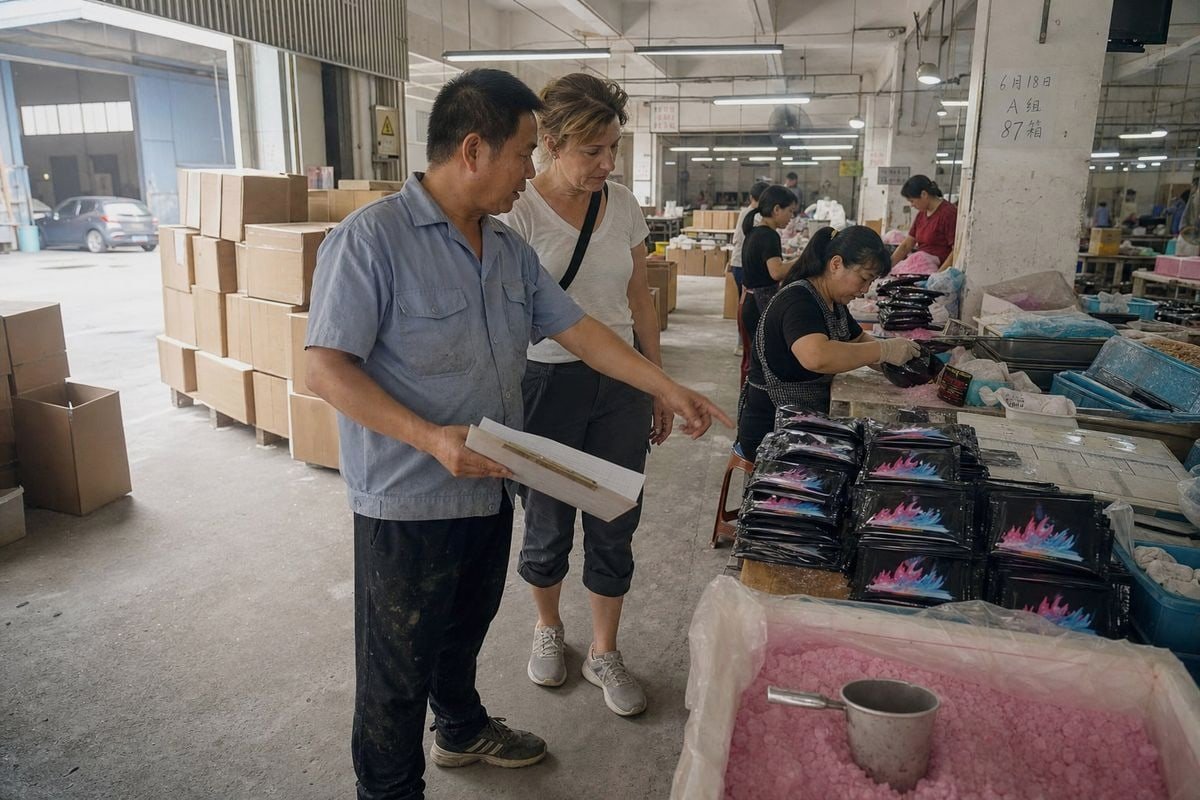
Understanding your buyer's motivation changes how you negotiate. Retailers are not being difficult when they ask for marks. They are protecting themselves from four specific risks, and each risk maps to a document they will request.
The Four Pressures Behind the Demand
Legal liability. In both the US and EU, the retailer who places a product on the market shares responsibility for its safety. If a color-flame packet causes an incident and the product lacks valid test reports, the retailer — not just the importer — faces recalls, fines, and lawsuits. Certification marks are their first line of legal defense.
Insurance requirements. Many retail chains carry seguro de responsabilidad del producto 7 that explicitly requires third-party tested goods. No valid marks, no coverage. This is non-negotiable for fire-related products.
Corporate audit standards. Large sourcing channels run supplier audits that check social compliance alongside product safety. This is why BSCI matters. Our BSCI audit, together with ISO 9001, is often the document that moves us from "candidate" to "approved vendor" in a big retailer's system.
Consumer trust on the shelf. A fire product without visible safety marks looks suspicious next to a competitor that displays them. Retail buyers know shelf perception drives sell-through, so they treat certification marks as a merchandising asset, not just paperwork.
The practical takeaway: send your compliance dossier proactively, before the buyer asks. In our experience exporting to the US and Germany, suppliers who lead with certificates close deals faster, because they remove the buyer's biggest fear on day one.
Conclusión
Certification marks on magic fire powder packaging are traceable proof of tested compliance — verify every number, demand layered documentation, and partner with a real factory that treats certification as standard practice.
Notas al pie
1. OSHA's official page defines the US Hazard Communication standard mentioned in the text. ↩︎
2. SGS is a leading third-party inspection and certification body referenced for verification. ↩︎
3. ILAC oversees international laboratory accreditation, relevant to verifying test lab credibility. ↩︎
4. General reference on quality management systems relevant to consistent batch production. ↩︎
5. ECHA explains REACH chemical registration rules cited for EU SDS compliance. ↩︎
6. Background on CE conformity marking supports the discussion of EU distributor obligations. ↩︎
7. Explains legal concept behind retailers requiring product liability insurance coverage. ↩︎


 English
  Spanish
  German
  French
  Arabic
  Portuguese
Únete a la conversación