







Wood fire starters that fail Ready to Burn 1 certification can get pulled off shelves. I've watched buyers lose entire seasons over one bad moisture report from our industry.
To ensure wood fire starters meet Ready to Burn certification and stay under 20% moisture, use calibrated pin-meter and lab testing on representative samples, source from certified suppliers with documented batch-to-batch moisture control, verify certificate numbers, and request compliance documentation covering both US and EU market requirements.
That is the short answer. The full picture involves testing methods, certification schemes, supplier audits, and paperwork. I will walk through each part below.
What Moisture Testing Methods Confirm My Wood Fire Starters Are Truly Under 20%?
A few winters ago, our QC team rejected a full pallet of wood rolls because surface readings looked fine but core readings did not. That lesson shaped how we test every batch today.
Confirm moisture under 20% by combining calibrated pin-type meter readings taken on freshly split faces with oven-dry laboratory testing of multiple samples pulled from different positions in each batch. Surface readings alone understate internal moisture, so representative sampling and cross-checked methods are essential.

Moisture testing sounds simple, but most failures I have seen come from testing the wrong way, not from wet wood. Let me break down the methods that actually hold up under audit.
Pin-Type Meter Testing Done Correctly
A pin-type moisture meter measures electrical resistance 2 between two probes. Wetter wood conducts more electricity. But the reading is only as good as the technique. You must split the piece and test the fresh inner face. The outer surface dries first, so a bark-side reading can show 15% while the core sits at 25%. You should also insert the pins across the grain, not along it, and take readings at the center of the piece. On our production line, we calibrate meters regularly and log every calibration date. An uncalibrated meter can drift by several percentage points, which is enough to turn a pass into a fail.
Why Lab Testing Still Matters
Das oven-dry method 3 is the reference standard. A sample is weighed, dried in an oven until its weight stabilizes, then weighed again. The weight difference is the water content. Certification bodies like Woodsure use lab testing on multiple separate samples because meter readings alone are not conclusive. Wood species also affect meter accuracy, since different species have different electrical resistance. Species-specific correction charts help, but the oven-dry method removes the guesswork entirely.
A Practical Testing Protocol
| Schritt | Methode | Zweck |
|---|---|---|
| 1 | Calibrate pin meter | Remove instrument drift |
| 2 | Pull samples from top, middle, and base of batch | Capture moisture variation |
| 3 | Split each sample, test inner face across grain | Avoid surface-only readings |
| 4 | Cross-check against species correction chart | Adjust for resistance differences |
| 5 | Send subset for oven-dry lab test | Confirm compliance with reference method |
| 6 | Record all results with batch ID | Build traceable evidence |
Moisture also varies within a single pile. The exterior, interior, and base of a stack can differ significantly. That is why one lucky reading proves nothing. Certification schemes demand representative sampling, and so should you.
Which Certifications Prove My Fire Starters Meet International "Ready to Burn" Standards?
When a UK distributor first asked us for Ready to Burn evidence, we spent weeks mapping which certifications actually mattered for wood fire starters versus plain firewood. The answer surprised us.
Ready to Burn, the Defra-backed UK scheme run by HETAS and Woodsure, certifies wood fuel moisture at 20% or less and is legally required in England for sales under 2m³. Supporting proof includes ISO 9001 quality systems, SGS or Intertek test reports, and CE-related compliance documentation.

Certification is not one badge. It is a stack of proofs that work together. Here is how I explain it to buyers who source from us in Ningbo for the UK, EU, and US markets.
The Ready to Burn Scheme Explained
Ready to Burn is the headline certification. It is administered by HETAS and Woodsure and backed by Defra. It covers firewood, kindling, briquettes, woodchip, and wood pellets. The legal trigger is volume: in England, wood fuel sold for domestic use in quantities under 2 cubic metres must carry the Ready to Burn mark. The mark confirms Feuchtigkeitsgehalt 4 of 20% or less. Certified suppliers must apply, pay a fee, submit representative samples for testing, and show evidence of ongoing moisture control. One important nuance: Ready to Burn certifies moisture content, not overall fuel quality. It says nothing about heat output or species grade.
How Certifications Stack Together
| Zertifizierung / Bericht | Was es beweist | Wo es am wichtigsten ist |
|---|---|---|
| Ready to Burn (HETAS/Woodsure) | Moisture ≤ 20%, point-of-sale compliance | England, referenced across UK |
| ISO 9001 | Dokumentiertes Qualitätsmanagementsystem | Global B2B buyers |
| SGS / Intertek Prüfberichte | Independent lab verification of composition and moisture | US and EU retail channels |
| BSCI-Audit 5 | Ethische und soziale Compliance im Werk | European retail sourcing |
| CE-bezogene Dokumentation | Produktsicherheitskonformität | EU-Markteintritt |
Our factory holds ISO 9001, BSCI, CE, and SGS/Intertek certification because our buyers treat these as hard requirements, not nice-to-haves. A retailer sourcing wax-dipped wood rolls for a UK shelf will typically ask for the moisture test report and the Ready to Burn framework details together. One without the other leaves a gap. Also note the packaging rule: the mark must be visible at the point of sale, whether on the retail box, a crate, a pallet label, an invoice, or a poster. Certification you cannot see does not protect the buyer.
How Do I Verify a Supplier's Batch-to-Batch Quality Control Before Placing a Bulk Order?
A purchasing manager from Germany once told me his previous supplier's samples were perfect, but the container that followed was not. That gap between sample and mass production is where most sourcing risk hides.
Verify batch-to-batch quality control by requesting the supplier's moisture logs across multiple production runs, auditing their calibration records and sampling protocol, ordering a paid trial batch, testing it independently, and confirming the factory holds ISO 9001 with documented in-process QC checkpoints.

Consistency is harder to prove than a single good sample. In 17-plus years of running production lines for fire-starting goods, we have learned that buyers who verify systems, not samples, avoid the painful surprises. Here is a practical verification sequence.
Ein Fünf-Schritte-Verifizierungsprozess
- Ask for historical moisture logs. A serious supplier records moisture readings per batch with dates and batch IDs. Ask for three to six months of records. Gaps or suspiciously uniform numbers are red flags.
- Review calibration and sampling procedures. Ask how often meters are calibrated and how samples are pulled. The right answer involves multiple positions per batch, not one log per pallet.
- Check drying and storage controls. Kiln drying delivers uniform moisture in days, but dried product can reabsorb moisture. Ask how finished stock is stored, covered, and kept off the ground before dispatch. Damaged tarps and poor ventilation quietly push compliant wood back above 20%.
- Order a trial batch and test it yourself. Flexible MOQs exist for exactly this reason. We encourage trial orders because they let a buyer split, pin-test, and even lab-test our wood rolls before committing to a container.
- Confirm the QC system is certified. ISO 9001 does not guarantee dry wood, but it does prove the factory follows documented procedures, keeps records, and handles nonconforming product formally.
Questions Worth Asking on a Factory Call
Ask who signs off on each batch. Ask what happens to a failed batch. Ask whether pre-shipment inspection by SGS or Intertek is welcome. A supplier who hesitates on any of these is telling you something. Our position has always been that the first sample must reflect mass-production quality, and the only way to promise that is a QC system that runs the same checks on batch one thousand as on batch one.
What Documentation Should I Request to Ensure Compliance Across US and EU Markets?
Shipping wax-dipped wood fire starters to 30-plus countries has taught our export team one thing: the paperwork requirements differ by market, but the buyers who ask early never get stuck at customs.
Request moisture test reports per batch, Ready to Burn certificate numbers for UK sales, SGS or Intertek lab reports, ISO 9001 and BSCI certificates, composition declarations, safety data sheets, compliant warning labels, and traceability records linking each shipment to its tested production batch.
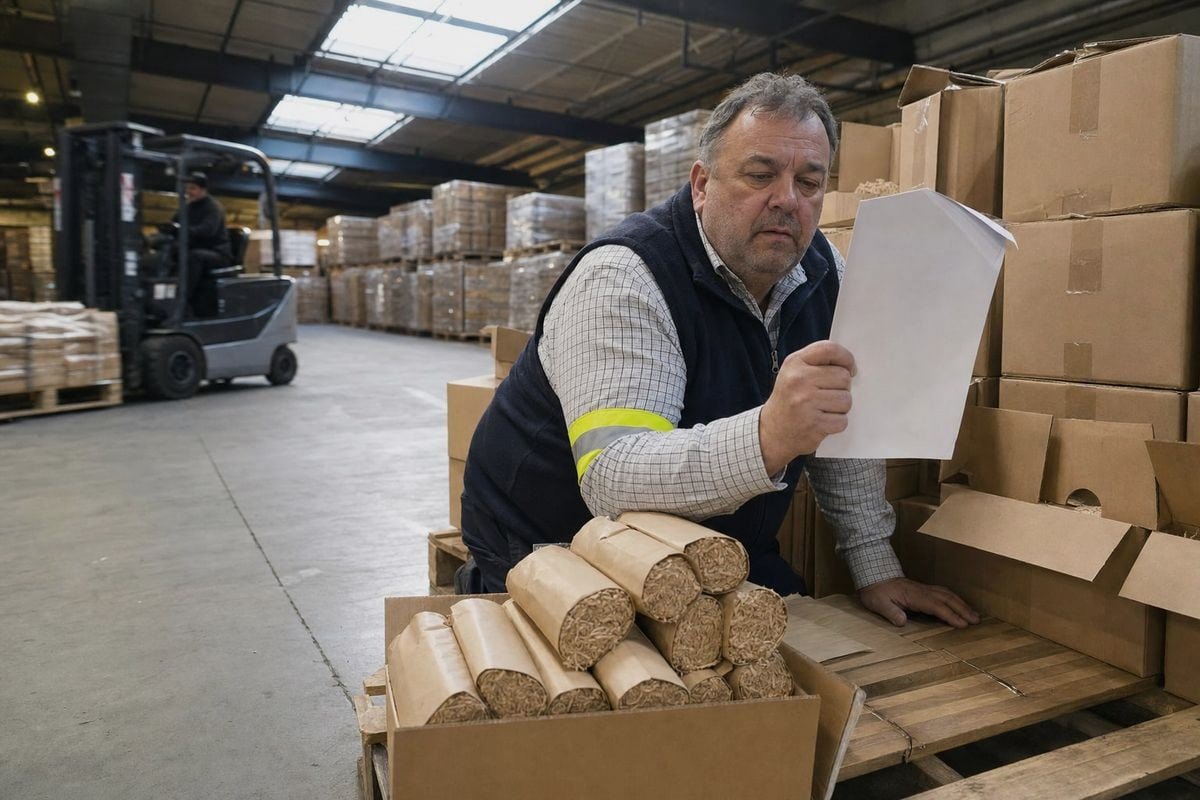
Documentation is the bridge between a compliant factory and a compliant shelf. Missing one paper can delay a container or trigger a retailer rejection. Let me map the essentials by market.
Die Kern-Dokumentationscheckliste
| Dokument | Zweck | USA | EU / UK |
|---|---|---|---|
| Batch moisture test report | Proves under-20% moisture per shipment | Empfohlen | Required for Ready to Burn claims |
| Ready to Burn certificate number | Legal point-of-sale compliance under 2m³ | Nicht zutreffend | Required in England |
| SGS / Intertek Prüfbericht | Unabhängige Überprüfung der Zusammensetzung und Sicherheit | Often requested by retailers | Often requested by retailers |
| Zusammensetzungserklärung | Discloses materials, e.g., wood fiber and paraffin ratio | Ja | Ja |
| Sicherheitsdatenblatt 7 | Handling and transport safety | Ja | Ja |
| ISO 9001 / BSCI-Zertifikate | Quality system and social compliance | Werksaudits (BSCI, ISO 9001) | Werksaudits (BSCI, ISO 9001) |
| Einzelhandelsverpackung | Shelf-ready retail compliance | Ja | Yes, with language requirements |
Traceability Ties It All Together
Every document should link back to a batch number. When we run private-label production for a distributor, the retail box, the moisture log, the lab report, and the shipping documents all carry the same batch reference. If a trading standards officer or a retail QA team asks a question two years later, the buyer can trace the answer in minutes. For UK-bound goods, also confirm the certificate number is checkable against the scheme register, and that the mark appears on the packaging or sales documents as required. For the US, retailers care most about lab-verified composition, safety labeling, and consistent test reports. One more practical tip: request documentation before production starts, not after the goods are packed. Labels, warning text, and barcodes are far cheaper to fix on a proof than on ten thousand printed boxes.
Schlussfolgerung
Compliant wood fire starters demand tested moisture, verified certification, audited batch control, and traceable documentation. Get all four right, and the under-20% claim becomes provable, not just promised.
Fußnoten
1. Official UK government guidance on Ready to Burn scheme and domestic fuel standards. ↩︎
2. Wikipedia entry clarifies the physical principle behind pin-type moisture meters. ↩︎
3. USDA Forest Products Laboratory documents the oven-dry method as the wood moisture reference standard. ↩︎
4. Wikipedia background on wood drying explains moisture measurement concepts discussed in testing methods. ↩︎
5. Official amfori BSCI page defines the social compliance audit referenced in certification tables. ↩︎
6. Wikipedia background on kiln drying supports the article's discussion of moisture control methods. ↩︎
7. OSHA reference explains safety data sheet requirements mentioned in the compliance documentation checklist. ↩︎



 English
  Spanish
  German
  French
  Arabic
  Portuguese
Diskutieren Sie mit