







Iniciadores de fuego de leña que fallan Listo para quemar 1 la certificación puede ser retirada de los estantes. He visto a compradores perder temporadas enteras por un mal informe de humedad de nuestra industria.
Para asegurar que los iniciadores de fuego de leña cumplan con la certificación Ready to Burn y se mantengan por debajo del 20% de humedad, utilice un medidor de pines calibrado y pruebas de laboratorio en muestras representativas, obtenga de proveedores certificados con control de humedad documentado lote a lote, verifique los números de certificado y solicite documentación de cumplimiento que cubra los requisitos del mercado de EE. UU. y la UE.
Esa es la respuesta corta. El panorama completo involucra métodos de prueba, esquemas de certificación, auditorías de proveedores y papeleo. Recorreré cada parte a continuación.
¿Qué métodos de prueba de humedad confirman que mis iniciadores de fuego de madera están verdaderamente por debajo de 20%?
Hace unos inviernos, nuestro equipo de control de calidad rechazó una paleta completa de rollos de leña porque las lecturas de la superficie parecían bien, pero las lecturas del núcleo no. Esa lección dio forma a cómo probamos cada lote hoy.
Confirmar la humedad por debajo de 20% combinando lecturas de medidor tipo pin calibrado tomadas en caras recién partidas con pruebas de laboratorio de secado en horno de múltiples muestras extraídas de diferentes posiciones en cada lote. Las lecturas de superficie por sí solas subestiman la humedad interna, por lo que el muestreo representativo y los métodos de verificación cruzada son esenciales.
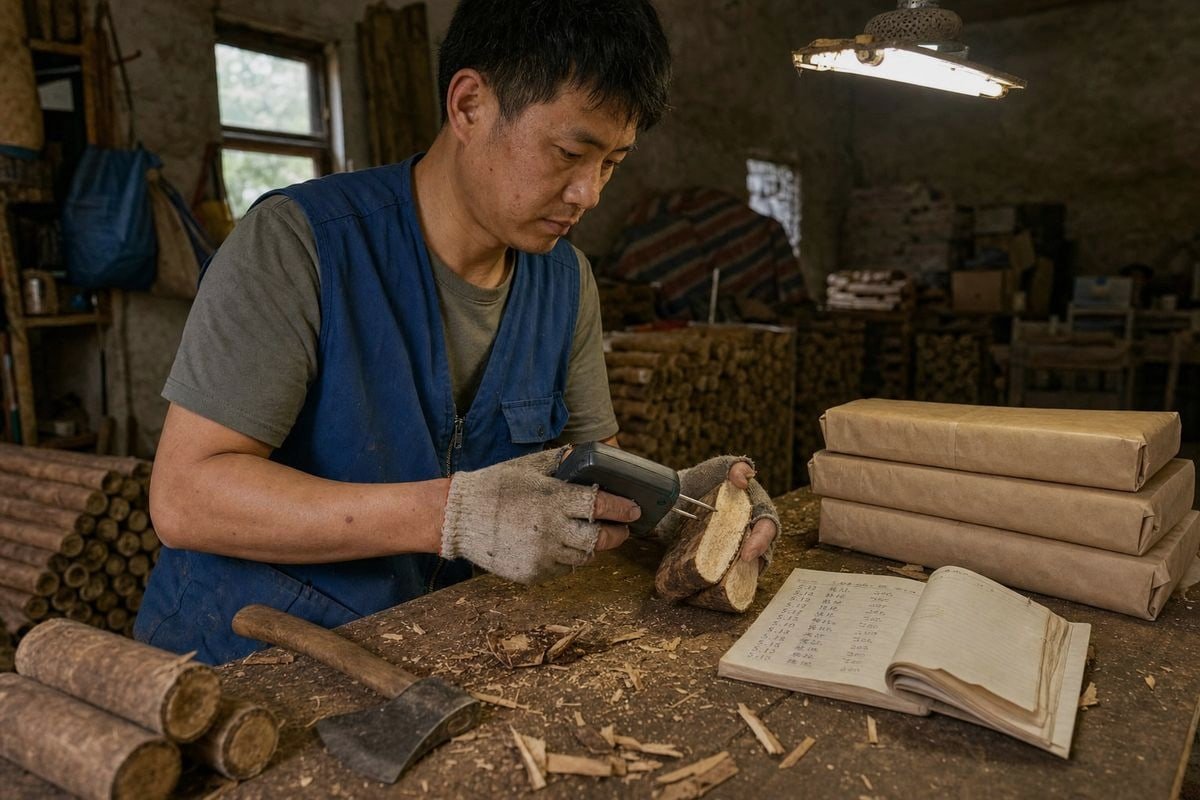
La prueba de humedad suena simple, pero la mayoría de los fallos que he visto provienen de probar de la manera incorrecta, no de leña húmeda. Permítanme desglosar los métodos que realmente se mantienen bajo auditoría.
Prueba con Medidor de Tipo Pin Realizada Correctamente
Un medidor de humedad de tipo pin mide la resistencia eléctrica 2 entre dos sondas. La madera más húmeda conduce más electricidad. Pero la lectura es tan buena como la técnica. Debes partir la pieza y probar la cara interior fresca. La superficie exterior se seca primero, por lo que una lectura del lado de la corteza puede mostrar 15% mientras que el núcleo está a 25%. También debes insertar las sondas a través de la veta, no a lo largo de ella, y tomar lecturas en el centro de la pieza. En nuestra línea de producción, calibramos los medidores regularmente y registramos cada fecha de calibración. Un medidor no calibrado puede desviarse varios puntos porcentuales, lo que es suficiente para convertir un aprobado en un suspenso.
Por qué las Pruebas de Laboratorio Siguen Siendo Importantes
La método de secado en horno 3 es el estándar de referencia. Se pesa una muestra, se seca en un horno hasta que su peso se estabiliza, y luego se vuelve a pesar. La diferencia de peso es el contenido de agua. Organismos de certificación como Woodsure utilizan pruebas de laboratorio en múltiples muestras separadas porque las lecturas del medidor por sí solas no son concluyentes. La especie de madera también afecta la precisión del medidor, ya que diferentes especies tienen diferente resistencia eléctrica. Los gráficos de corrección específicos de la especie ayudan, pero el método de secado en horno elimina las conjeturas por completo.
Un Protocolo de Prueba Práctico
| Paso | Método | Propósito |
|---|---|---|
| 1 | Calibrar medidor de pin | Eliminar la deriva del instrumento |
| 2 | Tomar muestras de la parte superior, media y base del lote | Capturar la variación de humedad |
| 3 | Partir cada muestra, probar la cara interior a través de la veta | Evitar lecturas solo de superficie |
| 4 | Cruzar con el gráfico de corrección de especies | Ajustar por diferencias de resistencia |
| 5 | Enviar subconjunto para prueba de laboratorio de secado en horno | Confirmar el cumplimiento con el método de referencia |
| 6 | Registrar todos los resultados con ID de lote | Construir evidencia rastreable |
La humedad también varía dentro de una sola pila. El exterior, el interior y la base de una pila pueden diferir significativamente. Es por eso que una lectura afortunada no prueba nada. Los esquemas de certificación exigen un muestreo representativo, y tú también deberías hacerlo.
¿Qué Certificaciones Prueban que Mis Iniciadores de Fuego Cumplen con los Estándares Internacionales "Listos para Quemar"?
Cuando un distribuidor del Reino Unido nos pidió por primera vez evidencia de "Listo para Quemar", pasamos semanas mapeando qué certificaciones realmente importaban para los iniciadores de fuego de leña frente a la leña común. La respuesta nos sorprendió.
Listo para quemar, el esquema del Reino Unido respaldado por Defra, administrado por HETAS y Woodsure, certifica la humedad del combustible de madera en 20% o menos y es legalmente requerido en Inglaterra para ventas de menos de 2 m³. La prueba de respaldo incluye sistemas de gestión de calidad ISO 9001, informes de prueba de SGS o Intertek y documentación de cumplimiento relacionada con CE.

La certificación no es una insignia. Es una pila de pruebas que funcionan juntas. Así es como se lo explico a los compradores que nos compran en Ningbo para los mercados del Reino Unido, la UE y los EE. UU.
El Esquema "Listo para Quemar" Explicado
"Listo para Quemar" es la certificación principal. Es administrada por HETAS y Woodsure y respaldada por Defra. Cubre leña, astillas, briquetas, astillas de madera y pellets de madera. El disparador legal es el volumen: en Inglaterra, el combustible de madera vendido para uso doméstico en cantidades inferiores a 2 metros cúbicos debe llevar la marca "Listo para Quemar". La marca confirma contenido de humedad 4 del 20% o menos. Los proveedores certificados deben postularse, pagar una tarifa, presentar muestras representativas para pruebas y mostrar evidencia de control de humedad continuo. Un matiz importante: "Listo para Quemar" certifica el contenido de humedad, no la calidad general del combustible. No dice nada sobre la producción de calor o el grado de la especie.
Cómo se Apilan las Certificaciones
| Certificación / Informe | Lo Que Demuestra | Dónde importa más |
|---|---|---|
| Listo para Quemar (HETAS/Woodsure) | Humedad ≤ 20%, cumplimiento en el punto de venta | Inglaterra, referenciado en todo el Reino Unido |
| ISO 9001 | Sistema de gestión de calidad documentado | Compradores B2B globales |
| Informes de prueba SGS / Intertek | Verificación de laboratorio independiente de composición y humedad | Canales minoristas de EE. UU. y la UE |
| Auditoría BSCI 5 | Cumplimiento ético y social en la fábrica | Abastecimiento minorista europeo |
| Documentación relacionada con CE | Conformidad de seguridad del producto | Entrada al mercado de la UE |
Nuestra fábrica cuenta con la certificación ISO 9001, BSCI, CE y SGS/Intertek porque nuestros compradores las tratan como requisitos obligatorios, no como algo deseable. Un minorista que busca rollos de leña recubiertos de cera para un estante del Reino Unido normalmente solicitará el informe de prueba de humedad y los detalles del marco "Listo para Quemar" juntos. Uno sin el otro deja un vacío. Tenga en cuenta también la regla de embalaje: la marca debe ser visible en el punto de venta, ya sea en la caja minorista, un palé, una etiqueta de palé, una factura o un póster. La certificación que no se puede ver no protege al comprador.
¿Cómo verifico el control de calidad lote a lote de un proveedor antes de realizar un pedido a granel?
Un gerente de compras de Alemania me dijo una vez que las muestras de su proveedor anterior eran perfectas, pero el contenedor que siguió no lo fue. Esa brecha entre la muestra y la producción en masa es donde se esconde la mayor parte del riesgo de abastecimiento.
Verificar el control de calidad lote a lote solicitando los registros de humedad del proveedor en múltiples lotes de producción, auditando sus registros de calibración y protocolo de muestreo, solicitando un lote de prueba pagado, probándolo de forma independiente y confirmando que la fábrica posee ISO 9001 con puntos de control de calidad en proceso documentados.

La consistencia es más difícil de probar que una sola muestra buena. En más de 17 años de dirigir líneas de producción de iniciadores de fuego, hemos aprendido que los compradores que verifican sistemas, no muestras, evitan sorpresas dolorosas. Aquí hay una secuencia de verificación práctica.
Un proceso de verificación de cinco pasos
- Solicitar registros históricos de humedad. Un proveedor serio registra las lecturas de humedad por lote con fechas e identificaciones de lote. Solicite de tres a seis meses de registros. Las lagunas o los números sospechosamente uniformes son señales de alerta.
- Revisar los procedimientos de calibración y muestreo. Pregunte con qué frecuencia se calibran los medidores y cómo se extraen las muestras. La respuesta correcta implica múltiples posiciones por lote, no un registro por paleta.
- Verificar los controles de secado y almacenamiento. El secado en horno proporciona una humedad uniforme en días, pero el producto seco puede reabsorber humedad. Pregunte cómo se almacena el stock terminado, cubierto y mantenido fuera del suelo antes del envío. Las lonas dañadas y la mala ventilación empujan silenciosamente la madera conforme de nuevo por encima del 20%.
- Solicitar un lote de prueba y probarlo usted mismo. Existen MOQ flexibles precisamente por esta razón. Fomentamos los pedidos de prueba porque permiten a un comprador dividir, probar con alfileres e incluso probar en laboratorio nuestros rollos de madera antes de comprometerse con un contenedor.
- Confirmar que el sistema de control de calidad está certificado. ISO 9001 no garantiza madera seca, pero sí demuestra que la fábrica sigue procedimientos documentados, mantiene registros y maneja el producto no conforme formalmente.
Preguntas que vale la pena hacer en una llamada a la fábrica
Pregunte quién aprueba cada lote. Pregunte qué sucede con un lote fallido. Pregunte si la inspección previa al envío por parte de SGS o Intertek es bienvenida. Un proveedor que duda en cualquiera de estas preguntas le está diciendo algo. Nuestra posición siempre ha sido que la primera muestra debe reflejar la calidad de la producción en masa, y la única forma de prometer eso es un sistema de control de calidad que ejecute las mismas verificaciones en el lote mil que en el lote uno.
¿Qué documentación debo solicitar para garantizar el cumplimiento en los mercados de EE. UU. y la UE?
Enviar iniciadores de fuego de madera encerados a más de 30 países ha enseñado a nuestro equipo de exportación una cosa: los requisitos de documentación difieren según el mercado, pero los compradores que preguntan con anticipación nunca se quedan atascados en la aduana.
Solicitar informes de prueba de humedad por lote, números de certificado Ready to Burn para ventas en el Reino Unido, informes de laboratorio SGS o Intertek, certificados ISO 9001 y BSCI, declaraciones de composición, hojas de datos de seguridad, etiquetas de advertencia conformes y registros de trazabilidad que vinculen cada envío con su lote de producción probado.
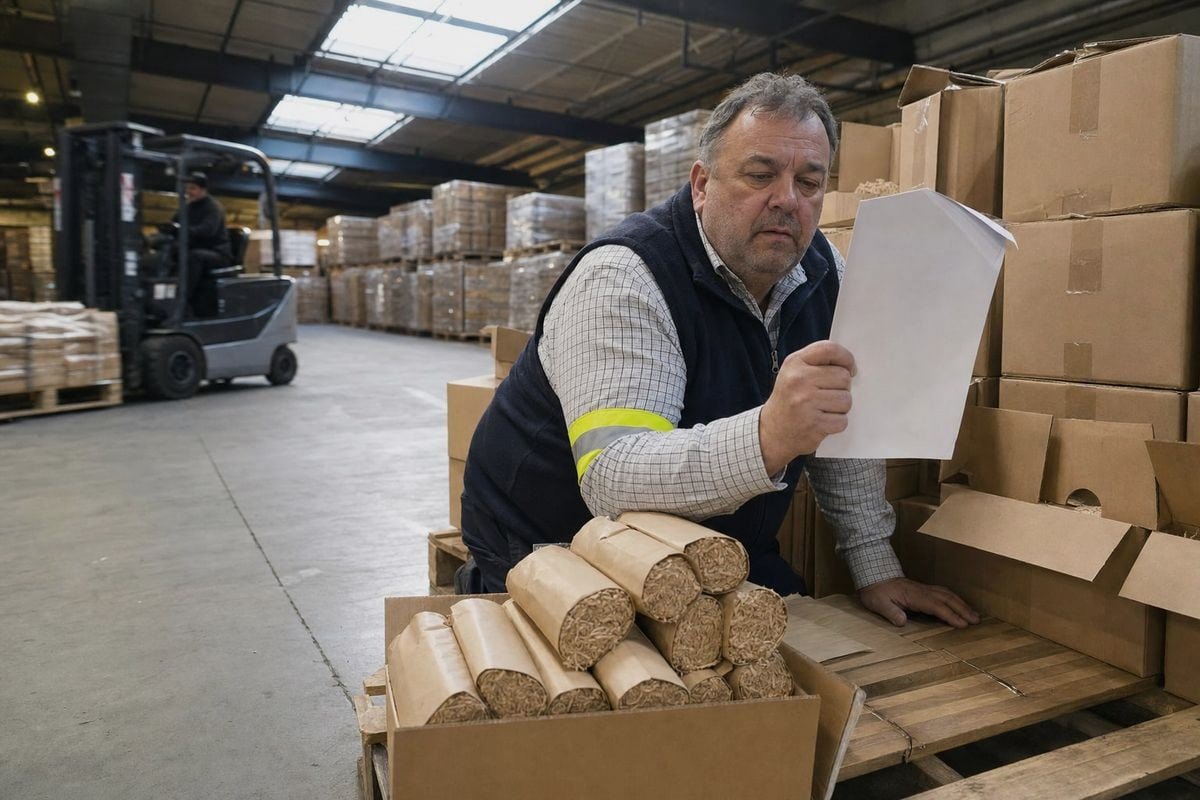
La documentación es el puente entre una fábrica conforme y un estante conforme. Perder un papel puede retrasar un contenedor o provocar el rechazo de un minorista. Permítame mapear lo esencial por mercado.
La lista de verificación de documentación principal
| Documento | Propósito | EE. UU. | UE / Reino Unido |
|---|---|---|---|
| Informe de prueba de humedad por lote | Demuestra humedad inferior al 20% por envío | Recomendado | Requerido para reclamaciones Ready to Burn |
| Número de certificado Ready to Burn | Cumplimiento legal en el punto de venta por debajo de 2 m³ | No aplicable | Requerido en Inglaterra |
| Informe de prueba SGS / Intertek | Verificación independiente de la composición y la seguridad | Solicitado a menudo por los minoristas | Solicitado a menudo por los minoristas |
| Declaración de composición | Revela materiales, por ejemplo, relación de fibra de madera y parafina | Sí | Sí |
| Hoja de datos de seguridad 7 | Manipulación y seguridad en el transporte | Sí | Sí |
| Certificados ISO 9001 / BSCI | Sistema de calidad y cumplimiento social | Requisito del minorista | Requisito del minorista |
| Etiquetas de advertencia y códigos de barras | Cumplimiento de venta al por menor listo para el estante | Sí | Sí, con requisitos de idioma |
La trazabilidad lo une todo
Cada documento debe vincularse a un número de lote. Cuando realizamos producción de marca privada para un distribuidor, la caja minorista, el registro de humedad, el informe de laboratorio y los documentos de envío llevan la misma referencia de lote. Si un oficial de normas comerciales o un equipo de control de calidad minorista hace una pregunta dos años después, el comprador puede rastrear la respuesta en minutos. Para los productos destinados al Reino Unido, confirme también que el número de certificado se puede verificar con el registro del esquema, y que la marca aparece en el embalaje o en los documentos de venta según lo requerido. Para EE. UU., a los minoristas les importan más la composición verificada en laboratorio, el etiquetado de seguridad y los informes de prueba consistentes. Un consejo práctico más: solicite la documentación antes de que comience la producción, no después de que los productos estén empacados. Las etiquetas, el texto de advertencia y los códigos de barras son mucho más baratos de arreglar en una prueba que en diez mil cajas impresas.
Conclusión
Los iniciadores de fuego de madera conformes exigen humedad probada, certificación verificada, control de lotes auditado y documentación rastreable. Si acierta las cuatro, la afirmación de menos del 20% se vuelve demostrable, no solo prometida.
Notas al pie
Guía oficial del gobierno del Reino Unido sobre el esquema Ready to Burn y las normas de combustible doméstico. ↩︎
La entrada de Wikipedia aclara el principio físico detrás de los medidores de humedad de tipo pin. ↩︎
El Laboratorio de Productos Forestales del USDA documenta el método de secado en horno como el estándar de referencia de humedad de la madera. ↩︎
El contexto de Wikipedia sobre el secado de madera explica los conceptos de medición de humedad discutidos en los métodos de prueba. ↩︎
La página oficial de amfori BSCI define la auditoría de cumplimiento social referenciada en las tablas de certificación. ↩︎
El contexto de Wikipedia sobre el secado en horno apoya la discusión del artículo sobre los métodos de control de humedad. ↩︎
La referencia de OSHA explica los requisitos de la hoja de datos de seguridad mencionados en la lista de verificación de documentación de cumplimiento. ↩︎


 English
  Spanish
  German
  French
  Arabic
  Portuguese
Únete a la conversación