







Language and governing law in wood fire starter contracts trip up more buyers than pricing ever does Lacey Act 1. I've watched deals from our Ningbo production line stall over one ambiguous clause.
Handle language and governing law in wood fire starter contracts by using two separate clauses: a prevailing language clause naming one controlling version (usually English), and a choice of law clause naming one jurisdiction, paired with a clear dispute resolution mechanism such as arbitration.
These two clauses are not the same thing. Many buyers merge them or skip one entirely. Below, I break down each decision so you can [negotiate your next supply agreement](https://sunrichfire.com/what-key-terms-specify-wood-fire-starters-contract/) with confidence.
Seventeen years of exporting fire-starting goods to 30+ countries has taught our team one thing: the contract language question comes up in almost every first negotiation we have with a new distributor.
Write the contract in English as the working language, and if your Chinese manufacturer requests a Chinese version, create a bilingual contract with a prevailing language clause stating that the English text controls in any discrepancy. Never rely on informal translations of a single-language document.

English is the default language of international trade, and most established Chinese factories, including ours, negotiate and sign English contracts daily. But the practical picture is more layered than "just use English." Let me walk through the real options.
Your three realistic options
| Option | How it works | Best for |
|---|---|---|
| English only | One English version signed by both parties | Experienced exporters with strong English teams |
| Bilingual, English controls | Side-by-side English and Chinese, English prevails | Most wood fire starter supply deals |
| Bilingual, Chinese controls | Chinese version prevails | Rare; only if enforcement in Chinese courts is your plan |
Here is why the middle option usually wins. If a dispute ever lands in a Chinese court, the court will work from a Chinese translation anyway. If you supply your own certified bilingual contract, you control that translation instead of leaving it to a court-appointed translator under time pressure. Meanwhile, your prevailing language clause protects you if the two versions ever conflict.
There is a relationship benefit too. When we sign bilingual agreements with European distributors, our production and QC managers in Ningbo can read the specification annexes directly. That reduces errors in burn time targets, wax composition, packaging dimensions, and warning label text. Fewer misreadings mean fewer rejected shipments.
One warning from experience: do not let purchase orders, specification sheets, and the master supply agreement drift into different languages without a controlling rule. If your master agreement is English-controlled but your spec sheets circulate only in Chinese, you have quietly created a translation gap in the documents that matter most for product quality.
Which country's law should govern my wood fire starter agreement to best protect my interests?
A German fireplace distributor once asked me, mid-negotiation, why we didn't object to their choice of law clause naming German law. My answer surprised them: a well-run factory cares more about clarity than home-field advantage.
Choose the governing law of the jurisdiction where you will most likely need to enforce the contract. For most importers, that means your home law or a neutral commercial law like English or New York law, stated in a clear choice of law clause that excludes conflict-of-laws rules.

Governing law is the rulebook used to interpret your agreement. It is separate from jurisdiction and venue, which decide where a dispute is actually heard. Strong contracts address both, because naming a governing law does not automatically pick a court or tribunal.
Comparing the common choices
| Governing law | Advantages | Drawbacks |
|---|---|---|
| Your home law (US state, German, UK) | Familiar, your lawyers know it | Supplier may resist; enforcement in China still needed |
| Chinese law | Easiest to enforce against a Chinese factory's assets | Unfamiliar to most Western buyers |
| Neutral law (English, New York, Singapore) | Well-developed commercial precedent, perceived fairness | Neither party's home turf; may raise legal costs |
Two drafting points matter more than the flag on the law you pick. First, decide whether to exclude the United Nations Convention on Contracts for the International Sale of Goods 2. The CISG applies automatically to many cross-border deals in the international sale of goods, and it will fill gaps unless you expressly opt out. If you prefer the certainty of your local statutes, such as the UCC in the United States, say so in writing.
Second, add "without regard to conflict of laws principles 3" to your clause. This stops a court from using conflicts rules to pull in another jurisdiction's law through the back door.
Also think commercially, not just legally. Where is the factory? Where do the goods ship under your incoterms 4? Where does your product liability insurance respond? For our wood firestarters, most of our long-term buyers pair a Western or neutral governing law with China-seated or Hong Kong-seated arbitration, because that combination is realistically enforceable against a Chinese manufacturer.
How do I handle disputes if my contract's governing law conflicts with my local consumer safety regulations?
Compliance paperwork is the first thing serious buyers ask us for, before price and before samples. Our CE marking, SGS and Intertek test reports exist precisely because local safety rules never bow to a contract clause.
Mandatory consumer safety regulations in your sales market always apply regardless of the contract's governing law. Handle the conflict by building safety compliance standards directly into the contract as warranties and specifications, so a regulatory breach becomes a clear contractual breach too.
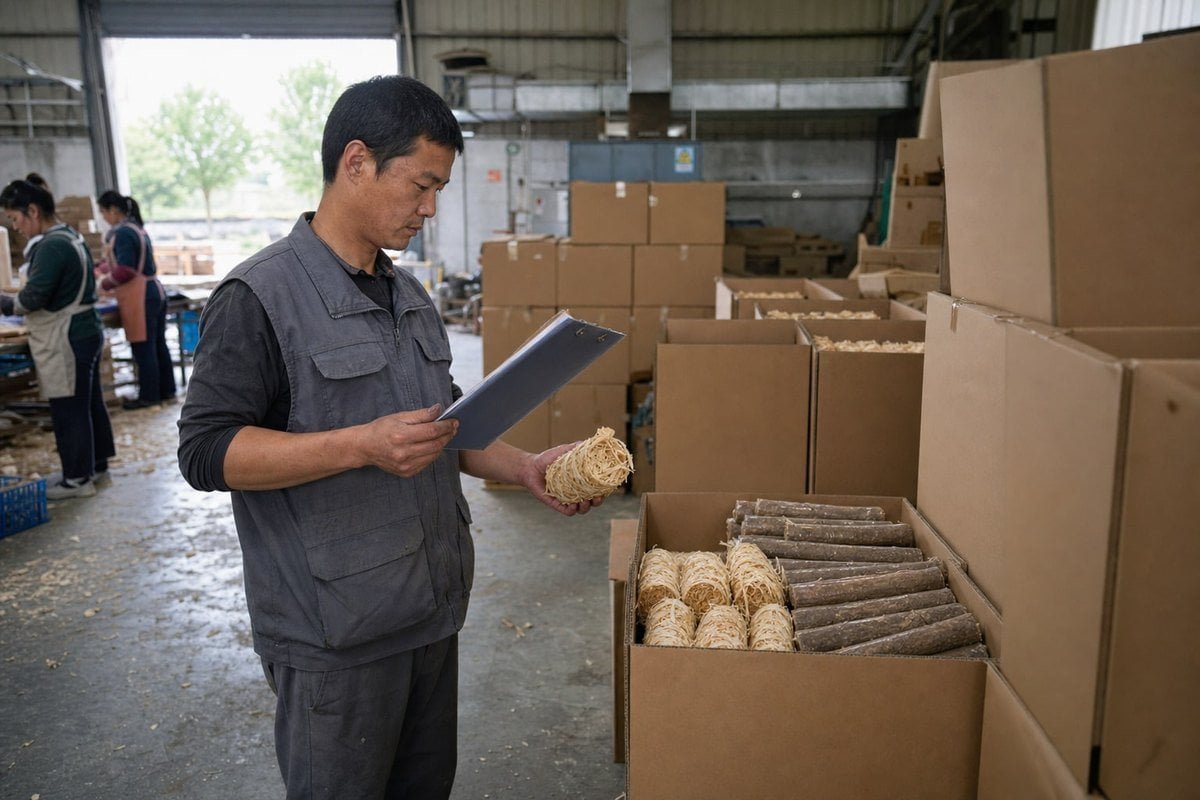
Here is the principle in plain terms. A choice of law clause governs the private deal between you and your supplier. It cannot waive public rules, such as chemical disclosure requirements 6 for the waxes and binders in fire starter compositions, packaging warning label mandates, or phytosanitary rules like ISPM-15 for wood packaging materials 7. Even the Lacey Act in the US can touch wood-derived products depending on sourcing. These rules apply because you sell into that market, full stop.
So the smart move is not to fight the conflict. It is to erase it.
A four-step approach that works
- List every mandatory rule in your sales market. Cover chemical content, labeling, flammability warnings, import documentation, and any emerging sourcing frameworks such as deforestation-free requirements in the EU.
- Convert those rules into contract specifications. Reference the exact standards in a compliance annex. Our OEM buyers routinely attach warning label artwork and composition limits directly to the agreement.
- Add a compliance warranty. The supplier warrants that goods meet the listed safety compliance standards, backed by test reports from recognized labs.
- Attach remedies and insurance. Spell out rejection rights, recall cost allocation, and require the supplier to carry or support product liability insurance for your market.
This structure means that if a regulator ever flags your product, you do not need to argue about which country's consumer law applies inside the contract dispute. The regulatory standard is already a contractual promise, judged under your chosen governing law. That is a far cleaner dispute resolution mechanism than litigating conflicting legal systems.
From our side of the table, we actually prefer buyers who work this way. Clear compliance annexes let our QC team test against fixed criteria on every batch, so the first sample and the ten-thousandth carton meet the same bar.
Should I require a bilingual contract with a English-language controlling clause to avoid translation disputes?
Early in our export history, a purchase order translated the phrase "wax-dipped wood rolls" in a way that could have covered a completely different product format. We caught it before signing. That near miss changed how we draft every agreement since.
Yes. For a China-sourced wood fire starter deal, a bilingual contract with an English controlling clause is best practice. It keeps both teams operationally aligned while guaranteeing that one authoritative text, the English version, decides any dispute over meaning.

A prevailing language clause is short, cheap to draft, and prevents an entire category of litigation. Without it, a mistranslated warranty term or a fuzzy force majeure trigger can become a genuine legal argument, with each side pointing to "their" version.
The trade-off, honestly stated
| Approach | Certainty | Operational clarity | Risk |
|---|---|---|---|
| English only | High legal certainty | Factory floor may misread specs | Execution errors |
| Bilingual, no controlling clause | Low | High | Two "official" versions can conflict |
| Bilingual, English controls | High | High | Slightly higher drafting cost |
The third row wins for almost every wood fire starter supply relationship. But three details make or break it in practice.
Extend the clause to all related documents. Your master agreement, purchase orders, specification annexes, and distribution addenda should all state that English controls. Inconsistent boilerplate across linked documents is one of the most common drafting failures we see, and it invites arguments about which paper governs.
Align it with your dispute resolution mechanism. If your arbitration agreement seats the case in Hong Kong or Singapore, specify English as the language of the arbitration too. Otherwise you win the contract-language battle but still face translated proceedings.
Invest in the translation once, properly. A controlling clause protects you legally, but a sloppy Chinese translation still causes commercial friction. Have a qualified legal translator prepare the Chinese counterpart, then let the controlling clause serve as a backstop rather than a crutch. When both versions genuinely match, disputes rarely start in the first place.
Conclusion
Ambiguity, not bad faith, kills most cross-border fire starter deals. Fix your governing law, controlling language, and compliance annexes before signing, and disputes rarely get the chance to start.
Footnotes
1. Official USDA APHIS source explaining Lacey Act requirements for wood-derived imports. ↩︎
2. Links to the official UNCITRAL text of the CISG convention referenced in the contract discussion. ↩︎
3. Background explanation of conflict-of-laws principles used in governing law clauses discussed in the article. ↩︎
4. ICC's official Incoterms rules page, directly relevant to shipping terms referenced in the article. ↩︎
5. ICC's authoritative resource on international arbitration, the dispute mechanism recommended in the article. ↩︎
6. EPA overview of chemical disclosure law relevant to wax and binder compliance mentioned in the article. ↩︎
7. Explains the ISPM-15 phytosanitary standard for wood packaging mentioned in the compliance section. ↩︎



 English
  Spanish
  German
  French
  Arabic
  Portuguese
Join the Conversation