






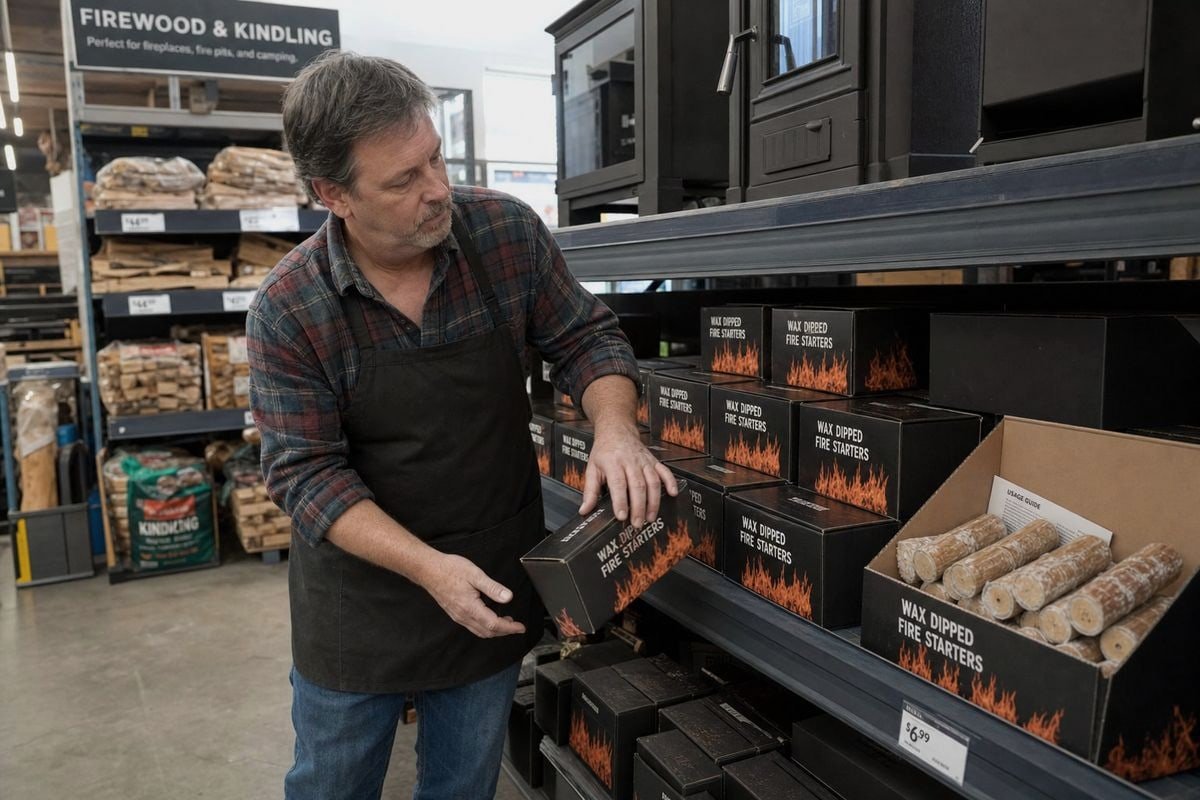
Our export team keeps hearing the same complaint: customers buy a wood fire starter usage guide product without one — then blame the retailer when the first fire fails.
To create a wood fire starter usage guide, cover product identification, fire-lay setup with kindling and tinder, correct starter placement, safe ignition, airflow management, and gradual fueling. Add safety warnings, certification references, and clear visuals, then format it for packaging inserts, shelf displays, and product pages.
A good guide does more than list steps. It prevents returns, builds trust, and turns a first-time buyer into a repeat customer CE marking 1. Let me walk you through how we build these guides for our B2B partners.
What Key Safety Instructions Should I Include in My Wood Fire Starter Usage Guide?
Years ago, a German distributor sent back a draft insert we had prepared. His feedback changed how our factory writes safety copy: warnings must sit next to the step they relate to, not buried at the bottom.
A wood fire starter usage guide must include instructions to open the chimney damper before ignition, light the starter at the base of the wood stack, keep hands and clothing clear of flames, never use starters in gas appliances, supervise all fires, and store starters away from children and pets.
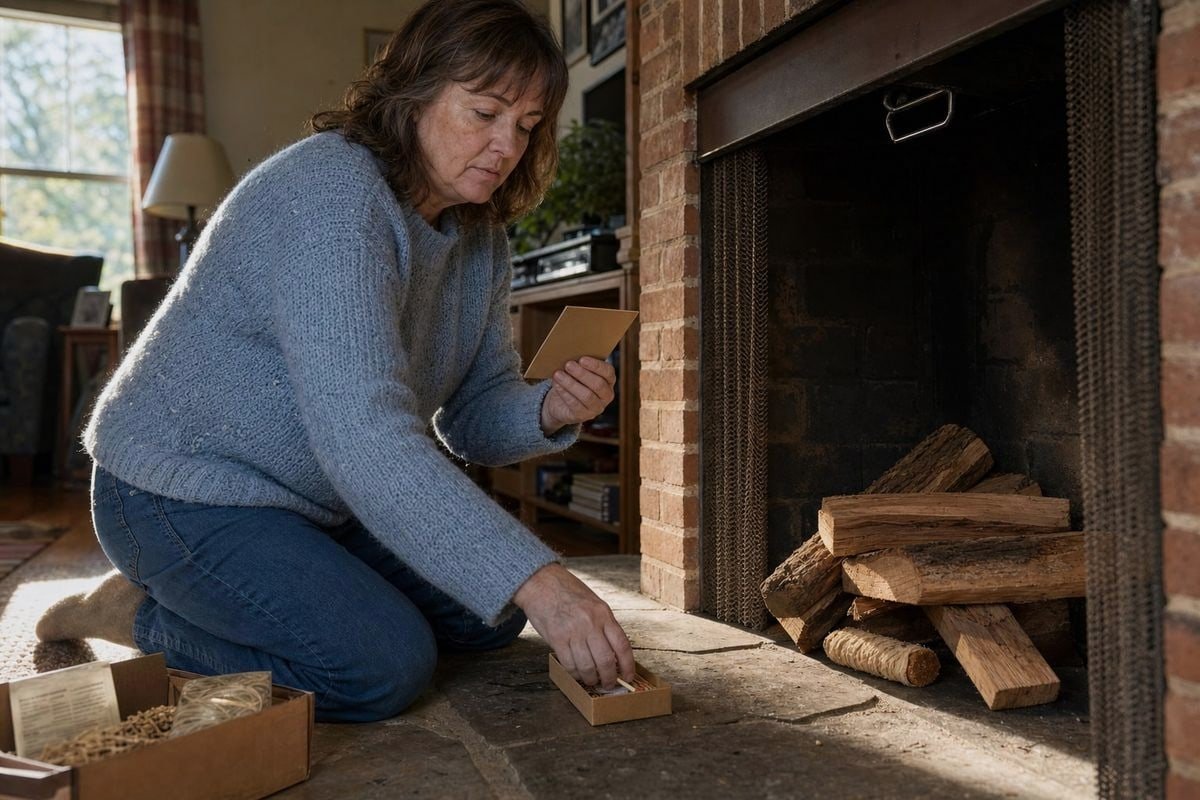
Safety content is the backbone of any usage guide. In our experience exporting to the US and EU, retailers who skip clear fire safety precautions face two problems. First, they get more complaints. Second, they carry more liability risk. Neither is worth the space you save on a package insert.
Place Warnings Where the Action Happens
The biggest mistake we see is a wall of warnings printed in tiny type on the back panel. Nobody reads it. Instead, pair each warning with the relevant step. When the guide says "light the starter," the same line should say "use a long match or long-nose lighter and keep hands clear." When the guide says "build your fire," it should remind users to open the chimney damper 2 first so the chimney draft pulls smoke upward instead of into the room.
Core Safety Points to Cover
Here is the safety checklist we recommend to every private-label buyer:
| Safety Instruction | Why It Matters |
|---|---|
| Open the damper before lighting | Prevents smoke backflow and supports chimney draft |
| Light only at the base of the stack | Stops premature burnout and flare-ups |
| Never use in gas fireplaces or pellet stoves | Wax-based starters are not rated for these appliances |
| Keep away from children and pets | Starters look harmless but ignite fast |
| Never add starters to an existing fire | Sudden flare-up risk near hands and face |
| Let embers die fully before cleanup | Hidden embers can reignite hours later |
Appliance Compatibility Deserves Its Own Line
Our wax-dipped wood rolls burn hot by design. That is great for wood stoves and fire pits, but it is exactly why the guide must state clearly which appliances the product suits. One explicit compatibility sentence saves retailers dozens of support emails.
How Can I Design a Usage Guide That Helps Retailers Sell My Product More Effectively?
There is a trade-off we weigh on every packaging project: how much instruction fits on a box before it stops being read. After 17 years of shipping fire-starting goods to 30+ countries, our answer is always the same — fewer words, more structure.
Design the guide as a numbered five-step visual workflow: gather tinder and kindling, build an open fire lay, place the starter at the base, light it safely, and add logs gradually. Use diagrams, "best for" labels, a starter-to-log ratio chart, and QR codes linking to full instructions.

A usage guide is a sales tool, not a compliance afterthought. Retailers who treat it that way sell more product. Here is the structure we build for our OEM partners.
Teach the Fire-Lay First
Most failed first fires have nothing to do with the starter. They fail because the wood is stacked too tightly and oxygen cannot circulate. So the guide should teach a simple fire lay — teepee, crisscross, or the top-down fire starting method 3 — with one small diagram. The top-down fire starting method works especially well for fireplaces because it burns cleaner and needs less tending.
Use a Numbered Workflow
Keep each step to one action:
- Gather dry kindling and tinder plus split fuel wood.
- Stack wood loosely so air can flow between pieces.
- Place one starter at the base of the stack.
- Light the starter with a long match or lighter.
- Wait for a stable flame, then add larger logs gradually.
Add Practical Reference Tools
A starter-to-log ratio chart makes the guide genuinely useful. Wood density and moisture content 4 change how much ignition help a fire needs:
| Wood Condition | Starters Needed | Expected Ignition Time |
|---|---|---|
| Dry softwood, split small | 1 starter | 3–5 minutes |
| Seasoned hardwood | 1–2 starters | 5–8 minutes |
| Dense or slightly damp hardwood | 2 starters | 8–12 minutes |
| High-humidity or high-altitude conditions | 2 starters + extra kindling | 10–15 minutes |
Micro-climate tips like that last row help retailers in mountain or coastal markets. Thin air and damp wood both slow combustion, and a guide that acknowledges this earns trust. Finally, format the same content three ways: a packaging insert, a shelf talker for point-of-sale displays, and a QR-linked web page with photos. Each placement catches the customer at a different decision moment.
What Certifications and Compliance Information Should I Reference in My Guide?
A UK importer once told our sales team that his retail buyers would not even open a sample box without seeing test reports first. That conversation shaped how we present compliance today — front and center, not in the fine print.
Reference safety certifications such as CE marking, third-party test reports from labs like SGS or Intertek, quality system certification like ISO 9001, and any required regional warning labels. Include composition details, non-toxic material claims, and disposal guidance to satisfy both regulators and eco-conscious consumers.

Compliance information does two jobs in a usage guide. It protects the retailer legally, and it reassures the shopper standing in the aisle. Both matter, and both deserve deliberate placement.
What to Show, and Where
For our own wax-dipped wood rolls, we hold ISO 9001 5, BSCI, CE, and SGS/Intertek test documentation, because our US and European buyers treat these as hard requirements. Your guide does not need to reprint full reports. It needs to reference them clearly:
| Compliance Element | Where to Place It | Purpose |
|---|---|---|
| CE mark or regional equivalent | Package front or side panel | Legal market access in the EU |
| Third-party lab test reference | Back panel + product page | Proof of independent verification |
| Composition statement (e.g., wood fiber and paraffin percentages) | Near usage instructions | Transparency and allergy awareness |
| Warning label language per market | Adjacent to safety steps | Regulatory requirement in many regions |
| Disposal and ash guidance | End of instructions | Environmental compliance and goodwill |
Turn Compliance into a Selling Point
Composition transparency also supports the eco-friendly fire starters story. If your product uses natural wood wool, fatwood sticks, or recycled biomass, say so in plain language: no lighter fluid, no chemical accelerants, no toxic fumes. Some of our partners go further with circular economy 6 storytelling — explaining that the wood fiber comes from diverted sawmill byproducts. That short paragraph builds brand loyalty in ways a generic claim never will.
One more angle worth a sentence in your guide: creosote buildup 7 prevention. High-heat natural starters help fires reach efficient temperatures faster than newspaper or cardboard, which supports cleaner burns and better chimney health over a season. That positions the product as a maintenance tool, not just a convenience item.
Can I Customize the Usage Guide with My Own Branding for Private Label Distribution?
Last year, our production team in Ningbo ran a private-label project where the buyer wanted the usage guide printed in four languages inside a custom display box. Watching that project ship taught me that the guide is often the most-read piece of brand real estate a fire product has.
Yes. A private-label usage guide can carry your brand name, logo, colors, custom illustrations, translated instructions, market-specific warning labels, and barcodes. Work with an OEM manufacturer that supplies compliance documentation and adapts the guide format to your packaging, display, and regional regulations.

Private-label customization is where a usage guide stops being generic paper and becomes part of your product experience. In our OEM/ODM work, we handle everything from custom boxes and display packaging to warning labels and barcodes, so I can tell you exactly which decisions matter most.
Decide What Stays Fixed and What Flexes
Some content should never change between brands: the core safety steps, appliance compatibility warnings, and regulated label language. Everything else is open. Your brand voice can shape the tone. Your illustrations can show your packaging. Your "best for" labels can match your customer base — fireplace-focused for a hearth distributor, campfire-focused for an outdoor brand.
Match the Guide to the Product Specification
Customization goes deeper than graphics. When a buyer orders a different starter size, the burn time and efficiency figures in the guide must change to match. A larger wax-dipped roll burns longer and may need a different starter-to-log recommendation. We update these numbers for every custom specification, because a guide that overstates burn time damages the retailer's credibility, not ours alone.
Plan for Multiple Markets from Day One
If you distribute across the US, Germany, and France, build the guide as a translation-ready template. Keep sentences short. Rely on numbered diagrams that work in any language. Leave space for region-specific warning labels. Also include universal storage guidance — a cool, dry location, ideally an airtight container — because moisture absorption quietly degrades ignition reliability and generates avoidable complaints. Finally, ask your manufacturer for editable artwork files and the underlying test reports. You will need both when a retail chain audits your packaging before a listing.
Conclusion
A confusing insert costs you returns and trust. A clear one does the opposite. Build your wood fire starter usage guide around safety, airflow, visuals, compliance, and brand-ready customization — and it becomes a genuine sales asset.
Footnotes
1. Explains the EU conformity marking referenced for compliance labeling. ↩︎
2. Explains the mechanical device controlling airflow referenced for fire safety. ↩︎
3. Background on fire-lay techniques including top-down methods discussed in the guide. ↩︎
4. Official EPA landing page for best burning practices, including critical wood moisture content guidance. ↩︎
5. Official ISO page defining the quality management standard mentioned. ↩︎
6. Defines the sustainability concept referenced in the sawmill byproduct storytelling. ↩︎
7. Updated EPA Burn Wise URL detailing health risks and efficiency issues related to creosote. ↩︎



 English
  Spanish
  German
  French
  Arabic
  Portuguese
Join the Conversation