






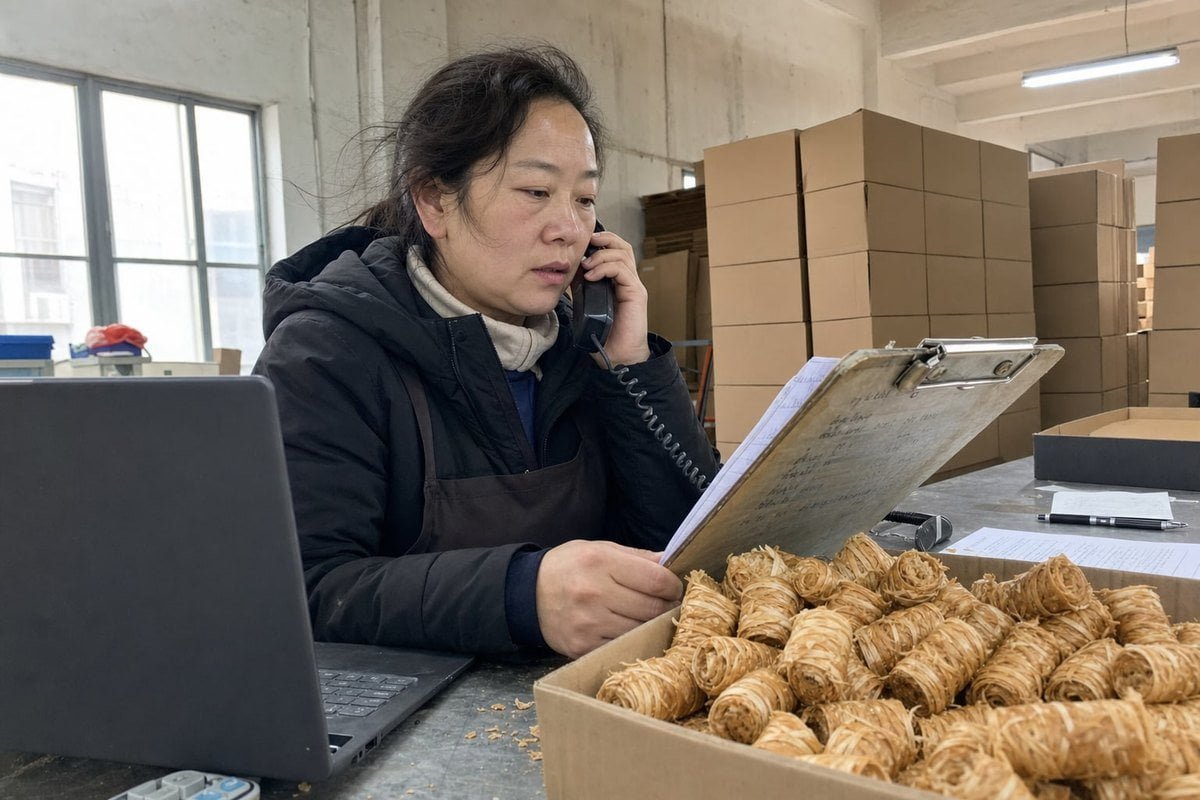
Buyers ask me about MOQ requirements for custom wood fire starters almost daily. Many get burned by hidden minimums, surprise setup fees 1, or terms that shift after sampling. Our production team sees the fix clearly.
To confirm MOQ requirements for custom wood fire starters, send the supplier your exact specification—size, wood type, wax binder, branding, packaging, and SKU count—then request written quotation terms covering unit price, setup fees, sample policy, and lead time before paying anything.
MOQ is not just a number on a product page. It changes with your customization choices. Below, I break down what drives the minimum, how to negotiate it, and how to lock terms in writing.
What Factors Determine the MOQ for Custom Wood Fire Starters?
A few years back, our Ningbo line ran three different wax formulas in one week, and the changeover downtime taught me exactly why minimums exist in this category.
MOQ for custom wood fire starters is driven by production setup time, wax formulation changeovers, raw material batch sizes, packaging print runs, and labor for kitting. Factory-direct MOQs typically run 500–1,000 units, while stock private-label options can drop to around 50 units.

Every minimum a factory quotes traces back to a real cost somewhere on the line. When we quote MOQ for our wax-dipped wood rolls, we are covering machine setup, material batch purchasing, and quality control overhead. If we ran 100 units of a fully custom SKU, the setup cost per unit would be unreasonable for both sides.
The Five Main MOQ Drivers
Here is how each factor pushes the minimum up or down:
| Factor | Why It Raises MOQ | Typical Impact |
|---|---|---|
| Wax formulation changes | Mixing tanks must be cleared and recalibrated between eco-friendly wax binders or scent blends | High |
| Custom packaging print runs | Printers require minimum sheet quantities for boxes and labels | High |
| FSC certified wood 2 sourcing | Certified lumber must be bought in minimum batches to maintain chain of custody | High, often non-negotiable |
| Custom logo engraving | Laser setup and file calibration take fixed machine time | Medium |
| Kitting and retail assembly | Manual labor to build retail-ready sets creates a labor floor | Medium |
Material Sourcing Matters More Than Buyers Expect
Wood is a batch-purchased raw material. If you request FSC certified wood, our purchasing team must order certified lumber in specific minimum volumes to protect the certification chain. That minimum flows straight into your MOQ. The same applies to specialty waxes. A standard paraffin blend is always in stock, but a custom scent or a specific eco-friendly wax binder forces a dedicated mixing run.
Product Format Also Shifts the Minimum
Bulk-loose fire starters carry lower MOQs than retail-ready kits. Assembly and kitting are labor bottlenecks, so a 100-piece boxed retail set demands a larger commitment than the same pucks shipped loose in cartons. In our experience exporting to the US and Germany, buyers who start with bulk-loose formats often unlock 30–50% lower minimums.
Can I Request a Lower MOQ for a Trial Order?
One of our UK distributors once asked for half our standard minimum on a first order. We agreed—because he came prepared with a demand forecast and a written reorder commitment.
Yes, most manufacturers will grant a lower MOQ for a trial order. Common approaches include a market-test run at roughly 50% of standard MOQ, simplified packaging, shared production runs, or accepting a slightly higher wholesale unit price in exchange for reduced volume.

Trial orders are normal in this industry, and factories expect the request. The key is understanding what makes a small run acceptable from the supplier's side. Smaller runs are less efficient, so you need to offer something that offsets that inefficiency.
Four Proven Ways to Lower Your Trial MOQ
- Ask for a market-test agreement. Many suppliers grant a one-time lower MOQ—often 50% of standard—paired with a written agreement for a full-scale order if sales targets are met. We offer this structure regularly for first-time buyers testing a new market.
- Simplify the customization. Use our stock wood roll with your label instead of full custom logo engraving. White label production on an existing SKU skips most setup costs.
- Join a shared production run. You use our base wood-wool formula and customize only the external labeling. Several small brands effectively split one production minimum.
- Pre-pay the packaging run. Custom private label packaging 3 is often the real MOQ driver. If you pay for a full run of printed boxes upfront, we can pull smaller batches of the physical product over time.
Timing Can Work in Your Favor
Off-peak ordering, typically April through July, gives you more flexibility. Fire starter demand peaks before the Northern Hemisphere winter 4, so factories are more willing to accept smaller runs in warmer months to keep lines active. Production lead times are also shorter then, which helps you sample, revise, and reorder before the season starts.
What Not to Do
Do not open negotiations by demanding a tiny quantity at bulk pricing. That signals inexperience. Instead, share your forecasted annual demand and reorder plan. When we see a credible path to repeat volume, flexibility follows naturally.
How Do I Confirm MOQ Terms Before Placing a Bulk Order?
There is one trade-off I explain to every new buyer: chasing the lowest headline MOQ versus locking in verified, written terms. The second protects your margin far better than the first.
Confirm MOQ terms by sending your complete product spec, asking whether the minimum applies per SKU or per production run, requesting 2–3 quantity price breaks, ordering a pre-production sample, and getting all costs, lead times, and sample policies confirmed in writing before payment.
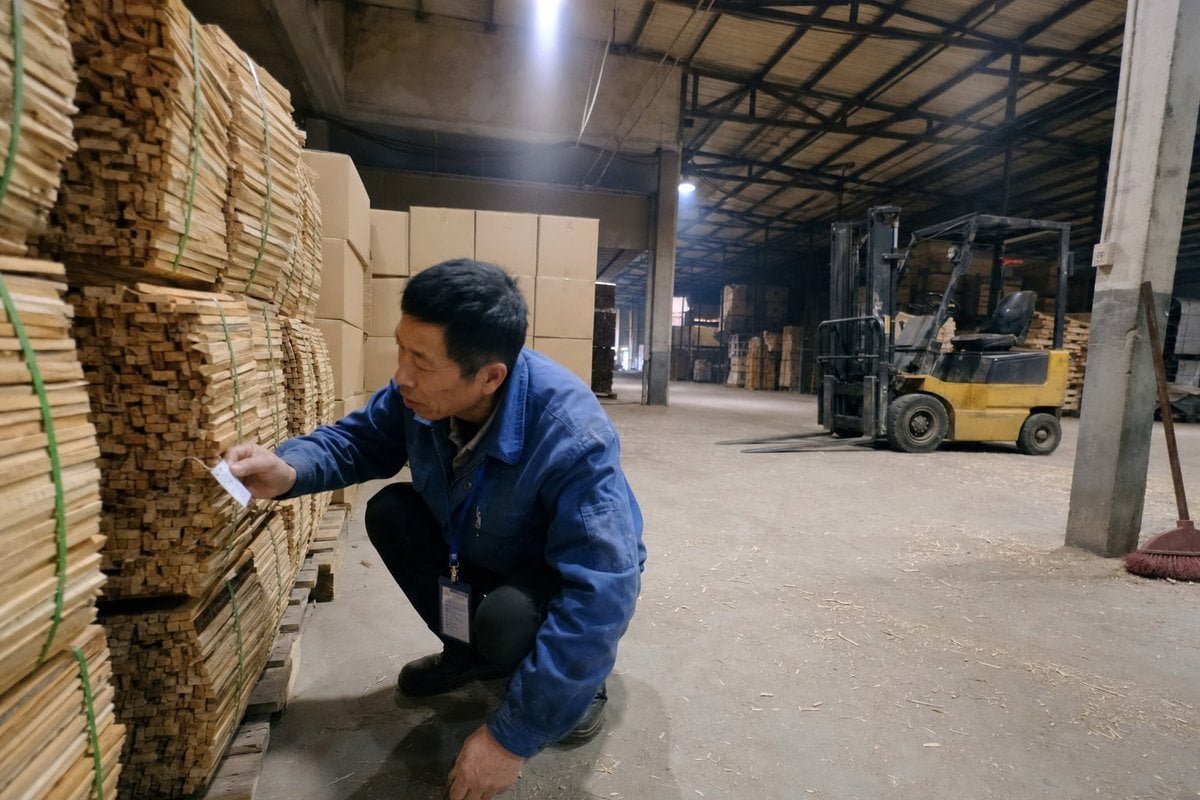
Finding an MOQ and confirming one are different tasks. A listed minimum tells you almost nothing about your custom configuration. The confirmation workflow below is what I recommend to every purchasing manager we work with.
The Six-Step Confirmation Workflow
| Step | Action | What to Verify |
|---|---|---|
| 1 | Send complete specs | Dimensions, wood type, wax binder, burn time specifications, branding, packaging, SKU count, destination market |
| 2 | Ask the MOQ basis | Per SKU, per variant, per packaging version, or per production run |
| 3 | Request price breaks | Quotes at 500, 1,000, and 2,500 units to compare unit economics |
| 4 | Order a pre-production sample | Sample fee ($30–$120 typical) locks your spec into the production queue |
| 5 | Calculate landed cost | Unit price + freight per unit + duties + storage cost |
| 6 | Get written confirmation | Quotation covering all fees, lead time, and sample policy before payment |
The Exact Questions to Ask
Do not settle for a one-line quote. Ask directly:
- Is the MOQ per SKU, per scent, per size, or per packaging version?
- Does custom branding change the MOQ versus unbranded stock?
- Are samples counted toward the MOQ or separate?
- Are there hidden minimums, such as minimum order value or bundled SKUs?
- What are the setup, tooling, and artwork charges?
- Can you provide a Material Safety Data Sheet 5 and third-party test reports for the destination market?
That last question matters more than most buyers realize. Compliance documents like SGS or Intertek reports 6 are hard requirements for US and EU retail channels. At our factory, the first sample reliably reflects mass-production quality because batch-to-batch QC is built into the line—but you should still verify this in writing with any supplier.
Judge the Number Against Your Economics
Compare the landed unit cost at each price break against your target selling price and margin. Then check whether the inventory can sell through in 6–12 months without excessive holding cost. Moving from 500 to 2,500 units can cut unit costs by up to 40% through bulk timber purchasing—but only if your cash flow and storage can absorb it.
Does Customization Affect the Minimum Order Quantity I Need to Meet?
When we developed our first fully private-labeled fire starter line for a European fireplace distributor, the packaging artwork—not the product itself—set the final minimum.
Yes, customization directly affects MOQ. Custom packaging, logo engraving, unique wax or scent formulas, and certified materials each add setup costs or sourcing minimums. Deeper customization means higher MOQs, while stock products with simple labels carry the lowest minimums.

Customization is a ladder. Each rung adds value for your brand, but each rung also adds a production constraint. Understanding which choices are expensive helps you design a product that fits your budget and your minimum.
Customization Levels and Their MOQ Impact
| Customization Level | What Changes | Typical MOQ Effect |
|---|---|---|
| Stock product, no branding | Nothing—ships from existing inventory | Lowest, sometimes 50–100 units |
| White label production | Your label on our stock roll | Low—label print minimum only |
| Private label packaging | Custom boxes, warning labels, barcodes | Medium—printing minimums apply |
| Custom logo engraving | Laser setup per design | Medium—machine setup time |
| Custom formula or size | New wax blend, burn time specifications, dimensions | High—dedicated production run |
| Full OEM with certified materials | FSC certified wood, custom everything | Highest—sourcing plus setup minimums |
Why Packaging Is Usually the Biggest Lever
Printed retail boxes carry their own minimum print runs, and those minimums often exceed the product MOQ itself. Our one-stop OEM manufacturing services 7 handle custom boxes, display packaging, warning labels, and barcodes in-house, which lets us align print runs with product runs. With fragmented suppliers, you can end up paying for 5,000 boxes to fill a 1,000-unit product order.
Smart Ways to Customize Without Inflating MOQ
Keep the core product standard and customize the outer layer. Use our proven wax-dipped wood roll with your artwork rather than requesting a new formula. Limit your launch to one or two SKUs instead of five scent variants, since each variant may carry its own minimum. Confirm the burn time specifications you actually need—longer burn times require more wax and material per unit, which changes both cost and batch sizing. In 17+ years of exports across 30+ countries, the most successful trial launches we have supported kept customization focused on branding, then expanded into custom formulas after the first reorder proved demand.
Conclusion
Unconfirmed MOQs cause budget overruns and stalled launches. Confirm your exact spec, MOQ basis, price breaks, sample policy, and lead time in writing—then order with confidence.
Footnotes
1. Setup costs are fixed expenses required to prepare equipment for a production run. ↩︎
2. FSC is the global standard for responsible forest management and chain of custody. ↩︎
3. Private labeling allows retailers to sell products manufactured by a third party under their own brand. ↩︎
4. Stable, accessible Wikipedia entry providing a comprehensive overview of the season. ↩︎
5. Authoritative OSHA landing page for Hazard Communication and Safety Data Sheets. ↩︎
6. SGS provides verification and testing to ensure products meet international compliance standards. ↩︎
7. OEM manufacturing involves producing goods that are eventually marketed by another company. ↩︎

 English
  Spanish
  German
  French
  Arabic
  Portuguese
Join the Conversation