






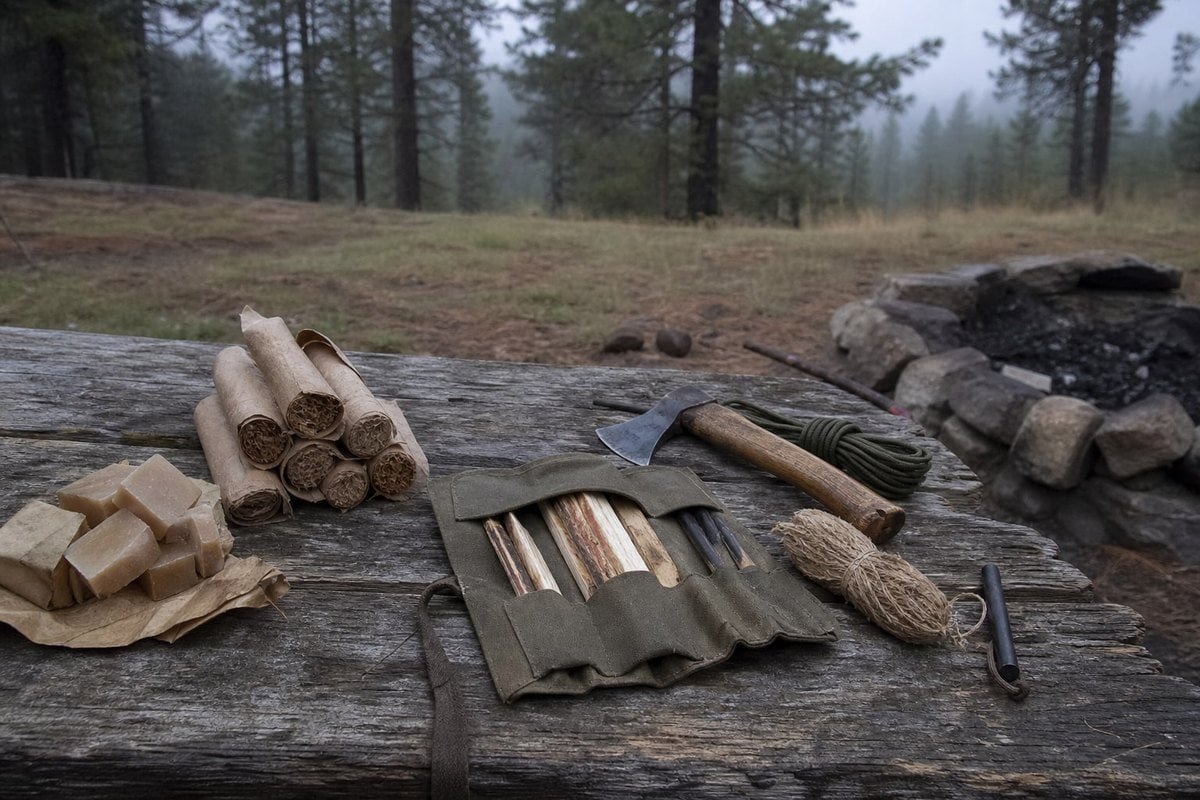
Choosing [wood fire starter types](https://sunrichfire.com/what-common-types-wood-fire-starters-uses-are/) gets harder when your customers range from casual car campers to survivalists ferrocerium rod 1. I see buyers on our production line struggle with this mismatch every season.
Car camping favors convenient, sustained-heat wood fire starter types like wax-dipped wood rolls and fire starter cubes, while wilderness survival demands compact, waterproof options such as fatwood sticks and ferrocerium-rod-compatible tinder. Stock a tiered range to cover both markets reliably.
The wrong assortment costs you slow-moving inventory and returns CE marking 2. The right one builds repeat orders. Let me walk you through how we help buyers get this decision right.
Which Wood Fire Starter Types Should I Stock for Car Camping Versus Wilderness Survival Customers?
Last winter, a German distributor asked us to produce one universal starter for both segments. After reviewing his sell-through data together, we split his order into two distinct product lines instead.
Stock wax-dipped wood rolls, wood-wool starters, and fire starter cubes for car camping customers who value easy ignition. For wilderness survival buyers, stock fatwood sticks, compact tinder bundles, and waterproof ignition backups that pair with a ferrocerium rod or stormproof matches.
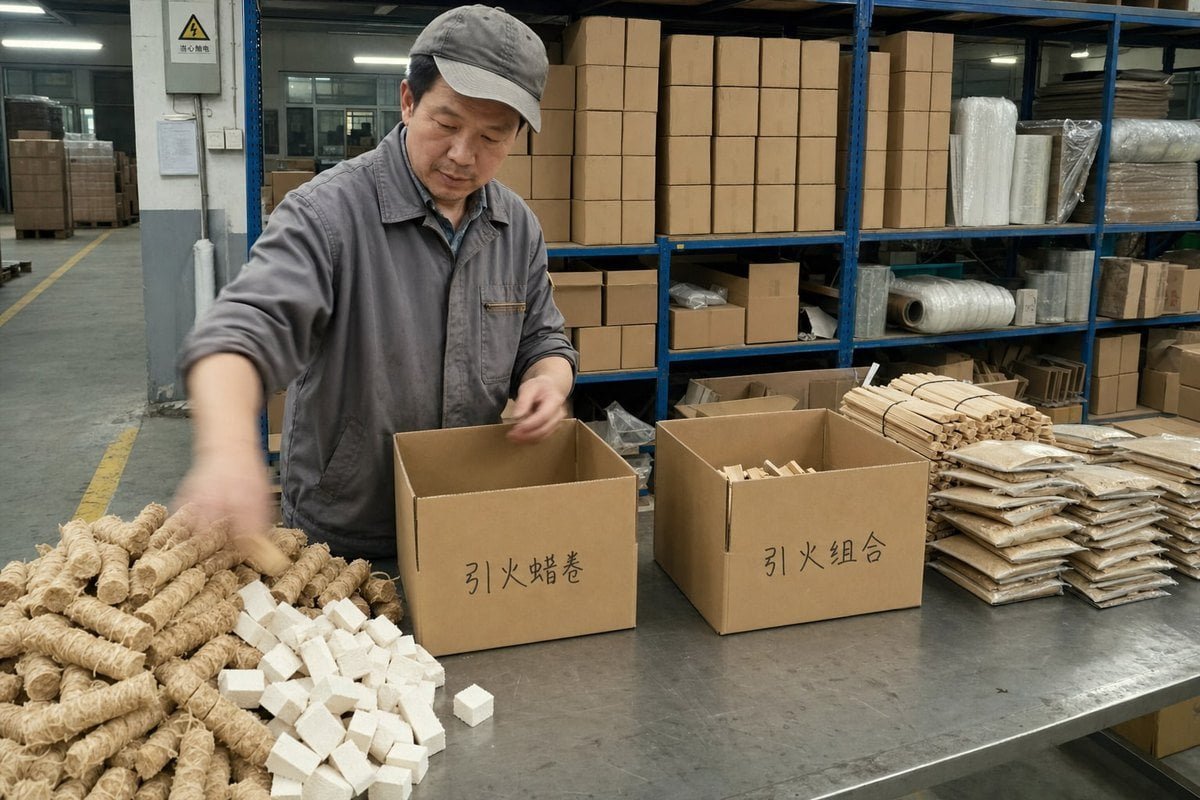
The core logic is simple. A car camper drives to the site, so weight and bulk barely matter. What matters is a near-guaranteed flame with zero skill. A survival user carries everything on their back, so every gram counts, and the product must work after rain, cold, or gear loss.
In our 17+ years supplying outdoor and camping brands across the US, Germany, and the UK, we have watched retail buyers converge on the same tiered model. It maps to three overlapping categories: natural wood-based starters (fatwood, resin-rich splints), processed wood starters (wax-dipped wood rolls, compressed wood-wool cylinders, paraffin 3 fire starter cubes), and DIY-adjacent tinder (wood shavings, petroleum jelly cotton balls, char cloth 4).
Match the Starter to the Use Case
Here is the comparison framework we share with new B2B buyers:
| Use Case | Best Wood Starter Type | Why It Wins |
|---|---|---|
| Car camping | Wax-dipped wood rolls, fire starter cubes | Sustained heat, one-match lighting, no wood processing needed |
| Overlanding / cabin trips | Wood-wool starters, fatwood sticks 5 | Natural look, forgiving in mild wind, bulk-friendly |
| Backpacking | Compressed mini cubes, waxed shavings | Light weight, sealed packs, decent burn time |
| Wilderness survival | Fatwood sticks + tinder bundle + ferro rod | Waterproof ignition, indefinite shelf life, redundancy |
| Wet-weather kits | Paraffin-bound wood fiber, stormproof matches | Chemically or wax-protected against moisture |
One nuance our engineers stress: wood-wool starters often outperform solid wax blocks in low-airflow fire pits. The fibrous structure pulls oxygen through the strands, so the flame builds faster. That is exactly why our wax-dipped wood rolls use a twisted wood-fiber core rather than a solid puck.
Burn time also separates the tiers. Untreated wood shavings burn for roughly two to three minutes. Add a paraffin binder, and the same wood fiber sustains a flame long enough to catch damp kindling without babysitting. For survival SKUs, we shorten and densify the roll so it packs flat inside an emergency fire kit.
How Do I Verify Certification and Compliance Before Importing Wood Fire Starters?
A UK importer once told me his previous supplier's shipment was held at customs for missing test documentation. That conversation shaped how we now front-load compliance paperwork before any deposit changes hands.
Verify that your supplier holds ISO 9001 and BSCI certification, provides CE marking where applicable, and can share current SGS or Intertek test reports. Confirm the reports match the exact product formula, and check labeling, warning text, and transport classification for your destination market.
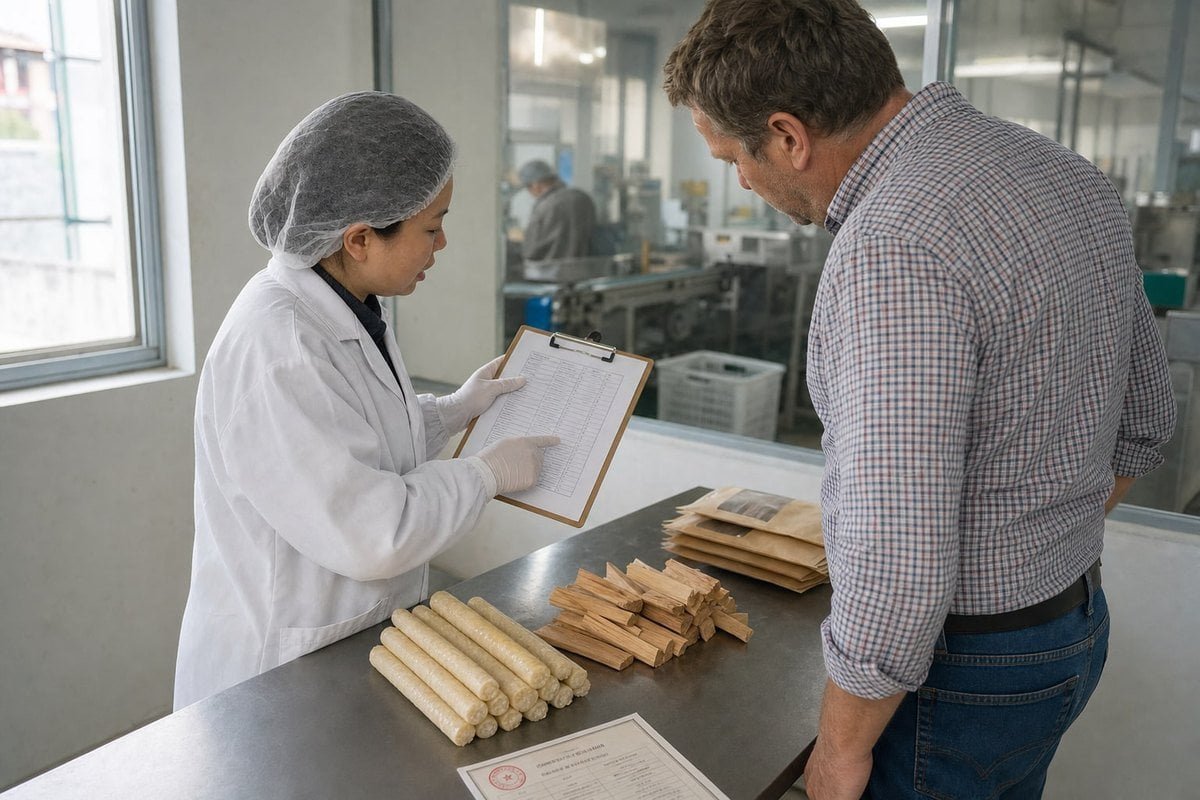
Compliance is not a nice-to-have for fire products. It is the gate that decides whether your goods clear customs, get accepted by large retail chains, and survive a liability review. In our experience exporting to 30+ countries, the buyers who ask compliance questions first are almost always the ones who scale fastest, because nothing stalls their supply chain later.
A Practical Verification Checklist
Follow this sequence before you commit to a factory:
- Request certificates, not claims. Ask for the actual ISO 9001 6 and BSCI documents with valid dates and audit scope. A real factory, like our facility in Ningbo, can send these within a day.
- Match test reports to the product. An SGS or Intertek report for one formula does not cover a different wax ratio or fiber blend. Confirm the report describes your exact spec — for example, 50% wood fiber and 50% paraffin.
- Check destination-market rules. The EU expects CE-relevant documentation and clear composition labeling. US retail channels often require warning labels, barcodes, and safety data sheets 7.
- Review transport classification. Wax-bound wood starters usually ship as non-dangerous goods, but your freight forwarder needs the supporting paperwork to confirm it.
- Audit the factory, not the trading company. Verify that the certificate holder is the actual producer. Trading companies often show borrowed certificates that will not survive a retailer audit.
We keep test reports current for every product family — from our color-flame packets to our wax-dipped wood firestarters — because our US and German buyers treat documentation gaps as deal-breakers. One practical tip: ask your supplier to send the compliance pack alongside the first sample. If the paperwork and the physical product arrive together and match, you are dealing with a factory that treats compliance as routine, not as an afterthought.
Can I Customize Burn Time, Size, and Private-Label Packaging for Different Camping Markets?
The trade-off we weigh most often in product development is burn time versus pack density. More paraffin extends the flame but adds weight and cost; more wood fiber lights faster but burns shorter.
Yes. A genuine OEM/ODM factory can adjust the wood-to-wax ratio to tune burn time, resize rolls or cubes for retail or survival kits, and deliver full private-label packaging — custom boxes, display packaging, warning labels, and barcodes — tailored to each camping market segment.
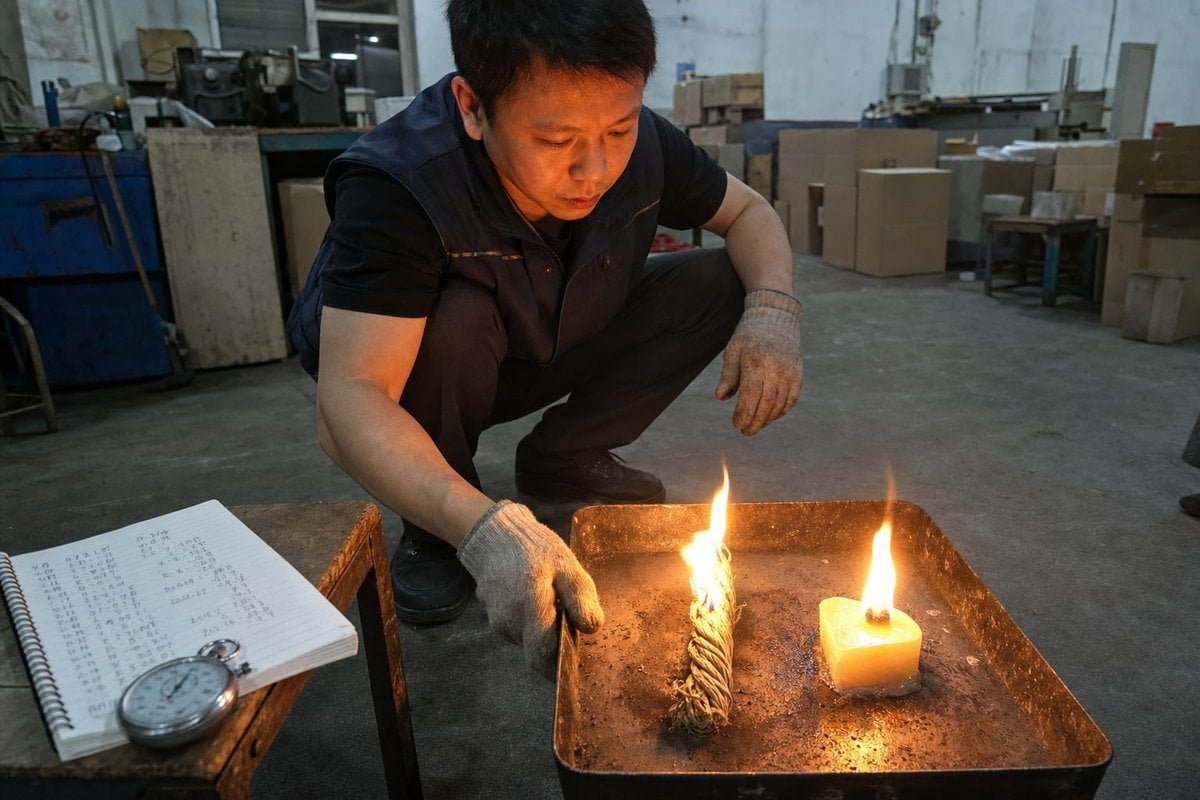
Customization is where our production depth pays off for buyers. Because we run complete production lines rather than outsourcing, we control the fiber twist, wax dip depth, and drying time on every batch. That means the sample you approve genuinely reflects mass-production quality — a promise many buyers tell us their previous suppliers could not keep.
What You Can Actually Customize
| Parameter | Typical Range | Market Application |
|---|---|---|
| Burn time | 6–15 minutes per piece | Longer for fireplace and BBQ retail; shorter, denser for backpacking |
| Piece size | Finger-length rolls to large pucks | Compact sizes for emergency fire kit inserts; larger for fire pit displays |
| Wood-to-wax ratio | Adjustable around 50/50 | Higher wax for wet-weather lines; higher fiber for fast ignition |
| Pack count | Small trial packs to 100-piece boxes | Impulse-buy packs versus warehouse-club value packs |
| Packaging format | Kraft bags, jars, retail boxes, displays | Eco-positioned camping brands versus mass retail shelves |
Private labeling goes beyond a logo. For a French camping brand, packaging usually means kraft-paper aesthetics and eco messaging. For a US hardware channel, it means a bold retail box, hang-hole options, UPC barcodes, and compliant warning text. We build all of that in-house, then optimize the carton dimensions for container loading so your landed cost stays predictable.
One more angle worth planning: seasonal assortments. Several of our European distributors run a summer camping line with wood-wool starters and a winter fireplace line with longer-burning wax rolls — same factory, two shelf-ready programs. Pairing your starter SKUs with complementary tinder items, such as a small tinder bundle pouch, also lifts average order value at retail.
What MOQ and Trial Order Options Should I Expect When Sourcing Wood Fire Starters From a Factory?
Early in my export career, I learned that rigid MOQs kill more good partnerships than pricing does. A Canadian buyer nearly walked away until we structured a mixed-SKU trial container for him.
Expect real factories to offer trial orders well below standard MOQs, often through mixed-SKU arrangements or shared production runs. Standard MOQs typically apply per SKU for custom packaging, while stock designs and neutral packaging allow smaller first orders to test your market.
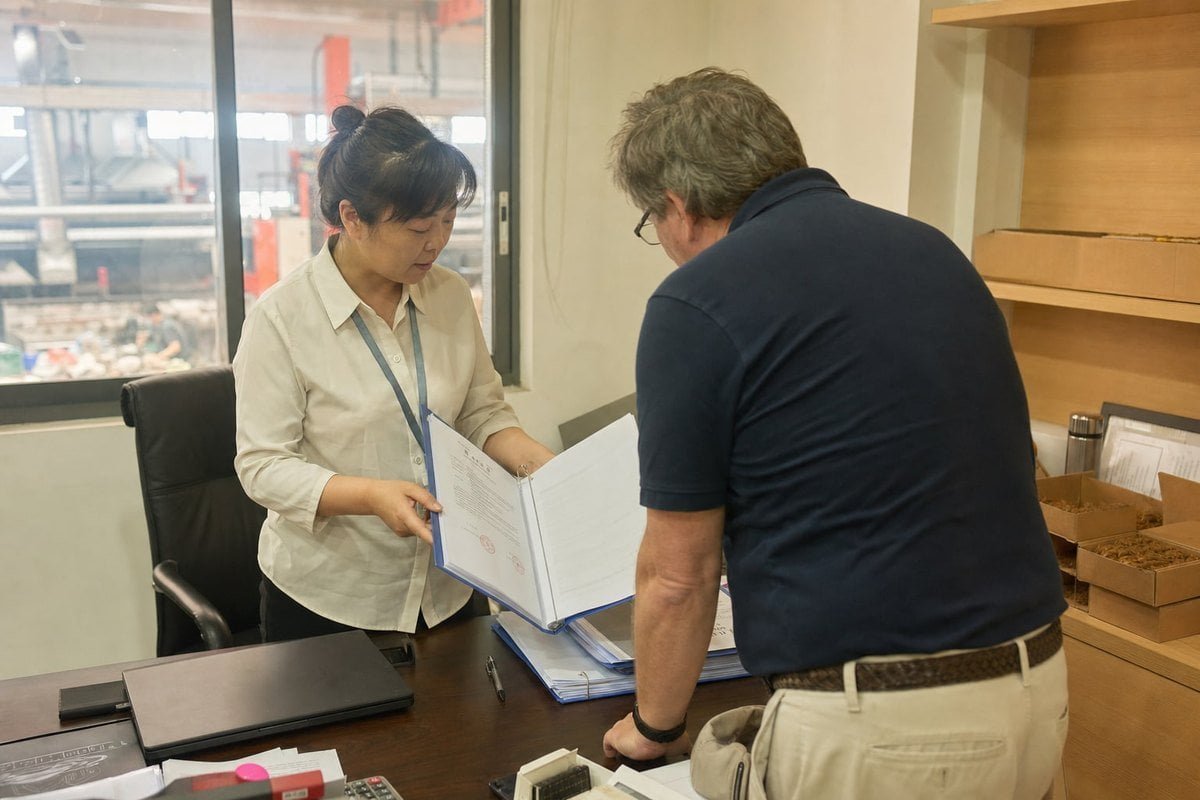
MOQ flexibility tells you a lot about who you are dealing with. A trading company resells someone else's production, so it has little room to negotiate quantities. A factory controls its own scheduling, so it can slot a smaller trial run between larger jobs. When buyers visit our facilities, this is usually the moment the conversation shifts from price to partnership.
How Trial Orders Typically Work
| Order Stage | What to Expect | Purpose |
|---|---|---|
| Samples | Free or low-cost, shipped in days | Verify quality, burn time, and ignition behavior |
| Trial order | Reduced MOQ, mixed SKUs allowed | Test sell-through in your channel with low risk |
| First full order | Standard MOQ per SKU with custom packaging | Launch your private-label line at scale |
| Repeat orders | Locked specs, batch-to-batch QC records | Predictable quality and lead times |
A few practical points from our side of the table. First, custom retail packaging carries a real setup cost — printing plates, box dies, label runs — so per-SKU MOQs for private-label boxes will be higher than for neutral kraft bags. If you want to test the market cheaply, start with our stock packaging plus a simple label. Second, mixed containers reduce your risk: combine wax-dipped wood rolls, fatwood sticks, and even color-flame products in one shipment so you can test multiple price points at once. Third, ask about lead times for repeat orders before you place the first one. Consistent replenishment matters more than a slightly cheaper first container, especially for seasonal fire products where missing the autumn shelf reset means losing the year.
We also recommend agreeing on QC checkpoints in writing — moisture content, wax coverage, ignition testing per batch. Our buyers receive batch records with every shipment, and that documentation habit is what turns a trial order into a multi-year program.
Conclusion
Mismatched inventory drains margin fast. Segment your wood fire starter range by use case, verify compliance early, customize per market, and start with flexible trial orders from a proven factory partner.
Footnotes
1. Explains the metallurgy behind ferrocerium rods used with survival tinder. ↩︎
2. Background on the EU conformity marking mentioned for compliance verification. ↩︎
3. Regulatory context on paraffin wax products relevant to transport classification checks. ↩︎
4. Wikipedia background on this traditional DIY tinder material mentioned among starter types. ↩︎
5. Background reference explaining resin-rich fatwood composition and natural fire-starting properties. ↩︎
6. Official ISO standard page verifying the quality management certification referenced for suppliers. ↩︎


 English
  Spanish
  German
  French
  Arabic
  Portuguese
Join the Conversation