







Safety warnings on Magic Fire powder packaging can make or break a shipment. I have watched buyers lose entire container loads at customs because a warning panel was missing one required phrase. On our production line in Ningbo, we treat the warning label as seriously as the powder formula itself — because one weak label can trigger recalls, fines, and blocked listings. The good news: getting it right is a repeatable process, and I will walk you through exactly what your packaging must say.
Magic Fire powder packaging must warn: keep out of reach of children, do not eat, keep dry, keep away from heat and open flames, avoid skin and eye contact, do not inhale smoke, use only as directed, plus first-aid, storage, and disposal instructions per GHS/CLP rules.
Those are the core statements. But requirements shift by market, by formulation, and by how you sell the product. Let me break down each layer so you can source with confidence.
What certifications prove my Magic Fire powder packaging meets US and EU safety requirements?
A German distributor once asked me a blunt question during a factory audit 1 in Liuyang: "Show me the paper, not the promises." That single sentence shaped how we handle every compliance file today.
CE marking, SGS or Intertek test reports, GHS/CLP-compliant labeling verification, ISO 9001 factory certification, and BSCI social audits together prove Magic Fire powder packaging meets US and EU safety requirements. US buyers also need CPSIA-aligned documentation and, for California, Proposition 65 review.

Certifications work in layers. No single certificate covers everything, so serious buyers check the full stack. In our seventeen-plus years exporting color-flame products to the US, Germany, the UK, France, and beyond, we have learned that customs officials and retail compliance teams each look for different documents. Here is how the pieces fit together.
The certification stack, layer by layer
| Certification / Report | What it proves | Who asks for it |
|---|---|---|
| CE marking | Product meets applicable EU safety directives | EU customs, EU retailers |
| SGS / Intertek test report | Third-party lab verified composition and hazards | Retail buyers, importers, insurers |
| GHS/CLP label review | Warning panel uses correct pictograms and statements | EU market surveillance, US OSHA-aligned buyers |
| ISO 9001 | Factory has a controlled quality management system | Large retail sourcing channels |
| BSCI audit | Factory meets social compliance standards | European brands and chains |
| SDS (Safety Data Sheet) | Full hazard, first-aid, and disposal data | All B2B buyers, logistics carriers |
Why the label and the certificate must match
A common failure we see: a supplier holds a valid SGS report, but the printed warning panel does not match the hazards listed in that report. Market inspectors compare the two. If the SDS says the product causes serious eye irritation, the label must carry the matching hazard statement and rinse instructions. When we design private-label packaging for clients, our compliance team cross-checks every warning phrase against the test report before the artwork goes to print. That single step has saved buyers from costly relabeling at destination ports.
For the US, add one more check. Products sold into California should be screened for Proposition 65 substances 2. Even trace metals can trigger a disclosure requirement, so ask your supplier for the screening result in writing.
Which warning labels and hazard symbols are legally required for color-flame packet exports?
There is a trade-off we weigh on every new packaging project: buyers want playful, eye-catching sachets, but regulators want sober, unmissable hazard panels. Our design team has learned to deliver both on the same small foil packet.
Color-flame packet exports legally require a signal word (Warning or Danger), applicable GHS pictograms, hazard statements such as harmful if swallowed and causes eye irritation, precautionary statements covering ignition sources and children, plus first-aid text — all in the destination market's language.

The exact panel depends on your product's chemistry. This is a point many first-time importers miss. A gentle campfire colourant and a metallic pyrotechnic-style powder 3 can look identical in a sachet, but they carry very different legal labeling obligations. Regulators classify by formulation, not by marketing category.
Core warning statements every packet should carry
- Keep out of reach of children. Health authorities have documented children mistaking colourant sachets 4 for candy. This warning is non-negotiable.
- Do not eat or swallow. Pair it with "if swallowed, call a poison center."
- Keep away from heat, sparks, open flames, and hot surfaces before use.
- Keep dry. Moisture-sensitive or water-reactive formulations demand this explicitly.
- Avoid skin and eye contact. Include rinse instructions.
- Do not inhale dust or smoke. Burning metal salts can release irritating compounds.
- Use only in well-ventilated, open wood-burning fires. Prohibit use in gas fireplaces, pellet stoves, and food-preparation flames.
- Dispose of contents and container per local regulations. Residual ash with metal salts should not enter soil or waterways.
Matching hazards to pictograms
| Hazard classification | Typical statement | GHS pictogram |
|---|---|---|
| Acute oral toxicity (Cat. 4) | Harmful if swallowed (H302) | Exclamation mark |
| Skin irritation | Causes skin irritation (H315) | Exclamation mark |
| Eye irritation | Causes serious eye irritation (H319) | Exclamation mark |
| Flammable solid | Flammable solid (H228) | Flame |
| Aquatic toxicity | Harmful to aquatic life | Environment |
Language matters too. Canada requires bilingual English and French text. The EU requires the official language of each destination country. When we prepare export files for clients shipping to Poland, the Netherlands, and France in one order, we build separate language panels or multi-language labels from the start — retrofitting later doubles the cost.
How do I get compliant, market-ready warning labels for private-label Magic Fire packaging?
Last year, a UK camping brand came to us with beautiful packaging artwork and zero warning text. Their designer had treated the back panel as free space for lifestyle photos. We rebuilt the layout together in under two weeks, and the product cleared UK retail compliance review on the first pass.
Get compliant private-label warning labels by working with a certified factory that supplies SDS-based label content, GHS/CLP-formatted artwork, destination-language translations, and pre-print compliance review. Confirm the supplier holds current test reports and offers OEM label customization before ordering.

Private-label projects fail on labels more often than on product quality. The powder can be perfect, but if the sachet says the wrong thing — or nothing — the shipment is dead on arrival. Here is the process we run with every OEM client, refined over hundreds of private-label projects across thirty-plus countries.
The five-step label compliance workflow
- Start from the SDS, not the design. The Safety Data Sheet defines which hazard and precautionary statements 5 are mandatory. Artwork comes second.
- Lock the mandatory zone. We block out a fixed area on the packet for the signal word, pictograms, and warning text. Designers work around it, never over it.
- Translate professionally. Machine translation of hazard statements is a known failure point. Regulatory phrases have fixed official wording in each language.
- Add market-specific extras. Proposition 65 text for California. Bilingual panels for Canada. Appliance-restriction wording (no gas fireplaces, no pellet stoves) for North American retail.
- Run a pre-print compliance check. Our team compares the final artwork against the test report line by line before plates are made.
What good OEM label support looks like
A capable factory partner should hand you editable label templates, not just a printed sample. You should receive the pictogram files 6 in vector format, the exact mandatory text per market, barcode placement guidance, and confirmation of minimum font sizes. We also advise on packaging format: our plastic bags, kraft bags, and jars each have different printable areas, and the jar format often gives the most room for multi-language panels. If your supplier cannot explain why a specific phrase appears on the label, that is a warning sign in itself.
One more practical tip: avoid candy-like design cues. Bright gradients sell, but public-health agencies have flagged sachets that resemble sweets. We steer clients toward clearly non-food visual language — flame graphics, outdoor imagery, matte black backgrounds — that keeps shelf appeal without inviting a child to open the packet.
What test reports and documentation should my supplier provide for packaging compliance?
Early in my export career, I learned a hard lesson: a buyer in Australia asked for our transport classification document mid-shipment, and the freight forwarder held the goods for days while we produced it. Since then, we send the full document pack before the goods leave the factory.
Your supplier should provide a current SDS, third-party test reports from SGS or Intertek, CE conformity documentation, a transport classification statement, label compliance verification, ISO 9001 and BSCI certificates, and batch traceability records — all dated, in English, and matching the exact formulation shipped.
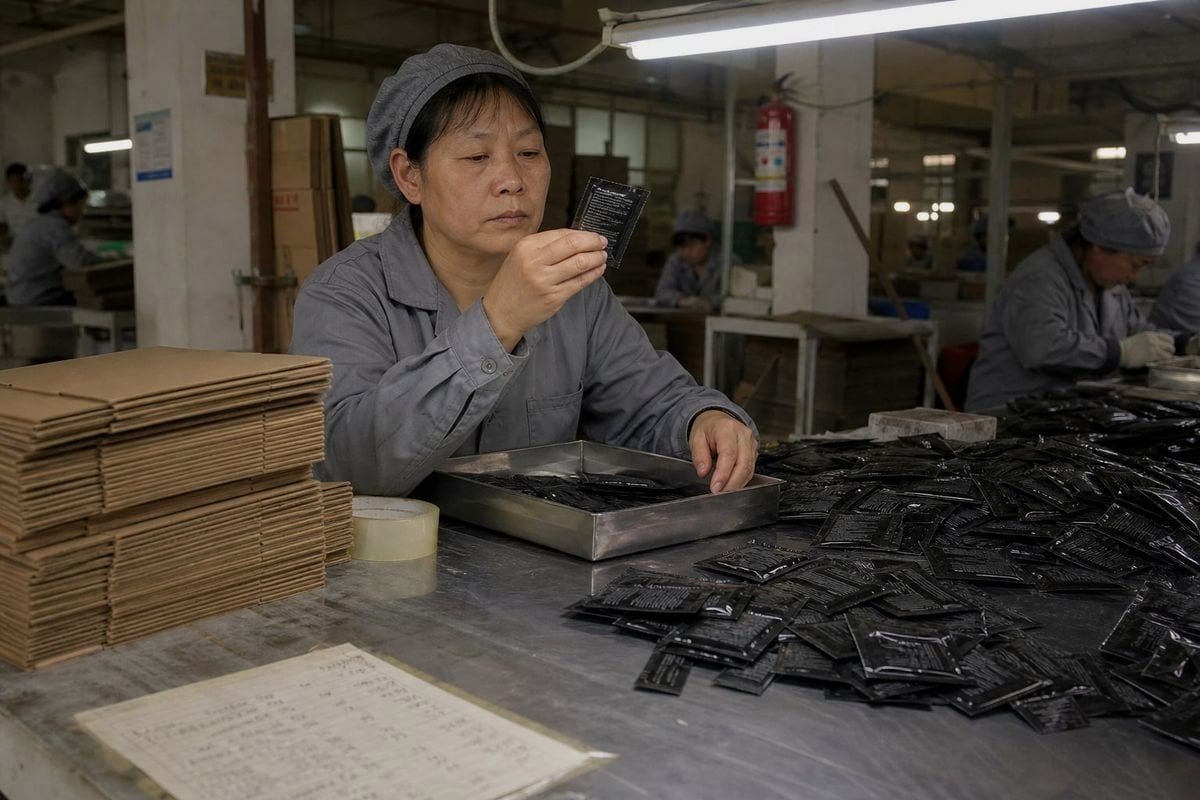
Documentation is where real factories separate themselves from trading companies. A trader forwards whatever paperwork the hidden factory gives them, often outdated or belonging to a different formulation. A genuine manufacturer generates and maintains the file set for every batch. Here is the complete checklist we hand our buyers, and what each document actually does for you.
The complete document checklist
| Document | Purpose | Red flag if missing |
|---|---|---|
| Safety Data Sheet (16-section GHS format) | Defines hazards, first aid, handling, disposal | Cannot legally ship or label correctly |
| SGS / Intertek test report | Independent verification of composition | You are trusting the supplier's word alone |
| CE / Declaration of Conformity | EU market access | EU customs seizure risk |
| Transport classification statement | Confirms sea/air shipping category | Carrier delays or refusal |
| Label compliance verification | Confirms artwork matches hazard data | Relabeling costs at destination |
| ISO 9001 certificate | Consistent production quality system | Batch-to-batch variation risk |
| BSCI audit report | Ethical production verification | Blocked by European retail compliance |
| Batch records / traceability | Links shipped goods to tested formula | No recall defense |
How to verify the documents are real
Do not just collect PDFs. Check the report number directly with the issuing lab — SGS and Intertek 7 both offer verification services. Confirm the tested product name matches your actual product, not a similar item. Check dates: reports older than two or three years may not reflect the current formulation. And ask for the SDS revision history; a living document shows the supplier actively maintains compliance rather than treating it as a one-time exercise.
In our experience, buyers who audit paperwork before the first purchase order almost never face compliance surprises later. The ones who skip this step pay for it at the border.
Conclusion
Weak warning labels sink good products. Strong labels — backed by real test reports and a certified factory — clear customs, satisfy retailers, and protect end users. Choose a partner who proves compliance on paper.
Footnotes
1. Amfori runs the BSCI social compliance audit program referenced throughout the certification stack. ↩︎
2. California's OEHHA administers Proposition 65 chemical disclosure rules referenced for US compliance. ↩︎
3. Background reference explaining pyrotechnic formulations and their distinct hazard classifications. ↩︎
4. Poison control centers document child ingestion risks that justify mandatory child-safety warnings. ↩︎
5. ECHA's CLP Regulation defines mandatory hazard and precautionary statement wording for EU labels. ↩︎
6. OSHA's Hazard Communication Standard governs GHS pictogram and labeling requirements in the US. ↩︎
7. SGS is a leading third-party testing and certification body named for verifying supplier reports. ↩︎
8. ISO standards underpin the quality and testing frameworks that legitimize third-party test reports. ↩︎


 English
  Spanish
  German
  French
  Arabic
  Portuguese
Join the Conversation