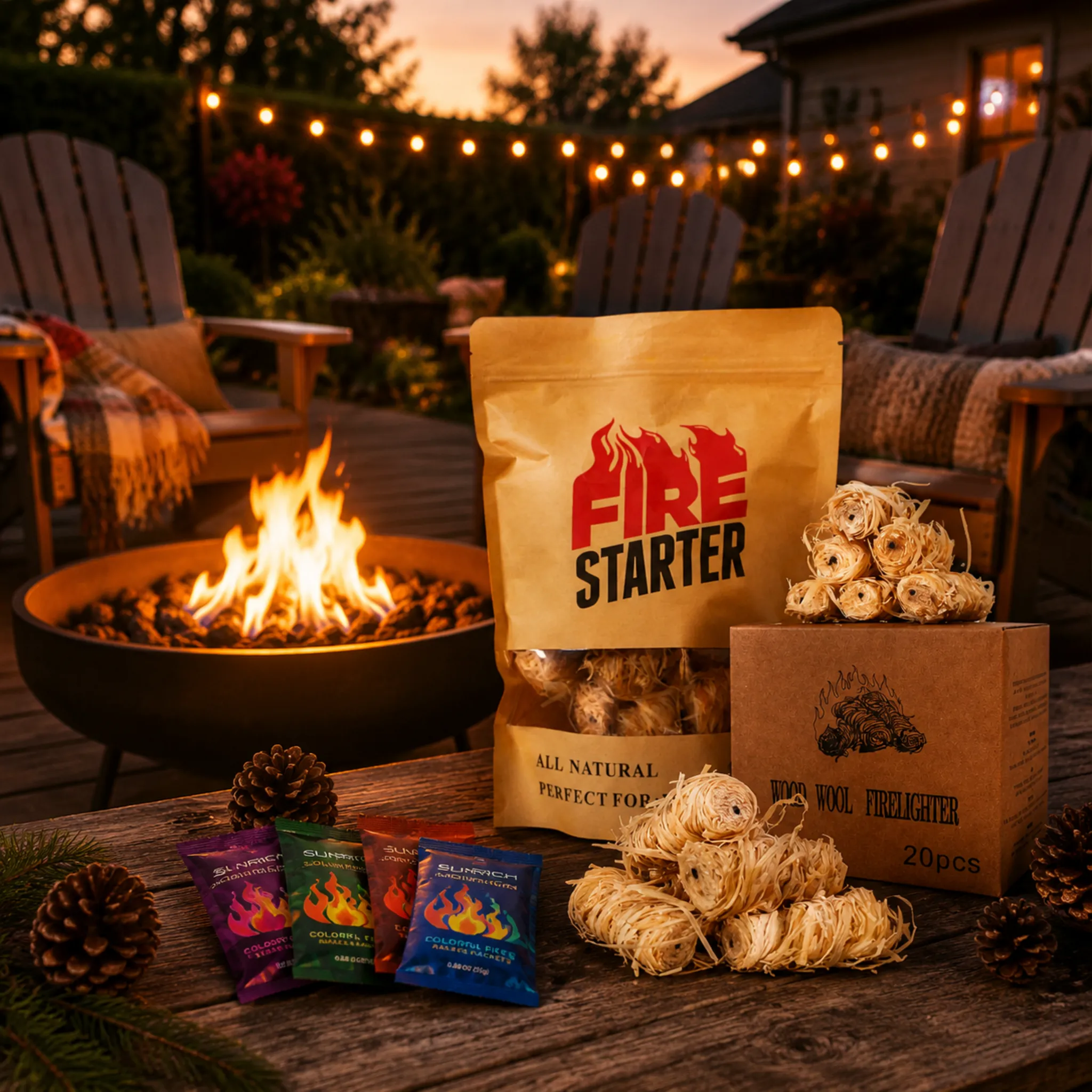
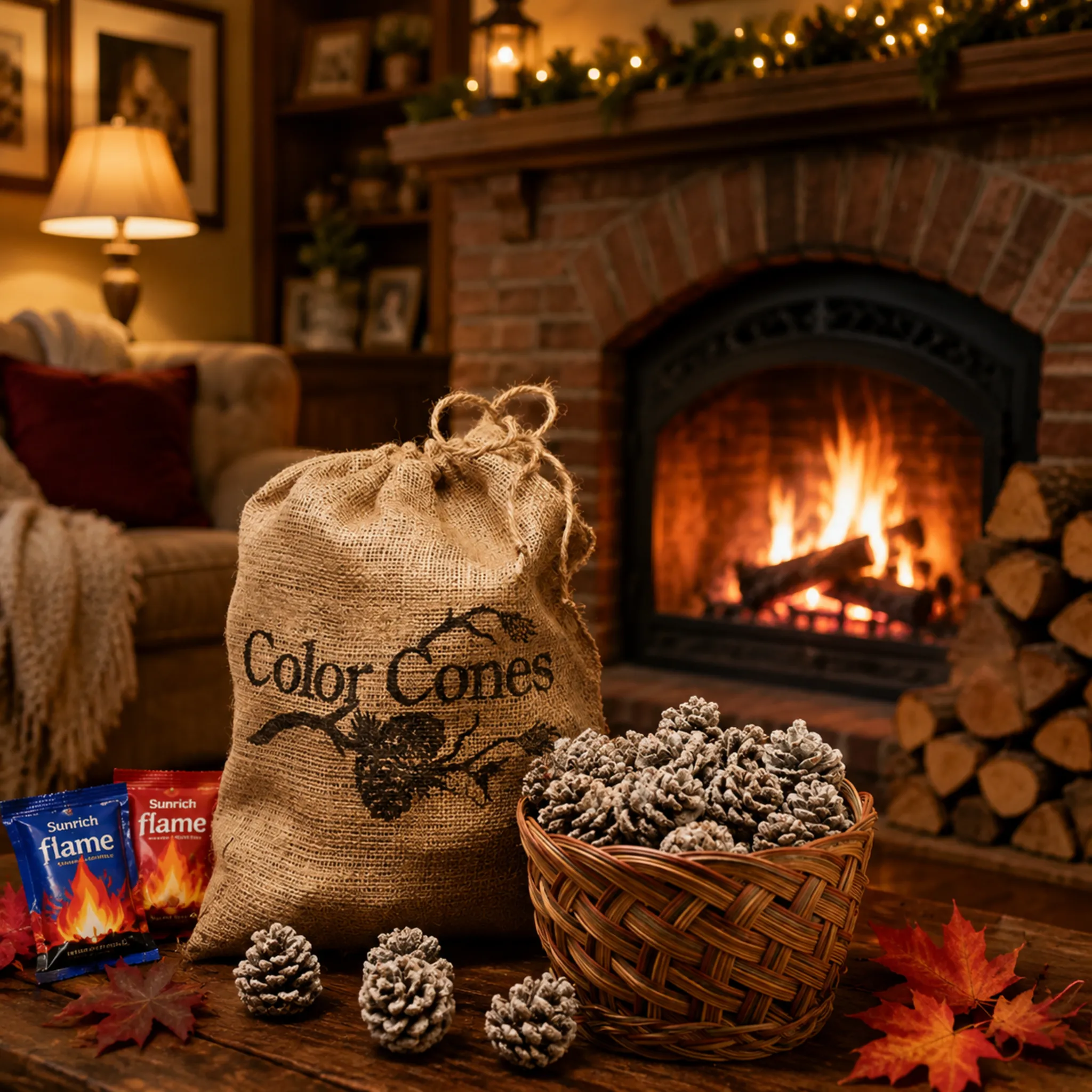
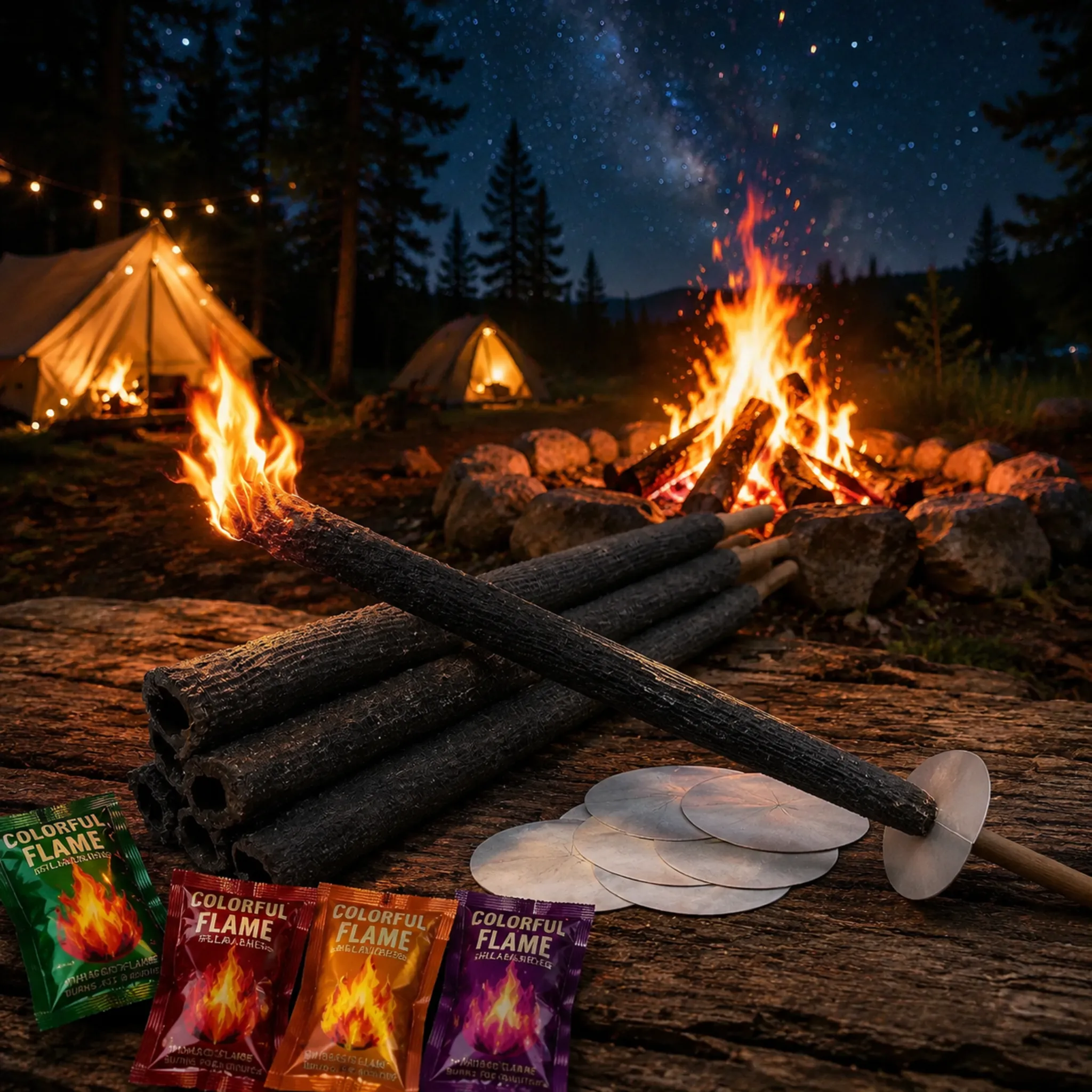

Buyers keep asking me what metal salts in magic fire powder actually create the colors. Vague supplier answers create compliance risk, so on our production line we explain the chemistry openly.
Metal salts in magic fire powder create colors through electron excitation: copper salts produce blue-green, strontium salts crimson red, barium salts green, sodium salts yellow, potassium salts violet, and calcium salts orange. Each metal cation emits its own characteristic wavelength when heated in a flame.
That is the short answer. But if you source or private-label these products, you need more. Let me walk you through the formulas, the safety checks, and the customization options.
What Metal Salt Formulas Does Sunrich Use to Achieve Vivid, Consistent Flame Colors?
During a batch trial in our Ningbo plant years ago, one drum of copper sulfate 1 absorbed moisture overnight. The flames turned patchy. That single lesson shaped how we formulate today.
Sunrich blends copper salts for blue-green, strontium chloride for crimson red, barium salts for emerald green, calcium salts for orange, and potassium salts for violet, carried in an eco-friendly base. Anti-caking agents and precise particle sizing keep every batch color-consistent and moisture-stable.

The science behind our formulas is the classic flame test 2, scaled up for real-world fires. Heat excites the electrons in each metal ion. When those electrons fall back to a lower energy state, they release light at a specific point on the emission spectrum 3. The metal cation does almost all of the work. The anion — chloride, sulfate, nitrate — mostly affects how easily the metal vaporizes into the flame.
The Core Color Palette We Work With
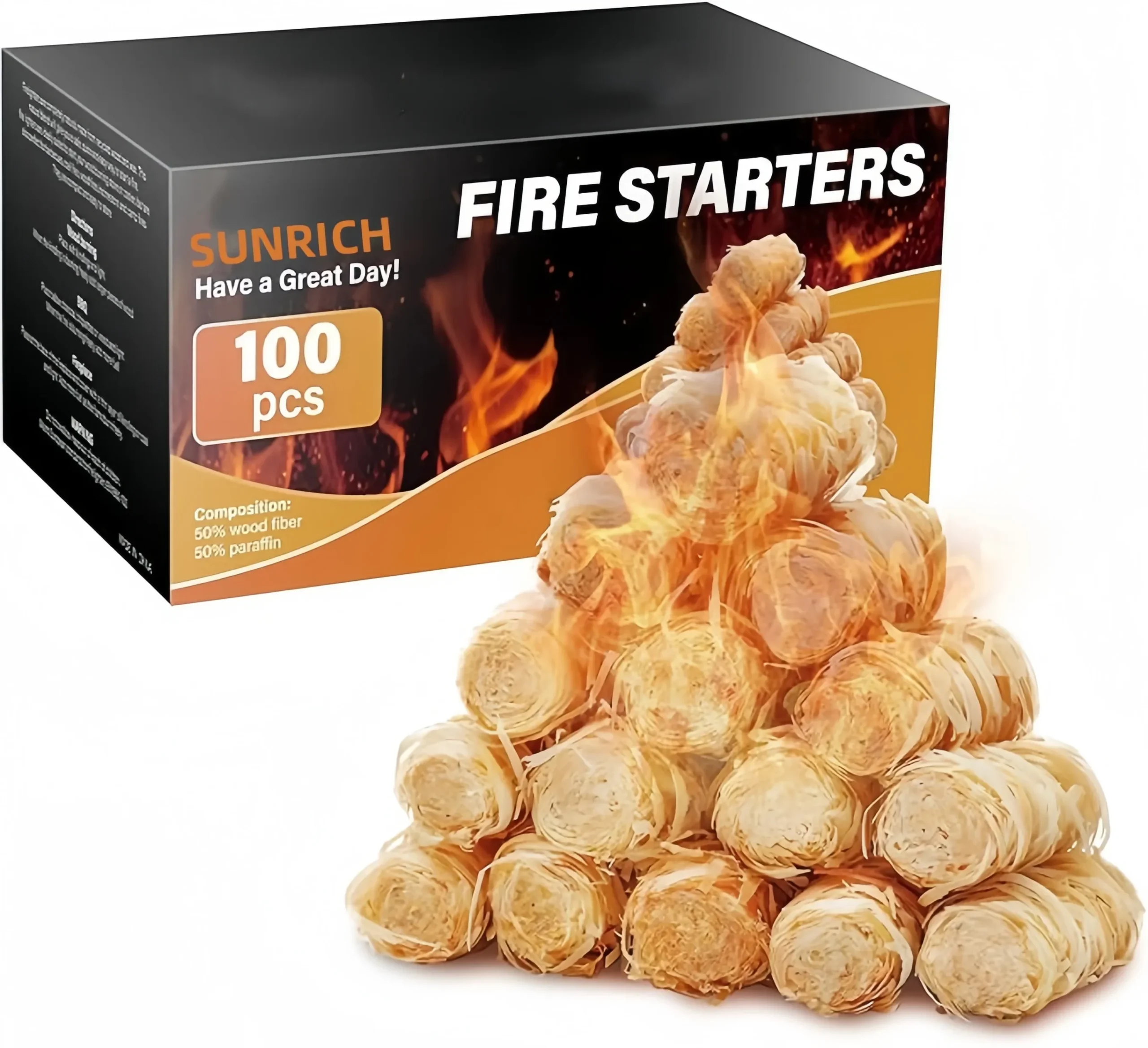
Here is the palette we rely on, refined over 17+ years of making color-flame packets, pinecones, and firestarters:
| Metal Salt | Flame Color | Strength | Role in Our Blends |
|---|---|---|---|
| Copper sulfate / copper chloride | Blue-green to turquoise | Strong | Primary blue-green driver |
| Strontium chloride | Crimson red | Very strong | Signature vivid red |
| Barium chloride | Emerald green | Strong | Deep green tones |
| Sodium salts | Bright yellow | Extremely strong | Used sparingly; can mask others |
| Potassium salts | Lilac / violet | Weak | Purple accents |
| Calcium salts | Orange | Moderate | Warm orange notes |
| Boric acid / borates | Soft green | Moderate | Gentle green alternative |
Why the Details Matter
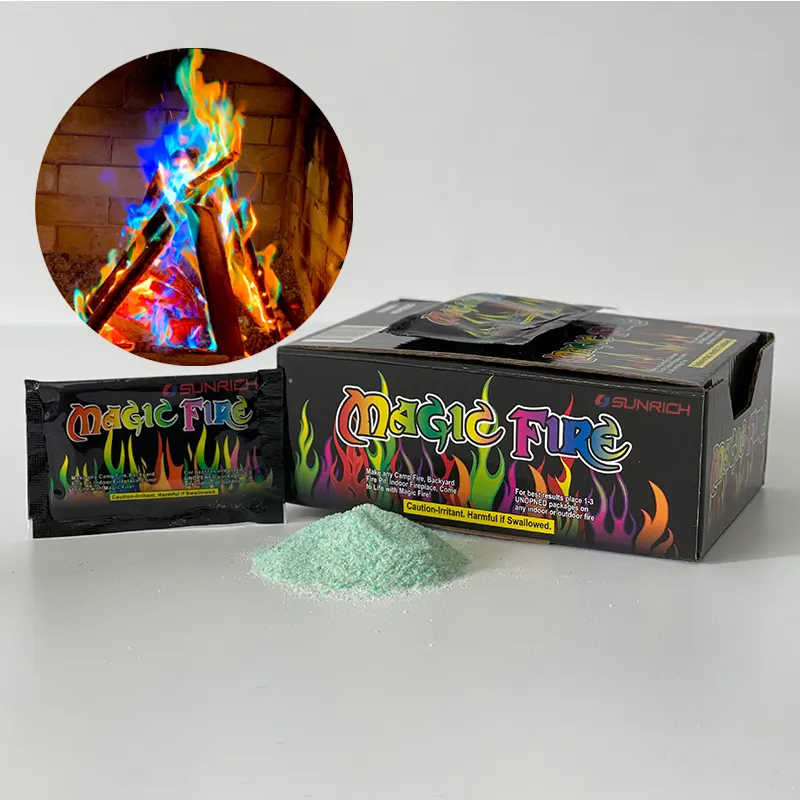
Two things separate a professional pyrotechnic colorant blend from a hobby mix. First, particle size. Our production lines mill and sieve granules to a tight range so the salts release evenly as they heat. Coarse chunks burn in pulses; fine, uniform granules give a steady color wash. Second, moisture control. Many metal salts are hygroscopic. We add buffering agents and use sealed foil sachets — the same heat-crimped packets you see in our retail-ready displays — so the powder stays dry from our factory to your customer's campfire.
One nuance worth knowing: copper sulfate tends toward green, while copper chloride leans blue-green. We adjust the ratio depending on whether a client wants "ocean blue" or "forest green" as the dominant effect.
How Can I Verify That the Metal Salts in My Color-Flame Products Are Safe and Compliant?
A German distributor once emailed us at midnight, worried after customs flagged a competitor's shipment. His question was simple: how do I prove my colorants are safe? Here is what I told him.
Verify safety by requesting third-party test reports from SGS or Intertek, CE documentation for the EU, a full material safety data sheet listing every metal salt, and factory audit records such as ISO 9001 and BSCI. Compliant suppliers provide these documents before you place an order.

Compliance is the first question our serious B2B buyers ask, and honestly, it should be. Not all metal salts are equal. Some traditional pyrotechnic colorants carry real toxicity concerns 4, and regulators in the US and EU treat consumer fire products seriously. In our experience exporting to 30+ countries, the buyers who skip documentation checks are the ones who end up with stranded containers.
The Document Checklist We Provide
Ask any supplier for these before committing:
- Third-party test reports. We supply SGS and Intertek 5 reports covering heavy metals and restricted substances. A real report has a verifiable reference number you can check with the lab.
- Factory certifications. ISO 9001 6 proves a quality management system exists. BSCI covers social compliance, which large retail sourcing channels increasingly demand.
- CE documentation. Required for our EU shipments to Germany, France, the Netherlands, and Poland.
- Full ingredient disclosure. A supplier who refuses to name their metal salts is a red flag. We disclose our colorant chemistry to buyers under standard confidentiality terms.
- Warning labels and safety text. Our packets ship with clear caution labels — you can see the yellow warning band on our retail packaging — localized to your market's requirements.
Red Flags to Watch For
Be cautious with suppliers who offer "food-grade" claims for a campfire colorant, quote prices far below market, or send test reports with mismatched product names. We have seen trading companies recycle reports across unrelated products. Because we run our own production in Ningbo, every report we issue maps to a traceable batch number. That traceability is what protects your brand if a regulator ever asks questions.
Which Flame Colors Can I Customize for My Private-Label Fire Products?
One of the most enjoyable projects we handled was a LARP event brand that wanted "dragon fire" — a purple-dominant blend for medieval festival props. Custom color profiles are a real option, not a gimmick.
You can customize blue, green, blue-green, red, crimson, orange, yellow, and violet flames, either as single-color packets or multicolor rainbow blends. Sunrich also customizes burn time, packet size, packaging format, private-label branding, warning labels, and barcodes for shelf-ready products.

Customization starts with the color profile, but it should not end there. When a US camping brand or European fireplace distributor comes to us, we walk through three layers of decisions.
Layer 1: Color Profile
| Custom Profile | Dominant Salts | Best For |
|---|---|---|
| Rainbow multicolor | Copper + strontium + potassium blend | Family camping, general retail |
| Ocean blue-green | Copper chloride emphasis | Coastal and outdoor brands |
| Crimson red | Strontium chloride | Holiday and romantic-themed lines |
| Emerald green | Barium salts or boric acid | St. Patrick's, forest themes |
| Mystic purple | Potassium with sodium suppression | LARP, fantasy, festival props |
Some colors are simply harder than others. Violet is faint by nature, so a purple-dominant blend needs careful suppression of competing yellow light. Blue demands more copper loading than green does. We are upfront about these trade-offs during sampling, because a first sample should honestly reflect mass-production quality — that is a standard we hold every batch to.
Layer 2: Format and Burn Time
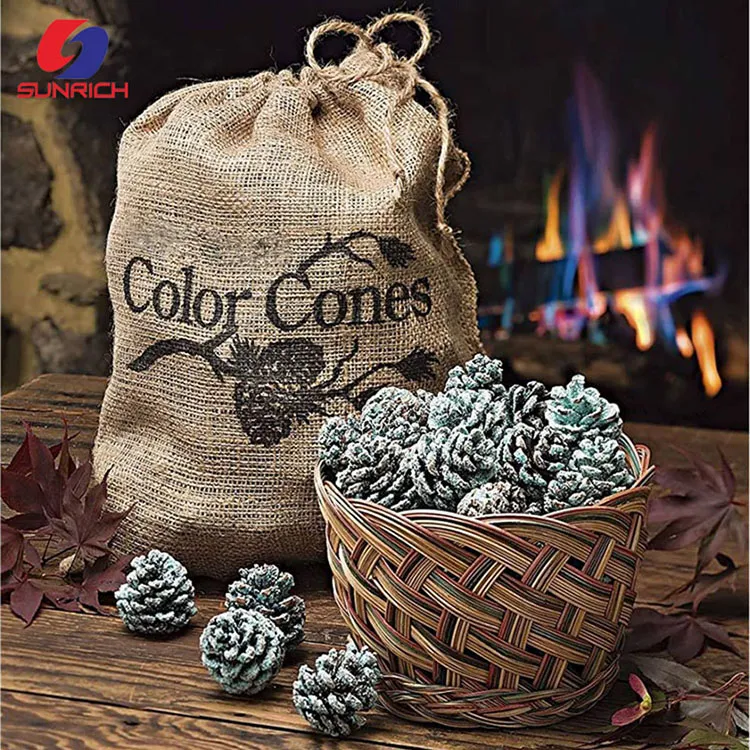
We produce color-flame packets in plastic bags, kraft stand-up pouches, and plastic jars, plus color-flame pinecones for a more natural, giftable look. Burn time is adjustable through packet weight and carrier formulation. Shorter burns suit trial-size retail packs; longer burns suit premium fireplace lines.
Layer 3: Branding and Retail Readiness
Full private-label support covers your logo, custom box design, display packaging with flip-top lids, localized warning text, and barcodes. We also optimize logistics for your destination market, whether that is a Home Depot–type retail channel in the US or a distributor network in the Middle East. Flexible MOQs let you run a trial order before committing to a full container.
Why Do Some Color-Flame Packets Produce Weak or Inconsistent Colors, and How Does Sunrich Prevent This?
Early in my career, I benchmarked a dozen competitor packets in our test fireplace. Half produced muddy orange flames with only flickers of color. The failures all traced back to three preventable causes.
Weak flame colors result from sodium contamination overpowering other hues, moisture absorption clumping the salts, and uneven particle sizes causing erratic release. Sunrich prevents this with sodium-line suppression buffers, hygroscopic control using anti-caking agents, sealed foil packaging, and strict batch-to-batch quality testing.

Understanding failure modes is the fastest way to judge supplier quality. Here is what actually goes wrong inside a cheap packet, and how a disciplined factory prevents each problem.
Failure Mode 1: Sodium Contamination
Sodium emits an extremely intense yellow — the famous D-line in its emission spectrum. Even trace sodium impurities 7 in low-grade raw materials will flood the flame with yellow light and drown out the weaker blues and purples. This is the single most common reason a "rainbow" packet burns plain yellow-orange. We source higher-purity metal salts and use chemical buffers to neutralize residual sodium interference. It costs more per kilogram. It is also the difference between a repeat customer and a one-star review.
Failure Mode 2: Moisture and Caking
Many metal cations travel into the flame best from dry, free-flowing granules. Hygroscopic salts like calcium chloride pull moisture from the air, clump, and then release color in weak, uneven bursts. Our answer is layered: moisture-buffering additives such as fumed-silica-type anti-caking agents, heat-sealed foil sachets, and humidity-controlled storage before packing.
Failure Mode 3: Poor Combustion Matching
Colored fire is not the same as glowing embers or sparks. If the carrier burns too fast, the color flashes and dies. Too slow, and the salts never fully vaporize. We tune the carrier so the release curve matches a typical campfire or fireplace temperature.
| Failure Cause | Symptom in the Fire | Sunrich Prevention |
|---|---|---|
| Sodium impurities | Everything looks yellow | High-purity salts, sodium suppression buffers |
| Moisture absorption | Weak, patchy color | Anti-caking agents, sealed foil sachets |
| Uneven particle size | Flickering, short color bursts | Milling and sieving to tight tolerances |
| Wrong carrier formulation | Color dies quickly or never appears | Carrier tuned to flame temperature |
| No batch QC | Good sample, bad mass production | Batch-by-batch flame testing in-house |
Every production batch goes through an actual burn test in our facility, not just a paperwork check. After 17+ years, we have learned that consistency is a process, not a promise.


 English
 Spanish
 German
 French
 Arabic
 Portuguese
Join the Conversation