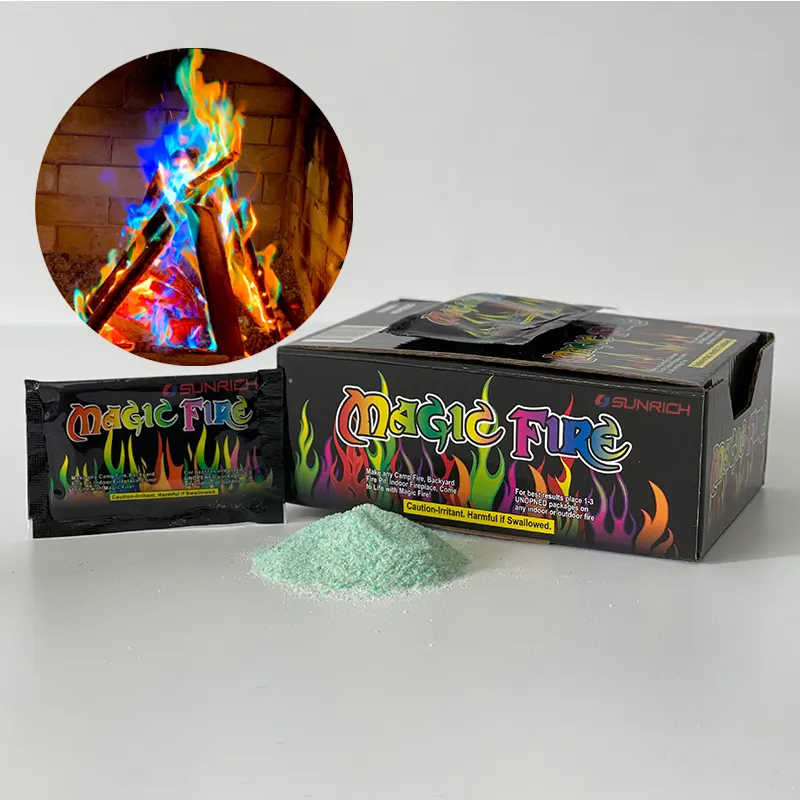

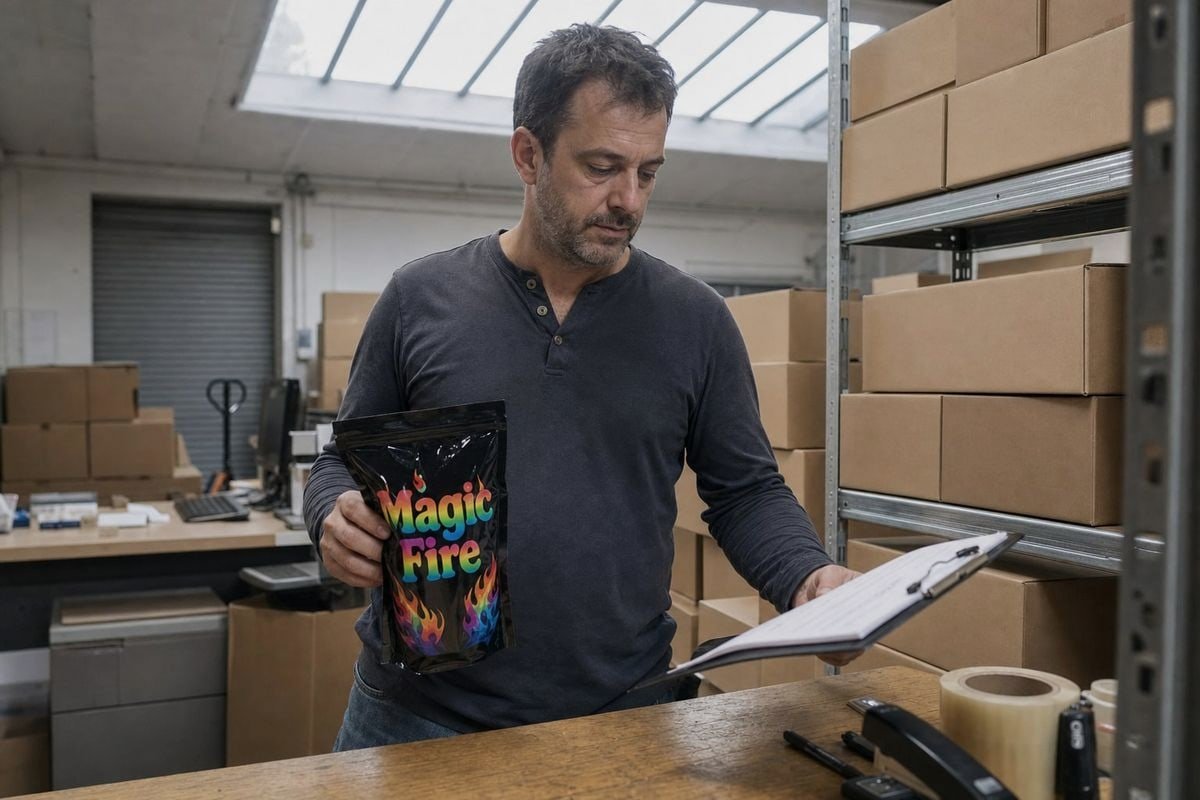
Every week, buyers ask us the same question before repackaging Magic Fire powder under their own brand: who owns the FHSA labels once our factory's name comes off the pouch?
Yes. Repackaging Magic Fire powder under your own brand makes you the private labeler under the FHSA, and you become legally responsible for compliant cautionary labeling. Your business name appears on the package, so the CPSC treats you as the accountable party for the product's warnings.
That answer surprises a lot of first-time importers. The good news is that compliance is manageable once you know the rules. Let me walk you through exactly what changes when your brand goes on the pouch, what the label must say, and what documents you should demand from your supplier before a single sachet ships.
Am I legally responsible for FHSA compliance once I put my own brand on Magic Fire powder packaging?
A US distributor once told me he assumed our factory's certificates covered him forever. Our compliance team had to explain, gently, why his brand on the foil pouch changed everything.
Yes, you are. The FHSA is product-based, not brand-based. Once your name appears on the packaging as the packer, distributor, or seller, private labeler responsibility attaches to you. Repackaging does not transfer FHSA duties back to the original manufacturer; it adds your business to the liability chain.
The Federal Hazardous Substances Act 1 follows the hazard, not the logo. If a color-flame powder qualifies as a hazardous substance — because it is toxic, an irritant, flammable, corrosive, or a strong sensitizer — then every package sold to a US consumer must carry compliant cautionary labeling. The law does not care whose factory made the crystals. It cares whose name sits on the pouch at the point of sale.
Why the label ties liability to you
The FHSA requires the label to state the name and place of business of the manufacturer, packer, distributor, or seller. When you repackage under your brand, your company becomes that named entity. In practical terms, the CPSC 2 will knock on your door first, not your supplier's. In our seventeen-plus years exporting fire-themed products to the US and Europe, we have seen this play out: the brand owner is always the first point of enforcement contact.
What happens if the label is wrong
A product without required warnings is a misbranded hazardous substance under 16 CFR Part 1500 3. The consequences are not theoretical:
| Enforcement Action | What It Means for Your Brand |
|---|---|
| Inventory seizure | CPSC can detain or seize non-compliant stock |
| Mandatory recall | You fund the recall, not your overseas supplier |
| Civil penalties | Fines can escalate per violation |
| Import refusal | Customs can block shipments at the port |
| Platform delisting | Amazon and other marketplaces remove listings fast |
One more nuance matters. Some buyers argue they are "only relabeling an already compliant product." That defense fails if your repackaging hides, replaces, or omits the original warnings. The final package as sold to the consumer must be compliant. That responsibility is yours.
What warning label information does FHSA actually require for color-flame fire products?
When we design private-label pouches for US buyers, our artwork team blocks out the warning panel before anything else. Rainbow flames come second; cautionary labeling requirements come first.
FHSA labels for color-flame products must include a signal word such as WARNING, the principal hazard statement, the chemical or common name of the hazardous ingredient, precautionary measures, first-aid instructions, handling and storage directions, the phrase "Keep out of reach of children," and your business name and address.
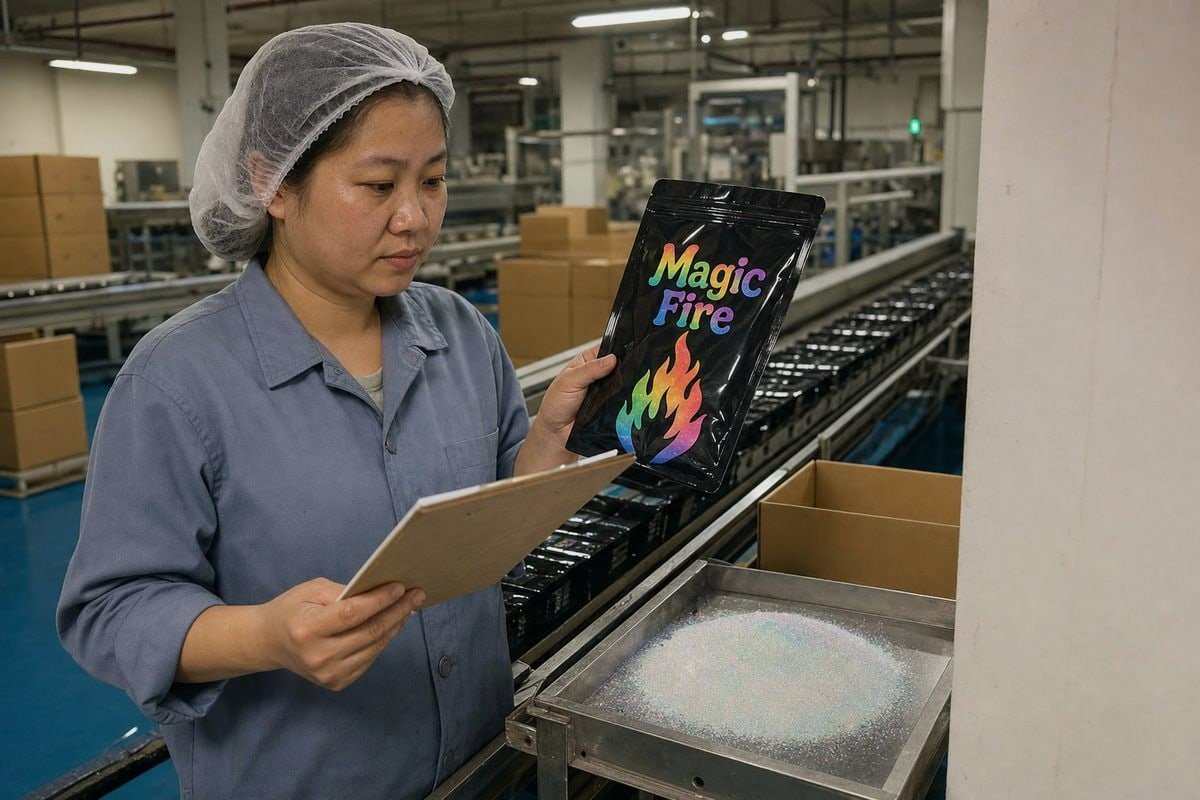
Color-flame powders typically contain metal salts that produce the colored effects. Depending on the formulation, regulators frequently classify these products as toxic or irritants, which triggers specific ingestion warnings. Children are the core concern here. A sparkling pastel powder in a shiny pouch looks a lot like candy, and the FHSA's foreseeable misuse principle 4 takes that into account. Even with perfect warning text, packaging that resembles a food sachet can increase your liability exposure.
The required elements, mapped to your pouch
| Label Element | Requirement | Common Mistake |
|---|---|---|
| Signal word | WARNING or CAUTION in capital letters | Printed too small for the label area |
| Principal hazard | e.g., MAY BE HARMFUL IF SWALLOWED | Buried in decorative graphics |
| Hazardous ingredient | Chemical or common name stated | Listed only as "proprietary blend" |
| Precautionary measures | How to avoid the hazard | Vague phrasing like "use carefully" |
| First aid | Instructions when needed | Omitted entirely on small sachets |
| Child protection | "Keep out of reach of children" | Placed only on the outer box |
| Business identity | Name and place of business | Showing the factory instead of the brand owner |
Placement, prominence, and small sachets
Two placement rules trip up repackagers. First, the immediate container — the foil sachet itself, not just the retail box — must carry the full warning. If the sachet label is hidden inside outer packaging, the outer package needs the information too. Second, formatting is strictly regulated under 16 CFR Part 1500: signal words and hazard statements must appear in capital letters and meet minimum type sizes based on total label area. If you shrink our Magic Fire packets into "sample" sizes, you do not escape these rules. Fold-out labels or securely affixed hang tags are the accepted solutions, and we produce both for buyers who order compact formats.
What compliance documents should I request from my supplier before repackaging under my brand?
Last year, a German distributor asked us for our full document pack before signing a private-label deal for our color-flame packets. That request told us he was a serious, long-term partner.
Request the Safety Data Sheet, third-party test reports from labs like SGS or Intertek, a toxicological evaluation or hazard classification, the full ingredient disclosure, a General Certificate of Conformity where applicable, and batch-level quality control records. These documents prove the product's hazard profile and support your label claims.
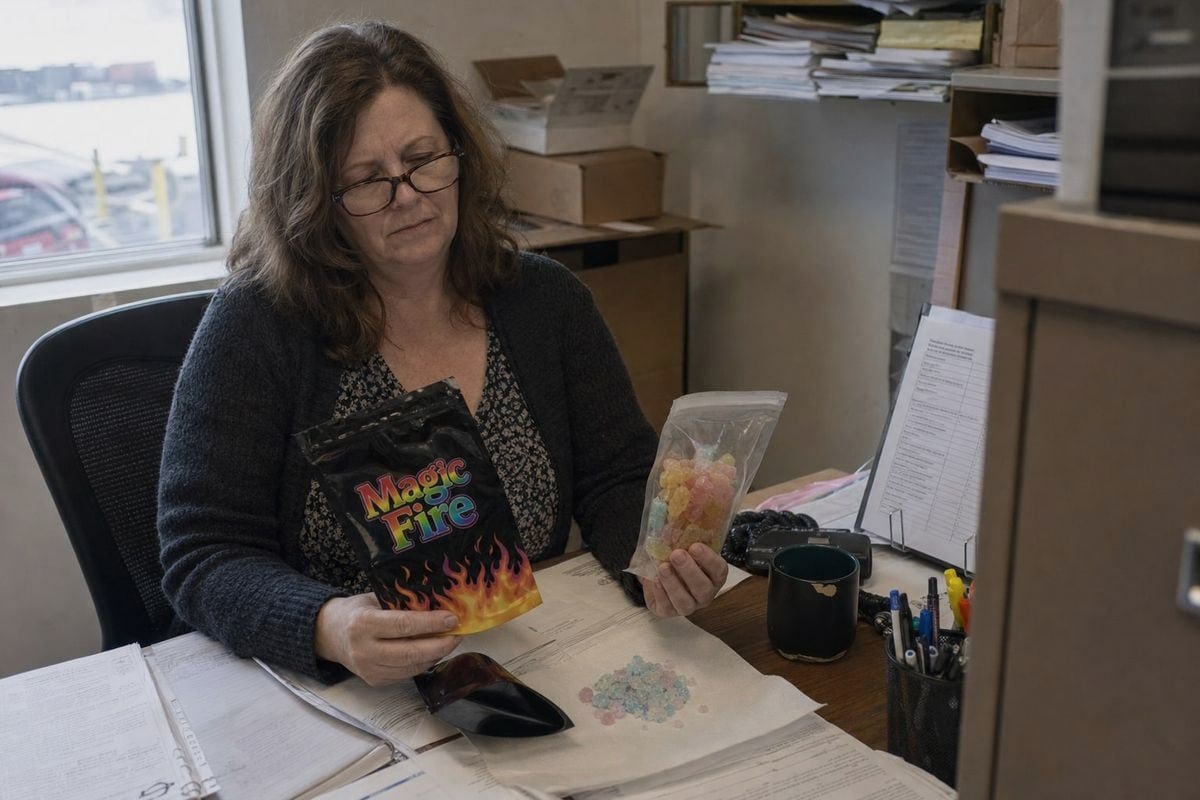
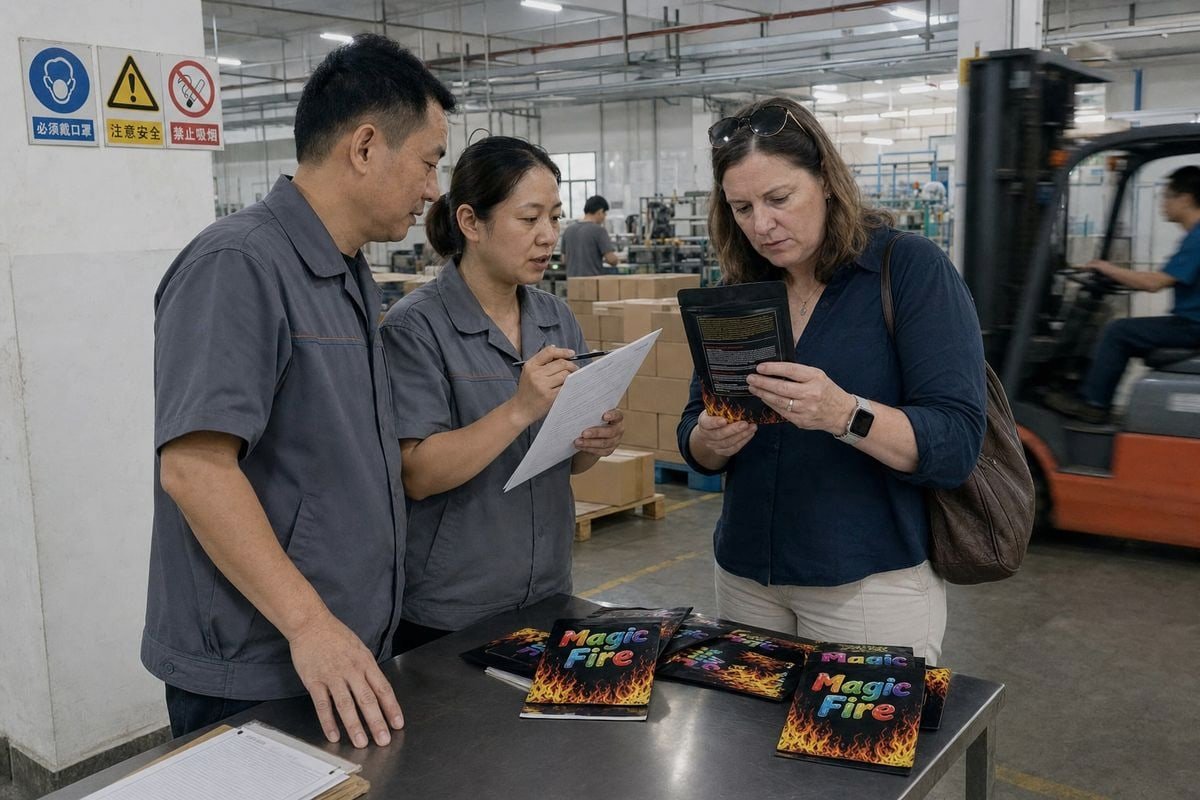
You cannot write a compliant label if you do not know what is in the powder. That sounds obvious, but I have met buyers who signed private-label contracts with suppliers who refused to share their formulation. That is a red flag. At our factory in Ningbo, full ingredient disclosure under NDA is standard practice for OEM partners, because we know their labels depend on it.
Your pre-repackaging document checklist
- Safety Data Sheet (SDS). This is your foundation. It identifies the chemical hazards, composition, first-aid measures, and storage requirements. Your FHSA warning text should trace directly back to it.
- Third-party test reports. Independent lab verification from SGS or Intertek confirms the product performs as claimed and does not contain undisclosed harmful substances. E-commerce platforms increasingly demand this before listing hazardous powders.
- Toxicological evaluation. This determines whether the powder is legally a "hazardous substance" under the FHSA at all. The classification drives everything: signal word, hazard statements, ingestion warnings.
- General Certificate of Conformity (GCC). Where a consumer product safety standard applies, a GCC 5 ties your specific repackaged product to test results. Note that it certifies your version, not just the bulk material.
- Batch QC records. Consistency matters. A supplier with strict batch-to-batch quality control ensures the powder you tested is the powder you sell.
One overlooked risk: your new packaging
Repackaging introduces a secondary hazard question. Will your chosen pouch material react with the powder over time? Moisture ingress, foil corrosion, or seal degradation can create stability risks that never existed in the original bulk container. When buyers switch from our standard foil sachets to their own kraft or jar formats, we run compatibility checks first. Ask your supplier to do the same, and get the results in writing.
Can I use my manufacturer's existing test reports and certifications for my private-label version?
The trade-off here is real, and we discuss it openly with every OEM buyer: reusing our test reports saves money upfront, but it only works within strict limits.
Partially. Your manufacturer's test reports can support your compliance file if the product, formulation, and packaging are identical. However, certificates naming the factory do not automatically cover your brand, and any change in packaging, quantity, or format usually requires supplemental testing under your own name.
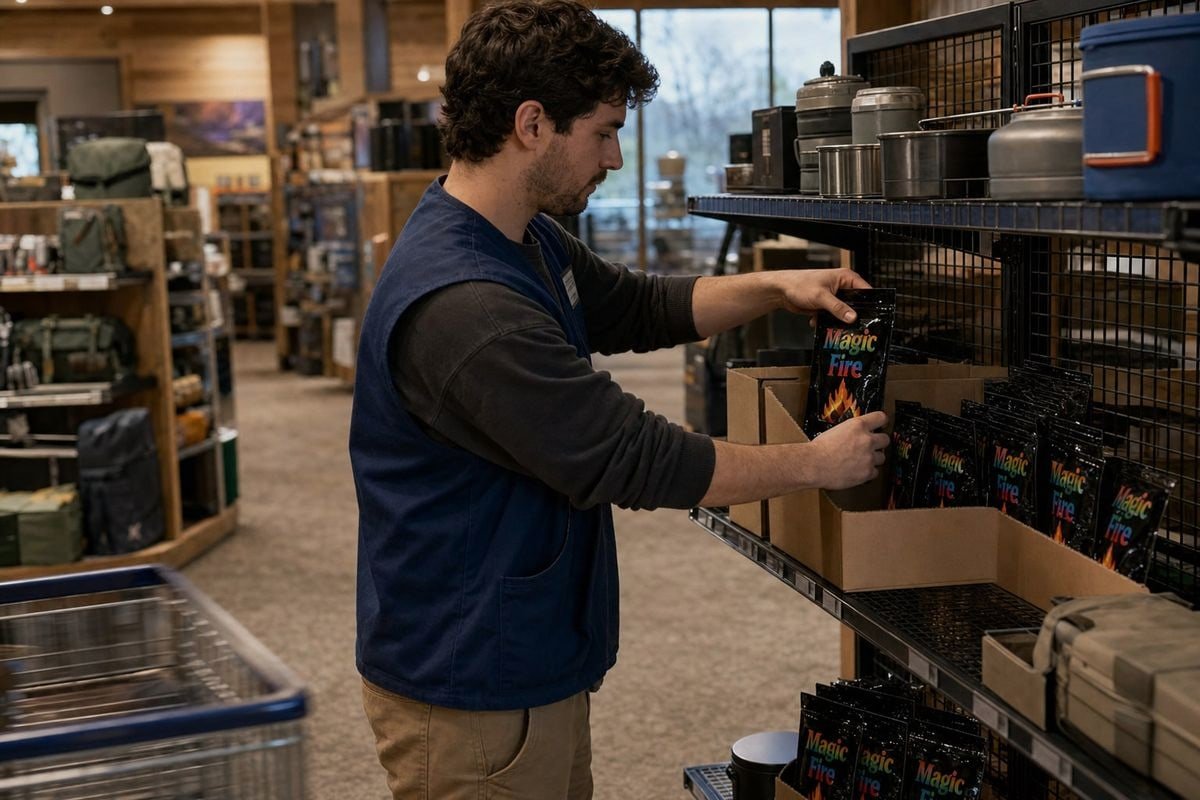
Here is how we explain it to buyers who private-label our Magic Fire packets. Our ISO 9001 6, BSCI, CE, and SGS/Intertek documentation proves that our production process and our product formulation meet consumer product safety standards. That evidence is genuinely useful to you. But CPSC compliance is assessed on the finished product as it reaches the consumer — and once you repackage, the finished product is yours, not ours.
When existing reports transfer, and when they do not
| Scenario | Can You Rely on Factory Reports? | Why |
|---|---|---|
| Same formula, same sachet, only artwork changes | Largely yes | The tested product is physically unchanged |
| Same formula, new pouch material or size | No, not fully | Packaging compatibility and label area change the compliance picture |
| Repackaged from bulk into consumer sachets | No | You performed the packing; the tested unit no longer exists |
| Blended or modified formula | No | This is a new product requiring fresh toxicological evaluation |
Building a defensible compliance file
The practical solution is a layered file. Keep the manufacturer's SDS 7, formulation disclosure, and lab reports as your foundation. Add a supplier agreement guaranteeing formulation consistency across batches. Then commission targeted testing on your final packaged unit — especially if platforms or large retailers request a GCC in your company's name. In our experience supplying Home Depot–type retail channels, buyers who arrive with this layered file clear vendor onboarding weeks faster than those waving a factory certificate with someone else's name on it. We support this by providing test reports, custom warning labels, barcodes, and shelf-ready packaging as part of our one-stop OEM service, so your file and your pouch tell the same story.
Conclusion
Repackaging Magic Fire powder under your brand makes you the responsible party for FHSA labels. Verify the hazard classification, demand full documentation, and partner with a factory that builds compliance in from day one.
Footnotes
1. Updated to official eCFR regulatory text to ensure accessibility and authority. ↩︎
2. Authoritative government portal link that provides a stable alternative to the main domain. ↩︎
3. eCFR text of the exact regulation governing hazardous substance labeling requirements cited. ↩︎
4. Background concept on product liability doctrine underlying the foreseeable misuse standard mentioned. ↩︎
5. Direct link to the legal requirements for Certificates of Compliance (GCC) via eCFR. ↩︎
6. Authoritative and highly accessible reference for the quality management standard. ↩︎
7. OSHA hazard communication page explaining Safety Data Sheet standards referenced in compliance file. ↩︎



 English
 Spanish
 German
 French
 Arabic
 Portuguese
Join the Conversation