







Return costs for wood fire starters can quietly destroy a distributor's margin Documentação CE 1. On our production line in Ningbo, we have seen good products lose money simply because nobody agreed who pays return freight.
The party responsible for the return reason pays: the supplier covers costs for defective wood fire starters and shipping damage, while the retailer or end customer covers change-of-mind returns. Your distribution agreement should define each scenario, the evidence required, and the payment method in writing.
That single sentence hides a lot of detail. Consumer law, retailer policy, and your wholesale contract all interact. Let me walk you through how to handle each layer, based on what actually works in export deals.
What return-cost terms should I negotiate with my wood fire starter manufacturer before signing a distribution agreement?
A few years back, a German distributor came to us mid-crisis. His retailer had deducted return freight from an invoice, and his wholesale supply agreement said nothing about who should absorb it.
Negotiate five terms before signing: who pays inbound return freight and outbound replacement freight, whether an RMA authorization process is mandatory, what evidence supports a claim, how credits are issued, and whether a restocking fee policy applies to non-defective returns.

The biggest mistake I see buyers make is treating returns as a footnote. In our 17+ years exporting fire-starting goods to 30+ countries, the deals that stay healthy are the ones where return-cost allocation was negotiated before the first container shipped, not after the first dispute.
Start with definitions, not percentages
Before you argue about who pays, agree on what each word means. Your agreement should define "defective," "damaged in transit," "wrong item," "nonconforming," and "change of mind." Each term is a different cost trigger. If the contract leaves them vague, every return becomes a negotiation.
The core terms worth fighting for
Here is how I would prioritize the negotiation, from the distributor's side:
| Term to Negotiate | Por que é importante | Resultado Típico |
|---|---|---|
| Return freight for defects | Supplier fault should mean supplier cost | Supplier pays or credits freight |
| Outbound replacement shipping | Often forgotten, doubles the cost | Supplier pays for defect replacements |
| RMA authorization process | Prevents blind returns and warehouse chaos | Mandatory RMA number before any return |
| Restocking fee policy | Offsets reverse logistics handling | 15–30% on non-defective returns |
| Credit mechanism | Cash flow depends on it | Credit note or offset against next order |
| Response deadline | Delayed approvals create extra freight cost | 5–10 business days for claim decisions |
Also negotiate the payment route. Will the supplier issue a prepaid label? Will you self-ship and invoice back? Or will you receive a credit note against your next purchase order? Each option shifts cash flow differently. We usually prefer credit notes on future orders because they keep the trading relationship moving, and most of our long-term buyers agree once they see the math.
Finally, ask your manufacturer for batch and lot traceability 2. Without lot numbers on cartons, you cannot prove which shipment a defective puck came from, and your claim weakens fast.
How do I decide who's liable for retailer returns caused by defective wood fire starters versus damage in transit?
One shipment taught me this lesson the hard way: a pallet of wax-dipped wood rolls arrived in the UK with crushed cartons, and the retailer filed the claim as "defective product." It wasn't. It was transit damage.
Liability follows fault and the risk-transfer point. The manufacturer is liable for defective merchandise returns caused by production faults. Transit damage falls on whichever party bore risk under the agreed Incoterms, backed by shipping liability insurance, so define the handover point precisely.
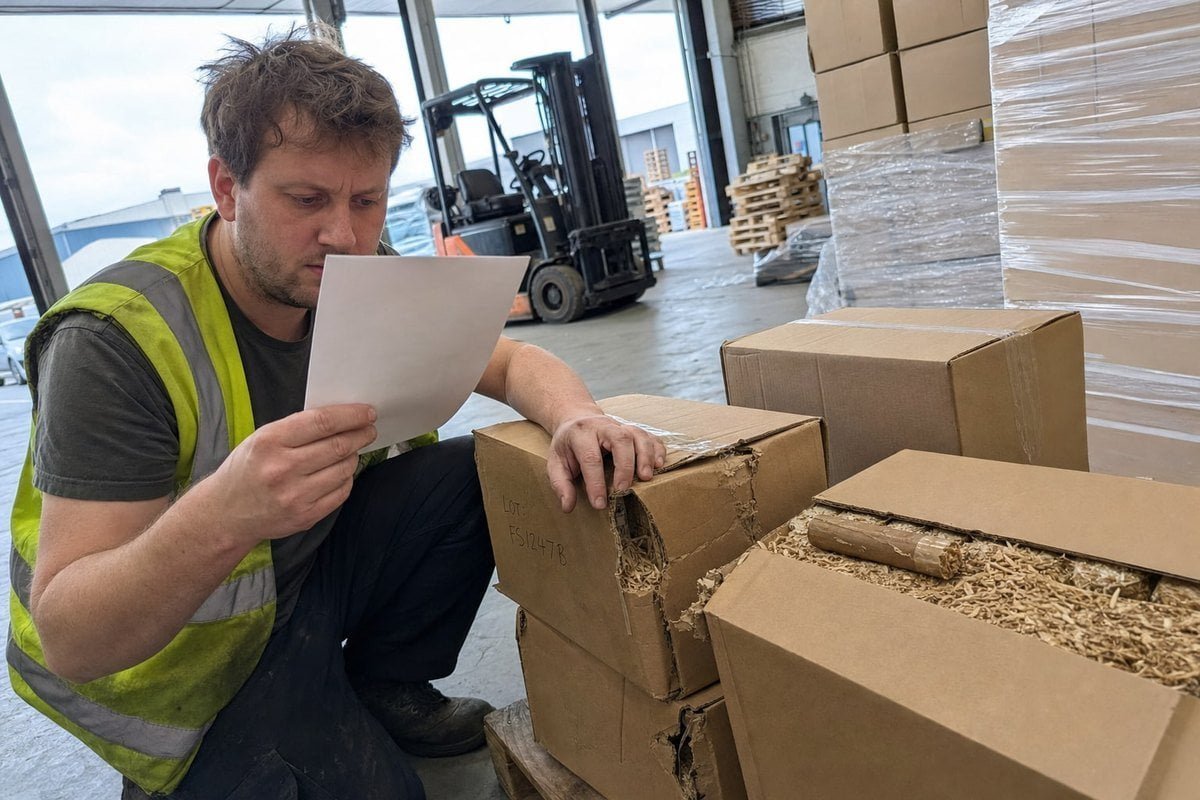
These two failure types look similar on a retailer's shelf, but they have completely different legal owners. Sorting them correctly is the single most important skill in managing wood fire starter returns.
Use Incoterms to fix the risk-transfer point
Your distribution agreement should state the exact moment risk passes. Under FOB destination 3, the supplier carries risk until goods reach your warehouse, so transit damage is the supplier's problem. Under Ex-Works, you take risk at the factory gate, and your shipping liability insurance handles carrier damage. Neither option is wrong. What is wrong is not choosing one.
| Cenário | Causa Raiz | Who Pays Return Costs | Key Evidence |
|---|---|---|---|
| Defective product | Manufacturing fault (poor wax saturation, weak binding) | Fornecedor | Lot number, photos, sample retention |
| Damage in transit | Carrier handling, crushed cartons, moisture ingress | Party holding risk per Incoterms | POD notes, arrival photos, carrier claim |
| Wrong item shipped | Erro de processamento | Fornecedor | Packing list versus PO |
| Change of mind | Consumer preference | Retailer or consumer | Retailer's published policy |
Evidence rules decide disputes before they start
At our factory in Liuyang and our Ningbo production site, we keep retained samples from every batch. When a claim comes in, we compare the returned product against the retained sample. If the retained sample burns correctly and the returned puck shows water damage, the fault likely occurred downstream. Your agreement should require photos on arrival, batch numbers, and condition notes on the proof of delivery. Retailers who sign delivery receipts "clean" and then claim transit damage weeks later put you in a weak position with both the carrier and the supplier.
Also remember that consumer law sits above your contract. In the UK and Australia, when goods are genuinely faulty, the seller must cover reasonable return costs regardless of what the private wholesale terms say. Your agreement should pass that mandatory cost back to whoever caused the fault.
Can better quality control and compliance testing reduce the return costs I face from retailers?
Every batch that leaves our line goes through burn-time and ignition checks, and there is a direct commercial reason: consistent product is the cheapest return-prevention tool that exists.
Yes, significantly. Strict batch-to-batch quality control, verified certifications, and third-party testing reduce defective merchandise returns at the source, satisfy vendor compliance guidelines, and cut chargebacks. Fewer defects mean fewer fault-based claims, which are the returns suppliers legally cannot contract away.

Here is the logic in plain terms. Your distribution agreement can shift change-of-mind returns to the retailer or consumer. But it can almost never shift genuinely defective returns away from the supply side, because consumer protection law 4 in markets like the UK, EU, and Australia forces a remedy. So the only way to shrink that cost bucket is to shrink the defects themselves.
What quality control actually prevents
For wood fire starters, the common defect drivers are uneven paraffin saturation, loose wood-wool binding, moisture absorption before sealing, and inconsistent burn time across a batch. Each one produces a retail complaint that becomes a return. Our controles de processo ISO 9001 5 exist precisely so the first sample a buyer approves reflects mass-production quality, batch after batch. When the hundredth carton matches the first, retailer claim rates stay low and your credit-memo exposure stays predictable.
Compliance testing protects you twice
Third-party test reports from labs like SGS ou Intertek 6 do two jobs. First, they prove the product meets safety expectations, which matters because compressed wood-and-wax starters can fall under regulamentos de envio de sólidos inflamáveis 7, and non-compliant labeling can trigger rejected shipments and forced returns at the carrier level. Second, test reports give you a documented baseline. If a retailer claims the product is unsafe or nonconforming, you can point to certified results instead of arguing opinions. Large retail sourcing channels also audit against vendor compliance guidelines, and BSCI 8 plus CE documentation helps you pass those audits without chargebacks for missing paperwork.
A practical tip from our export experience: write the quality standard into the contract itself. Reference the approved sample, the agreed burn time tolerance, the moisture limit, and the applicable test standard. Then a "defect" is measurable, not debatable, and return-cost liability becomes a simple comparison instead of a fight.
What clauses should I include in my distribution agreement to limit my exposure to unsold or returned inventory?
When we help private-label buyers plan seasonal fireplace programs, the question of unsold winter stock always comes up, usually around March when the season ends.
Include an inventory buyback clause with clear limits, a restocking fee policy for non-defective goods, seasonal blackout windows, a returnless refund option for low-value items, certified field destruction rights, storage condition requirements, and cross-retailer rebalancing provisions to redirect stock instead of returning it.
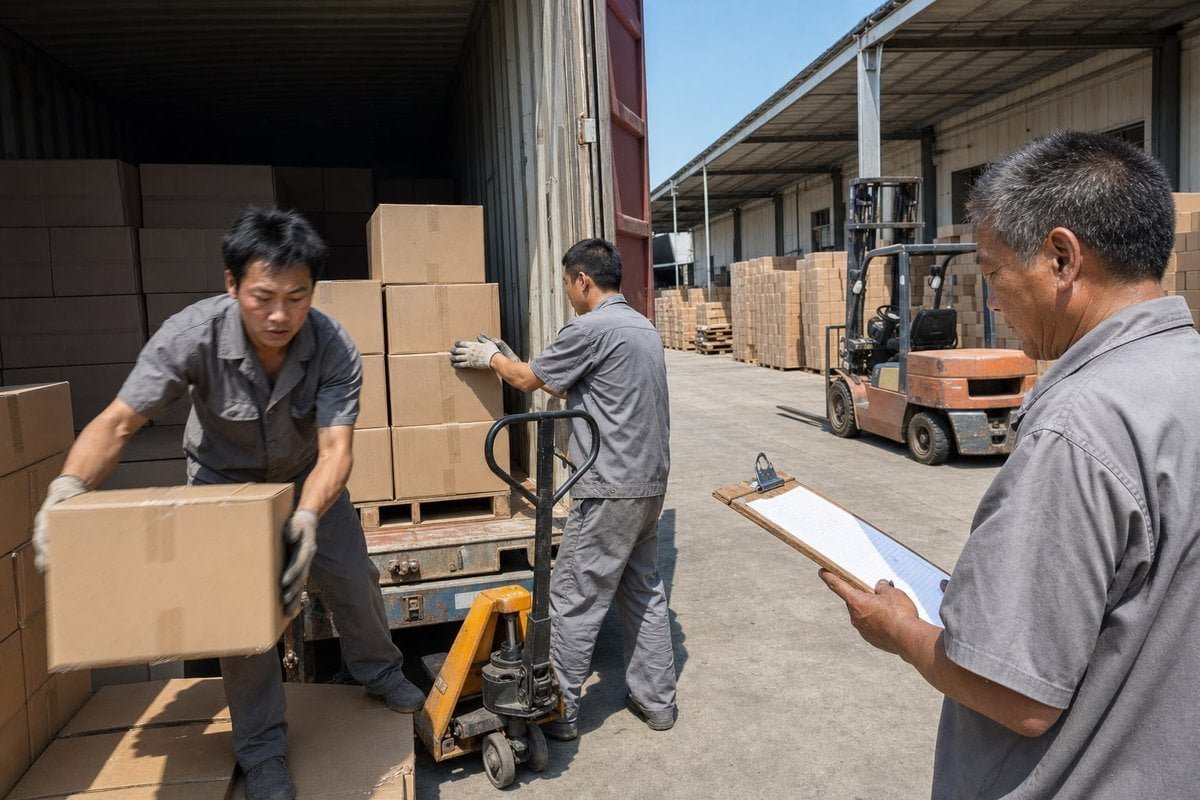
Unsold inventory is different from defective inventory. Nobody is at fault, so the contract alone decides who eats the cost. That makes this section of your agreement pure negotiation, and every clause below is a lever you can pull.
The clause toolkit
| Cláusula | O que Faz | Exposição de Caixa Inicial |
|---|---|---|
| Inventory buyback clause | Caps how much unsold stock the supplier must repurchase, and at what price | Seasonal overstock |
| Restocking fee policy | Charges 15–30% on non-defective returns to cover reverse logistics | Change-of-mind and overstock returns |
| Seasonal blackout window | Blocks returns during peak winter months when logistics are at capacity | Q4 shipping crunch |
| Returnless refund | Credits the retailer without shipping the goods back | Low-margin multipacks where freight exceeds value |
| Certified field destruction | Lets the retailer destroy and recycle stock locally with documentation | Bulky wood products with heavy return freight |
| Storage condition requirement | Voids return credits if humidity or storage rules were breached | Moisture-sensitive wood-wool starters |
| Cross-retailer rebalancing | Moves excess stock between stores, splitting local transit cost | Multi-location retail programs |
Why the economics favor avoidance over recovery
Wood fire starters are low-to-medium price items sold in bulk. A 100-piece box, like our standard retail format, often costs less to write off than to ship back across an ocean. Reverse logistics for this category is expensive: freight, inspection, repackaging, and sometimes hazmat-adjacent handling under flammable solids shipping regulations. That is why returnless refunds and certified field destruction have become popular. The retailer gets the credit, the stock gets recycled locally, and nobody pays international return freight on product that may no longer be resellable anyway.
The moisture clause deserves special attention for this category. Wax-dipped wood rolls lose ignition performance if stored in damp conditions. A storage-integrity clause means you are not crediting returns for damage the retailer's own warehouse caused. Pair it with lot tracking so the condition history of every carton is traceable.
Finally, keep your wholesale terms consistent with the retailer's consumer-facing policy. If the retailer promises free returns online but your distribution agreement never says who absorbs that promise, the cost lands on whoever has the weakest paperwork. Align the two documents before launch, not after the first chargeback.
Conclusão
Unclear return terms leak margin from every shipment. Define fault-based cost triggers, fix your Incoterms, demand certified quality, and write the clauses down—before you sign, not after the first dispute.
Notas de rodapé
1. CE marking is the official EU compliance mark referenced for product safety documentation. ↩︎
2. GS1 traceability standards support the lot-tracking practice recommended for proving defect claims. ↩︎
3. Incoterms define the risk-transfer point that determines liability for transit damage. ↩︎
4. Background on statutory consumer protection rules that override private wholesale return terms. ↩︎
5. ISO 9001 is the official quality management standard cited for batch consistency control. ↩︎
6. Third-party testing labs verify safety compliance, reducing defect-based returns for wood fire starters. ↩︎
7. Explains dangerous goods classification relevant to wax-and-wood fire starter shipping compliance. ↩︎
8. BSCI is a recognized vendor compliance framework retailers audit against for supply chain ethics. ↩︎



 English
  Spanish
  German
  French
  Arabic
  Portuguese
Participe da conversa