






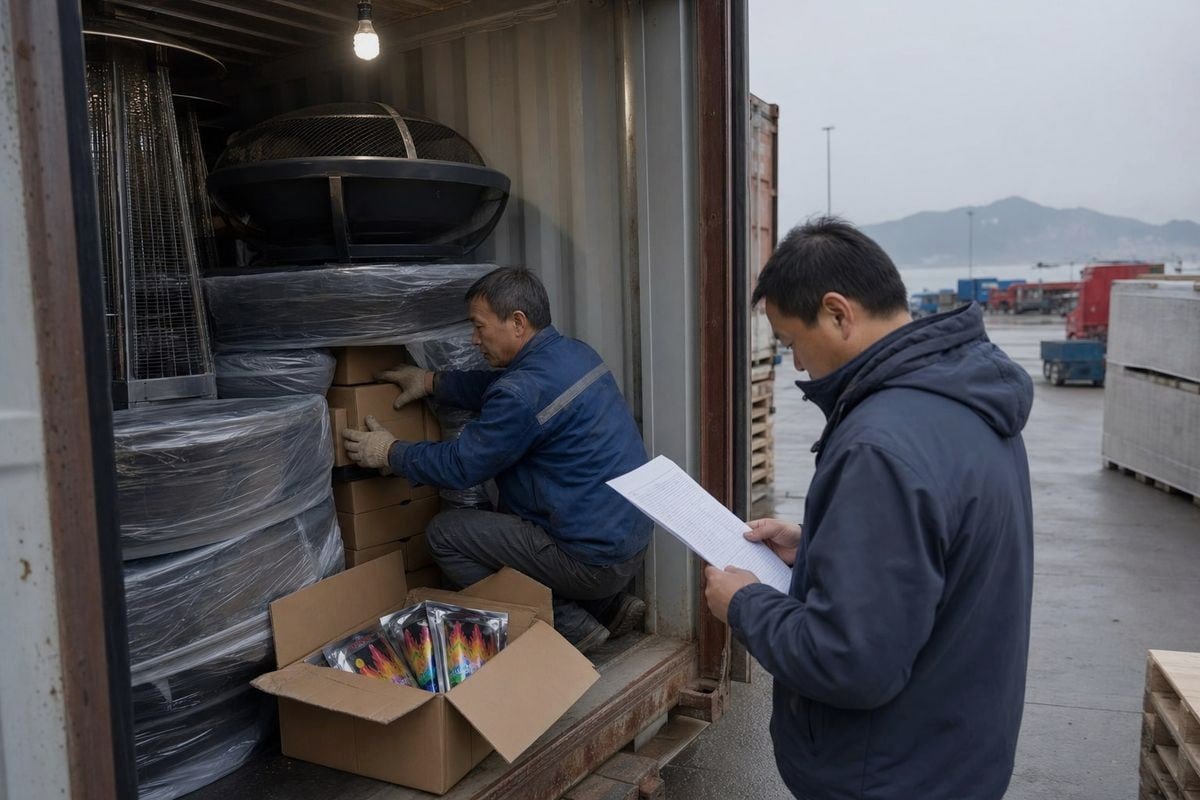
Bulky goods waste container space fast. On our Ningbo production line, I have watched buyers pay full freight for half-empty containers — Magic Fire powder weight can help offset that loss.
Magic Fire powder weight offsets wasted container space by adding dense, compact cargo — packets of 10g to 30g each — into voids left by bulky goods. This raises total load weight and cargo density, improving container utilization without adding meaningful dimensional volume to your shipment.
The idea sounds simple. But doing it right takes real calculation, the correct certifications, smart packaging sizes, and a sensible trial order certificação de fábrica ISO 9001 1. Let me walk you through each step below.
How do I calculate the right Magic Fire powder weight to balance out leftover container space?
A German fireplace distributor once asked me why his 40ft container shipped at only 60% of its legal weight limit UN3077 2. His fire pits cubed out long before they weighed out. That gap is where the math starts.
Calculate leftover capacity by subtracting your bulky goods' total weight from the container's payload limit, then dividing the remainder by the carton weight of Magic Fire powder. A 50-unit carton weighing roughly 1.5kg lets you convert spare tonnage into sellable, high-density inventory.

The core concept here is the difference between "cubing out" and "weighing out." Bulky goods like fire pits, camping chairs, and patio heaters fill a container's volume long before they reach its weight ceiling container's payload limit 3. That gap between actual weight and permitted weight is capacity you already paid for. So the goal is to fill it with product that earns revenue.
Here is the process I walk buyers through during load planning:
A simple four-step calculation
- Find your payload gap. A standard 40ft container allows roughly 26,000–28,000kg of cargo. If your bulky goods total 12,000kg, you have a large weight reserve.
- Measure your void volume. Bulky, irregular items leave air pockets between cartons and above the final tier. Estimate this in cubic meters.
- Match powder cartons to voids. Magic Fire packets ship in compact display cartons. A 50-unit carton at about 1.5kg gross weight slots into gaps that would otherwise ship as air.
- Check the weight-to-volume ratio. Confirm your combined load stays legal on both weight and axle distribution. Keep dense cartons within the center half of the container length.
Reference numbers for your load plan
| Packet Format | Typical Weight | Typical Footprint | Best Use in Load Plan |
|---|---|---|---|
| Sachê pequeno | 10–15g | Very slim, flat | Nested into small gaps |
| Standard packet | 25g | ~10.5 x 6 x 1 cm | Display cartons in mid-tier voids |
| Large packet | 30–60g | ~14.8 x 10 cm | Foundation-layer cartons |
| 50-unit carton | ~1.5kg gross | Compact box | Top-off and gap filling |
One honest caution: do not treat these packets as physical void fill like air pillows. The real win is commercial, not structural. You improve cargo density and shipping cost optimization by turning dead weight capacity into a second revenue stream. In our experience shipping mixed loads to the US and Germany, buyers who plan this way lower their landed cost per SKU across the entire container.
What certifications should I check before mixing Magic Fire packets with my bulky goods in one shipment?
Compliance is the first thing our export team reviews before any mixed-container booking. I have seen shipments held at Rotterdam because a small add-on item lacked test reports — the entire container waited, bulky goods included.
Check for ISO 9001 factory certification, BSCI social audits, CE marking, and third-party SGS or Intertek test reports before consolidating Magic Fire packets with bulky goods. Also confirm correct HS classification and any UN declaration your freight forwarder requires for the destination market.

Freight consolidation only works when every SKU in the container clears customs together. One non-compliant item can hold everything. So treat compliance on the small add-on with the same seriousness as your main product. This is where many first-time buyers get burned. They vet the fire pit supplier carefully, then toss in a novelty flame product from an uncertified trading company.
The documents I recommend requesting
| Documento | O que Comprova | Why It Matters for Mixed Loads |
|---|---|---|
| Certificado ISO 9001 | Sistema de qualidade de fábrica consistente | Batch-to-batch consistency in weight and formulation |
| relatório de auditoria BSCI | Padrões éticos de produção | Exigido por muitos canais de varejo dos EUA e da UE |
| Documentação CE | Conformidade com o mercado da UE | Mandatory for consumer sale in Europe |
| Relatórios SGS / Intertek | Independent chemical testing | Confirms no harmful chemicals; supports customs clearance |
| Correct HS classification | Proper tariff and handling category | Prevents "hidden hazmat" reclassification at port |
Watch the classification question
Some flame-colorant products get flagged under pyrotechnic-adjacent codes such as HTS 3604.90 4, or under environmental declarations like UN3077, depending on formulation and jurisdiction. This is a legitimate buyer concern, and the answer is documentation, not hope. Our Magic Fire formulation uses eco-friendly materials with no harmful chemicals, and we supply the full test-report package so your forwarder can classify the goods correctly before booking. We also print compliant warning labels and usage instructions — packets go unopened into the fire — directly on the packaging.
One more nuance from our 17+ years exporting to 30+ countries: destination rules differ. What clears smoothly into Australia may need extra paperwork for Brazil. Ask your supplier for market-specific documentation before the container is loaded, not after. Freight class and handling codes should be settled at the quotation stage.
Can I customize Magic Fire packaging sizes to fit odd gaps in my container loading plan?
There is a trade-off we weigh with every OEM buyer: smaller custom cartons fit tighter gaps, but they raise per-unit packing cost slightly. The right answer depends on your specific load plan, so we model both options before tooling anything.
Yes. Packet weight, pouch dimensions, carton counts, and display-box geometry can all be customized to match your load plan. Options include 10g to 60g fills, plastic or kraft pouches, jars, and made-to-measure master cartons sized to slot into your container's recurring void spaces.
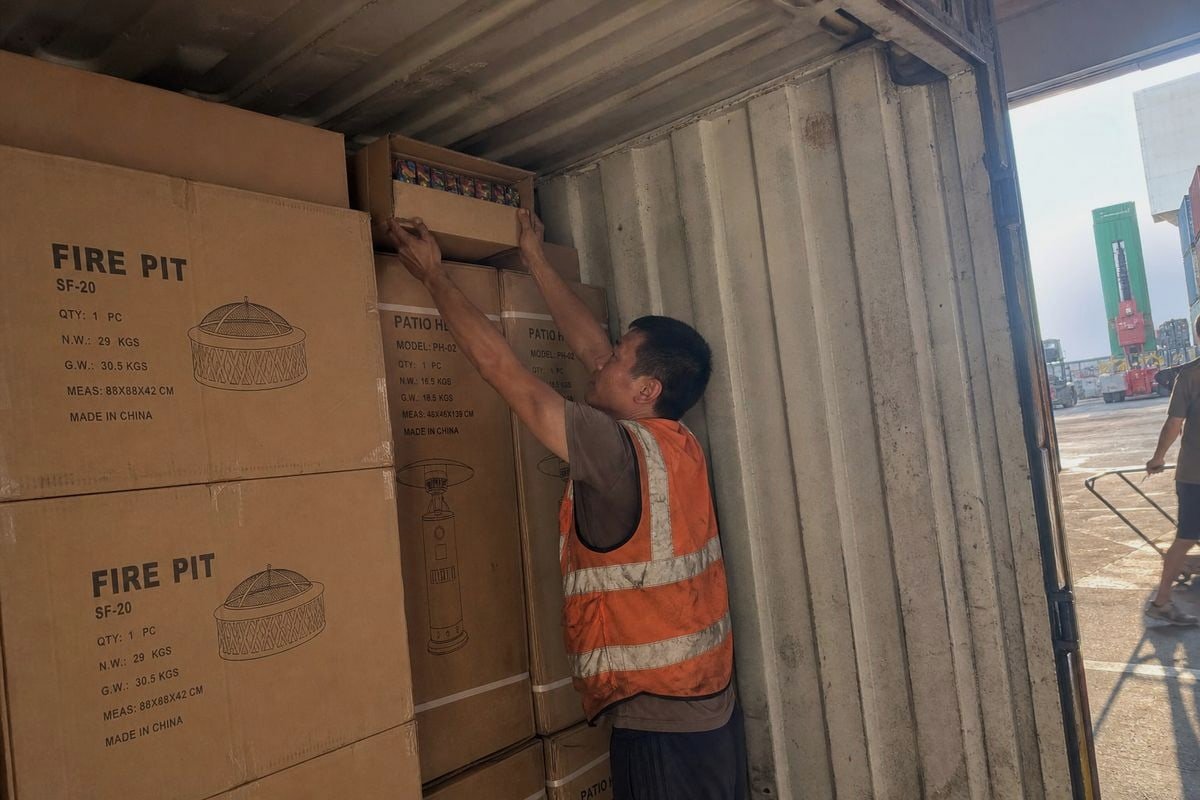
Load planning software has changed how our buyers order. Several of our US and Dutch clients now run 3D cartonization simulations first, identify their recurring void dimensions, and then send us the target carton size. We build the packaging backward from the container, not forward from the product. That is what true one-stop OEM/ODM means in practice.
What we can adjust
- Fill weight per packet: 10g, 15g, 25g, 30g, or 60g, which changes both the sachet footprint and your bulk density per carton.
- Pouch format: slim foil sachets lie flat and stack tight; kraft stand-up pouches suit retail shelves; plastic jars maximize weight per cubic centimeter.
- Master carton dimensions: we size the outer carton to your stated gap — for example, the space above a tier of fire-pit boxes or between pallet columns.
- Display packaging: flip-top counter displays holding 25 units, packed 24 displays per case, so the same carton serves as shipping filler and shelf-ready merchandising.
- Private label: your branding, barcodes, multilingual warning labels, and instructions printed at our facility.
A practical sizing example
Suppose your patio heater cartons leave a consistent 15cm gap at the top of each container tier. A standard-height display case might not fit. We can spec a lower-profile master carton — same unit count, flatter geometry — that nests into that gap. Your volumetric weight barely changes, but your revenue per container rises. This is nested loading done deliberately, and it also helps you stay on the right side of dimensional weight pricing 6 in downstream parcel shipping, because bundled orders carry more actual weight relative to their volume.
Because we run complete production lines in Ningbo with strict batch-to-batch quality control, the custom carton you approve at sampling is the carton that arrives in mass production. That consistency matters when your entire load plan depends on a dimension holding true.
What MOQ options let me trial Magic Fire powder as a space-filler before committing to a full container order?
A UK camping-brand buyer taught me a useful lesson years ago: he refused any supplier who demanded a full container on the first order. He was right. A trial run should prove quality, compliance, and load-plan fit before serious money moves.
Trial options start with sample packs for burn testing, then a small carton-level order — typically a few hundred to a few thousand packets — shipped LCL or consolidated with your existing bulky goods order. This validates quality, sell-through, and container fit before a full private-label production run.

Flexible MOQs are not a courtesy in this category; they are how sensible purchasing managers de-risk a new SKU. Here is the staged path we typically recommend to importers and distributors testing Magic Fire as a container-weight add-on.
A staged trial approach
| Etapa | Typical Scale | 1. Amostragem | Shipping Method |
|---|---|---|---|
| 1. Samples | 10–50 packets | Flame color, burn quality, packaging feel | Mensageiro |
| 2. Trial cartons | 500–2,000 packets | Retail sell-through, compliance paperwork | LCL 7 or air |
| 3. Consolidated add-on | 2,000–10,000 packets | Container fit, weight math, customs flow | Inside your bulky goods container |
| 4. Full program | Custom production run | Private label, custom cartons, seasonal volume | FCL or ongoing consolidation |
Why stage three matters most
Stage three is where the space-offset thesis gets proven with real numbers. You add trial cartons into a container you were already booking. Your incremental freight cost is near zero because the volume was going to ship empty anyway. You then measure three things: how cleanly customs processed the mixed load, how the cartons fit your actual voids versus the simulation, and how fast the product sells at retail. If all three check out, you scale into custom packaging sizes and larger runs.
One caution I always give buyers: do not let a trial supplier's first sample mislead you. Some factories send hand-picked samples that mass production never matches. Our position has always been that the first sample must reflect production reality — that is the whole point of running our own lines with documented QC rather than brokering through trading companies. Ask any supplier how they guarantee that, and listen carefully to the answer.
Conclusão
Wasted container space quietly erodes margins on every bulky goods shipment. Magic Fire powder weight converts that dead capacity into revenue — when you calculate carefully, verify certifications, customize packaging, and trial smart. We are ready when you are.
Notas de rodapé
1. Official ISO source explains the quality management standard referenced for factory audits. ↩︎
2. Background on UN dangerous goods classification numbers used in shipping declarations. ↩︎
3. Wikipedia overview of intermodal containers explains payload and volume constraints discussed in the article. ↩︎
4. US trade authority resource explains harmonized tariff codes referenced for classification concerns. ↩︎
5. Wikipedia background on CE marking clarifies EU conformity requirements mentioned in the article. ↩︎
6. Explains the freight pricing concept referenced regarding parcel shipping costs. ↩︎
7. WTO trade facilitation resource relevant to less-than-container-load shipping and customs processes. ↩︎



 English
  Spanish
  German
  French
  Arabic
  Portuguese
Participe da conversa