







Todo outono, nossa fábrica enfrenta a mesma crise: compradores que encomendaram pinhas coloridas para lareira tarde demais, vendo um único contêiner atrasado apagar toda a sua temporada de pico. Uma data de prateleira perdida custa um ano inteiro.
Planeje um cronograma de envio faseado para pinhas coloridas para lareira, retrocedendo a partir da sua data alvo na prateleira: faça o primeiro pedido 14–18 semanas antes do pico, divida o inventário em três ondas (aproximadamente 60/30/10) e crie um buffer de 2–3 semanas para atrasos alfandegários e de fábrica.
Essa é a resposta curta. Os detalhes importam mais. Abaixo, detalho o cronograma, a matemática da divisão de pedidos, a coordenação de produção e o planejamento de contingência que usamos com nossos próprios clientes distribuidores.
Com quanta antecedência devo fazer meu primeiro pedido para atingir as datas de validade da alta temporada?
Em julho passado, um distribuidor alemão de lareiras nos ligou em pânico. Seu fornecedor anterior havia perdido um slot de produção e sua data de prateleira de outubro estava subitamente em risco. Resgatamos esse pedido — por pouco.
Faça seu primeiro pedido 14–18 semanas antes da sua data de prateleira alvo. Isso cobre 3–5 semanas de produção, 4–6 semanas de frete marítimo, 1–2 semanas para liberação alfandegária e 2–3 semanas para recebimento, etiquetagem e distribuição para lojas ou centros de distribuição.
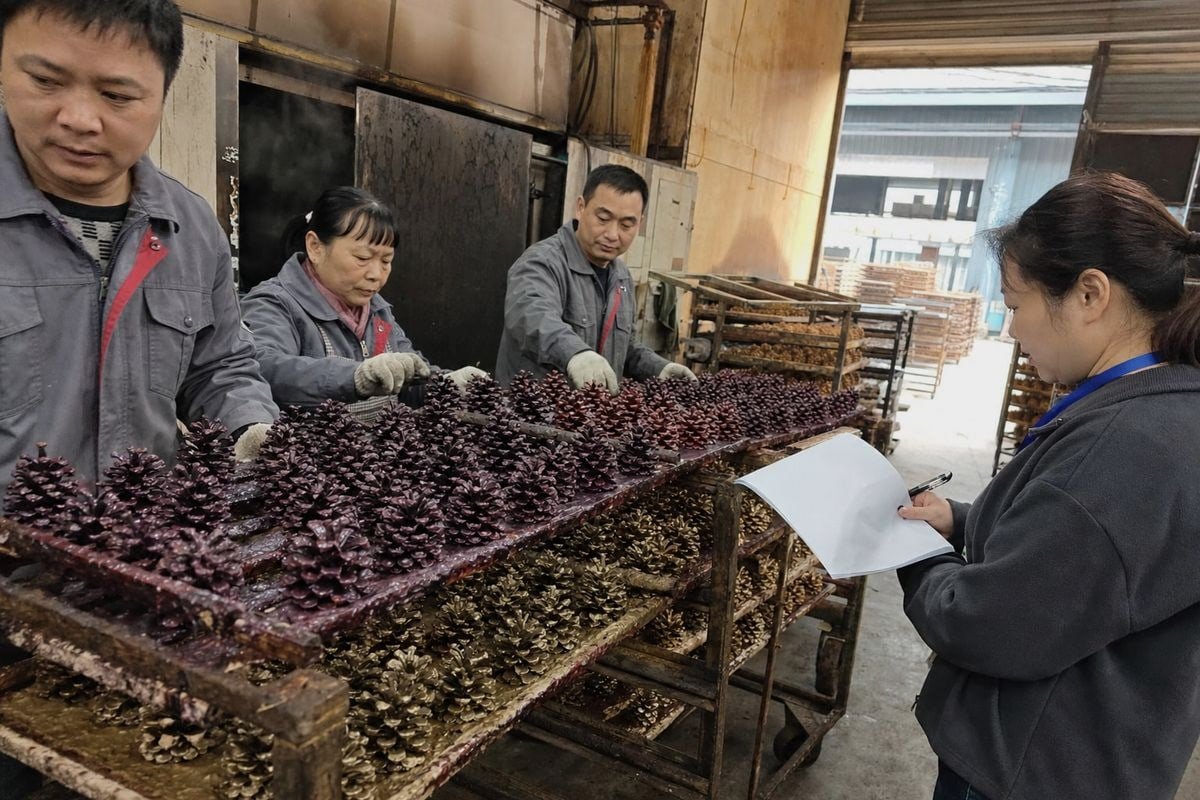
A maioria dos compradores subestima o tempo total de entrega porque contam apenas o trânsito do transportador. Em nossa experiência exportando pinhas de chama colorida para os EUA e Europa há mais de 17 anos, o trânsito é frequentemente a menor parte da cadeia. O tempo total de entrega inclui fila de produção, cura e secagem de pinhas tratadas, inspeção de qualidade, embalagem, coleta de saída, frete marítimo ou terrestre, desembaraço aduaneiro, recebimento e armazenamento. Pular qualquer etapa em seu cálculo e sua data de prateleira desliza.
Trabalhe de trás para frente, não para frente
Comece com a primeira semana em que você espera que a demanda acelere — não a semana em que a demanda atinge o pico. Para decoração de lareiras e mantas, as pesquisas de comércio eletrônico geralmente aumentam antes da demanda nas lojas, porque os compradores reagem ao conteúdo de feriados cedo. A demanda impulsionada por presentes também começa mais cedo do que a demanda de uso de lareiras. Regiões mais frias acendem fogueiras mais cedo, portanto, se você atende a várias zonas climáticas, ancore sua data na mais antiga.
Um exemplo de retro-agendamento para um pico em novembro
| Marco | Cronograma antes da data de prateleira | O que acontece |
|---|---|---|
| Pedido de compra confirmado | 16–18 semanas | Fábrica reserva slot de produção, materiais corantes garantidos |
| Produção + cura concluídas | 11–13 semanas | Pinhas tratadas, secas, inspecionadas, embaladas |
| O frete marítimo 1 parte | 10–12 semanas | Reserva feita cedo para garantir taxas de frete a granel |
| Desembaraço aduaneiro 2 | 4–6 semanas | Documentação e relatórios de teste prontos com antecedência |
| Recebimento no armazém | 3–4 semanas | Rotulagem, código de barras, armazenamento |
| Produto na prateleira / listagem ativa | Semana 0 | Janela de demanda de comprador antecipado abre |
previsão de demanda sazonal 3 deve impulsionar a própria data de prateleira. Aconselhamos os clientes a revisar a venda semanal da temporada passada por SKU, em seguida, definir a data alvo uma a duas semanas antes do primeiro aumento visível da demanda. Pedido no final do verão não é conservador. É simplesmente pontual.
Qual estratégia de divisão de pedidos funciona melhor para equilibrar o fluxo de caixa e o risco de estoque?
O dilema que discuto com mais frequência com gerentes de compras é simples: enviar cedo e pesado para vencer a temporada, ou enviar de forma enxuta para proteger o caixa. Ambos os extremos queimaram compradores que conheço.
Uma estrutura de ondas 60/30/10 funciona melhor: 60% de previsão na Onda 1 para lançamento, 30% na Onda 2 como reposição acionada por vendas e 10% mantidos como reserva para promoções e picos de fim de temporada. Isso equilibra o risco de falta de estoque contra o custo de manutenção e a exposição a descontos.

Deixe-me abordar as duas objeções concorrentes diretamente, porque ouço ambas todas as temporadas. Alguns compradores argumentam que você deve carregar tudo antecipadamente: "Se eu ficar sem estoque em novembro, perco a temporada." Isso é verdade — mas pinhas coloridas são volumosas, sazonais e sensíveis ao tempo. Se a demanda for menor que o esperado, você carrega estoque morto até o próximo inverno, ocupando espaço de armazém e caixa. Outros compradores argumentam por ondas ultra-enxutas para se manterem eficientes em capital. Também razoável — mas uma única reposição atrasada durante o pico significa prateleiras vazias no exato momento em que a conversão é maior. Nenhum extremo vence. O escalonamento vence, pois preserva a flexibilidade enquanto protege os níveis de serviço.
Dividindo por SKU, não apenas por volume
A demanda se fragmenta por tamanho de embalagem e cor. Pequenas sacolas para presentes — o formato que muitos de nossos clientes posicionam como kits de presentes para iniciar fogo — vendem cedo para presentes. Sacolas de recarga maiores e pacotes econômicos vendem mais tarde, quando as lareiras estão em uso regular. Carregue suas cores principais comprovadas e tamanhos de embalagem mais vendidos na Onda 1. Guarde as cores experimentais para a Onda 2, após os dados reais de venda chegarem.
| Onda | Compartilhar | Ação | Conteúdo | Gatilho |
|---|---|---|---|---|
| Onda 1 | ~60% | Estoque de lançamento, chega 3–4 semanas antes do pico | Cores principais, tamanhos de embalagem mais vendidos | Data fixa no calendário |
| Onda 2 | ~30% | Reposição de meio de temporada | Vencedores dos dados da Onda 1, sacolas de recarga | Vendas atingem o ponto de reordenação |
| Onda 3 | ~10% | Estoque de reserva / promocional | Pacotes promocionais, suporte BFCM | Promoção planejada ou pico de canal |
Ajuste a proporção por canal
Contas de atacado precisam de alocações maiores na Onda 1 porque os pedidos de compra de varejo são grandes e inflexíveis. Canais DTC e de marketplace podem operar com estoque mais enxuto na Onda 1, pois seu ciclo de feedback de reposição é mais rápido. Bom feriado gerenciamento de estoque 4 significa que a proporção se flexiona; a lógica da onda não.
Como coordeno as execuções de produção com vários lotes de envio sem atrasar o meu lançamento?
Em nossas linhas de produção em Ningbo, executamos lotes de pinhas coloridas em ciclos escalonados precisamente para que os clientes de várias ondas nunca esperem em uma fila de produção de "cold-start" no meio da temporada. Essa coordenação é planejada no verão, não em outubro.
Coordenar reservando todos os horários de produção antecipadamente ao confirmar a Onda 1, escalonando as execuções com 3–4 semanas de intervalo e pré-aprovando os padrões de qualidade para que lotes posteriores pulem a reamostragem. Confirmar as quantidades da Onda 2 em uma data de decisão fixa, não em uma data em aberto.

A maior causa de atraso no meio da temporada é tratar cada onda como um pedido totalmente novo. Se sua fábrica só souber da Onda 2 quando você a fizer, você entra no final da fila de produção da alta temporada — atrás de todos os outros compradores sazonais. A solução é contratual e operacional ao mesmo tempo.
Reserve capacidade, confirme quantidades depois
Encorajamos os clientes a reservar três horários de produção no PO inicial, com quantidades da Onda 1 fixas e quantidades das Ondas 2-3 ajustáveis dentro de uma faixa acordada até uma data de corte. A fábrica retém os materiais — incluindo os corantes químicos para chamas, que nós fornecemos e testamos com antecedência — e você mantém a flexibilidade de volume. Ambos os lados ganham.
Trave a qualidade uma vez, aplique-a a cada lote
Como executamos controle de qualidade rigoroso de lote para lote sob nosso Sistema ISO 9001 5, a primeira amostra aprovada define todas as execuções posteriores: intensidade da cor da chama, nível de umidade da pinha, acabamento do revestimento e especificação da embalagem. Isso significa que a Onda 2 não precisa de uma nova rodada de amostragem, o que por si só economiza de uma a duas semanas. Peça a qualquer fornecedor esse compromisso por escrito.
Sincronize a cura com a cadência de envio
Pinhas tratadas precisam de cura e secagem adequadas antes da embalagem, e as oscilações de umidade durante o outono podem afetar os produtos acabados. Ciclos de cura em micro-lotes combinados com sua cadência de envio mantêm o produto fluindo sem acumular estoque acabado no armazém. Alinhe sua estratégia de fulfillment pré-temporada com o calendário de cura da fábrica e confirme a embalagem private-label, códigos de barras e etiquetas de advertência para todas as ondas de uma vez — alterações de arte no meio da temporada são um atraso oculto clássico.
Que margem de contingência devo incluir para atrasos alfandegários ou atrasos na fábrica durante a alta demanda?
Uma lição que aprendemos da maneira mais difícil anos atrás: um envio de cliente ficou no porto por onze dias extras devido a uma consulta de documentação sobre regulamentos de envio de materiais combustíveis. Desde então, anexamos relatórios de teste SGS a cada arquivo de exportação.
Crie um buffer de calendário de 2 a 3 semanas entre a chegada planejada e a data de prateleira, mantenha um estoque de segurança de 10 a 15% acima da previsão e mantenha uma janela de buffer de meados de outubro reservada para substituições de danos. Envie a maioria das mercadorias antes dos prazos de feriado da transportadora de meados de novembro.

Os buffers não são um número. Eles são em camadas, e cada camada cobre um modo de falha diferente. Veja como aconselhamos os distribuidores a estruturá-los.
As três camadas de buffer
| Tipo de buffer | Tamanho recomendado | O que protege contra |
|---|---|---|
| Buffer de calendário | 2–3 semanas antes da data de prateleira | Retenções alfandegárias, congestionamento portuário, atrasos de frete |
| Buffer de quantidade | 10–15% acima da previsão | Danos de trânsito, rejeições de controle de qualidade, picos de demanda |
| Janela de substituição | Slot reservado em meados de outubro | Reenvios de mercadorias danificadas sem interromper a Onda 2 |
Por que a alfândega merece atenção especial
Pinhas coloridas são produtos adjacentes ao fogo, portanto, os fiscais alfandegários podem solicitar documentação de conformidade. Embarques apoiados por Marcação CE 6 e relatórios de teste SGS ou Intertek são liberados mais rapidamente porque a papelada responde às perguntas antes que sejam feitas. Preparamos pacotes completos de documentos — relatórios de teste, declarações de materiais, etiquetas de advertência corretamente redigidas — para cada contêiner, porque um certificado ausente pode custar mais tempo do que uma tempestade no mar. Verifique se seu fornecedor pode fazer o mesmo antes de comprometer um pedido de pico de temporada.
Respeite os prazos de corte da transportadora e proteja o produto
As sobretaxas de pico de temporada aumentam e os prazos de feriados da transportadora se apertam a partir de meados de novembro, portanto, agende a maior parte do volume de saída antes desse gargalo. Para trechos domésticos, o frete terrestre mais lento para centros regionais durante as semanas de baixa temporada mantém as taxas de envio em massa gerenciáveis para um produto volumoso e leve, enquanto a logística de entrega de última milha 7 permanece rápida onde os clientes realmente sentem a velocidade. Finalmente, insista em embalagens resistentes à umidade e suportes internos; as pinhas podem fechar, deformar ou ficar quebradiças com as oscilações de temperatura em trânsito, e uma Onda 1 danificada sem uma janela de substituição é um problema que encerra a temporada.
Conclusão
Perder a alta temporada com um SKU sazonal significa esperar um ano inteiro por outra chance. Um cronograma de envio escalonado para pinhas coloridas para lareira remove essa aposta.
Retroceda o cronograma de 14 a 18 semanas a partir da sua data de prateleira. Divida o estoque em ondas de 60/30/10 moldadas por SKU e canal. Reserve todos os horários de produção com antecedência com padrões de qualidade pré-aprovados. Camada seus buffers — tempo de calendário, estoque de segurança e uma janela de substituição — e envie antes que os prazos de corte da transportadora se apertem. Em nossa fábrica na China, construímos esses calendários escalonados com clientes distribuidores todos os verões, apoiados por documentação de conformidade completa e qualidade consistente de lote. Se seu fornecedor atual não puder se comprometer com horários de produção escalonados e papelada pré-aprovada, esse é o primeiro risco a ser corrigido antes do início da próxima temporada.
Notas de rodapé
Fornece uma definição fundamental do principal método de transporte discutido para remessas internacionais. ↩︎
Fonte autoritária explicando o processo regulatório exigido para mercadorias que entram nos Estados Unidos. ↩︎
Explica a metodologia por trás da previsão das necessidades do consumidor para definir cronogramas de envio precisos. ↩︎
Define a prática de negócios mais ampla de controle



 English
  Spanish
  German
  French
  Arabic
  Portuguese
Participe da conversa