






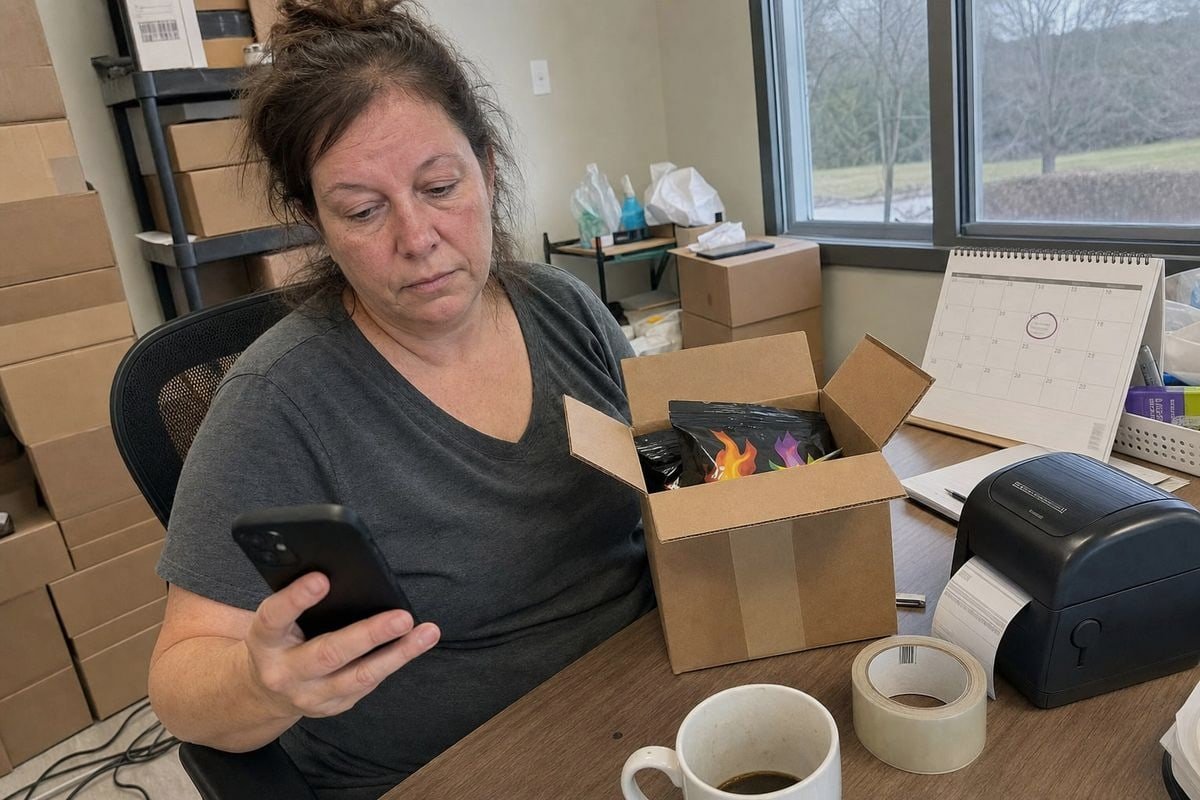
Reporting Magic Fire powder incidents under Canada's CCPSA confuses many FBA sellers 1 who buy from our production line. One missed deadline can trigger recalls, fines, or Amazon suspension. It does not have to.
Under Canada's CCPSA, FBA sellers must report any Magic Fire powder incident involving death, serious injury, or a dangerous defect to Health Canada and their supplier within two days of awareness. Sellers who also import the product must file a detailed written report within ten days.
The rules sound simple, but the details trip people up. Below, I walk through what counts as an incident, the deadlines, the paperwork, and how to work with your supplier.
What Counts as a Reportable Incident Under CCPSA for My Magic Fire Products?
A Canadian distributor once forwarded us a customer email about a flame flash from a color packet. His first question was blunt: does this even count? Good question.
A reportable incident under the CCPSA is any event related to your Magic Fire product that caused, or could reasonably have been expected to cause, death, serious injury, or serious adverse health effects — including defects, dangerous characteristics, or labeling problems that create that level of risk.

The most common mistake I see is sellers assuming only actual hospitalizations count. That is wrong. The CCPSA threshold 2 includes near misses and defect patterns. If a customer reports that a color-flame pouch flared unexpectedly, and that flare could reasonably have caused a serious burn, the event may be reportable even though nobody was hurt.
For a product like magic fire powder, the analysis turns on the product's actual form and use, not its playful name. Our Magic Fire packets are consumer products sold for campfires and fire pits. That places them squarely inside the CCPSA's scope when sold to Canadian consumers.
Incident Types Most Relevant to Color-Flame Powder
| Event Type | Likely Reportable? | Por quê |
|---|---|---|
| Burn injury requiring medical care | Sim | Serious adverse health effect |
| Flash fire or uncontrolled ignition | Sim | Could reasonably cause serious injury |
| Smoke or dust inhalation reaction | Likely yes | Potential serious health effect |
| Property fire from product ignition | Likely yes | Indicates a serious hazard pattern |
| Missing or wrong warning label | Possibly | Defect that creates injury risk |
| Mild complaint about color effect | Não | No serious harm or credible risk |
The Two-Part Test
Ask two questions. First, is the product related to the event? "Related" is broader than "proven cause." Second, did the event meet the harm threshold, or could it reasonably have? If both answers are yes, treat it as reportable. Foreseeable misuse counts too — powder used near children or thrown onto open flames in an unintended way still triggers review.
How Quickly Do I Need to Report a Color-Flame Powder Incident to Health Canada?
Timing is where the trade-off gets sharp. In our export work across Canada, the US, and the EU, I always tell buyers: report fast with partial facts, not late with perfect ones.
You must report a color-flame powder incident to Health Canada, and to the supplier you bought from, within two days of becoming aware of it. If you are also the manufacturer or importer of record, you must file a detailed written report within ten days.

The clock does not start after your internal investigation ends. It starts when you have enough information to decide the event may be reportable. For an FBA seller, that usually means the moment a fire-related complaint lands in Seller Central messages. Do not let a complaint sit in a customer-service queue for a week while someone decides whether it "counts."
Two-Day Report vs. Ten-Day Report
| Característica | Two-Day Report | Ten-Day Report |
|---|---|---|
| Who files it | Manufacturers, importers, and sellers | Manufacturers and importers only |
| Deadline | 2 days from awareness | 10 days from awareness |
| Sent to | Health Canada and your upstream supplier | Health Canada (written report) |
| Conteúdo | All information in your control at that time | Incident analysis, product details, related products, corrective measures |
| Filed via | Health Canada's incident report form or portal | Health Canada, not the U.S. CPSC system |
Here is the FBA trap. Many Amazon sellers ship inventory into Canada themselves, which can make them the importer. In that case, both reports apply. If you are purely a domestic reseller, only the two-day duty applies — but you still must notify the party you sourced from. Amazon handling storage and fulfillment changes nothing. The CCPSA looks at your role in the supply chain, not who packed the box.
One more point: an Amazon safety takedown or refund is not a substitute for a CCPSA filing. Regulators and marketplace systems run on separate tracks. You must satisfy both.
What Documentation Should I Request From My Manufacturer to Support a CCPSA Report?
When we prepare compliance packs at our Ningbo facility, we assume a buyer may one day need every page on a regulator's desk. That assumption should shape what you request upfront.
Request batch and lot records, SGS or Intertek test reports, safety data sheets, ingredient and formulation confirmations, label and warning artwork, production QC records, and certification documents such as ISO 9001 and CE. These files let you complete a CCPSA report quickly and credibly.

Health Canada's incident form 3 asks for facts: what happened, when, injuries or near misses, photos, and online identifiers like the ASIN 4 or product URL. Your own records cover the sale. Your manufacturer's records cover the product. You need both sides ready before an incident, because two days is not enough time to chase documents across time zones.
Documents to Collect Before You Ever Need Them
| Documento | Purpose in a CCPSA Report | Quem o Fornece |
|---|---|---|
| Relatórios de teste de terceiros (SGS/Intertek) | Shows the product met safety benchmarks | Fabricante |
| Safety data sheet and ingredient list | Supports hazard and inhalation analysis | Fabricante |
| Batch/lot production records | Ties the incident unit to a specific run | Fabricante |
| Label and warning artwork files | Answers labeling-defect questions | Manufacturer/brand |
| Certifications (ISO 9001 5, BSCI, CE) | Demonstrates a controlled quality system | Fabricante |
| Distribution history and unit counts | Scopes potential affected inventory | Vendedor |
| ASIN, URL, SKU, and listing screenshots | Required online identifiers | Vendedor |
| Customer statement and photos | Core incident facts | Vendedor |
Build an Intake Checklist Now
Set up an internal template before anything happens. Capture the date, time, and place of the incident. Record the lot number from the pouch or box. Save photos of the product, packaging, and any injury or damage. Note whether medical treatment occurred. Document what you do not know, too. Health Canada expects all information in your control — not a finished investigation. Gaps are acceptable. Silence is not.
Also verify one adjacent issue: whether your powder falls under Transport of Dangerous Goods classification 6. Combustible or pyrotechnic-adjacent products can carry parallel shipping obligations, and your CCPSA filing should not contradict your TDG paperwork.
How Can I Work With My Supplier to Prevent Future Compliance Incidents in Canada?
Seventeen years of shipping color-flame products to 30+ countries taught us one lesson above all: incidents are cheapest to handle before they exist. Prevention beats reporting every time.
Prevent future CCPSA incidents by choosing a certified supplier, locking down formulations and batch QC, aligning warning labels with Canadian requirements, keeping lot traceability on every unit, and agreeing on a joint incident-response protocol with named contacts and 24-hour communication commitments.

Some sellers push back here. They argue that compliance is the manufacturer's problem, and their job is just to sell. I understand the instinct, but Canadian law disagrees. The seller holds the two-day reporting duty regardless of who made the product. That means your supplier relationship is your compliance infrastructure. If your factory cannot produce a test report in 24 hours, you cannot meet a two-day deadline with credible facts.
A Practical Prevention Workflow
- Qualify the factory first. Ask for ISO 9001, BSCI 7, CE, and third-party test reports before the first purchase order. In our experience, buyers who treat certification as a hard requirement rarely face incident surprises later.
- Fix the formulation in writing. Eco-friendly, non-harmful chemistry should be specified in your contract, not assumed. Any formulation change should require your written approval.
- Demand batch-to-batch QC records. The first sample should reflect mass production. Strict batch control is what makes that true.
- Localize labels for Canada. Warnings, instructions, and bilingual requirements belong on the artwork before printing, not after a complaint. A genuine OEM partner will handle custom warning labels and barcodes as part of the packaging build.
- Print lot codes on every pouch. Rastreabilidade turns a potential full recall into a single-batch action.
- Agree on an escalation protocol. Name a compliance contact on both sides. Set a 24-hour response commitment. Designate a Canada-based contact point for Health Canada correspondence.
- Run an annual review. Re-test, re-check labels, and review complaint trends together.
When we develop private-label Magic Fire packets with distributors, this protocol is part of onboarding. It costs a few emails upfront. It saves a crisis later.
Conclusão
CCPSA reporting for Magic Fire powder is manageable: know the incident threshold, hit the two-day and ten-day deadlines, keep documentation ready, and partner with a certified, traceable manufacturer.
Notas de rodapé
1. Background explanation of the Fulfillment by Amazon model central to the article's audience. ↩︎
2. Official Health Canada page explains the statutory basis for CCPSA reporting thresholds. ↩︎
3. Links readers to the government body that administers CCPSA incident reporting. ↩︎
4. Background reference explaining the Amazon product identifier mentioned in the report. ↩︎
5. Official ISO page defining the quality management standard referenced for supplier qualification. ↩︎
6. Transport Canada's official program page for the shipping classification mentioned in the article. ↩︎
7. Authoritative source on the BSCI social compliance initiative used as a supplier vetting criterion. ↩︎



 English
  Spanish
  German
  French
  Arabic
  Portuguese
Participe da conversa