







Wood fire starter VOC compliance in Canada trips up many importers CEPA 1999 1. I have watched buyers lose whole containers at customs because our competitors handed them paperwork that could not survive one ECCC question. It hurts.
To verify wood fire starter VOC compliance with Canada's 0.02 kg standard, request an ISO/IEC 17025-accredited lab report stating VOC mass per kilogram of product, confirm the test method matches Canada's SOR/2009-264 guidance, verify product classification, and audit batch consistency against the original tested sample.
That is the short answer. Now let me walk you through each step in detail, based on what we actually prepare for our Canadian buyers.
What documents should I request to confirm VOC test results meet Canada's 0.02 kg standard?
A Canadian distributor once emailed our compliance team a single question: "Can you defend this number in an audit?" That question changed how we build every document package for wax-dipped wood fire starters.
Request an ISO/IEC 17025-accredited lab test report, a Certificate of Analysis per batch, the full product formulation sheet, raw material SDS documents, the classification rationale, and a signed supplier declaration confirming the VOC result applies to the exact SKU you are importing.

Canada's federal framework works differently from what many buyers expect. The Compostos Orgânicos Voláteis 2 Concentration Limits for Certain Products Regulations, enforced under CEPA 1999 3, do not require you to file routine test reports with the government. But that is a trap, not a relief. The burden of proof sits entirely on you, the regulated party. If Environment and Climate Change Canada (ECCC) tests your product and it fails, "my supplier said it was fine" is not a defense.
So your document file must be complete before the goods ship. Here is the checklist I recommend, and the one we prepare for our own Canadian orders.
O conjunto de documentos principal
| Documento | O que deve mostrar | Quem o fornece |
|---|---|---|
| Accredited lab report | VOC result, method used, lab accreditation number | ISO/IEC 17025 lab |
| Certificado de Análise (COA) | VOC result tied to a specific production batch | Factory or lab |
| Formulation sheet | Exact wax, binder, and fiber percentages | Fábrica |
| Raw material SDS | VOC content of paraffin, resin, or wax inputs | Material suppliers |
| Classification rationale | Why the product is (or is not) a charcoal lighter product | Factory + your compliance advisor |
| Declaração do fornecedor | Confirmation the tested sample matches the shipped SKU | Factory, signed |
One important nuance many buyers miss: classification matters as much as the number itself. Under the federal schedule, wood kindling that ignites through naturally occurring sap or resin can be excluded from the charcoal lighter category entirely. A manufactured, wax-based fire starter designed to ignite charcoal is a different regulatory animal. Your document file should state clearly which category your product falls into and why. If you cannot answer that question, no lab report will save you.
Also verify units. Some reports state VOC as a percentage, some as grams per liter, some as mass per ignition. Ask the lab to express the result in the same units as the applicable Canadian limit, so there is no room for interpretation at the border.
Which certifications or lab reports prove my wood fire starter supplier is compliant?
Buyers often ask us whether our ISO 9001 4 certificate proves VOC compliance. My honest answer, after 17 years of exporting fire-starting goods to 30+ countries, is no — and any supplier who says otherwise is cutting corners.
Only a VOC test report from an ISO/IEC 17025-accredited laboratory proves the product itself complies. Supporting certifications like ISO 9001, BSCI, and third-party audits from SGS or Intertek prove the supplier can produce that compliant product consistently.

There are two layers of proof, and you need both. Confusing them is the single most common mistake I see purchasing managers make.
Layer one: product-level proof
Canada's federal guidance is explicit. Compliance determinations must come from a laboratory accredited to ISO/IEC 17025 (or under Quebec's equivalent accreditation framework). For charcoal lighter material, the guidance points to the South Coast AQMD Rule 1174 5 Ignition Method protocol as the test method. For VOC content of wax and binder inputs, labs commonly use US EPA Method 24 or ASTM D2369 6. When you receive a report, check three things: the lab's accreditation number, the method cited, and whether the tested sample matches your production formulation.
Layer two: supplier-level proof
A single lab report is a snapshot. It tells you nothing about batch 40, produced eight months later. That is where system certifications matter.
| Certificado | O que realmente prova | O que NÃO prova |
|---|---|---|
| ISO/IEC 17025 lab report | The tested sample met the VOC limit | Future batches will match |
| ISO 9001 | Sistema de gestão de qualidade existente | Any specific VOC result |
| Auditoria BSCI | Ethical, audited factory operations | Product-level compliance |
| SGS / Intertek testing | Verificação independente por terceiros | Coverage of untested SKUs |
At our plant in Ningbo, we hold ISO 9001 and BSCI, and we run SGS and Intertek testing on our wood fire starters precisely because our EU and North American buyers treat this two-layer structure as a hard requirement. Ask your supplier for both layers. If they can only show one, you are carrying the missing risk yourself.
How do I verify that a factory's mass-production batches match the original VOC test sample?
The riskiest moment in any fire starter program is not the first sample — it is batch number twenty. Our own batch QC process was built after we saw how much a small paraffin dosage drift can change a finished product.
Verify batch consistency by requiring documented formulation lock, wax-uptake weight checks on every production lot, batch-coded Certificates of Analysis, periodic re-testing at an accredited lab, and traceability records linking each shipped carton back to its production batch.

Here is why this matters for VOC specifically. In a typical wax-dipped wood fire starter — say 50% wood fiber and 50% paraffin, like the composition printed on many retail boxes — the VOC contribution comes almost entirely from the wax and any added binders or fragrance. If the dipping line runs hotter one week, the rolls absorb more wax. The product weight shifts. The VOC mass per kilogram shifts with it. The original test report, run on a lighter sample, no longer represents what is in the container.
Um processo de verificação prático
- Lock the formulation in writing. The supplier signs a spec sheet stating exact material ratios and tolerances. Any change requires your written approval and triggers re-testing.
- Check wax uptake per lot. Weigh a sample of finished pieces from every batch. Wax uptake outside tolerance means the batch is quarantined.
- Demand batch-coded COAs. Every lot gets a batch number printed on cartons, and each COA references that number.
- Re-test on a schedule. Send a random production sample to an accredited lab annually, or whenever materials, suppliers, or processes change.
- Audit traceability. Ask your supplier to trace a random carton from your last shipment back to its raw material lots. If they cannot do it in a day, the system is theater.
On our production lines in Ningbo, we weigh dipped rolls at set intervals and log the results against the locked spec, because our whole promise to buyers is that the first sample reliably reflects mass production. Digital batch tracking also makes retailer audits far faster — large sourcing channels increasingly ask for lot-level compliance retrieval, not just a one-time certificate.
What steps can I take to avoid customs delays or import bans due to VOC non-compliance?
Years ago, a European client of ours had a shipment of fire products held for three weeks over a labeling question — not even a test failure. That experience taught me that customs problems are usually documentation problems, not chemistry problems.
Prevent customs delays by classifying the product correctly before shipping, keeping the full compliance file ready for inspection, aligning labels and instructions with the tested condition, building a VOC safety margin into the formulation, and confirming Canadian requirements separately from US rules.
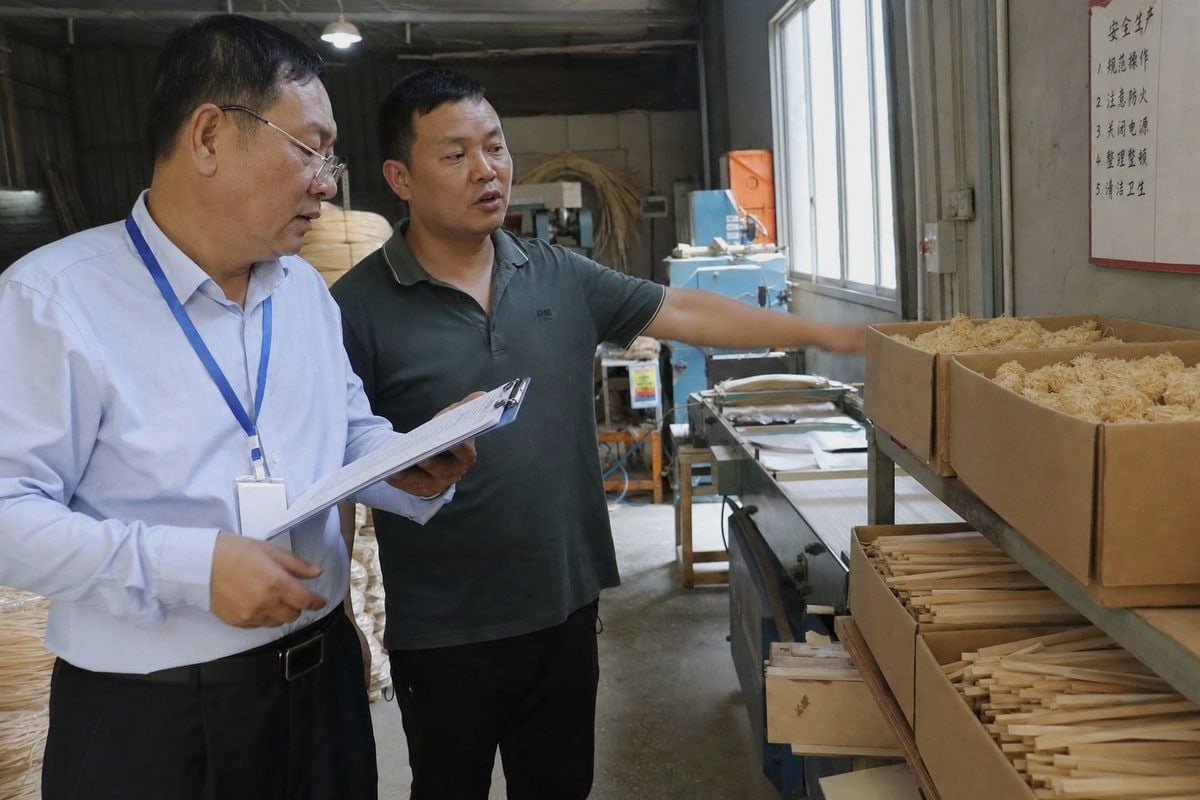
Think of this as building layers of protection, from formulation to paperwork to border readiness.
Get the classification right first
The most expensive mistake is shipping under the wrong category. A "natural wood fire starter" that is actually a manufactured, wax-based product may be scrutinized as a charcoal lighter product, which carries an emission-per-ignition limit under the federal schedule. Genuine wood kindling relying on natural sap or resin can be excluded. Document your classification decision before the goods leave the factory, and make sure your customs broker, invoices, and labels all tell the same story. Inconsistent descriptions across documents are a classic inspection trigger.
Build in a margin, not a pass
Formulating to sit exactly at the limit is gambling. Lab-to-lab variance, batch drift, and possible future tightening of limits under CEPA's review cycles all argue for headroom. If your target is a concentration-based threshold, aim comfortably below it. Low-VOC inputs — compressed sawdust, beeswax, or soy-wax binders — give you that margin by design. We take the same margin-first approach with our own eco-friendly formulations, because reformulating after a failed enforcement test costs far more than doing it right upfront.
Pre-shipment risk checklist
| Risco | Etapa de prevenção | Quando fazer |
|---|---|---|
| Wrong product classification | Written classification rationale | Before first order |
| Failed enforcement test | Accredited pre-shipment testing | Before each new formulation ships |
| Label/instruction mismatch | Test product as used, per its own instructions | At sample approval |
| Batch drift | Lot-level COAs and weight checks | Cada lote de produção |
| Cross-border confusion | Separate US and Canada compliance files | At market entry |
One final point: US EPA and California rules 7 for similar categories differ from Canada's federal limits. Do not assume a US-compliant file automatically satisfies ECCC. Run each market as its own verification exercise.
Conclusão
Weak paperwork sinks shipments; chemistry rarely does. Classify correctly, test at accredited labs, lock formulations, track batches, and keep a defensible file — that is how wood fire starter VOC compliance survives any Canadian audit.
Notas de rodapé
1. Official legislation text for the federal act enforcing Canada's VOC concentration limits. ↩︎
2. Background concept explaining the chemical class regulated under Canada's compliance limits. ↩︎
3. Links to the official Canadian Environmental Protection Act text underlying VOC enforcement. ↩︎
4. Official standard reference for the quality management certification discussed as supplier-level proof. ↩︎
5. Background on the agency whose ignition test method is cited for charcoal lighter products. ↩︎
6. Official ASTM standard page for the alternative VOC content test method mentioned. ↩︎
7. Provides authoritative source for California's separate VOC regulatory framework referenced here. ↩︎


 English
  Spanish
  German
  French
  Arabic
  Portuguese
Participe da conversa