






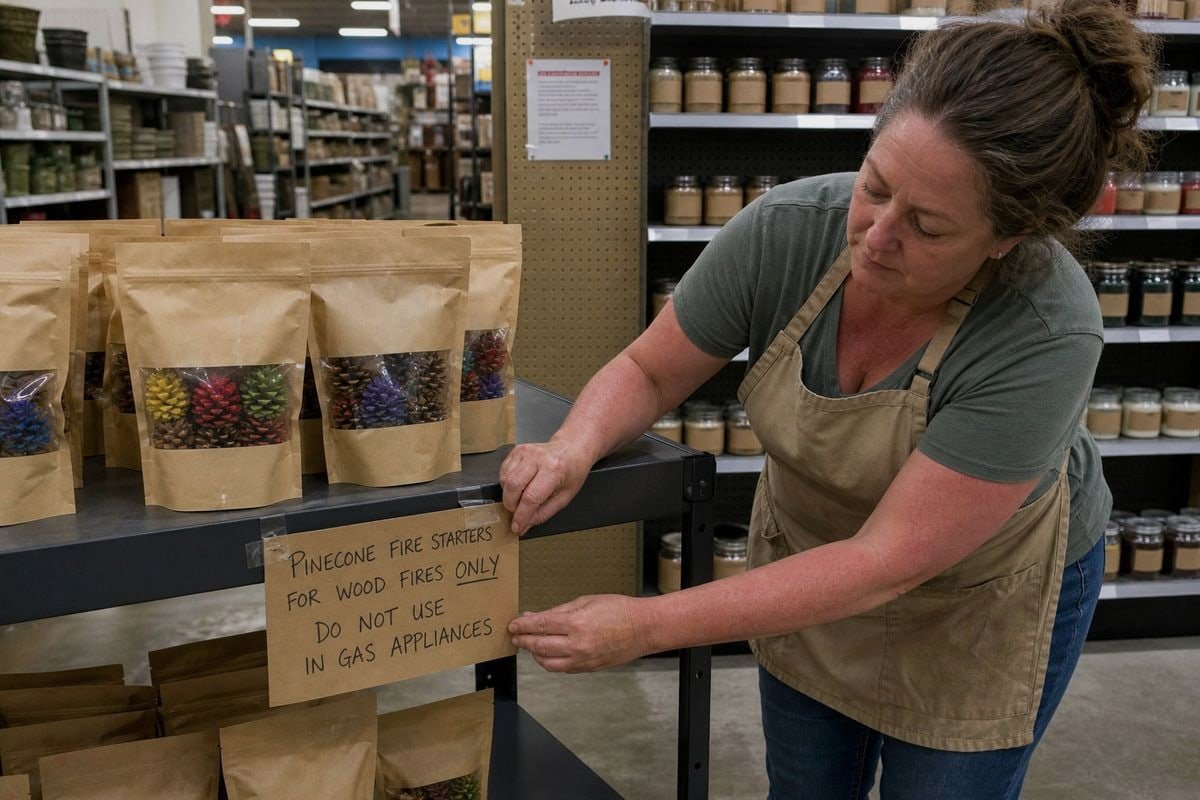
A safe in-store display for color-changing fireplace pine cones can make or break your season corantes de sal metálico 1. On our production line, we have seen great products fail at retail because the display invited misuse.
A safe in-store display for color-changing fireplace pine cones needs verified certifications (CE, SGS, FHSA labeling), non-combustible fixtures, sealed moisture-proof packaging, clear consumer warning signage stating wood-fires-only restrictions, and manufacturer-supplied custom display packaging that fits your shelf space and brand.
Shoppers see pretty pine cones and think décor. You are selling a chemical-treated fire accessory. The gap between those two ideas is where liability lives. Let me walk you through how to close that gap, one display decision at a time.
What certifications should I check before approving a display design for retail safety compliance?
During a factory audit last year, a German buyer asked us for every test report tied to a single pallet of color-flame pinecones. That level of scrutiny is now the norm, and your display design should be built on the same paper trail.
Before approving a display, verify the product carries CE marking, SGS or Intertek test reports, and FHSA-compliant hazard labeling. Confirm the supplier holds ISO 9001 and BSCI certifications, check California Proposition 65 disclosure needs, and ensure display fixtures meet NFPA 101 and OSHA combustible-material limits.

Certification is not a nice-to-have for this category. It is a hard gate. In our 17 years exporting color-flame products to the US, Germany, the UK, and 30+ other markets, we have never seen a serious retail chain approve a fire-accessory display without a full compliance file behind it. So build your checklist in two layers: the product itself, and the display environment around it.
Product-Level Certifications
Start with the paperwork attached to the pine cones. Ask your supplier for third-party test reports from SGS ou Intertek 2. These reports confirm that the metal salt colorants used in the cones burn without releasing regulated toxins. Then check the factory's system certifications. ISO 9001 tells you their quality process is audited. BSCI tells you their labor practices are audited. Both matter when a fire marshal inspection or a customer complaint puts your sourcing under a microscope.
Display-Level Compliance
The fixture itself must also comply. NFPA 101 3 and OSHA rules limit the volume and density of materiais combustíveis 4 in retail sales areas. Point-of-purchase display compliance means your cardboard shipper, header card, and shelf trays all count toward that combustible load.
| Item de Conformidade | O que Cobre | Quem Solicita |
|---|---|---|
| Marcação CE | Conformidade de segurança do produto da UE | EU importers, customs |
| Relatório SGS / Intertek | Chemical and burn testing | Retail buyers, insurers |
| FHSA labeling | US hazard warning requirements | US regulators, legal teams |
| Prop 65 | Divulgação química da Califórnia | CA retailers |
| ISO 9001 / BSCI | Factory quality and ethics | Chain-store sourcing teams |
| NFPA 101 / OSHA | In-store fixture and egress rules | Fire marshal, store ops |
One more practical tip from our export experience: request the chemical safety data sheets 5 before you sign off on anything. Your store staff may never read them, but your insurer and your legal counsel will want them on file. We supply SDS documentation with every export shipment for exactly this reason.
How can I choose display materials and packaging that keep my pinecones safe from moisture and fire risk on the shelf?
Humidity is the quiet enemy here. We once tested retail packaging in a Ningbo warehouse through a wet summer, and the results changed how we spec every pouch, jar, and kraft bag we produce today.
Choose non-combustible fixture materials such as powder-coated steel or tempered glass, and pack the cones in sealed, resealable, moisture-barrier packaging like lined kraft pouches or plastic jars. Keep displays at moderate height, away from heat sources, with no open bins or loose product.
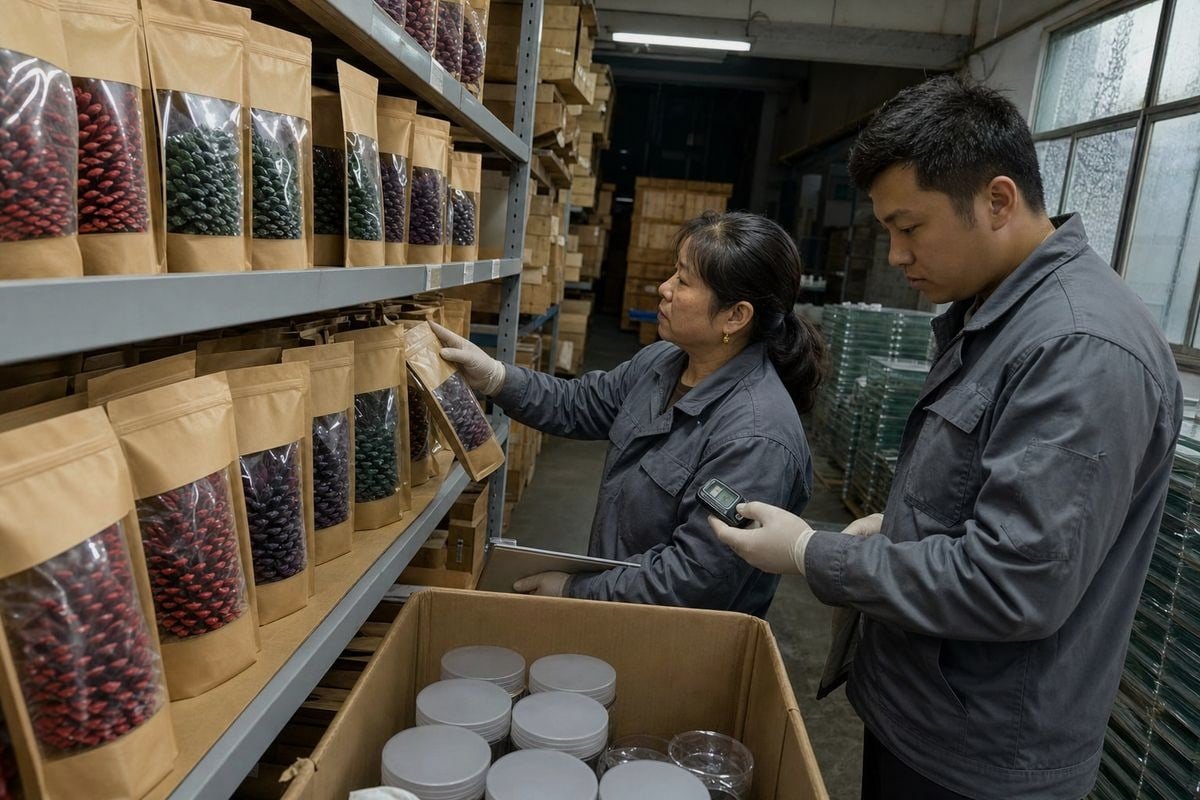
The display problem splits into two risks that pull in different directions. Moisture degrades the colorant treatment and can cause chemical leaching. Fire risk comes from the display materials themselves. Your job is to solve both without making the product look like a hazardous waste drum. That balance is achievable, and it starts with the fixture.
Fixture Materials That Reduce Fire Risk
Avoid untreated wood crates, straw filler, and raffia. They look rustic, but they read as kindling to a fire marshal and they add combustible load. Powder-coated steel racks, tempered glass shelving 6, and stone or ceramic bases give you the same warm seasonal feel with far better visual merchandising safety. Also skip faux flames, candles, and any heated props near the display. If you want to show the rainbow-flame effect, use an LED simulator or a printed hearth image instead of anything that generates heat.
Packaging That Blocks Moisture and Contact
Sealed primary packaging solves three problems at once. It blocks humidity, it prevents shoppers from touching chemical-treated surfaces, and it contains loose debris. On our lines, we produce three main formats for this product, and each suits a different retail setting.
| Formato da Embalagem | Proteção contra Umidade | Best Retail Setting |
|---|---|---|
| Lined kraft stand-up pouch with resealable zip | 1 x 20 pés ou 40 pés | Varejo de atividades ao ar livre e camping |
| Plastic jar with screw lid | Muito alta | Lojas de lareira e aquecimento |
| Burlap sack with inner poly liner | Moderado | Gift shops, artisanal displays |
A word on armazenamento de sólidos inflamáveis: keep backstock in a cool, dry area away from electrical panels, and never stack open cartons on the sales floor. If you want a tactile element, use a sealed-sample station — one cone encased in a clear acrylic box. Shoppers get the sensory moment. Your product stays dry, sealed, and safe.
What warning labels and signage do I need to include to protect my store from liability issues?
A UK distributor once returned a signage proof to us with one blunt note: "Where does it say NOT for cooking?" That single question reshaped our entire warning-label template, and it should shape yours too.
Include FHSA-mandated hazard labeling on each unit, plus shelf signage stating: wood-burning fireplaces and campfires only; never gas fireplaces, BBQ grills, or cooking fires; burn one color at a time; keep away from children and pets; and read manufacturer instructions before use.

Here is the tension you need to resolve. Marketing language sells "magical rainbow flames." Safety language restricts use. Some retailers worry that strong warnings will kill the fun and hurt sales. In our experience across the US and European markets, the opposite is true. Clear consumer warning signage builds purchase confidence, because the shopper understands exactly what they are buying and how to use it. A display that hides the hazards is the one that generates returns, complaints, and legal exposure.
The Two Layers of Warning Communication
Layer one is hazardous material labeling on the package itself. This is regulatory. FHSA cautionary statements, Prop 65 disclosure 7 where required, and first-aid instructions belong on every unit. We print these directly onto private-label packaging for our buyers so nothing depends on a store-applied sticker that can fall off.
Layer two is point-of-sale signage. This is where you educate. Use large icons and short copy. Here is proven shelf-talker language we recommend to our distribution partners:
- For use in wood-burning fireplaces and campfires only
- Não usar in gas fireplaces, BBQ grills, or cooking fires
- Burn one color at a time — do not mix batches
- Keep away from children and pets
- Follow the manufacturer's instructions before use
Smart Additions That Strengthen Your Position
Add a QR code on the display header linking to a safety video and the chemical safety data sheets. It costs almost nothing and it documents that safety information was available at the point of sale. Also place the product in the hearth-accessories category, not among seasonal ornaments or children's items. Category placement is itself a form of warning. It tells the shopper: this is a fire consumable, not a craft supply. If your market has strong DIY interest in homemade color cones, a "commercially tested — never attempt homemade chemical treatments" line further separates your product from unsafe experimentation.
How do I work with my manufacturer to get custom display packaging that fits my brand and shelf space?
Every autumn, our OEM team in Liuyang fields the same request from new buyers: "Can you match our brand and still fit a 12-inch shelf?" The answer is yes, but the process works best when you follow a clear sequence.
Send your manufacturer exact shelf dimensions, brand guidelines, and target market regulations first. Then request pre-production samples of custom pouches, jars, or display shippers with integrated warning labels and barcodes. Approve printed proofs and a physical sample before committing to mass production.
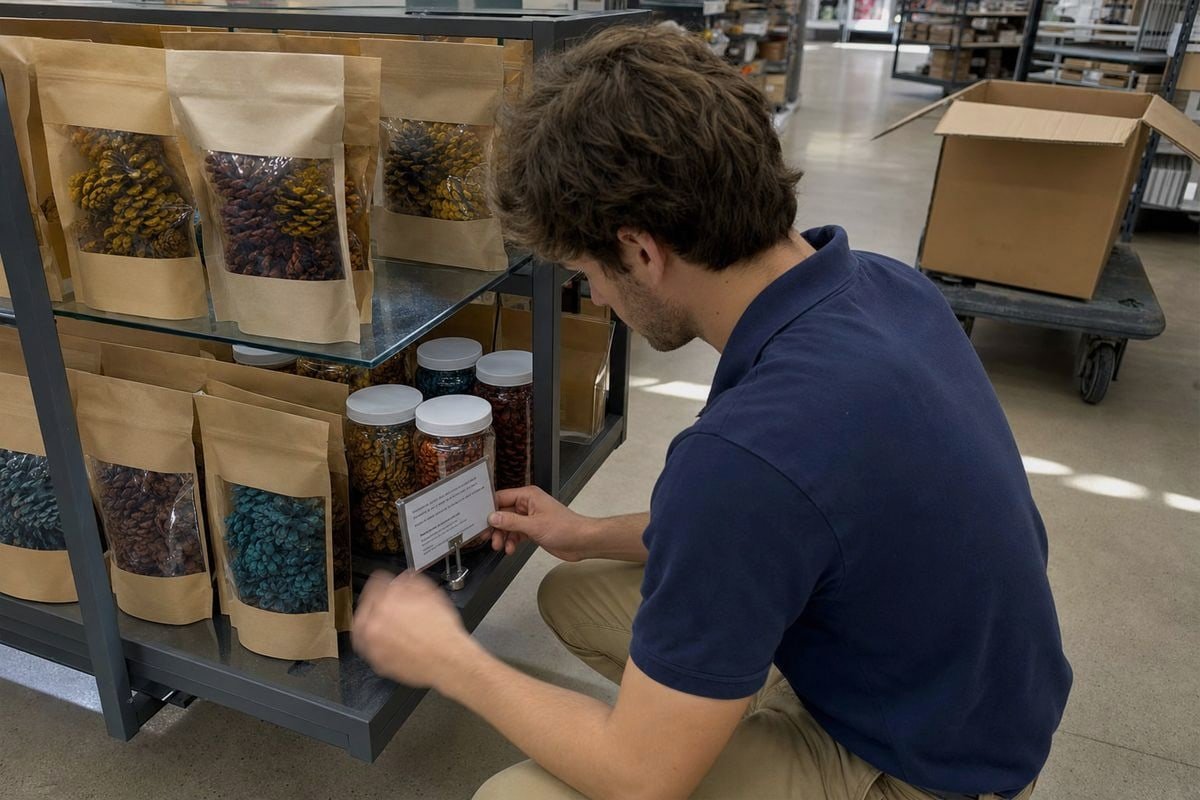
One-stop OEM/ODM is where a real factory separates itself from a trading company. When you work directly with the production source, the display packaging, the warning labels, the barcodes, and the product itself all come from one controlled process. That means the compliance file matches the physical goods, batch after batch. When a middleman assembles these pieces from different suppliers, small mismatches creep in — and those mismatches are what fail audits.
A Practical Collaboration Sequence
Follow these steps and the project stays on schedule:
- Share your constraints first. Shelf height, footprint, planogram position, and target market (US FHSA rules differ from EU CE requirements).
- Choose a packaging platform. Stand-up kraft pouch for camping channels, jars for hearth retailers, burlap-style sacks for gift traders. We produce all three, so the choice follows your channel, not our limitations.
- Lock in the compliance elements. Warning copy, hazard icons, barcodes, and Prop 65 text get embedded in the artwork, not added later.
- Review a pre-production sample. With complete production lines and strict batch-to-batch quality control, the first sample should reliably reflect mass-production quality. If a supplier's sample and bulk shipment differ, walk away.
- Confirm logistics. Display shippers should be palletized for your DC and rated for the humidity of ocean freight.
What Customization Typically Covers
| Custom Element | Typical Options | Por que é importante |
|---|---|---|
| Tamanho da embalagem | Single cones to 5 lb bag formats | Matches price point and channel |
| Burn time / effect | Color mix, burn duration | Differentiates your brand |
| Packaging type | Pouch, jar, kraft bag, sack | Fits shelf and brand aesthetic |
| Display shipper | Counter unit, floor stand, PDQ tray | Fits your exact shelf space |
| Rotulagem | Private label, warnings, barcodes | Compliance plus brand ownership |
For trial orders, ask about flexible MOQs. A reasonable factory will let you test a display concept 8 in a limited store set before you commit to a full seasonal program. We structure orders this way for new distribution partners because a display that performs in ten stores is a much safer bet to scale into hundreds. Child-resistant packaging options are also worth discussing early if your market or insurer requires them, since they affect tooling and lead time.
Conclusão
A safe in-store display for color-changing fireplace pine cones turns novelty into informed confidence. Verify certifications, seal the packaging, warn clearly, and partner with a factory that builds compliance in from the start.
Notas de rodapé
1. Explains the chemical basis for the color-changing effect in fire products. ↩︎
2. Verifies third-party testing bodies referenced for chemical and burn safety compliance. ↩︎
3. References the official life safety code limiting combustible materials in retail areas. ↩︎
4. Official standard for life safety and fire protection in commercial buildings. ↩︎
5. Official OSHA resource for understanding and managing chemical safety documentation. ↩︎
6. Technical overview of the safety properties and manufacturing of tempered glass. ↩︎
7. Official California government resource for Proposition 65 warning requirements and compliance. ↩︎
8. Overview of visual merchandising strategies used to engage customers and drive retail sales. ↩︎



 English
  Spanish
  German
  French
  Arabic
  Portuguese
Participe da conversa