






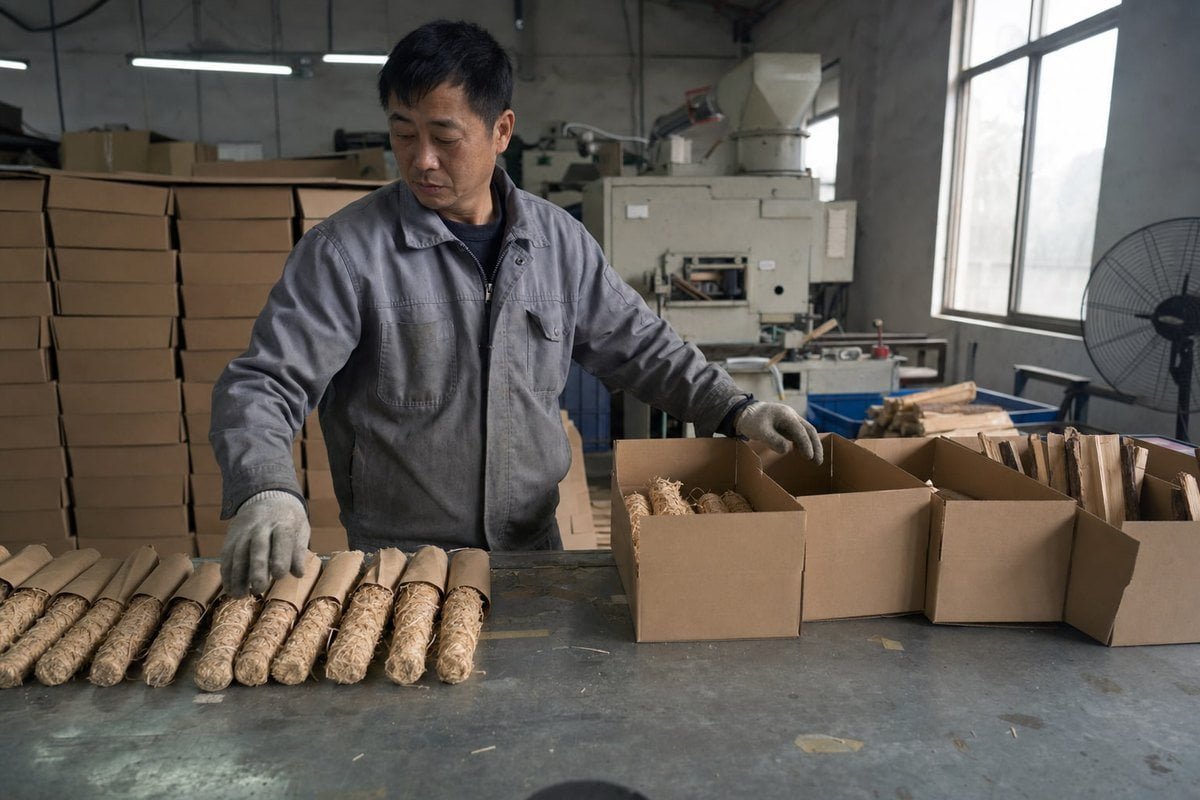
Os níveis de preços de varejo para acendedores de lenha individuais vs. multiembalagens podem silenciosamente matar suas margens Auditoria BSCI 1. Observei compradores em nossa linha de produção errarem isso por anos — precificando cada tamanho de embalagem da mesma forma, vendo as prateleiras pararem e, em seguida, culpando o produto em vez da escada de preços. A solução é mais simples do que a maioria dos importadores pensa.
Projete níveis de preços de varejo em torno do custo por fogo, não do preço do pacote. Preço do pacote único para teste de baixa fricção com uma porcentagem de margem mais alta, e dê aos pacotes múltiplos um valor por unidade visivelmente melhor — tipicamente 15–30% menor custo unitário — enquanto protege um piso mínimo de margem bruta em todos os níveis.
Abaixo, divido isso em quatro perguntas práticas. Cada uma cobre uma decisão que você enfrentará ao construir sua linha de embalagens. Vamos começar com a matemática.
Como calculo as margens de lucro para acendedores de fogo a lenha de unidade única versus embalagem a granel?
Durante uma revisão de custos com um distribuidor alemão no inverno passado, descobrimos que sua caixa de 100 unidades estava, na verdade, gerando menos lucro bruto por espaço de prateleira do que sua embalagem de 6 unidades. Isso o surpreendeu. Nossa fábrica vê esse padrão com frequência quando os compradores pulam uma análise adequada de preço por unidade.
Calcule a margem por nível dividindo (preço de varejo - custo de chegada) pelo preço de varejo para cada tamanho de embalagem. Embalagens individuais devem ter margem bruta de 50–60% para financiar a experimentação e a demanda por impulso; embalagens a granel podem ter 35–45% porque vencem em volume e valor médio do pedido.

O erro principal é tratar a porcentagem de margem como o único número que importa. Não é. Você precisa de três números para cada nível: porcentagem de margem, lucro absoluto por unidade e custo por ignição para o comprador. Quando os três se alinham, a escada funciona.
Comece com o custo de chegada, não com o preço FOB
Seu custo real inclui o produto, embalagem, frete de entrada, impostos e armazenamento. Rolos de madeira mergulhados em cera como os nossos são densos e embalam eficientemente, então o frete por unidade cai acentuadamente em quantidades de caixa e palete. Isso significa que sua embalagem a granel geralmente tem um custo menor custo de chegada 2 por acendedor do que sua embalagem individual — antes mesmo de você definir um preço de varejo.
Um exemplo prático
Aqui está um modelo simplificado que compartilho com compradores que estão construindo sua primeira modelo de precificação em níveis:
| Nível | Tamanho da Embalagem | Custo de Chegada/Embalagem | Preço de Varejo | Margem Bruta 3 | Custo por Ignição (Comprador) |
|---|---|---|---|---|---|
| Teste | Embalagem de 6 unidades | $1.20 | $3.99 | 70% | $0.67 |
| Padrão | 24-pacote | $4.00 | $9.99 | 60% | $0.42 |
| Valor | Embalagem de 60 unidades | $9.00 | $19.99 | 55% | $0.33 |
| A granel | 100-pacote | $13.50 | $29.99 | 55% | $0.30 |
Observe o formato. A porcentagem de margem diminui suavemente à medida que o tamanho da embalagem aumenta, mas o lucro absoluto por embalagem aumenta. Enquanto isso, o custo por ignição do comprador cai a cada passo, que é a história de economia visível que impulsiona a atualização. Esta é uma estratégia saudável de desconto por volume: todos ganham algo e nenhum nível se canibaliza.
Mais uma regra que insisto: defina um piso de margem — digamos 50% — e nunca deixe uma promoção quebrá-lo no nível a granel. A embalagem a granel é o seu motor de lucro, não o seu produto de lançamento com prejuízo.
Que opções de embalagem e MOQ devo oferecer para suportar níveis de preços flexíveis?
A embalagem é onde vejo a maior lacuna entre o que os compradores planejam e o que realmente é enviado. Em nossa fábrica em Ningbo, produzimos de tudo, desde mangas de teste de kraft até caixas com alça de 200 unidades, então posso dizer exatamente onde a otimização de custos de embalagem cria ou destrói um nível.
Ofereça pelo menos três formatos de embalagem: uma manga ou bolsa de baixo custo para embalagens de teste, uma caixa pronta para prateleira ou bandeja PDQ para embalagens de nível médio e uma caixa com alça ou saco de recarga para granel. Defina os MOQs de embalagens de teste baixos o suficiente para que os varejistas possam testar a venda sem risco de estoque elevado.
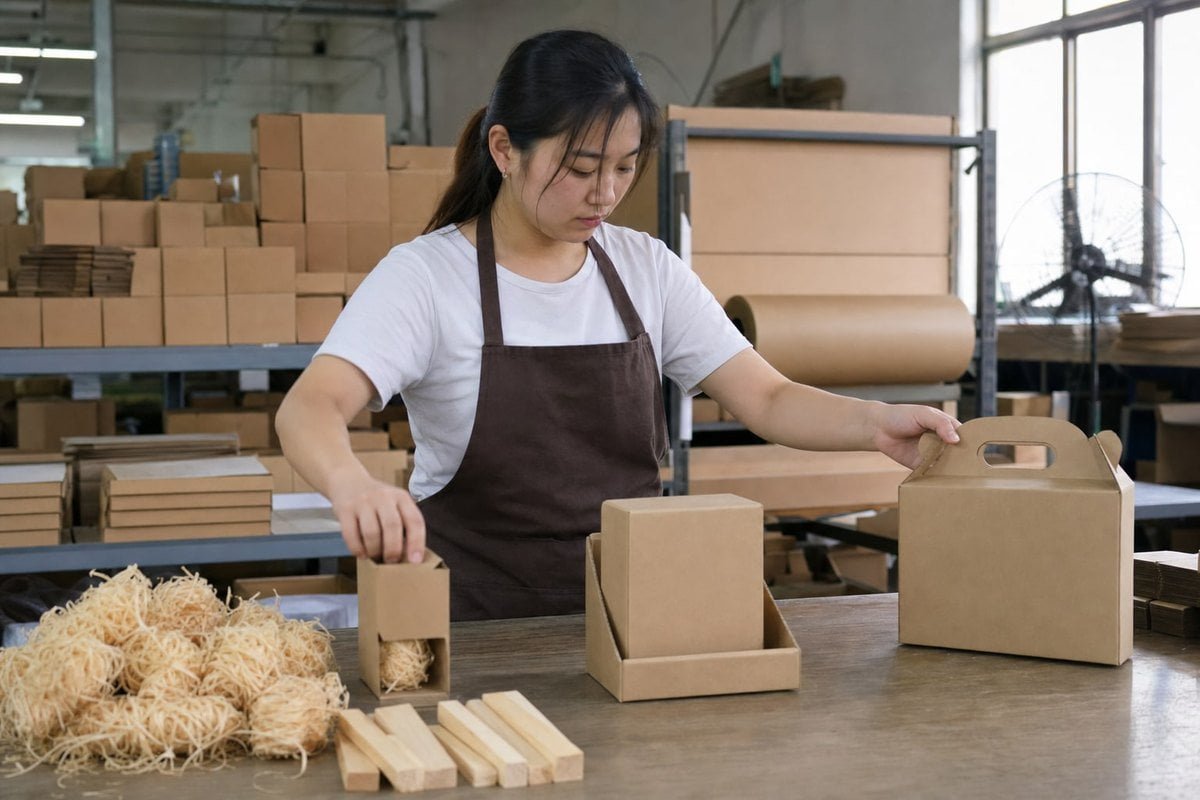
A embalagem nunca deve custar mais do que o nível pode absorver. Uma embalagem de teste com um preço de varejo de R$ 3,99 não pode carregar uma caixa impressa rígida com uma janela — a embalagem sozinha comeria a margem. Mas uma embalagem a granel de R$ 29,99 pode carregar uma caixa resistente com alça que também serve como armazenamento, e os compradores veem isso como valor agregado.
Combine o formato com a função do nível
Cada tamanho de embalagem faz um trabalho diferente no varejo, e a embalagem deve sinalizar claramente esse trabalho:
| Nível | Melhor Formato de Embalagem | Por que Funciona | Abordagem Típica de MOQ |
|---|---|---|---|
| Teste / individual | Manga de kraft, bolsa pequena | Barato, fica no caixa, convida ao impulso | MOQ baixo, amigável para caixas mistas |
| Embalagem intermediária | Caixa impressa em bandeja de exibição PDQ | Pronto para prateleira, forte superfície de marca | MOQ de caixa padrão |
| Pacote econômico | Caixa com alça | Portátil, parece substancial, adequado para presentes | Mínimos de meio palete |
| Refil / eco | Bolsa a granel mínima ou envoltório de papel | Apelo de desperdício zero para compradores recorrentes | Preços em nível de palete |
Por que a flexibilidade do MOQ é mais importante do que os compradores admitem
Gerentes de compras nos dizem a mesma coisa repetidamente: eles querem testar um novo SKU antes de se comprometerem com um contêiner. Então nós estruturamos os MOQs por nível. Embalagens de tamanho de teste são executadas em slots de produção compartilhados, o que permite que um distribuidor peça uma primeira tiragem modesta de unidades individuais ao lado de um pedido maior de embalagem a granel. Assim que os dados de sell-through chegam, eles escalam o nível vencedor.
O nível de refil merece menção especial. Uma bolsa de refil sem desperdício em embalagem ecológica mínima custa menos para produzir e atrai seus compradores mais frequentes. Também protege seus níveis de marca contra preços de corrida para o fundo, porque o refil é claramente uma proposta diferente, não um desconto no mesmo produto.
Como a marca própria afeta minha estratégia de precificação para diferentes tamanhos de embalagem?
Uma marca de lareiras do Reino Unido nos pediu uma vez para produzir rolos de madeira idênticos mergulhados em cera sob dois rótulos — um premium, um de valor. Mesmo produto, duas escadas de preços. O exercício me ensinou mais sobre precificação de marca própria do que qualquer planilha jamais fez.
A marca própria permite capturar margem que, de outra forma, iria para uma marca nacional, adicionando tipicamente 10–20 pontos de margem de precificação. Níveis premium justificam alegações ecológicas e garantias de confiabilidade; níveis de valor competem por custo por fogo. O tamanho da embalagem determina qual história o rótulo deve contar.
A marca própria muda a questão do preço de "quanto o mercado cobra?" para "quanto minha marca permite?". Essa é uma mudança maior do que a maioria dos importadores de primeira viagem espera. Nosso trabalho OEM/ODM — caixas personalizadas, rótulos de advertência, códigos de barras, especificações de tempo de queima — existe precisamente porque o rótulo define o teto.
Segmente por história, não apenas por contagem
Tamanhos de embalagem diferentes carregam mensagens de marca diferentes, e seu preço deve seguir:
- Embalagens individuais vendem confiança. Um comprador de primeira viagem está testando sua marca, não apenas seu produto. Uma reivindicação de Garantia de Uma Fósforo na embalagem de teste permite que você precifique acima de produtos individuais de commodity, porque compradores avessos ao risco pagam por confiabilidade.
- Embalagens intermediárias vendem identidade. É aqui que o posicionamento ecológico e natural ganha seu prêmio. Iniciadores de fibra de madeira com composição limpa e certificações de conformidade (Marcação CE 4, relatórios de teste SGS ou Intertek) apoiam a posição "melhor" em uma hierarquia bom-melhor-melhor.
- Embalagens a granel vendem lealdade. Quando alguém compra 100 peças, ele confia em você. O rótulo aqui deve enfatizar a transparência de valor — imprima a matemática do custo por fogo na caixa.
Conformidade é um ativo de precificação, não um custo
Aqui está algo que enfatizamos a cada comprador que entra nos EUA ou na UE: a certificação não é despesa geral — é poder de precificação. Cadeias de varejo não estocarão produtos de fogo não certificados, então um produto totalmente documentado com ISO 9001 5 produção, auditoria BSCI e relatórios de teste de terceiros enfrenta menos pressão de preço simplesmente porque menos concorrentes se qualificam para a prateleira. Em nossos 17 anos exportando para mais de 30 países, os compradores que lideram com conformidade consistentemente defendem pontos de preço mais altos do que aqueles que lideram com barateza. A marca própria amplifica isso: sua marca carrega a história de certificação, e os compradores recompensam a confiança com compras repetidas e mais altas o valor médio do pedido 6.
Que pontos de preço funcionam melhor para varejistas de grande porte em comparação com distribuidores especializados nos EUA e na UE?
Enviar os mesmos acessórios para acender fogo para uma cadeia do tipo Home Depot e uma loja de lareiras boutique ensinou uma lição difícil à nossa equipe de exportação: produtos idênticos precisam de arquiteturas de preço totalmente diferentes por canal. Agora construímos níveis específicos de canal em quase todos os projetos OEM.
Varejistas de grande porte favorecem preços de atração acentuados — $4,97 unidades, $9,97 pacotes médios, $19,97 pacotes de valor — com margens apertadas compensadas pelo volume. Distribuidores especializados apoiam preços premium 20–40% mais altos, ancorados na qualidade, posicionamento ecológico e acessórios de acendimento de fogo agrupados em vez do menor custo unitário.
A estratégia de canal é realmente estratégia de ancoragem. Em um corredor de grande caixa, sua embalagem fica ao lado de cinco concorrentes, então o efeito de ancoragem de preço 7 funciona contra você, a menos que sua escada seja deliberada. Em uma loja especializada, seu produto pode ser o único acendedor de fogo em exibição, então a âncora se torna o feixe de lenha ao lado dele — e uma embalagem de $6.99 parece insignificante ao lado de um feixe de $12 de toras premium.
Referências de canal que valem a pena conhecer
| Canal | Preço Típico Individual/Teste | Preço a Granel Típico | Expectativa de Margem | Mensagem Vencedora |
|---|---|---|---|---|
| Grandes redes americanas | 3,97 €–5,97 € | 17,97 €–24,97 € | Margem de varejo de 40–50% | Menor custo por fogo, precificação charmosa |
| Especializado/Lareira americano | 5,99 €–8,99 € | 24,99 €–34,99 € | Margem de varejo de 50–60% | Materiais naturais, confiabilidade de um fósforo |
| Redes de bricolagem da UE | 3,99 €–5,99 € | 16,99 €–22,99 € | Margem de varejo de 45–55% | Certificação ecológica, composição limpa |
| Especializado/Jardim da UE | 5,99 €–9,99 € | 24,99 €–39,99 € | Margem de varejo de 55–65% | Visual artesanal, embalagem pronta para presente |
Use pacotes e vendas adicionais para aumentar a escada
Duas táticas funcionam bem em ambas as regiões. Primeiro, táticas de pacotes de produtos: emparelhar iniciadores com gravetos ou pacotes de chama colorida cria um SKU de presente que escapa completamente da comparação direta de preços — produzimos esses conjuntos de combinação regularmente para compradores de festivais e sazonais. Segundo, técnicas de vendas adicionais na prateleira: um aviso "compre a caixa grande, economize 30% por fogo" converte compradores de embalagens intermediárias para cima, e incentivos de compra em massa como uma bolsa de teste gratuita dentro da caixa de 100 unidades semeiam a próxima compra de presente.
Um nicho que vale a pena testar nos EUA: um nível de sobrevivência que agrupa iniciadores com armazenamento à prova de intempéries para o mercado de preparação para emergências. Ele precifica bem acima dos níveis padrão porque o comprador está comprando prontidão, não apenas fogo.
Conclusão
Preços de embalagem mal projetados sangram margem silenciosamente, estação após estação. A solução é uma escada deliberada: unidades de teste, uma embalagem intermediária de melhor equilíbrio e um nível de volume com custo por fogo imbatível. Construa-a sobre custos reais de chegada, âncoras específicas do canal e produtos de marca própria em conformidade — e seus níveis converterão compradores de primeira viagem em clientes recorrentes. Nossa equipe ajudou marcas nos EUA e na UE a estruturar exatamente essas escadas, desde embalagens personalizadas até logística pronta para prateleira, e o padrão se mantém: precifique por ocasião de uso, proteja seu piso de margem e deixe a embalagem múltipla fazer o trabalho pesado.
Notas de rodapé
Página oficial da amfori BSCI explicando a auditoria de conformidade social referenciada para credibilidade do fornecedor. ↩︎
Guia oficial da Administração de Comércio Internacional para cálculo de custos de chegada. ↩︎
Define o conceito financeiro central usado em toda a metodologia de cálculo de margem. ↩︎
Explica a marca de conformidade da UE referenciada como uma certificação que apoia preços premium. ↩︎
Referência oficial da ISO para a certificação de gestão de qualidade mencionada como poder de precificação. ↩︎
Define o KPI de varejo referenciado ao discutir a contribuição de lucro da embalagem em volume. ↩︎
Histórico da Wikipedia sobre o viés cognitivo que impulsiona a estratégia de percepção de preço de varejo. ↩︎



 English
  Spanish
  German
  French
  Arabic
  Portuguese
Participe da conversa