






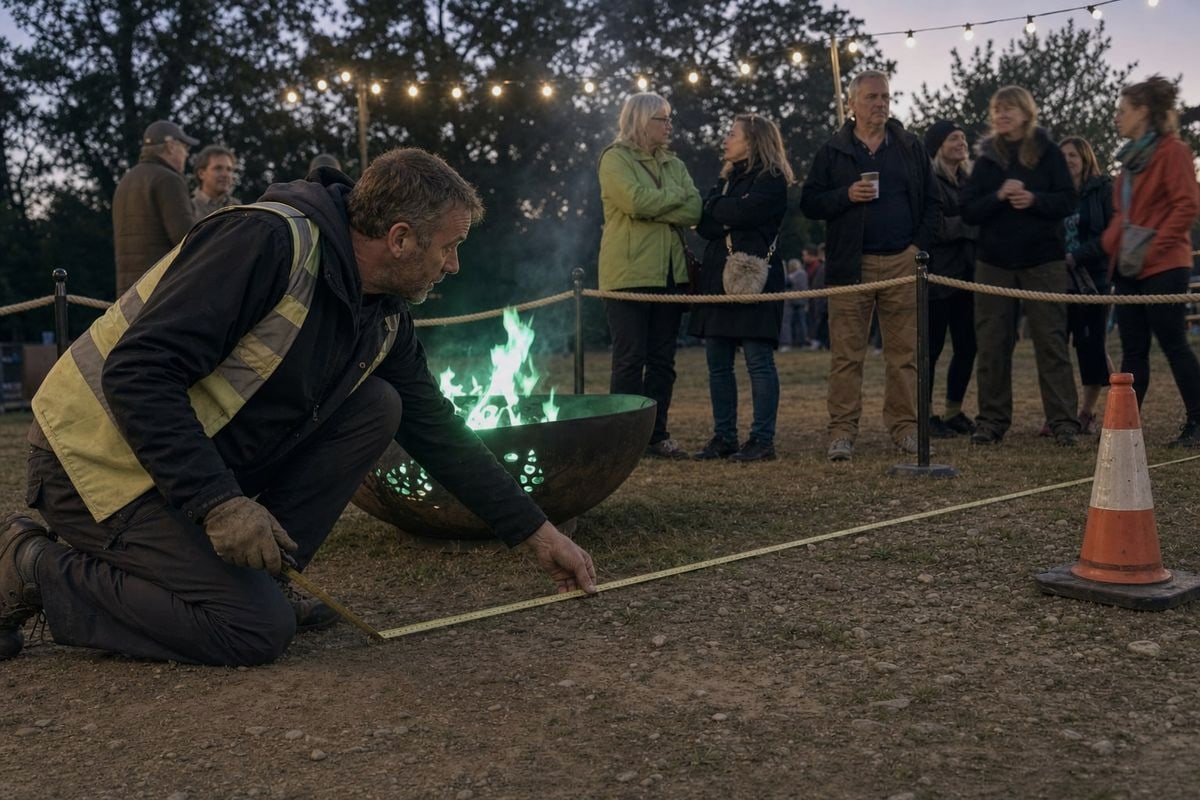
Controlar a distância de segurança e a dosagem para o Pó Mágico de Fogo em grandes locais preocupa muitos compradores de eventos com quem falo. Uma estimativa errada pode significar ferimentos, multas ou um show cancelado. Após mais de 17 anos administrando linhas de produção de chama colorida em Liuyang e Ningbo, nossa equipe ajudou traders de festivais e distribuidores de eventos a evitar exatamente essas falhas — e a solução começa com a classificação correta, dosagem documentada e regras de distância em camadas.
Controle a distância de segurança e a dosagem para o Pó Mágico de Fogo seguindo a folha de dados do fabricante, mantendo os espectadores a pelo menos 3–5 metros das chamas tratadas, dosando um sachê por fogueira padrão, dimensionando pela área da chama e obtendo a aprovação da autoridade local de incêndio antes do evento.
Deixe-me detalhar isso passo a passo. Abordaremos documentação, matemática de dosagem, regras de distância e como embalagens personalizadas apoiam seu plano de segurança.
Que documentação de segurança devo solicitar antes de encomendar Pó Mágico de Fogo para grandes eventos?
Um distribuidor alemão nos pediu a papelada antes mesmo de discutir o preço. Esse pedido me ensinou algo: para grandes eventos, a documentação é o produto. Nossos arquivos de conformidade agora viajam com cada remessa de exportação.
Antes de encomendar, solicite a FISPQ (Ficha de Informações de Segurança de Produtos Químicos), relatórios de teste SGS ou Intertek, documentos de conformidade CE, certificados de fábrica ISO 9001 e BSCI, a ficha técnica do produto com orientação de dosagem e distância, e confirmação da classificação correta do produto para sua jurisdição.

A documentação é importante porque o pó de chama colorida está em uma zona cinzenta em muitos mercados. Não é um fogo de artifício de exibição. Nem é pólvora de flash. Mas os bombeiros locais e Autoridades Competentes (AHJ) 1 ainda perguntarão o que é, o que contém e como queima. Se você não puder responder com papel, eles podem recusar sua licença ou classificar o produto sob regras pirotécnicas mais rigorosas do que o necessário.
A lista de verificação de documentos principais
| Documento | O que prova | Quem o solicita |
|---|---|---|
| FISPQ (Ficha de Dados de Segurança 2) | Composição química, perigos, manuseio | Bombeiro, seguradora, alfândega |
| Relatório de teste SGS / Intertek | Dados de queima e segurança verificados por terceiros | Varejistas, seguradoras de eventos |
| Ficha técnica | Dosagem por aplicação, distâncias recomendadas | Oficial de segurança de eventos, AHJ |
| Documentação CE | Conformidade com o mercado da UE | Importadores da UE, gerentes de local |
| Certificados ISO 9001 / BSCI | Produção consistente e auditoria ética | Gerentes de compras |
Por que a classificação vem primeiro
A palavra "pó de fogo" é usada de forma imprecisa. Alguns produtos vendidos sob nomes semelhantes se comportam como composições de flash pirotécnico 3. Estes se enquadram em códigos rigorosos de exibição ou proximidade. Nossos pacotes de chama colorida Magic Fire são aditivos ecológicos que você simplesmente adiciona a uma fogueira, lareira ou braseiro existente. Eles não detonam, lançam ou produzem efeitos de concussão. Essa distinção muda qual código se aplica. Portanto, solicite a confirmação escrita da classificação do seu fornecedor e compartilhe-a com sua AHJ local antecipadamente. Em nossa experiência exportando para mais de 30 países, os compradores que apresentam a documentação à autoridade de incêndio semanas antes quase nunca enfrentam paralisações de eventos de última hora.
Quanta pó de chama colorida preciso para calcular a dosagem correta por fogueira ou área de chama?
Durante a calibração do tempo de queima em nossa fábrica de Ningbo, testamos cada lote em um braseiro padrão antes da liberação. Essa rotina nos dá números concretos, e compartilharei o método de trabalho aqui.
Use um sachê de 25g por fogueira ou lareira padrão para 30–60 minutos de efeito de cor. Para áreas de chama maiores, dimensione aproximadamente um sachê por metro quadrado de leito de chama ativo e nunca exceda o máximo declarado pelo fabricante por fogo.
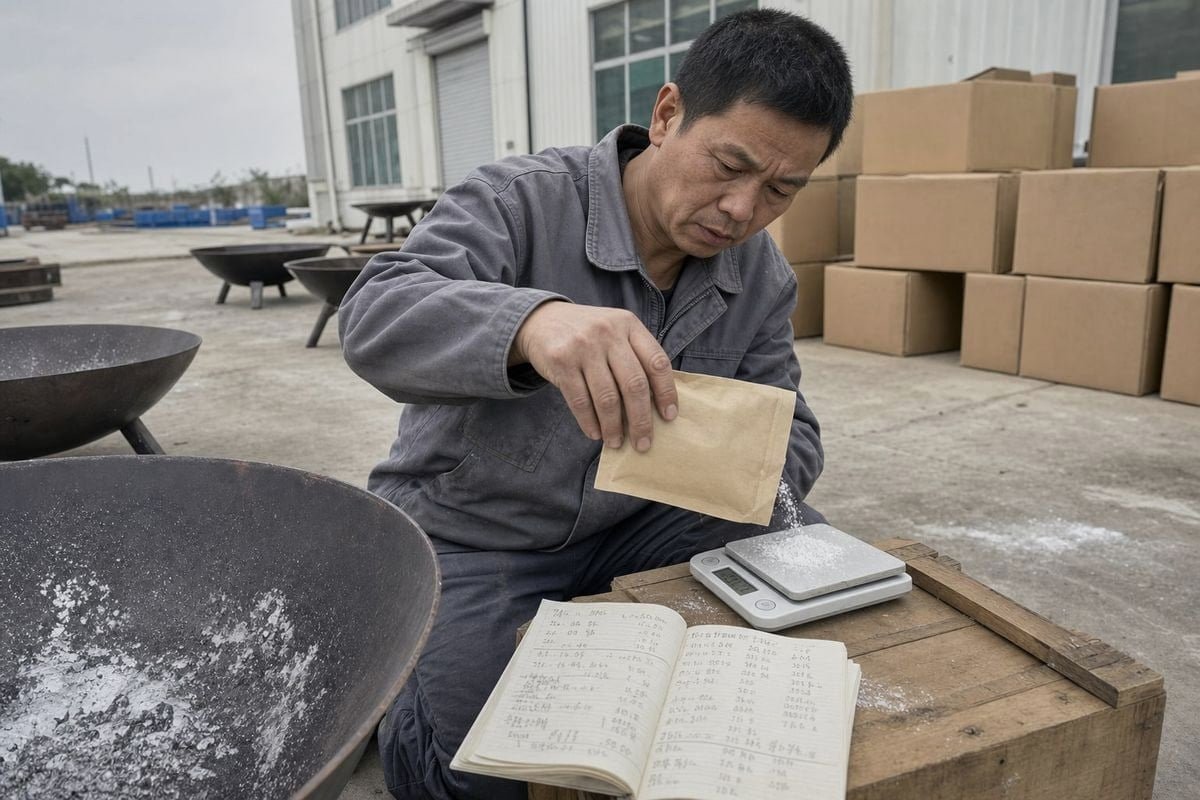
A dosagem é um multiplicador de risco. Mais pó não significa simplesmente mais cor. Pode significar chamas mais altas, mais fumaça e uma maior queda de faíscas. É por isso que os manuais de segurança pirotécnica limitam consistentemente os tamanhos de lote e as quantidades por sinal. A mesma lógica se aplica aos aditivos de chama colorida, apenas em uma escala mais suave.
Um método prático de dosagem
- Meça a área ativa da cama de chamas de cada braseiro, não a borda do braseiro.
- Aplique a dose base: um sachê padrão por braseiro de até cerca de um metro quadrado.
- Aumente linearmente para áreas de chama maiores, mas limite a quantidade total por fogo à máxima da folha de dados.
- Para locais internos ou cobertos, calcule em relação ao volume do local, não apenas à área do piso, para controlar o acúmulo de fumaça e a altura da chama.
- Realize um disparo de teste controlado no local real antes do evento ao vivo.
Tabela de referência de dosagem
| Aplicação | Área de chama | Dose sugerida | Duração do efeito |
|---|---|---|---|
| Lareira doméstica | Abaixo de 0,5 m² | 1 sachê | 30–60 min |
| Braseiro padrão | 0,5–1 m² | 1 sachê | 30–60 min |
| Grande fogueira de festival | 1–2 m² | 2 sachês | 30–60 min |
| Fogueira / recurso de chama de evento | 2 m²+ | Apenas por folha de dados | Varia |
Fatores ambientais também importam. Alta umidade retarda a liberação da cor. Ar quente e seco intensifica as chamas. Nossos engenheiros recomendam medição calibrada — sachês selados de dose única eliminam suposições, que é exatamente por que projetamos embalagens de dose unitária em vez de colheres a granel para uso em eventos.
Qual a distância mínima de segurança que devo manter entre os espectadores e as chamas tratadas em grandes locais?
Um compromisso que pesamos constantemente ao escrever painéis de instrução: um único número de distância é fácil de imprimir, mas locais reais precisam de regras em camadas. Nossos mercados de exportação provam que não existe um valor universal.
Mantenha o maior de três valores: 3–5 metros como um limite absoluto, a distância recomendada pelo fabricante ou o dobro do raio de queda da chama. Locais internos e grandes multidões geralmente requerem 15–20 pés (4,5–6 m) mais barreiras físicas aprovadas pela autoridade local de incêndio.
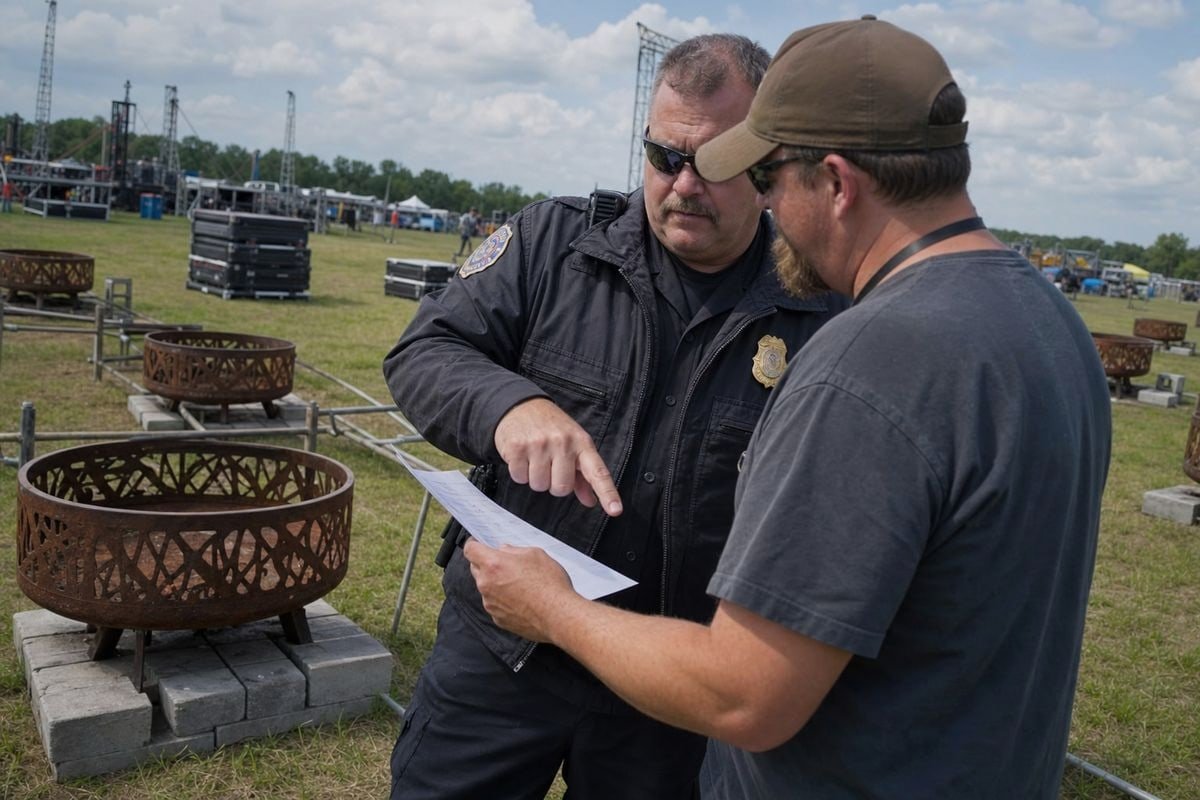
O aconselhamento de distância varia amplamente entre as jurisdições porque visa diferentes classes de efeito. Regras de desempenho contra incêndio 4 em algumas cidades dos EUA exigem 20 pés entre o item envolvido no fogo e o público. Alguns guias de desempenho aceitam 15 pés em ambientes controlados. O aconselhamento pirotécnico de efeitos especiais canadense usa o maior valor entre 5 metros, a distância do fabricante ou o dobro do raio de queda. Manuais de fogos de artifício de exibição exigem muito mais — distância do fabricante mais 50 metros. Estes não são padrões intercambiáveis. Chamas abertas tratadas de aditivos de chama colorida ficam mais próximas da extremidade de desempenho contra incêndio desse espectro, não da extremidade de fogos de artifício. Mas sua AHJ decide qual estrutura rege seu evento.
Marcos de distância por contexto
| Contexto | Distância mínima comum | Notas |
|---|---|---|
| Piso de efeito de proximidade | 3 m | Nunca vá abaixo disso, mesmo que uma folha permita menos |
| Chama tratada de base | 5 m | Ou distância do fabricante, o que for maior |
| Desempenho de fogo interno | 15 pés (4,5 m) | Expectativa típica do corpo de bombeiros |
| Código municipal de desempenho contra incêndio | 20 pés (6 m) | Algumas cidades exigem isso mais barreiras |
| Regra do raio de queda | 2× raio de queda | Meça durante o disparo de teste do seu local |
Por que "mínimo" é um piso, não uma meta
Grandes locais adicionam variáveis que a distância bruta não consegue resolver sozinha. Multidões se movem. Linhas de visão puxam as pessoas para frente. O vento espalha faíscas. Portanto, estruture seus controles: barricadas para grandes públicos, observadores treinados no perímetro, extintores e mantas corta-fogo 5 ao alcance, rotas de evacuação claras e separação de decoração combustível. Alguns operadores agora adicionam sensores de perímetro a laser ou ultrassônicos que alertam a equipe se os espectadores violarem a zona de exclusão. Você sempre pode exceder a distância mínima de segurança. Você nunca deve reduzi-la. Quando nossos compradores de LARP e festivais planejam eventos, aconselhamos adicionar margem além do valor impresso — metros extras não custam nada, enquanto um incidente custa tudo.
A Sunrich pode fornecer embalagens personalizadas e instruções de dosagem adaptadas aos requisitos de segurança do meu local?
Um distribuidor de lareiras do Reino Unido recentemente nos pediu para redesenhar rótulos de advertência para sua rede nacional de varejo, e esse projeto mostra o quão profunda é a personalização em nossas linhas.
Sim. A Sunrich oferece personalização completa OEM/ODM: sachês de dose única, sacos de papel kraft, potes ou caixas de exibição; marca própria; rótulos de advertência e códigos de barras específicos do mercado; tempos de queima e pesos de sachê ajustados; e instruções impressas de dosagem e distância escritas para corresponder ao seu tipo de local e às necessidades de conformidade locais.
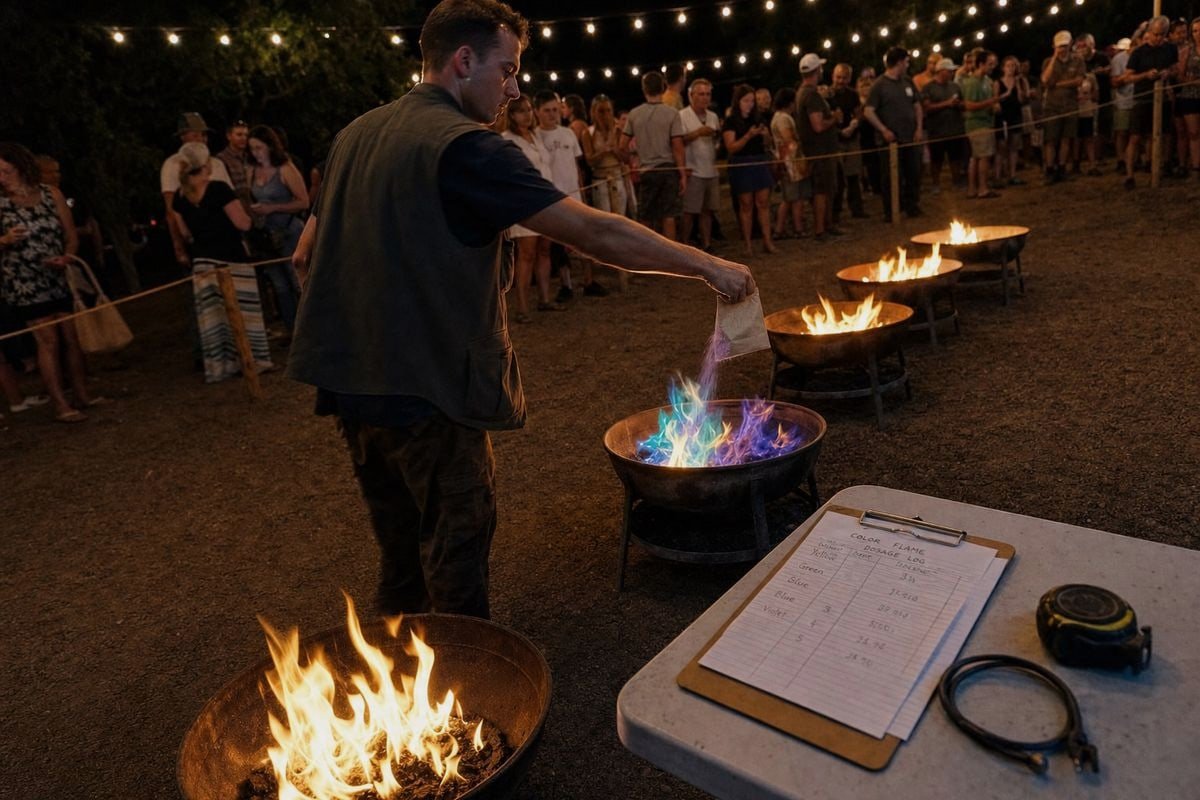
A embalagem é uma ferramenta de segurança, não apenas uma superfície de marketing. Um sachê de dose única selado impõe a dosagem correta automaticamente — a equipe do evento não pode derramar em excesso o que não pode abrir em massa. Essa escolha de design veio diretamente do feedback de comerciantes de presentes de festivais e compradores de adereços de eventos que precisavam de aplicação à prova de falhas por pessoal não especializado.
O que podemos adaptar para o seu plano de segurança
- Peso da dose unitária. Ajustamos o enchimento do sachê para que um pacote seja igual a uma dose correta para o seu tamanho típico de fogueira. Sem colheres, sem balanças, sem erros de estimativa.
- Tempo de queima. Calibramos formulações para efeitos de cor de 30, 45 ou 60 minutos, correspondendo ao seu cronograma de show.
- Rótulos de advertência. Imprimimos texto de cautela específico da jurisdição, aconselhamento de distância e símbolos de perigo no idioma do seu mercado — inglês, alemão, francês, holandês, polonês, português ou árabe.
- Painéis de instrução. Incluímos sua tabela de dosagem específica do local e aconselhamento de distância mínima diretamente na caixa ou sachê.
- Formatos de exibição. Caixas de varejo flip-top, bolsas kraft autoportantes resseláveis ou potes, todos com códigos de barras e apresentação pronta para prateleira.
Por que a profundidade da fábrica é importante aqui
Operamos nossas próprias linhas de produção com rigorosos controle de qualidade lote a lote 6, sediada em Liuyang com produção em Ningbo. Isso significa que a amostra que você dispara em teste em seu local se comporta da mesma forma que o envio de produção em massa seis meses depois. A consistência é em si uma característica de segurança: seus cálculos de distância e dosagem só valem se cada lote queimar de forma idêntica. Nosso ISO 9001, BSCI, CE e documentação SGS/Intertek 7 respaldam cada lote personalizado, e apoiamos MOQs flexíveis para que você possa experimentar um formato específico do local antes de se comprometer com o volume total. Diga-nos o tipo do seu local, os requisitos da autoridade de incêndio e o mercado-alvo, e nós construímos o pacote em conformidade em torno deles.
Conclusão
O uso seguro de Pó Mágico de Fogo em grandes locais se resume a documentação verificada, dosagem disciplinada, controles de distância em camadas e aprovação da AHJ — e nós construímos produtos para apoiar todos os quatro.
Notas de rodapé
Explica o conceito regulatório referenciado para aprovação de código de incêndio e decisões de licenciamento. ↩︎
A OSHA define os requisitos da SDS, apoiando a lista de verificação de documentação para materiais perigosos. ↩︎
Informações sobre a categoria de composto pirotécnico distinta dos aditivos de chama colorida. ↩︎
A NFPA estabelece padrões de desempenho de fogo e proximidade pirotécnica referenciados para distâncias de segurança do local. ↩︎
Referência para o equipamento de supressão de incêndio de emergência mencionado em controles de segurança de local em camadas. ↩︎
Links para recursos ISO que apoiam os padrões de consistência de fabricação


 English
  Spanish
  German
  French
  Arabic
  Portuguese
Participe da conversa