






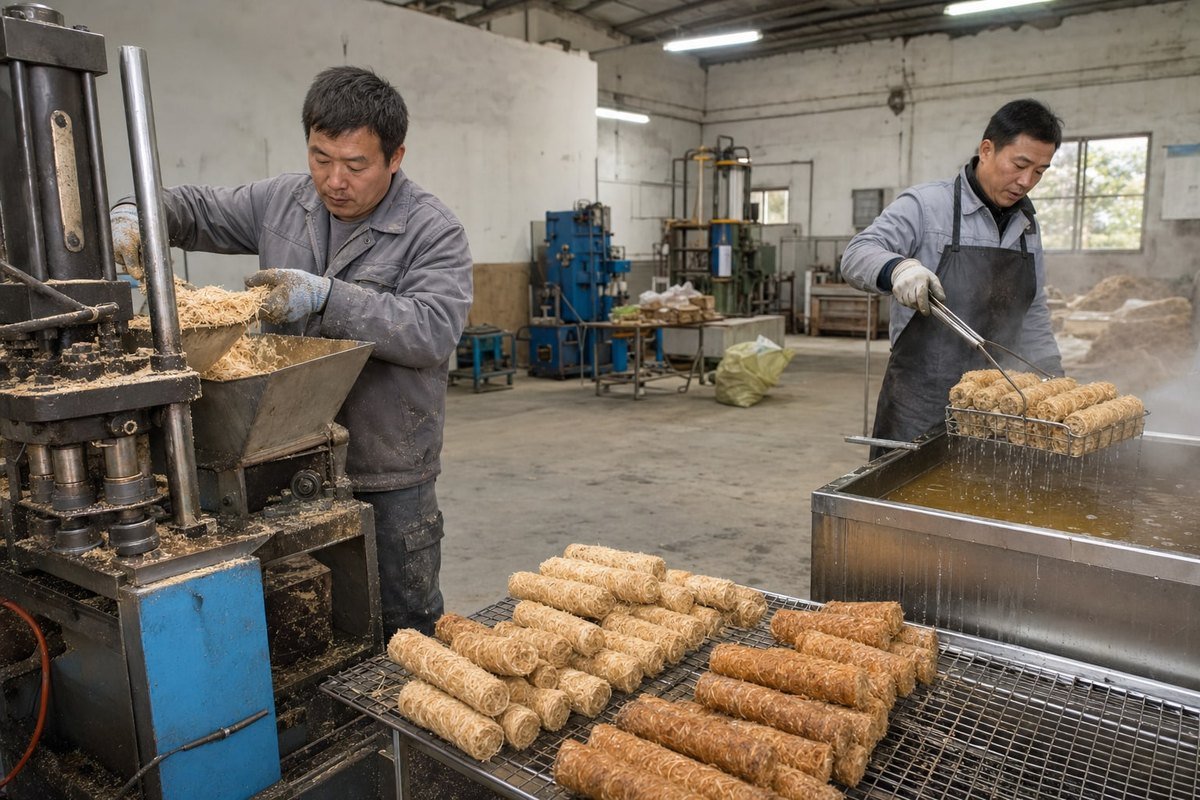
O desempenho do acendedor de fogo a lenha muitas vezes confunde os compradores. Em nossa linha de produção, eu vi acendedores de aparência idêntica se comportarem de maneira completamente diferente na chama — e a razão se esconde no processo.
Moldagem por compressão e imersão em cera afetam o desempenho de iniciadores de fogo de madeira de maneiras diferentes: a compressão controla a densidade, a duração da queima e a consistência estrutural, enquanto a imersão em cera controla a confiabilidade da ignição, a resistência à água e a sustentação da chama. A combinação de ambos os métodos produz iniciadores que acendem facilmente e queimam de 10 a 15 minutos de forma confiável.
Essa resposta curta esconde muitos detalhes de engenharia. Abaixo, detalho o que cada processo realmente muda e o que você deve verificar antes de se comprometer com um pedido em grande quantidade.
Quais diferenças de tempo de queima e confiabilidade devo esperar entre iniciadores de fogo moldados por compressão e mergulhados em cera?
Um distribuidor na Alemanha uma vez me enviou duas amostras de concorrentes e perguntou por que uma queimava duas vezes mais que a outra. Ambas eram rolos de lã de madeira. A diferença era puramente o processo.
Iniciadores apenas comprimidos queimam mais devagar, mas acendem com mais força; iniciadores apenas encerados acendem instantaneamente, mas queimam mais rápido e de forma menos uniforme. Iniciadores combinados de compressão mais cera oferecem o melhor dos dois: ignição confiável com um único fósforo e uma duração de queima constante de aproximadamente 10 a 15 minutos por peça.
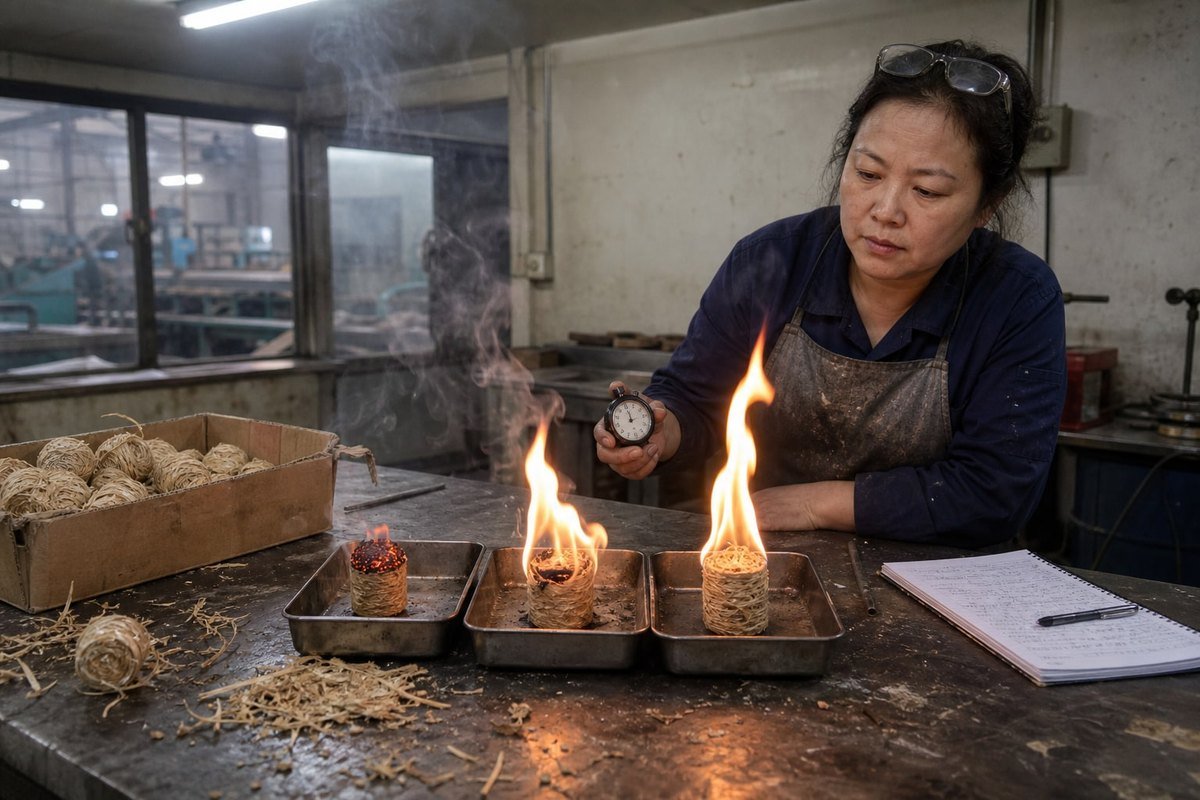
A maneira mais rápida de entender a diferença é ver os dois processos lado a lado:
| Fator de Desempenho | Apenas Comprimido | Apenas Mergulhado em Cera | Comprimido + Mergulhado em Cera |
|---|---|---|---|
| Velocidade de ignição | Lento a moderado | Muito rápido | Rápido |
| Duração da queima | Longa e estável | Moderado, pode inflamar | Longo e estável (10–15 min) |
| Resistência à umidade | Ruim | Bom | Excelente |
| Intensidade da chama | Baixo, em brasa | Alto, às vezes irregular | Alto e consistente |
| Durabilidade no manuseio | Bom | Frágil se o núcleo não for revestido | Muito bom |
Por que a compressão muda a queima
A compressão transforma serragem solta ou lã de madeira em biomassa comprimida 1 com muito menos bolsos de ar internos. Essa densidade retarda a penetração de oxigênio no núcleo do combustível, de modo que o material queima de fora para dentro. O resultado é uma duração de queima mais longa e uma taxa de liberação de calor mais estável. Há uma desvantagem, no entanto. Se a densidade ficar muito alta e a área da superfície ficar muito pequena, a ignição se torna lenta. Aprendemos isso no início do nosso trabalho de desenvolvimento: rolos supercomprimidos precisavam de duas ou três caixas de fósforos para pegar fogo, o que nenhum cliente de varejo tolerará.
Por que a cera muda a chama
Cera de parafina 2 é um combustível de alto valor calórico. Ele vaporiza em baixas temperaturas, então uma superfície revestida de cera pega fogo quase instantaneamente. A camada de cera também atua como um barreira de umidade 3, que é por isso que os acendedores encerados mantêm sua confiabilidade de ignição em galpões úmidos, garagens e acampamentos. Nossos acendedores de fogo a lenha padrão usam uma composição de aproximadamente 50/50 fibra de madeira 4 e parafina. A lã de madeira funciona como um pavio, puxando a cera derretida para cima através ação capilar 5, enquanto a estrutura comprimida impede que a peça desmorone em uma poça no meio da queima. Essa combinação de pavio e andaime é o que sustenta a chama tempo suficiente para acender gravetos ou carvão.
Qual processo de fabricação me dá mais qualidade consistente em grandes lotes de produção?
A consistência do lote é a pergunta que mais ouço de gerentes de compras. Após mais de 17 anos gerenciando linhas de produtos de fogo em Ningbo, posso dizer que a resposta honesta envolve ambos os processos — e os controles por trás deles.
A moldagem por compressão oferece maior consistência lote a lote porque pressão, temperatura e peso de enchimento são variáveis controladas pela máquina. O mergulho em cera é mais dependente do operador, portanto, a consistência requer controles rigorosos sobre a temperatura da cera, tempo de imersão e tempo de drenagem. Fábricas de processo combinado devem controlar ambas as etapas.
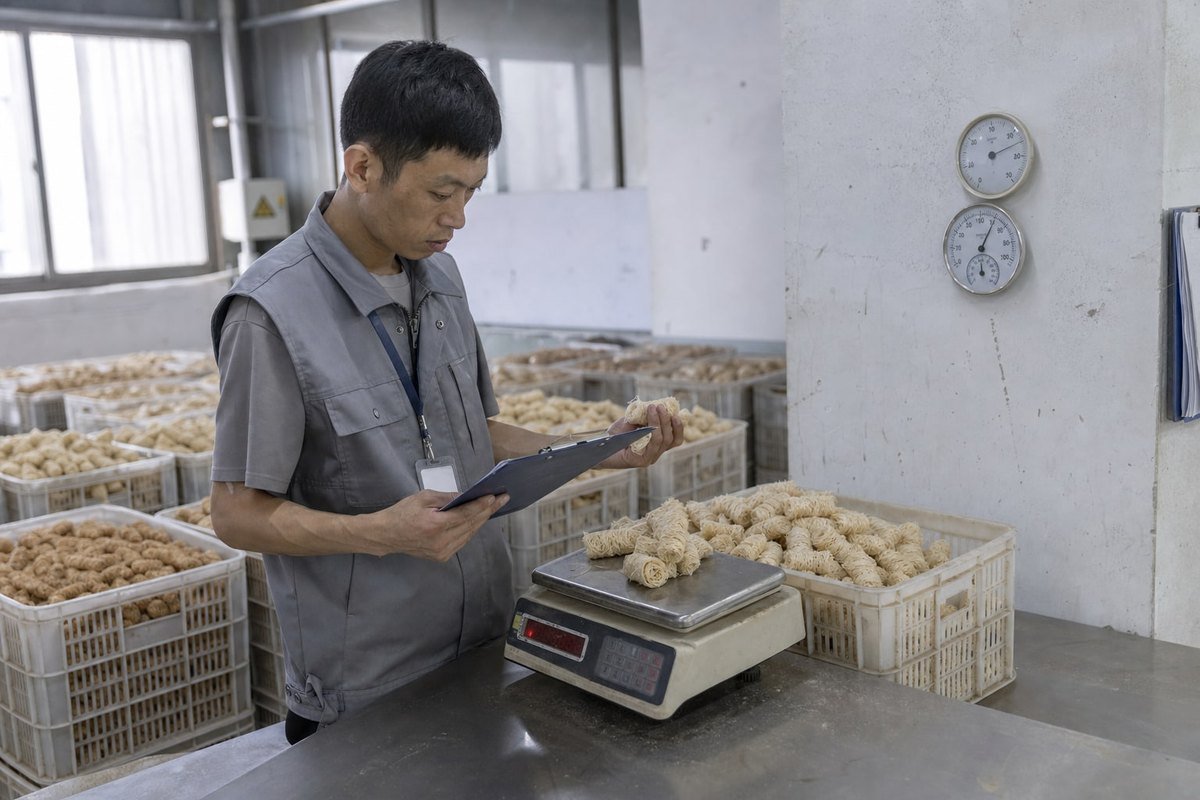
A consistência não é um número único. Ela vem do controle de variáveis específicas em cada etapa. Veja como gerenciamos isso em nossas linhas:
As variáveis que realmente flutuam
- Teor de umidade da fibra bruta. A lã de madeira absorve umidade. Se a fibra recebida variar de lote para lote, tanto a densidade de compressão quanto a absorção de cera mudam. Condicionamos e verificamos a fibra antes que ela chegue aos moldes.
- Pressão de moldagem e tempo de permanência. Estes definem a densidade final e, portanto, a duração da queima. Parâmetros definidos pela máquina os mantêm estáveis, razão pela qual a compressão é o mais repetível dos dois processos.
- Temperatura do banho de cera. Cera mais fria reveste espessamente, mas penetra mal. Cera mais quente penetra profundamente, mas deixa uma casca fina. Qualquer extremo muda o comportamento de ignição.
- Tempo de imersão e drenagem. Isso determina a profundidade de saturação da parafina. Tempo irregular produz acendedores que acendem de forma diferente dentro da mesma caixa — a maneira mais rápida de gerar reclamações de varejo.
| Etapa do Processo | Variável Chave | Risco de Consistência | Nosso Método de Controle |
|---|---|---|---|
| Preparação da fibra | Conteúdo de humidade | 1 x 20 pés ou 40 pés | Inspeção e condicionamento de entrada |
| Compressão | Pressão, peso de enchimento | Baixo | Parâmetros definidos pela máquina, verificações de peso |
| Imersão em cera | Temperatura do banho | 1 x 20 pés, vários produtos | Monitoramento contínuo da temperatura |
| Mergulho/drenagem | Ação | 1 x 20 pés, vários produtos | Tempos de ciclo padronizados por SKU |
| CQ final | Teste de queima | — | Amostras de queima de cada lote |
Nós amostras de teste de queima de cada ciclo de produção em relação a uma janela de tempo de queima alvo. É também por isso que dizemos aos compradores que a primeira amostra reflete de forma confiável a produção em massa — os mesmos parâmetros que fizeram sua amostra são bloqueados para seu pedido. Uma empresa de comércio que revende de várias oficinas simplesmente não pode prometer isso, pois não controla os moldes ou os banhos de cera.
Como avalio a espessura do revestimento de cera e a segurança do material antes de fazer um pedido em grande quantidade?
Uma interação com um comprador fica comigo: um importador do Reino Unido quase fez um pedido a um fornecedor cuja "cera" acabou sendo parafina industrial reciclada com aditivos desconhecidos. A equipe de conformidade de sua rede de varejo descobriu. A nossa teria sinalizado no primeiro dia.
Avalie o revestimento de cera cortando uma amostra longitudinalmente para verificar a profundidade de penetração, pesando as peças para consistência e testando com fogo para uma propagação uniforme da chama. Para segurança, exija documentação de parafina de grau alimentício ou totalmente refinada, relatórios de teste SGS ou Intertek e rotulagem em conformidade com a CE antes de fazer o pedido.
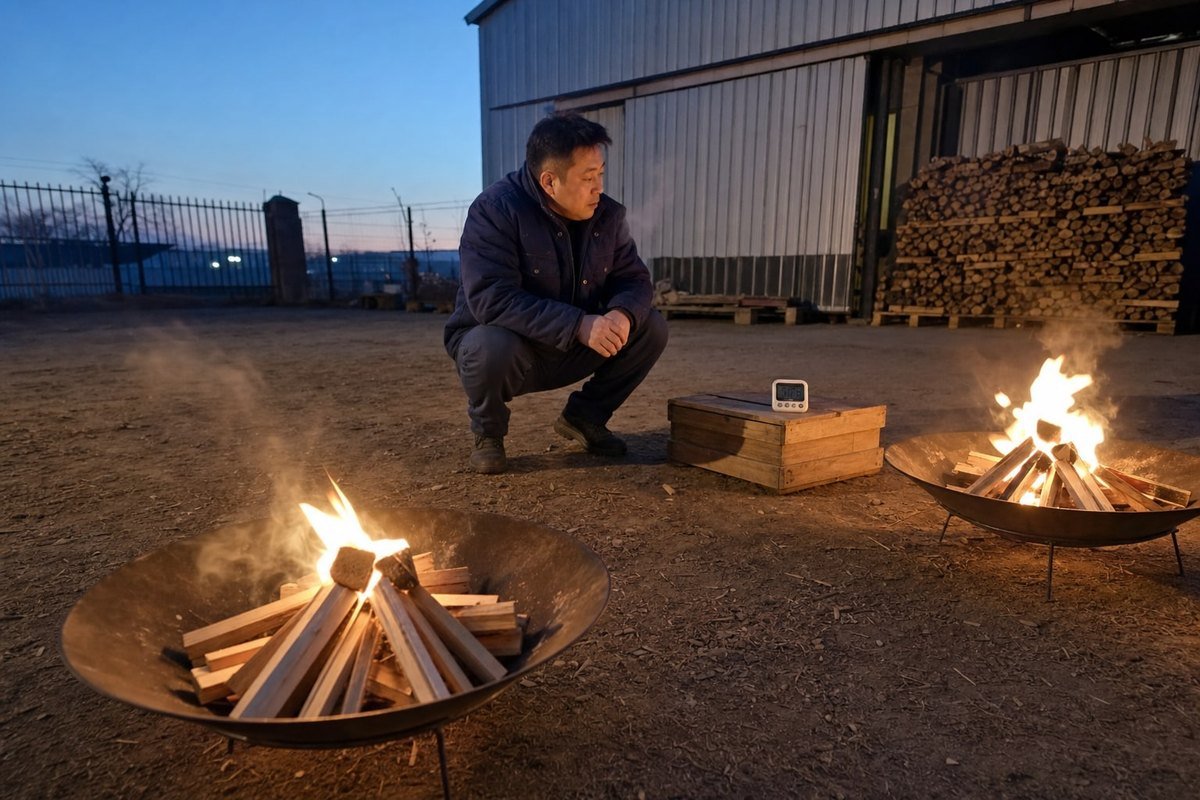
Você não precisa de um laboratório para fazer uma primeira avaliação significativa. Você precisa de uma faca, uma balança e um fósforo. Aqui está o lista de verificação prática que apresentamos aos compradores quando eles recebem nossas amostras.
As verificações físicas que qualquer pessoa pode fazer
- Teste de corte. Corte uma iniciação no sentido do comprimento. Você deve ver a penetração da cera na lã de madeira, não apenas uma fina casca ao redor de um núcleo seco. A saturação profunda e uniforme de parafina significa queima consistente do início ao fim. Um revestimento apenas de casca queima intensamente por um minuto e depois apaga.
- Verificação de peso. Pese dez peças. Variação de peso apertada sinaliza peso de enchimento controlado e tempo de imersão. Variação ampla prevê duração de queima desigual no campo.
- Teste de queima. Acenda uma peça com um único fósforo. Observe a propagação uniforme da chama pela superfície, uma chama estável em vez de flamejante e pouca fumaça. Fumaça preta excessiva sugere cera contaminada ou de baixa qualidade — uma falha de desempenho de queima limpa que os clientes notarão em ambientes fechados.
- Teste de água. Salpique uma peça e tente acendê-la. Bom propriedades de impermeabilização 6 significa que ainda pega em poucos segundos.
As verificações de papelada que importam mais
Testes físicos confirmam o desempenho. Documentos confirmam segurança e acesso ao mercado. Em nossa experiência exportando para os EUA, Alemanha e Reino Unido, estes são inegociáveis:
| Documento | O que Comprova | Por que é importante |
|---|---|---|
| Relatórios de teste SGS / Intertek | Sem produtos químicos nocivos na cera e na fibra | Conformidade de varejo e segurança do consumidor |
| Folha de especificações da cera | Grau de parafina totalmente refinada | Exclui cera industrial reciclada |
| Certificado ISO 9001 | Gestão de qualidade documentada | A consistência do lote é sistemática, não sorte |
| Auditoria BSCI | Condições éticas de fábrica | Exigido por muitos varejistas da UE e dos EUA |
| Rotulagem em conformidade com a CE | Avisos e texto de uso corretos | Posicionamento legal nas prateleiras da UE |
Se um fornecedor hesitar em qualquer um desses documentos, trate isso também como um sinal de alerta de desempenho. Fábricas que pulam a papelada de conformidade geralmente pulam os controles de processo também.
Posso solicitar tamanhos personalizados, durações de gravação ou embalagens de marca própria para qualquer um dos métodos de produção?
O compromisso que pesamos com mais frequência em projetos OEM é tamanho versus tempo de queima versus custo da caixa. Um rolo mais longo queima por mais tempo, mas também altera sua pegada de embalagem e cálculo de frete. Acertar os três é onde o verdadeiro trabalho de ODM acontece.
Sim. Tanto a moldagem por compressão quanto a imersão em cera suportam personalização total. As dimensões do molde definem o tamanho e a forma, o nível de compressão e a proporção da cera ajustam a duração da queima, e a embalagem de marca própria — caixas personalizadas, unidades de exibição, rótulos de advertência e códigos de barras — é padrão para pedidos de OEM de iniciadores de fogo.
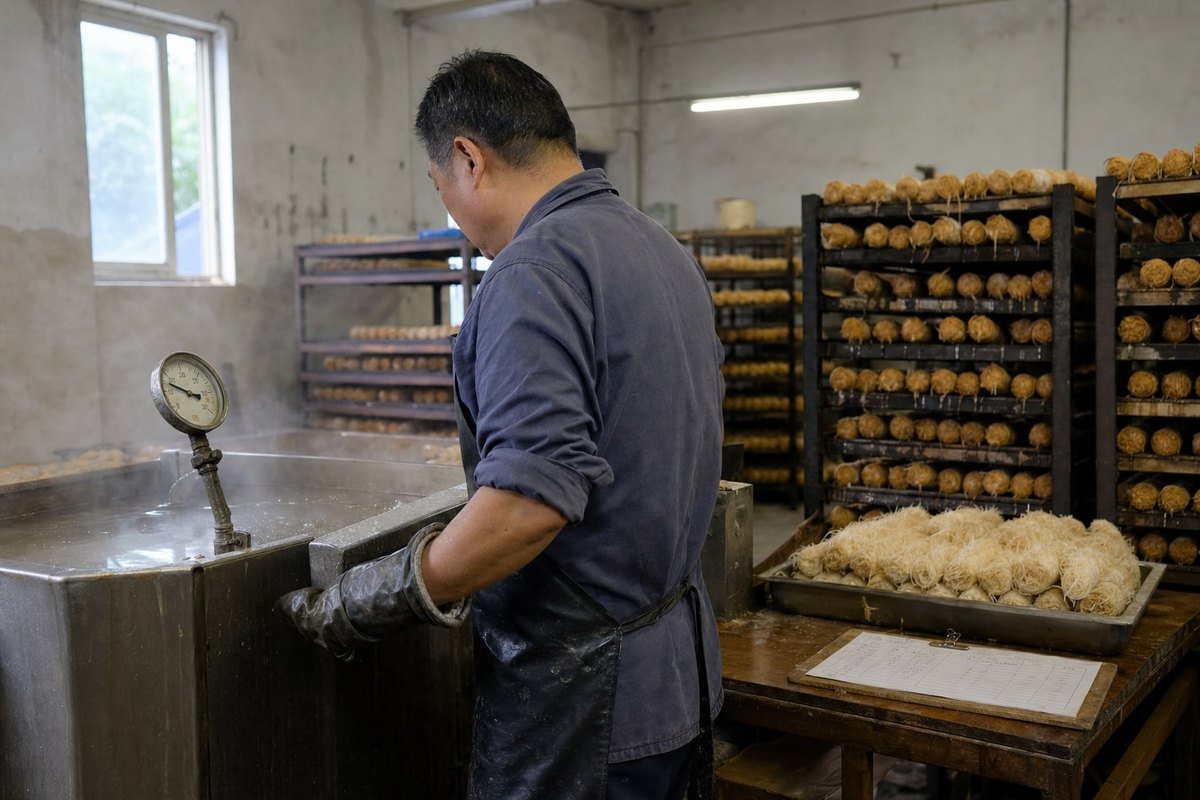
A personalização não é um menu de opções cosméticas. Cada solicitação altera um parâmetro físico, e uma fábrica capaz deve explicar exatamente qual. Veja como as principais solicitações se mapeiam para as alavancas de processo em nossas linhas.
Como suas especificações se traduzem em configurações de processo
- Maior duração de queima. Aumentamos a densidade de compressão, ampliamos a peça ou elevamos a proporção cera/fibra. Cada rota tem efeitos colaterais. Maior densidade retarda ligeiramente a ignição. Peças maiores aumentam o custo unitário. Mais cera aumenta valor calórico 7 e a longevidade da chama, mas pode adicionar fumaça se for muito longe. Normalmente, ajustamos os três juntos para atingir uma janela alvo — por exemplo, um mínimo garantido de 8 minutos para marcas focadas em churrasco, ou 12 minutos ou mais para linhas de lareira.
- Tamanho e forma personalizados. Novas ferramentas de moldagem cuidam disso. A forma também importa funcionalmente: uma maior relação área de superfície/volume dá uma chama mais alta e rápida para ignição rápida de carvão; uma forma mais robusta dá uma saída de calor mais longa e estável.
- Ignição mais rápida em climas úmidos. Para compradores do norte da Europa, podemos ajustar os parâmetros de imersão para uma penetração mais profunda da cera, melhorando a confiabilidade da ignição, mesmo quando o produto ficou em um armazém úmido.
- Embalagem de marca própria. Fornecemos caixas de varejo personalizadas, opções de sacos de papel kraft ou plástico, embalagens de exibição de balcão, rótulos de aviso multilíngues e códigos de barras de varejo. Nosso formato padrão de caixa de varejo "100 unidades" é um ponto de partida comum que os compradores renomeiam com sua própria arte.
Para pedidos de teste, mantemos os MOQs flexíveis em tamanhos de molde padrão, pois novas ferramentas são o principal fator de custo para formas totalmente personalizadas. A maioria dos compradores começa com um cilindro padrão, valida a venda e, em seguida, investe em um formato proprietário assim que o volume o justifica. Esse caminho escalonado protege seu fluxo de caixa e permite que o mercado vote antes de você se comprometer com as ferramentas.
Conclusão
Escolher acendedores de fogo sem entender o processo por trás deles é um jogo de azar. Um lote ruim prejudica sua marca. Entender a compressão e a imersão em cera remove esse risco.
A moldagem por compressão constrói a estrutura: densidade, duração da queima e uniformidade do lote. A imersão em cera constrói o comportamento de combustão: ignição rápida, impermeabilização e sustentação da chama. Os melhores acendedores de fogo de madeira comerciais combinam ambos, combinando um núcleo de lã de madeira comprimida com saturação controlada de parafina para ignição com um único fósforo e uma queima constante de 10 a 15 minutos. Antes de pedir a granel, corte uma amostra, realize um teste de queima e exija documentos de conformidade reais. Quando estiver pronto para especificar seus próprios tamanhos, tempos de queima e embalagem de marca própria, trabalhe com uma fábrica que controle ambos os processos de ponta a ponta - porque nesta categoria de produto, o processo é o desempenho.
Notas de rodapé
Explica como o combustível de biomassa densificada afeta o fluxo de oxigênio e a taxa de queima. ↩︎
O histórico das propriedades da cera de parafina apoia a alegação de combustão de valor calorífico. ↩︎
Esclarece o mecanismo de barreira de umidade referenciado para desempenho à prova d'água. ↩︎
Entrada da Wikipedia definindo propriedades da fibra de madeira e suas aplicações industriais. ↩︎
Guia autoritário sobre ação capilar e seu papel no transporte de líquidos através de materiais porosos. ↩︎
Apoia a alegação técnica sobre a impermeabilização afetando a confiabilidade da ignição. ↩︎
Artigo da Wikipedia explicando o valor calorífico e o calor de combustão dos combustíveis. ↩︎



 English
  Spanish
  German
  French
  Arabic
  Portuguese
Participe da conversa