







Canada's CCCR 2001-GHS alignment 1 confuses many buyers who order our Magic Fire color-flame packets. A wrong label can strand an entire container at the border, and I have seen it happen.
Canada's CCCR 2001-GHS alignment adds GHS-style hazard classification, pictograms, and statements to consumer chemical labels, but CCCR 2001 remains the governing regime for retail imports. Magic Fire Powder sold to consumers still needs bilingual CCCR-compliant labeling, consumer hazard symbols, and possibly child-resistant packaging—not just a GHS label.
That short answer hides a lot of detail. Let me walk you through what the rules actually demand, section by section, so your next shipment clears customs cleanly.
What does the CCCR 2001-GHS alignment actually require for my Magic Fire Powder labels?
A German distributor once asked me why his EU label failed in Canada. Our compliance team traced it to one core misunderstanding about how CCCR 2001-GHS alignment really works in practice.
The alignment requires GHS-based hazard classification criteria for consumer chemicals, but labels must still follow CCCR 2001's consumer format: bilingual hazard statements, consumer hazard symbols, signal words, first-aid instructions, and negative statements. A standard GHS diamond-pictogram label alone does not satisfy Canadian consumer import rules.
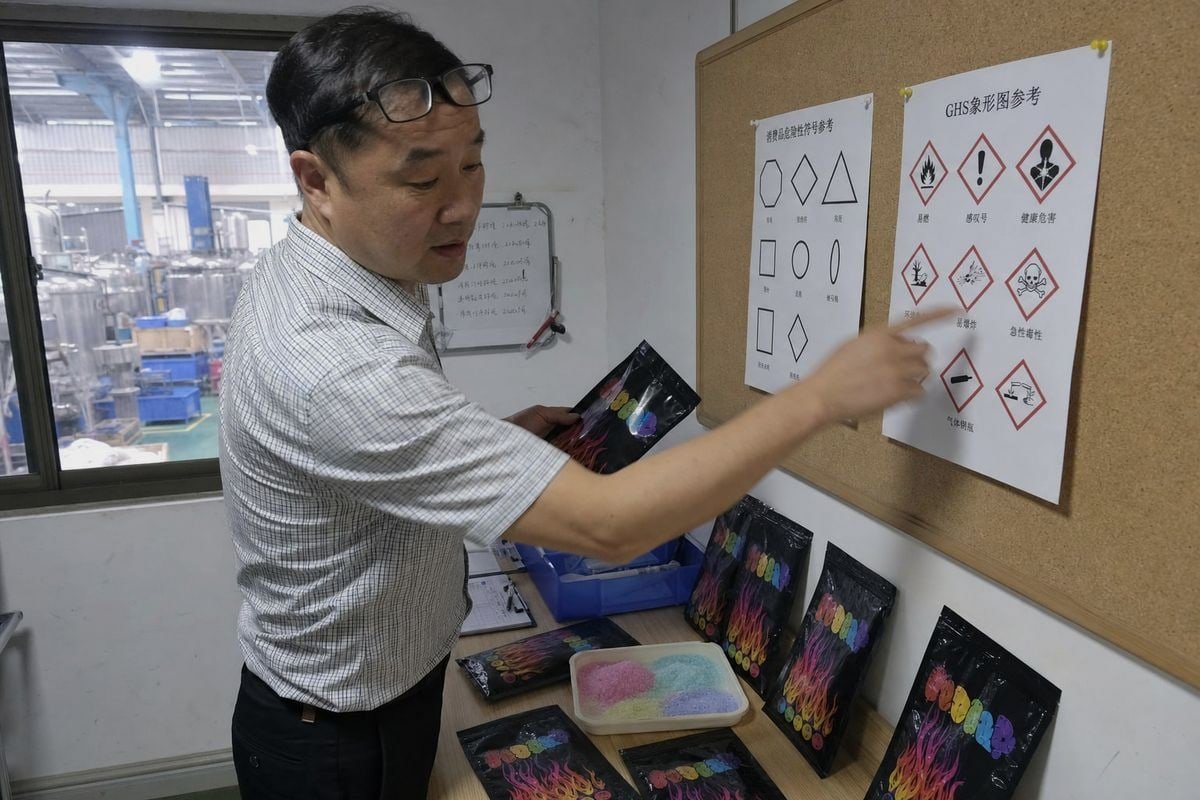
The key point is that CCCR 2001 did not simply "become GHS." Canada keeps two separate systems. Consumer chemical products sold at retail fall under the Lei de Segurança de Produtos de Consumo do Canadá 2 and CCCR 2001. Workplace hazardous products fall under WHMIS and the Hazardous Products Regulations 3, which are fully GHS-aligned. Magic Fire Powder sold to campers and homeowners sits in the consumer lane. That lane has its own logic.
What the alignment changed, and what it did not
Health Canada has moved classification criteria for health, physical, and environmental hazards closer to GHS standards. It has also proposed GHS-style label elements—signal words, hazard statements, precautionary statements, and ingredient disclosure—for certain higher-hazard consumer chemical categories. But the existing CCCR 2001 framework stays in force until formally replaced. In our experience preparing Canadian shipments from our Ningbo production site, that means we build labels that satisfy CCCR's consumer structure first, then layer in GHS-informed hazard data where the classification demands it.
| Elemento | CCCR 2001 (Consumer) | GHS / WHMIS (Workplace) |
|---|---|---|
| Symbols | Consumer hazard symbols (octagon, diamond, triangle frames) | Red-diamond GHS pictograms |
| Idioma | Bilingual English/French mandatory | Bilingual English/French mandatory |
| SDS required | Não | Sim |
| Packaging rules | Child-resistant closures for some hazards | Not a core feature |
| Focus | Acute hazards, label clarity | Full hazard communication |
For a color-flame powder, the practical output is a bilingual consumer label with the correct symbol, signal word, primary hazard statement, and first-aid text. A transition period existed for reclassifying inventories, but new imports today must arrive compliant.
How do I make sure my Canadian bilingual labeling meets both CCCR 2001 and GHS pictogram rules?
There is a trade-off we weigh on every private-label run for Canada: one harmonized North American label versus a Canada-specific version. Getting the bilingual layout right decides which route works.
Classify the product first under CCCR 2001, then build a bilingual label with equal-prominence English and French text, the correct consumer hazard symbol, signal word, primary and specific hazard statements, negative instructions, and first-aid statements. Add GHS elements only where Canadian classification requires them.

Bilingual labeling is not a courtesy in Canada. It is mandatory. English and French must appear with equal prominence, and the French must be a proper regulatory translation, not machine output. When we design retail pouches for our Canadian buyers, we plan the bilingual text block before the artwork, because French hazard statements typically run longer than English and can break a layout that was designed English-first.
A practical five-step process
- Classify the powder. Test flammability, oxidizing potential, and irritation against CCCR 2001 criteria, now informed by GHS-based thresholds.
- Select the symbol and signal word. CCCR uses consumer-oriented symbols in specific frames, not the GHS red diamond used under WHMIS.
- Draft bilingual statements. Include the primary hazard statement, specific hazard statements, instructions, and first-aid text in both languages.
- Check packaging triggers. Products meeting certain toxicity or flammability thresholds need child-resistant packaging 4 on top of the label.
- Proof against the display panel rules. Type size and placement requirements depend on container size, so our single-use foil sachets get checked separately from our kraft stand-up pouches and jars.
One more point matters for flame-coloring powders specifically. Metal-salt formulations—copper, strontium, or barium based—can trigger dual classification: skin and eye irritation from direct contact, plus hazardous combustion byproducts. That second exposure route is an often-overlooked disclosure risk. Our own Magic Fire formulations use eco-friendly materials without harmful chemicals, which simplifies classification, but every formulation still needs its own assessment. Never copy a competitor's label and assume it fits your chemistry.
What compliance documents should I request from my supplier before importing color-flame powder into Canada?
Last year a Canadian wholesaler emailed us a simple question before placing his trial order: "What paperwork will keep CBSA 5 happy?" We sent him a pacote de documentos the same week, and his shipment cleared without a single query.
Request a full ingredient disclosure, third-party test reports covering flammability and toxicity, a CCCR 2001 classification assessment, bilingual label artwork proofs, packaging compliance confirmation, and the factory's quality certifications such as ISO 9001 and SGS or Intertek reports. Importers carry legal liability, so verify everything pre-shipment.

Here is the uncomfortable truth for buyers: under the Lei de Segurança de Produtos de Consumo do Canadá 6, the importer is treated as the first responsible party. If the label fails, Canadian authorities look at you, not your Chinese factory. That is why we push documentation on our clients even when they do not ask for it. Small e-commerce importers get hit hardest—CBSA border holds on shipments without pre-applied bilingual CCCR labels are a compliance gap we see frequently among sellers used to US-only English labeling.
The document pack we recommend
| Documento | Por que você precisa disso | When to request |
|---|---|---|
| Full formulation / ingredient disclosure | Enables independent CCCR classification | Before sampling |
| relatórios de teste SGS ou Intertek | Third-party proof of flammability and toxicity data | Before ordering |
| CCCR 2001 classification rationale | Shows which hazard categories apply, and why | With label design |
| Bilingual label proofs | Confirms symbols, statements, and French accuracy | Before print approval |
| Child-resistant packaging evidence | Required if hazard thresholds are met | Before packaging run |
| Certificados ISO 9001 / BSCI | Confirms consistent production quality and ethics | During supplier vetting |
| Registros de CQ de lote | Prova que a produção em massa corresponde à amostra aprovada | With each shipment |
At our Liuyang headquarters, keeping these files current is standard practice because our buyers in thirty-plus markets treat certification as a hard requirement, not a nice-to-have. A supplier who hesitates on any item in that table is telling you something. Batch-to-batch consistency matters here too: a test report is only meaningful if production chemistry never drifts from the tested formulation. Ask how the factory controls that.
Can my manufacturer help me adapt existing US or EU labels to meet Canada's CCCR 2001-GHS standards?
The hardest lesson from our early Canadian exports was that label adaptation is design work, not translation work. We rebuilt one client's artwork three times before we standardized our current process.
Yes—an experienced OEM manufacturer can reclassify your product under CCCR 2001, redesign US or EU artwork with Canadian consumer hazard symbols, add compliant bilingual statements, adjust packaging for child-resistance if required, and deliver shelf-ready pouches or jars printed for the Canadian market before shipment.

Adaptation is rarely a matter of swapping a pictogram. A US GHS label and a Canadian CCCR consumer label differ in symbols, statement structure, language, and sometimes packaging hardware. Some elements carry over; others must be rebuilt from scratch. Here is how the conversion typically breaks down when we handle it for private-label clients.
What transfers and what must change
| Existing label element | Reusable for Canada? | Action needed |
|---|---|---|
| Pictogramas GHS | No, for consumer sales | Replace with CCCR consumer symbols |
| English hazard statements | Parcialmente | Rewrite to CCCR wording, add French |
| Ingredient listing | Mostly | Verify against Canadian disclosure rules |
| Brand artwork and graphics | Sim | Resize to fit bilingual text block |
| Declarações de precaução | Parcialmente | Align with CCCR instructions and negative statements |
| Barcode and retail marks | Sim | Confirm Canadian retail requirements |
Because we run true one-stop OEM/ODM production, this work happens inside one workflow: your existing artwork comes in, our team maps it against the CCCR classification for your specific formulation, and revised print-ready files go back for your approval before the packaging line runs. We can print directly on foil sachets, kraft stand-up pouches, jars, or display boxes, so the compliant label ships applied—not stickered on later in a Canadian warehouse.
One forward-looking note. Health Canada may amend CCCR 2001 further, or eventually replace it with a more risk-based UN GHS framework 7. Some of our Canadian buyers already add voluntary supplementary warnings referencing provincial open-burning restrictions in Quebec or British Columbia. That practice goes beyond federal minimums, but it reduces liability exposure and it is growing. A flexible manufacturing partner should accommodate those extra elements without treating them as a change order crisis.
Conclusão
CCCR 2001-GHS alignment adds GHS-style rigor without replacing Canada's consumer label rules. Classify first, label bilingually, document everything, and partner with a factory that ships compliant products.
Notas de rodapé
1. Explains the GHS framework Canada is partially aligning its consumer chemical labeling rules toward. ↩︎
2. Official statute governing consumer chemical products and importer liability discussed in the article. ↩︎
3. Legal text of the GHS-aligned workplace regulations referenced alongside WHMIS in the article. ↩︎
4. Background on the packaging technology required for certain hazardous consumer products under CCCR. ↩︎
5. Border agency enforcing import compliance and the labeling holds described in the article. ↩︎
6. Official federal statute establishing importer liability and consumer product safety obligations referenced in the text. ↩︎
7. Provides background on the international hazard classification system Canada may eventually adopt for consumer chemicals. ↩︎



 English
  Spanish
  German
  French
  Arabic
  Portuguese
Participe da conversa