
Buyers ask me about Magic Fire powder packaging almost weekly. On our production line in Ningbo, this question decides which pouch material goes onto the filling machine each morning.
Magic Fire powder packaging can be eco-friendly and recyclable, but only in specific formats. Kraft paper bags and paper-based cans are recyclable and often biodegradable, while standard plastic bags and foil sachets are not. The exact package construction — not the product name — determines real sustainability.
That answer needs unpacking. The market sells the same color-flame powder in plastic bags, foil sachets, kraft pouches, and jars. Each format tells a different environmental story. Let me walk you through what we actually use, what testing proves, and how you can position your own private-label line honestly.
What packaging materials does Sunrich use for Magic Fire color-flame powder, and are they truly biodegradable?
During a factory audit last year, a German distributor spent more time inspecting our packaging film rolls than our powder blending room. That told me where buyer priorities have shifted.
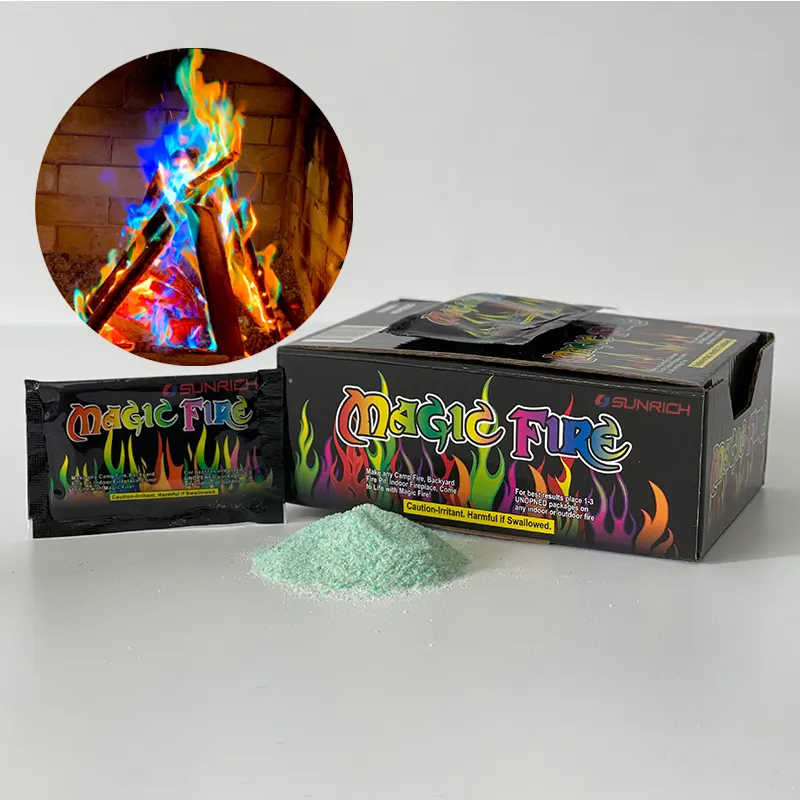
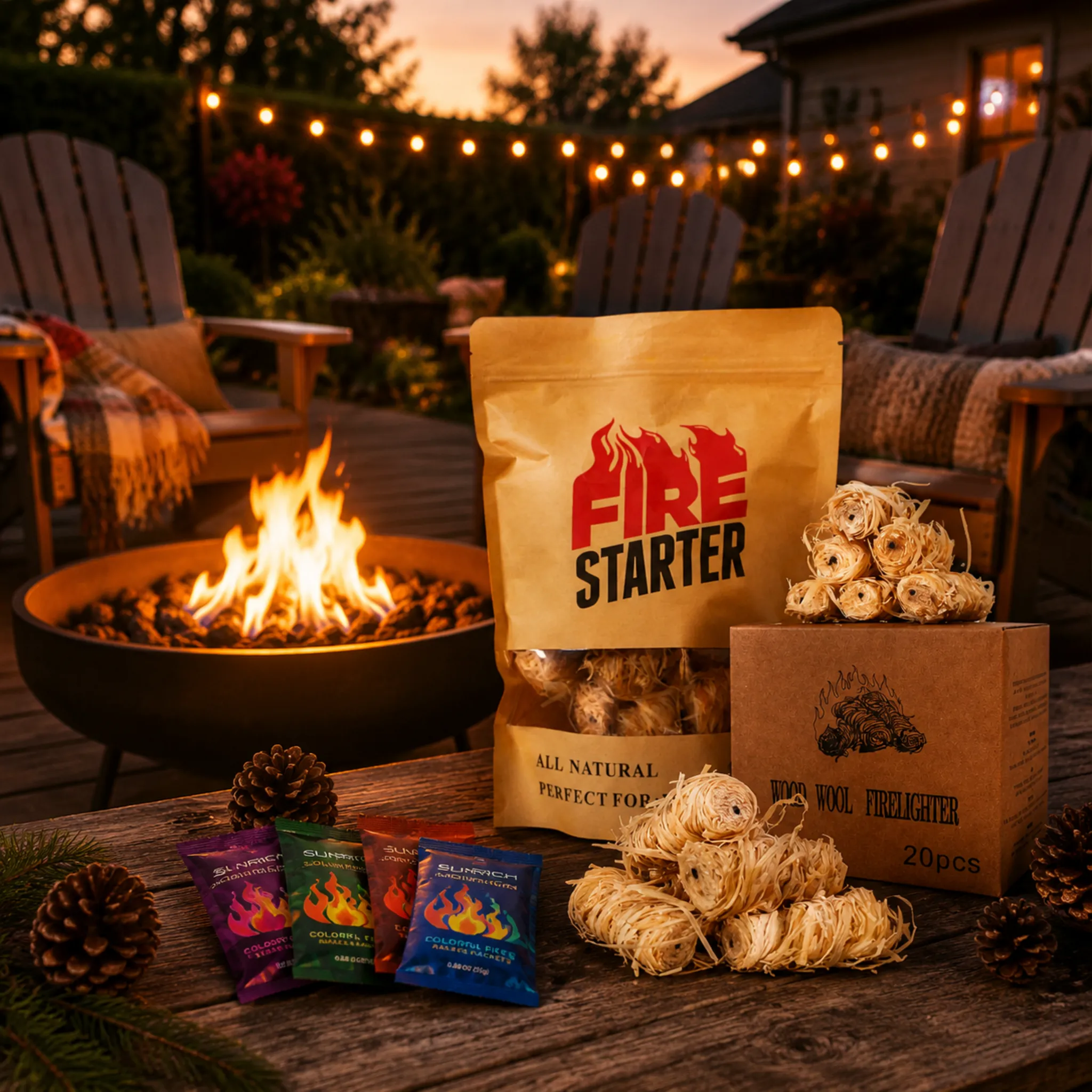
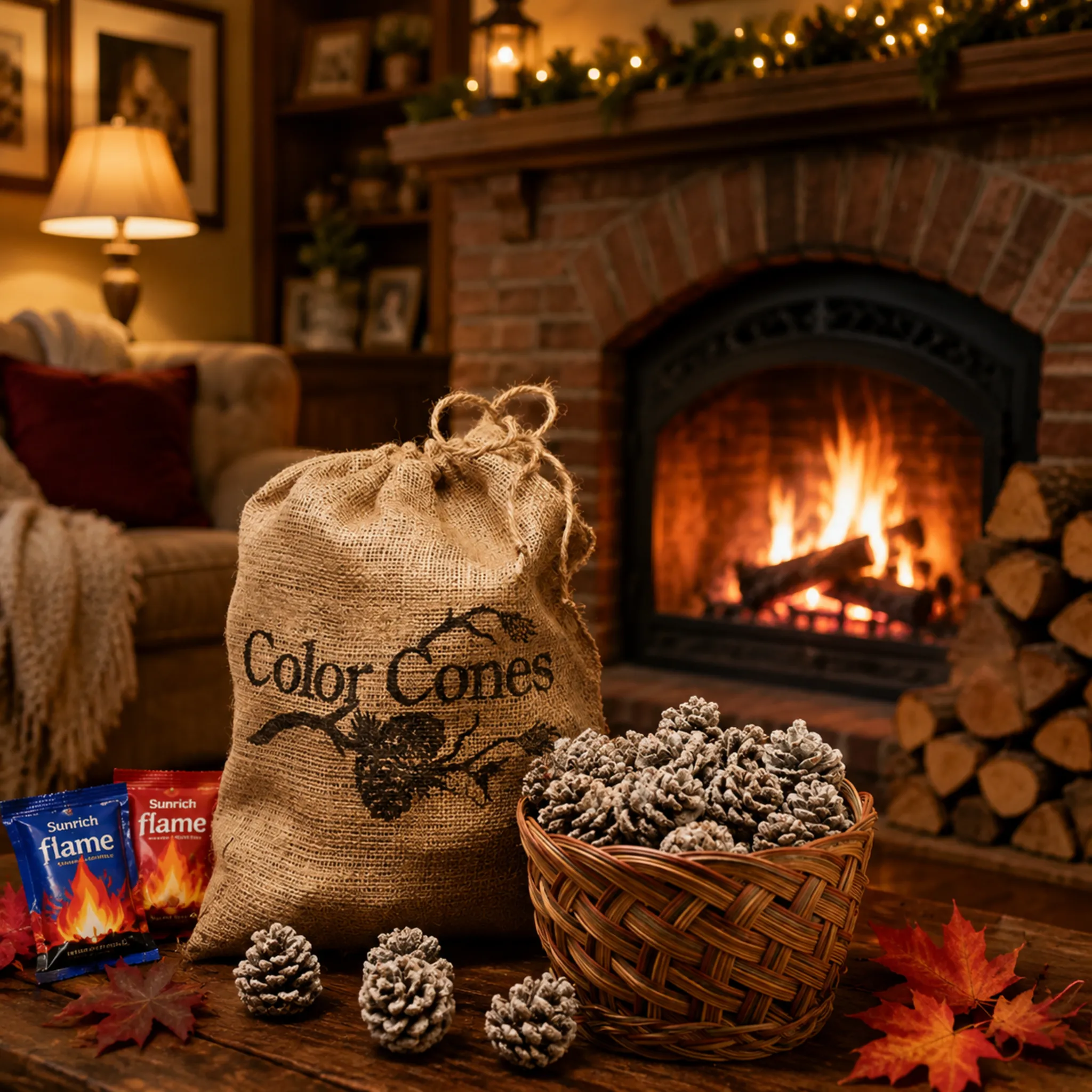
Sunrich offers Magic Fire powder in three formats: plastic bags, kraft paper bags, and plastic jars. The kraft paper option is recyclable and largely biodegradable; the plastic formats are durable but not biodegradable. Buyers choose the format that matches their sustainability positioning and moisture-protection needs.

Let me be direct about the materials, because vague claims help nobody in a compliance-driven B2B deal. Our standard sachet uses a heat-sealed film that keeps moisture out. Moisture is the enemy of color-flame powder. Damp granules burn poorly and produce weak color. So every packaging decision starts with barrier performance, then we work backward toward sustainability.
The three formats we run on our lines
Here is how the options compare in practice:
| Format | Main material | Recyclable? | Biodegradable? | Moisture barrier |
|---|---|---|---|---|
| Plastic bag / foil sachet | PE or metallized film | Rarely (composite) | No | Excellent |
| Kraft paper bag | Kraft paper, thin inner liner | Yes, in most paper streams | Largely, depending on liner | Good |
| Plastic jar | PET or PP | Yes, where collected | No | Excellent |
The honest nuance is the liner. Pure uncoated kraft paper cannot protect a hygroscopic powder 1 on a six-week sea shipment to Rotterdam or Los Angeles. So kraft pouches usually carry a thin inner barrier. We keep that layer as thin as possible so the pouch stays paper-dominant and acceptable in paper recycling streams. When a client asks for a fully compostable structure, we discuss PLA-coated 2 or aluminum-free barrier papers, which cost more but remove the mixed-material problem.
One more point matters. The single-use sachet is often thrown into the fire unopened, so it is consumed rather than recycled. In that case, the outer retail box carries most of the recyclability story. Our display boxes are plain cardboard, which goes into any curbside paper bin 3. We learned early on that buyers appreciate this two-layer logic: the sachet is engineered for clean combustion, and the outer packaging is engineered for recycling.
Can I get SGS or Intertek test reports proving the packaging contains no harmful chemicals?
A purchasing manager from the UK once told me she had walked away from a cheaper supplier purely because the test reports arrived as blurry photos with mismatched batch numbers. Documentation quality is a quality signal.
Yes. Sunrich provides SGS and Intertek test reports covering both the Magic Fire powder and its packaging, alongside ISO 9001, BSCI, and CE certification. These reports verify the absence of harmful chemicals and support customs clearance and retail compliance in the US and EU.

Compliance is our first differentiator, so let me explain what these reports actually cover, because many buyers only see the acronyms. Third-party labs like SGS and Intertek test packaging materials for restricted substances, heavy metals, and chemical migration 4. They also test the powder formulation itself. For a product that goes into a family campfire, both layers matter. Packaging that leaches nothing is meaningless if the contents are questionable, and a clean formula is undermined by a contaminated pouch.
What the documentation package includes
When you place an order with us, the compliance file typically contains:
- SGS or Intertek test reports for the powder formulation, confirming no harmful chemicals.
- Material composition data for the chosen packaging format, including any liner or coating.
- CE documentation 5 for the European market.
- ISO 9001 6 quality-system certification for our production process.
- BSCI audit results confirming social compliance at the factory level.
Two practical tips from seventeen-plus years of exporting to thirty-plus countries. First, always check that the report's batch or product reference matches what you are actually buying. A generic report for "fire additive" tells you very little. Second, ask how recent the report is. We re-test regularly because retailers like large US home-improvement chains often demand reports dated within a defined validity window. If a supplier hesitates on either point, treat that as a red flag. We keep our reports current precisely because our buyers cannot afford a container held at customs over a paperwork gap.
How does Sunrich's kraft bag option compare to plastic bags or jars for my sustainability positioning?
Choosing between kraft and plastic is a trade-off we weigh with almost every new client, and the right answer depends on where the product sits on the shelf.
Kraft bags deliver the strongest sustainability story: recyclable, largely biodegradable, and visually eco-branded. Plastic bags cost less but weaken green positioning. Jars offer premium display and reusability but remain plastic. For eco-focused brands, kraft is the clear choice; for value lines, plastic still works.

Here is the comparison the way I lay it out for buyers during sampling:
| Factor | Kraft paper bag | Plastic bag | Plastic jar |
|---|---|---|---|
| Sustainability story | Strong | Weak | Moderate (reusable) |
| Recyclability | High (paper stream) | Low (film composite) | High where PET/PP collected |
| Unit cost | Medium | Lowest | Highest |
| Shelf impression | Natural, premium eco | Functional, value | Premium, gift-ready |
| Moisture protection | Good with liner | Excellent | Excellent |
| Print quality | Earthy, matte | Vivid, glossy | Full-wrap label |
A few observations from real orders. Our European clients — especially in Germany, the Netherlands, and France — increasingly default to kraft. EU packaging regulations 7 are tightening, and retail buyers there openly favor paper-based formats. In the US, the picture is more mixed. Camping and outdoor brands lean kraft for its trail-friendly aesthetic. BBQ distributors often stay with plastic bags because they compete on price at big-box retail.
The jar deserves a fair hearing too. It photographs well, stacks neatly, and allows repeat dosing rather than single-use sachets. Some buyers position the jar as the "less waste per gram" option because one jar replaces many sachets. That is a legitimate angle, but it should be presented honestly: the jar is still plastic. We usually advise brands to pick one format and one clear message rather than making broad eco claims that cannot survive scrutiny. Greenwashing accusations damage a brand faster than a slightly higher packaging cost ever will.
Can I request custom eco-friendly packaging and labeling for my private-label Magic Fire product line?
One of the more memorable projects on our line was a Canadian outdoor brand that wanted a fully kraft-wrapped retail box with soy-based inks and a bilingual warning panel. We had shelf-ready samples out within weeks.
Yes. Sunrich provides full OEM/ODM customization: kraft or compostable pouch materials, custom pouch sizes, private-label branding, custom display boxes, warning labels, barcodes, and multilingual compliance text. Low MOQs are available for trial orders, and all custom packaging retains SGS/Intertek-backed documentation.

One-stop customization is the third pillar of how we work, so let me map out what is actually adjustable and what the process looks like.
What you can customize
| Element | Options |
|---|---|
| Pouch material | Kraft paper, PLA-coated paper, standard film |
| Pouch size / fill weight | Adjustable to your target burn time and price point |
| Branding | Your logo, colors, artwork — full private label |
| Outer packaging | Custom retail boxes, flip-top display boxes, counter units |
| Labels | Warning labels, usage instructions, barcodes, EAN/UPC |
| Languages | English, German, French, Dutch, Polish, and more |
How a typical private-label project runs
- You share your brand guidelines and target market. We flag any regulatory labeling requirements for that region.
- We propose packaging structures and send material samples so you can feel the kraft weight and check the liner.
- Our team produces printed pre-production samples. Because our lines run strict batch-to-batch quality control, the sample you approve genuinely reflects mass production.
- We finalize compliance documents in your brand's name where required and arrange optimized logistics.
Two honest cautions. First, compostable films have longer lead times than standard materials, so build that into your launch calendar. Second, warning labels are not optional decoration. Color-flame products need clear "do not cook over colored flames" and "do not open the sachet" text in the destination language. We include this by default because a compliant label protects your brand as much as ours. Trial orders at flexible MOQs let you test a kraft-based eco line in one market before committing to a full container.
Conclusion
Magic Fire powder packaging can genuinely be eco-friendly and recyclable — if you choose kraft or paper-based formats, verify liners, and demand SGS or Intertek reports. We build all three into every order.
Footnotes
1. Explains moisture-absorbing property affecting packaging barrier decisions. ↩︎
2. Background on PLA bioplastic used in compostable packaging liners. ↩︎
3. EPA guidance on paper recycling supports claim about curbside collection streams. ↩︎
4. Background on chemical migration testing relevant to packaging safety claims. ↩︎
5. Official EU source explaining CE marking requirements referenced in compliance file. ↩︎
6. Official


 English
 Spanish
 German
 French
 Arabic
 Portuguese
Join the Conversation