







Learning to verify test reports are genuine when buying Magic Fire Powder saved one of our earliest distributors from a costly recall CE marking 1. Fake paperwork floods this niche, and one forged PDF can destroy your brand.
To verify a Magic Fire Powder test report is genuine, confirm the issuing lab's accreditation in public registries, contact the lab directly to validate the report number, and match the batch code on the report to the code printed on your actual shipment.
That is the short answer. Now let me walk you through each verification step, based on what we see across real B2B orders every month.
How can I check if a Magic Fire Powder test report matches the actual product batch?
A German fireplace distributor once showed me a competitor's report dated two years before the sachets in his warehouse were even produced. The document was real. The batch linkage was not.
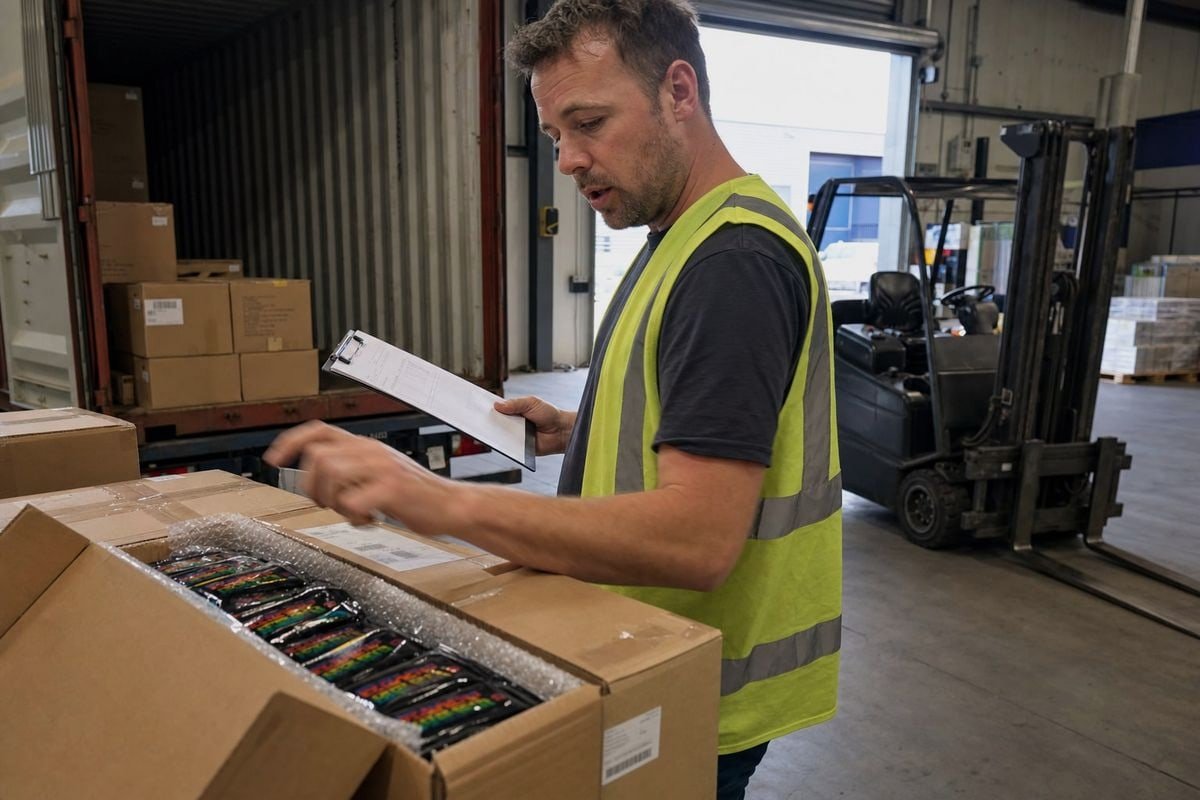
Match the batch or lot number printed on the report against the code on the product packaging, the packing list, and the customs documents. If the numbers differ, or the report shows no lot code at all, it does not prove anything about your specific shipment.

A test report is only evidence for the exact sample the lab tested. This sounds obvious. Yet most buyers skip the batch check because the PDF looks official. In our export documentation for color-flame packets, every SGS or Intertek report references a specific production lot. That lot code also appears on the outer cartons and the commercial invoice. The chain must be unbroken.
What to compare, line by line
Start with the physical product. Find the lot code on the sachet, the inner box, or the master carton. Then open the report and locate the sample description section. Compare these fields:
| Field on Report | Must Match | Where to Cross-Check |
|---|---|---|
| Batch / lot number | Exactly | Product packaging, carton label |
| Product name and model | Exactly | Purchase order, invoice |
| Sample description | Closely | Physical product (color, weight, format) |
| Test date | Logically | Production date — test must come after |
| Applicant / manufacturer name | Exactly | Your supplier's registered company name |
Watch the timeline
A report dated before the production date is impossible. A report dated three years ago may be authentic but expired in practical terms, because formulas and suppliers of raw material change. We re-test our Magic Fire color-flame products on a regular cycle precisely because a single old report cannot cover ongoing production. Ask your supplier when the batch was made and when it was tested. If they hesitate, that hesitation is data.
Also check whose name is on the report. If the applicant is a trading company you have never heard of, the report may have been borrowed from another client entirely.
What certification numbers should I verify directly with ISO, CE, or SGS before trusting a supplier's report?
Certification talk comes up in almost every first call we take from US and European purchasing managers. The smart ones never ask "are you certified?" They ask for the numbers.
Verify the lab's ISO/IEC 17025 accreditation number in ILAC-MRA or national registries, the supplier's ISO 9001 certificate number with the issuing body, the SGS or Intertek report number in the lab's own portal, and the CE technical file reference for the product category.

Each certificate type answers a different question. Confusing them is the most common mistake I see buyers make. Here is how to separate them:
| Certificate | What It Actually Proves | Where to Verify |
|---|---|---|
| ISO/IEC 17025 2 | The testing lab is competent and accredited | ILAC-MRA 3, A2LA, or national accreditation body databases |
| ISO 9001 4 | The factory runs a certified quality management system | The certification body's public certificate lookup |
| CE marking 5 | The product meets applicable EU directives | Supplier's Declaration of Conformity 6 and technical file |
| SGS / Intertek / BV report | A specific sample passed specific tests | The lab's own online verification portal or hotline |
| BSCI | The factory meets social compliance standards | The audit platform, via your buying office |
Check the accreditation scope, not just the name
A lab can be genuinely accredited but only for, say, textile testing. If your Magic Fire Powder report cites chemical or heavy-metal analysis, the accreditation scope must cover that test category. Public registries list the scope. Read it.
Ask for numbers before samples
In our experience exporting to 30+ countries, serious buyers request our ISO 9001, BSCI, CE, and SGS/Intertek document numbers before they even request pricing. That order of operations is correct. A supplier who resists sharing verifiable numbers is telling you something. We share ours on the first request, because verification costs an honest factory nothing and costs a dishonest one everything.
Remember one caveat: accreditation proves the lab is real. It does not prove your specific PDF came from that lab. That requires the next step.
How do I contact the testing lab to confirm a report wasn't altered or reused from another client?
Direct lab confirmation is the step that exposes the most fraud, and it takes less than a day. I have watched it collapse a competitor's "certified" offer in a single email.
Find the lab's contact details on its official website — never from the seller's document — then email or call with the report number, issue date, and applicant name. Ask the lab to confirm the report exists, is unmodified, and was issued to that applicant.
The reason you must source the contact details independently is simple. Forgers who fake a report will also fake the phone number and email printed on it. If you call the number on the PDF, you may be calling the forger. Search the lab's name yourself, go to its official domain, and use the verification channel listed there. Major labs like SGS, Intertek, and Bureau Veritas 7 all offer report-verification services, and many host online portals where a report number returns the original result.
A simple verification workflow
- Note the report number, issue date, lab branch, and applicant name from the PDF.
- Search the lab independently and open its official website.
- Use the lab's verification portal if one exists; enter the report number.
- If no portal exists, email the lab's verification department with the details.
- Compare the lab's confirmed data against your PDF field by field.
- Confirm the applicant name matches your supplier, not an unrelated company.
What the lab can and cannot tell you
Labs will confirm whether a report number is genuine and whether the content matches. Some will not disclose full results to third parties for confidentiality reasons. That is fine. Even a yes/no authenticity check filters out edited and recycled documents. When buyers verify our reports this way, the process usually closes within 24 to 48 hours, and it builds trust faster than any sales pitch we could write.
Be alert if the "lab" replies from a free email address, or if the supplier insists on handling the verification for you. Genuine verification never needs the seller in the middle.
Which red flags in a test report suggest my supplier might be hiding non-compliance issues?
Seventeen years of side-by-side comparisons — our reports versus documents buyers forward to us for a second opinion — have taught our QC team to spot forgery patterns quickly.
Major red flags include missing batch numbers, mismatched fonts or text alignment, suspiciously perfect results, scanned-only files with no metadata, generic descriptions that fit any product, an applicant name that differs from your supplier, and reports that cannot be found in the lab's system.

Red flags come in three layers: the document itself, the data inside it, and the supplier's behavior around it. Weigh all three together.
Layer one: document forensics
| Red Flag | Why It Matters |
|---|---|
| Font or spacing changes mid-document | Suggests numbers or dates were edited over an original |
| Blurry logo or stamp on a sharp page | Indicates copy-paste from another document |
| Scanned image only, no text layer | Common tactic to hide digital edits |
| No report number or accreditation mark | Legitimate labs always include both |
| Same template reused across different products | Points to a recycled or fabricated file |
Layer two: data plausibility
Real lab data has texture. Results vary slightly. A report where every measured value lands exactly on the specification limit, or where all figures are perfectly round, deserves suspicion. Also check that the test methods listed actually apply to a color-flame powder product. A report citing methods for an unrelated category means the document was borrowed.
Layer three: supplier behavior
Behavior often reveals more than paper. Watch for suppliers who only send screenshots, refuse to name the lab branch, discourage direct lab contact, or cannot produce reports from earlier batches for comparison. When buyers ask us for historical reports across production runs, we can show consistent letterheads, signatories, and formats spanning years. A supplier who cannot demonstrate that continuity may not have a real testing history at all. And never attempt hazardous home chemistry tests on flame products yourself; leave analysis to accredited labs and rely on documented verification instead.
Conclusion
Fake test reports are cheap to make and expensive to trust. One forged PDF can mean seized shipments, retailer delisting, and liability you never priced in. The solution is a simple discipline: verify the lab, verify the report number, verify the batch.
Our rule for buyers is blunt. If the lab cannot be independently verified, if the report number fails the lab's own lookup, or if the batch code does not match your shipment, treat the report as unverified — full stop. Suppliers with genuine ISO, CE, BSCI, and SGS/Intertek documentation welcome this scrutiny, because we know verification is where honest factories win. Apply the checklist in this article before your next Magic Fire Powder order, and let the paperwork prove itself.
Footnotes
1. EU official page defines CE marking requirements mentioned as a certificate type to verify. ↩︎
2. Official ISO standard page explaining lab accreditation requirements referenced in the article. ↩︎
3. Official registry for verifying lab accreditation under the ILAC Mutual Recognition Arrangement. ↩︎
4. Background on the quality management standard suppliers cite for certification numbers. ↩︎
5. Explains what CE marking legally certifies for products sold in the EU. ↩︎
6. Explains the document type suppliers must provide to support CE marking claims. ↩︎
7. Background on one of the major testing labs mentioned for report verification services. ↩︎

 English
  Spanish
  German
  French
  Arabic
  Portuguese
Join the Conversation