







Verifying whether a wood fire starter supplier truly supplies chain retailers is a question I hear weekly, because on our production floor we see how often bold claims collapse under scrutiny. Buyers get burned. A supplier says "we sell to major chains," the buyer places a container order, and then the goods arrive with packaging that no retail buyer would ever accept. The stakes are real: rejected shipments, lost listings, and a damaged reputation with your own retail accounts. The good news is that genuine retail supply always leaves a paper trail, and you can check it before you commit a single dollar.
To verify a wood fire starter supplier supplies chain retailers, request redacted invoices or bills of lading naming the retailer, check customs trade data, confirm GTIN/barcode ownership via GS1, inspect retail-ready packaging specs, and validate ISO 9001, BSCI, and FSC certificates through official registries.
Claims are cheap. Evidence is not. Below, I break down the exact documents, certifications, capacity signals, and reference checks that separate real chain-retail suppliers from those who only talk like one.
What Documentation Should I Request to Confirm a Supplier's Chain Retail History?
A few years back, a German distributor asked us to prove our export history before a trial order of wax-dipped wood rolls. We sent redacted shipping documents within a day. That exchange taught me what serious buyers actually look for.
Request redacted commercial invoices naming the retailer or its distributor, bills of lading showing shipments to retail distribution centers, retailer vendor codes, packaging dielines with retailer-specific labeling, and authorization or vendor agreements. Cross-check these against public customs trade data and import records.

Documentation is the backbone of verification because paperwork is hard to fake consistently. A supplier can print a Walmart 1 logo on a slide deck in five minutes. But faking a bill of lading, a vendor compliance manual, a barcode registration, and a matching customs record all at once is nearly impossible. So your job is to ask for several document types and check whether they tell the same story.
The Document Hierarchy: Strong to Weak
Not all documents carry equal weight. In our own dealings with large retail sourcing channels, some papers settle the question instantly, while others prove very little on their own.
| Evidence Type | Strength | What It Proves |
|---|---|---|
| Bill of lading to a retail distribution center | Very strong | Physical goods actually shipped to the retailer's network |
| Redacted commercial invoice naming the retailer | Very strong | A real commercial transaction occurred |
| Retailer vendor code or vendor agreement | Strong | The supplier passed onboarding and vendor compliance standards |
| Retail-ready packaging dielines with GTINs | Strong | The supplier understands shelf-ready requirements |
| Photos of products on retail shelves | Moderate | Product reached shelves, but maybe via a middleman |
| Retailer logos on a website | Weak | Anyone can add a logo |
| Verbal claims of "supplying major chains" | Very weak | Nothing verifiable |
Cross-Check Against Independent Sources
Never rely on supplier-provided documents alone. Customs trade data 2 platforms let you search import records by company name. If a supplier claims regular container shipments to a US chain, those shipments should appear in public import records. You can also check the retailer's own website for the supplier's brand or SKU, and inspect the "Manufactured for" or "Distributed by" fine print on private-label fire starter packaging. If the address on that fine print matches the supplier's headquarters, you have independent confirmation. If nothing lines up, ask why.
One more distinction matters. Many factories sell into wholesale distribution channels, and their goods eventually reach chains through importers or brokers. That is legitimate, but it is not the same as being a direct, approved vendor. Ask the supplier to state clearly whether their relationship is direct, indirect, or through a distributor.
Can I Verify Certifications Like ISO 9001 or BSCI Before Trusting Their Retail Claims?
Compliance audits are a routine part of our year in Ningbo, and one lesson from hosting BSCI 3 and SGS auditors stands out: real certificates are always traceable, because the auditing bodies want them to be.
Yes. Ask for the full certificate copies, then verify the certificate number, company name, scope, and expiry date directly through the issuing body's online registry — IAF CertSearch for ISO 9001, the amfori platform for BSCI, and the FSC certificate database for FSC certification. Mismatches are disqualifying.

Certifications matter for two reasons. First, most chain retailers treat ISO 9001 4, BSCI, and product test reports as hard prerequisites, so a supplier with valid, current certificates has at least cleared the entry gate. Second, certificate fraud is a genuine problem in sourcing, and checking a registry takes ten minutes. Skipping that check is negligence, not trust.
A Simple Certificate Verification Process
- Request the full PDF or scanned certificate, not a cropped screenshot.
- Note the certificate number, legal company name, site address, scope statement, and validity dates.
- Look up the certificate in the official database of the issuing or accrediting body.
- Confirm the legal name and address match the factory you are actually buying from — not a related trading company.
- Check the scope covers the product category. An ISO 9001 scope for "textile production" tells you nothing about fire starters.
- For SGS or Intertek test reports, request the report number and verify it with the lab directly.
Why Scope and Site Matter for Wood Fire Starters
Wood fire starters sit at an interesting intersection. They are a consumer product, so retailers expect quality-system and social-compliance audits. But they also contain wood fiber, so origin questions arise. FSC certification 5, chain-of-custody documents, and certificates of origin show the wood inputs are legal and traceable. In our experience exporting to Germany and the UK, buyers increasingly ask about wood sourcing alongside the usual CE marking 6 and lab test reports. A supplier who can only show a generic ISO certificate for a different site, or who cannot explain where their wood shavings come from, has not truly operated inside a retail vendor compliance program.
Also watch for the trading-company shuffle. Some sellers present certificates issued to a partner factory they do not control. If the certified entity and the contracting entity differ, ask for the relationship in writing and consider a third-party facility audit.
How Do I Confirm a Supplier's Production Capacity Matches Chain Retailer Order Volumes?
There is a trade-off I weigh every time we quote a large program: promising aggressive volumes wins orders, but overpromising destroys retail relationships when a distribution center charges chargebacks for late delivery. Honest capacity numbers are a survival skill, not modesty.
Verify manufacturing capacity by requesting monthly output figures per product line, comparing them against shipment history in customs trade data, conducting a factory audit or video tour, checking staffing and equipment counts, and confirming EDI capabilities and palletization experience required by big-box logistics.
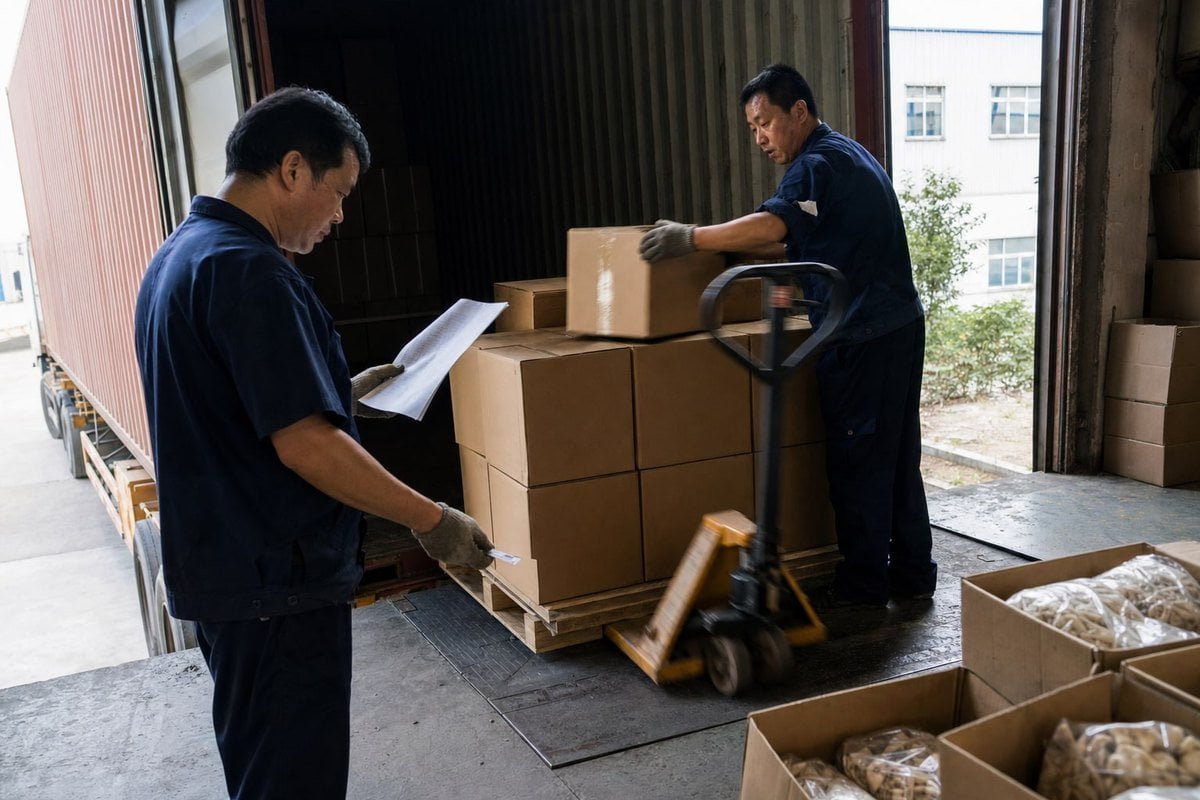
Chain retail volume breaks small workshops. A regional wholesaler might order a few pallets per quarter. A national chain rollout can demand multiple containers per month, delivered on strict windows, with retail-ready packaging and zero tolerance for mixed or short cartons. A supplier who has genuinely served chains will talk fluently about all of this. A supplier who has not will get vague fast.
Capacity Signals Versus Retail Volume Requirements
| What Chains Typically Demand | What to Verify at the Supplier |
|---|---|
| Multiple 40' containers per month during season | Stated monthly output, line count, shift structure, and matching import records |
| Fixed delivery windows at distribution centers | On-time shipment history and production planning process |
| Retail-ready packaging: display cartons, inner packs, GTINs, batch codes | Existing dielines, barcode ownership, private label manufacturing samples |
| Automated ordering and invoicing | Confirmed EDI capabilities or a 3PL/partner who handles EDI |
| Consistent quality across reorders | Batch-to-batch QC records and retained samples |
| Seasonal surge (Q3–Q4 for fire starters) | Raw material stocking plan for wood fiber and wax |
How to Test the Numbers
Ask three simple questions. First, what is your monthly capacity for this exact SKU, and how much is already committed? Second, can you show shipment records from your last peak season? Third, walk me through your process from wood shaving intake to sealed retail carton. At our factory, we answer with line-by-line figures because 17 years of seasonal fire-product cycles taught us that a buyer who checks capacity now saves both sides pain later.
Then corroborate. A video factory tour reveals whether the equipment matches the claims. Customs trade data reveals whether the shipment volume matches the story. A third-party inspection firm 7 can count lines, workers, and warehouse stock in one visit. If the supplier claims chain-level volume but their import records show two small shipments a year, the math does not work.
Should I Ask for References or Case Studies From Their Existing Retail Clients?
A Canadian buyer once asked us for references before a private-label program 8, and I appreciated the request — because suppliers who fear reference checks are usually hiding something, while suppliers with real accounts are proud of them.
Yes, always ask. Request two or three references or anonymized case studies covering order volume, product type, and duration. Validate them independently: confirm the contact through LinkedIn or the company's official domain, and ask specific questions about lead times, defect handling, and compliance performance.
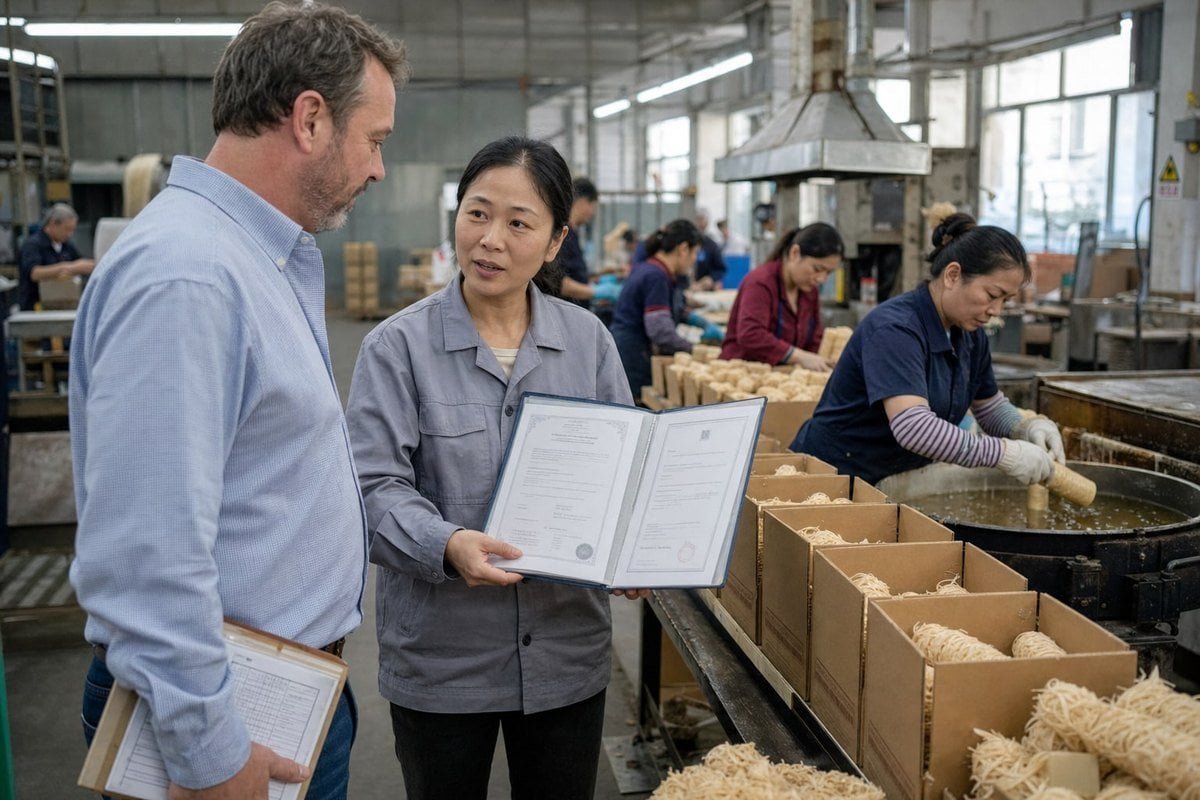
References are the human layer of verification. Documents show what happened; references show how the supplier behaves when things go wrong — a late vessel, a failed inspection, a packaging change requested mid-production. That behavioral evidence is exactly what you cannot get from a certificate.
That said, references come with limits, and you should handle them carefully.
Getting Useful References Without Friction
Many legitimate suppliers cannot name chain retailers directly because of non-disclosure agreements. That is normal. In our own case, some private-label agreements restrict what we can disclose, so we offer anonymized case studies instead: product type, market, annual volume range, packaging format, and program duration. A supplier who explains an NDA and offers a redacted alternative is credible. A supplier who uses "confidentiality" to avoid providing anything at all is not.
When you do get a reference, verify the person before you trust the answers. Check that their email domain matches the company. Look at their LinkedIn role — a National Account Manager or purchasing lead is a meaningful contact; a generic Gmail address is not. Then ask questions that only a real client could answer well:
- How long have you worked with this supplier, and across how many reorders?
- Have they ever missed a delivery window, and how did they respond?
- Did the mass-production quality match the approved sample?
- How did they handle a quality complaint or a failed inspection?
- Do they manage barcodes, warning labels, and retail-ready packaging themselves?
Reading Case Studies Critically
Treat case studies as claims to test, not proof. If a case study mentions a specific retail program, see whether the product still appears on that retailer's website or shelves, and check the "Distributed by" fine print. Consistency between the story, the shelf, and the shipping records is what you are looking for. One matching data point is coincidence. Three matching data points are a supply relationship.
Conclusion
Verifying a wood fire starter supplier's chain-retail claims comes down to one habit: demand evidence, then cross-check it. Documents, registries, capacity data, and references must all agree before you order.
Ask for redacted invoices and bills of lading. Validate ISO 9001, BSCI, and FSC certificates in official databases. Test manufacturing capacity against customs records and a factory tour. Then talk to real references. Suppliers with genuine chain-retail history — ourselves included, after 17 years of building compliant, shelf-ready fire products for buyers in 30+ countries — will welcome every one of these checks. The ones who resist have just answered your question for you.
Footnotes
1. Background on the retail chain referenced as an example of verifiable retailer relationships. ↩︎
2. Replaced 403 error with an authoritative government resource for international trade data and analysis. ↩︎
3. Updated broken 404 link to the current official amfori BSCI program page. ↩︎
4. Replaced 403 error with a stable Wikipedia overview of the quality management standard. ↩︎
5. Forest Stewardship Council's official site verifies chain-of-custody wood sourcing certification claims. ↩︎
6. European Commission's official page explains CE marking compliance requirements for consumer products. ↩︎
7. SGS is a leading third-party inspection provider used to verify factory capacity and compliance. ↩︎
8. Background explanation of private-label manufacturing relevant to retail sourcing arrangements. ↩︎



 English
  Spanish
  German
  French
  Arabic
  Portuguese
Join the Conversation