






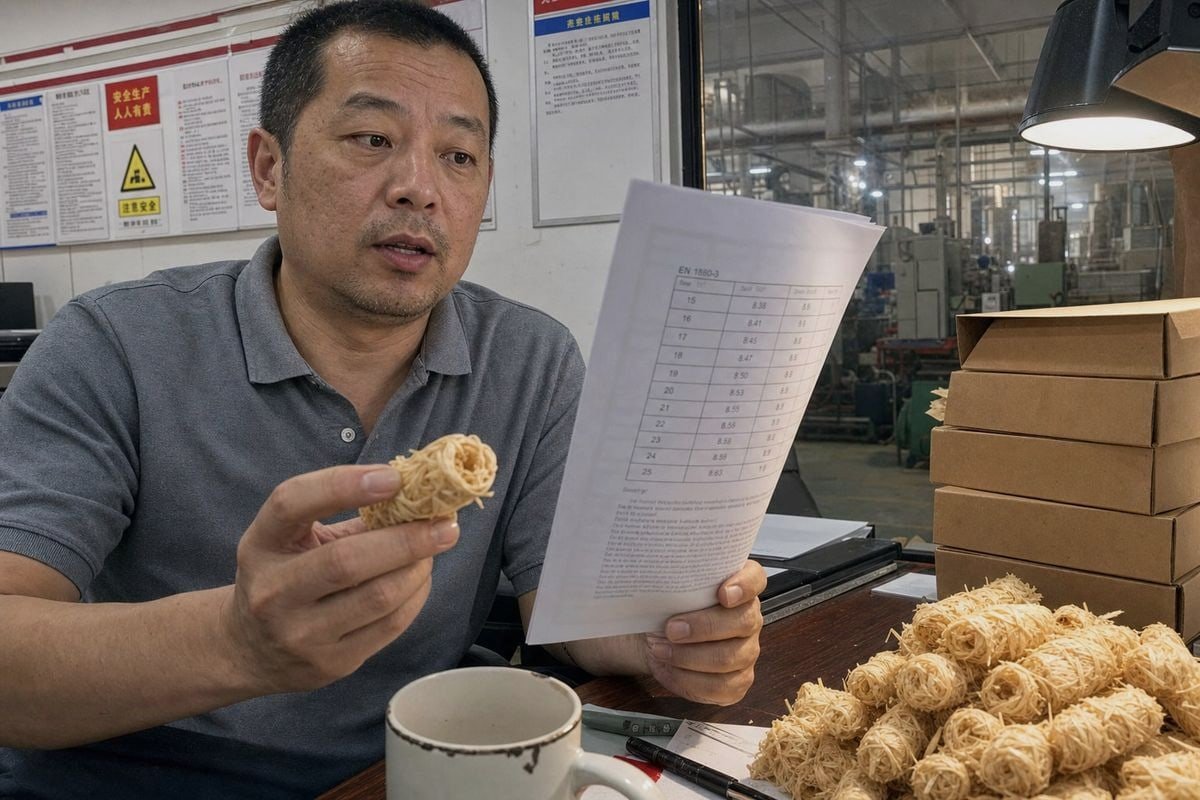
Verifying EN 1860-3 test reports is a question I answer weekly, because buyers get burned by fake paperwork before our wax-dipped wood firestarters even leave the factory floor.
To verify EN 1860-3 test reports, confirm the report was issued by an ISO/IEC 17025-accredited lab, matches your exact product and batch, references the current standard edition, lists all required safety tests with results, and can be validated directly with the issuing laboratory.
That answer sounds simple. In practice, each step has traps. Let me walk you through them one by one, based on what actually happens in real sourcing deals.
What details should I check to confirm an EN 1860-3 test report is genuine and not fabricated?
A buyer from Germany once forwarded me a competitor's report to review. Within five minutes, our compliance team spotted three inconsistencies. Fabricated reports are more common than most importers realize.
Check the lab's name and accreditation number, the report number, the standard edition cited, the exact product description, the test date, listed test methods with measured results, and consistent company details. Then call or email the lab directly to confirm the report number exists in their system.
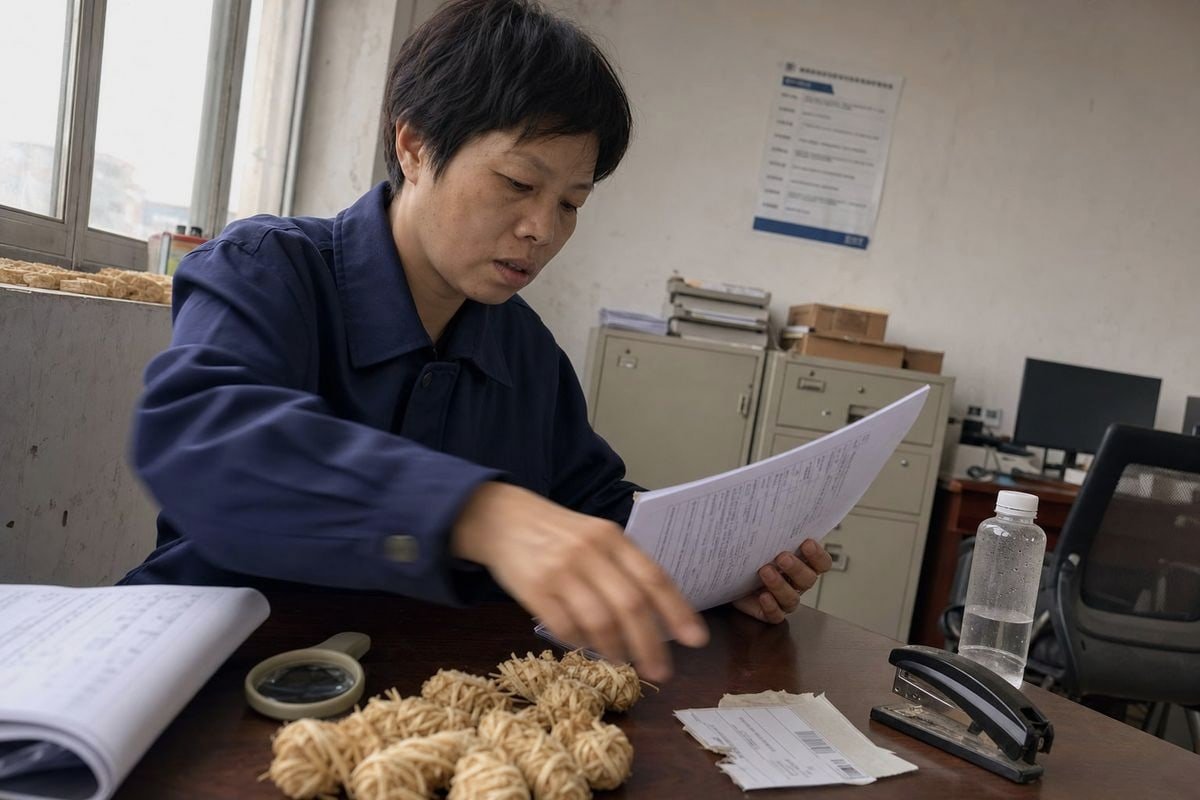
A genuine EN 1860-3 report follows a predictable structure. Once you know that structure, weak or altered documents stand out fast. In our 17+ years exporting fire-starting goods to 30+ markets, we have reviewed hundreds of reports, both our own from SGS and Intertek and others sent to us by buyers for a second opinion.
The anatomy of a genuine report
Start with the header. It must name the laboratory, its address, and its accreditation reference. Then check the body. A real report never just says "passed." It lists each test method, the measured values, and the pass criteria side by side. If the document only offers a one-line conclusion, treat it as marketing, not evidence.
Here is a quick comparison of what strong and weak reports look like:
| Element | Strong Report | Weak or Suspect Report |
|---|---|---|
| Lab identity | Named lab, accreditation number, contact details | Generic logo, no accreditation reference |
| Product ID | Exact product name, model, formulation, packaging | Vague "firelighter" description only |
| Standard cited | EN 1860-3 with the edition year | Standard name without an edition, or wrong standard |
| Results | Measured values per test method | Single "pass" statement, no data |
| Traceability | Report number verifiable with the lab | Number missing or unverifiable |
| Dates | Test date, issue date, sample receipt date | Only one date, or dates that conflict |
Cross-checking beyond the paper
Do not stop at the PDF. Compare the company name and address on the report with your supplier's business license and your commercial invoice. If the report names a different manufacturer, ask why. Trading companies often circulate reports borrowed from factories they no longer use. We are a real factory in China, headquartered in Liuyang with production in Ningbo, so our reports carry our own name. That should be your baseline expectation from any serious supplier.
Also ask for the raw evidence. Sample photos from the test session, the sample submission form, or even short video clips make fabrication far harder. A supplier who resists sharing these usually has a reason.
Which testing labs are accredited to issue valid EN 1860-3 reports for wood fire starters?
When we set up our own testing routine for wax-dipped wood rolls, choosing the right lab was the first decision. The wrong choice would have made every report worthless in Europe.
Valid EN 1860-3 reports must come from laboratories accredited to ISO/IEC 17025 with firelighter testing in their accreditation scope. Recognized options include major international labs like SGS, Intertek, and TÜV, plus DIN CERTCO-authorized laboratories and national labs accredited by EU accreditation bodies.
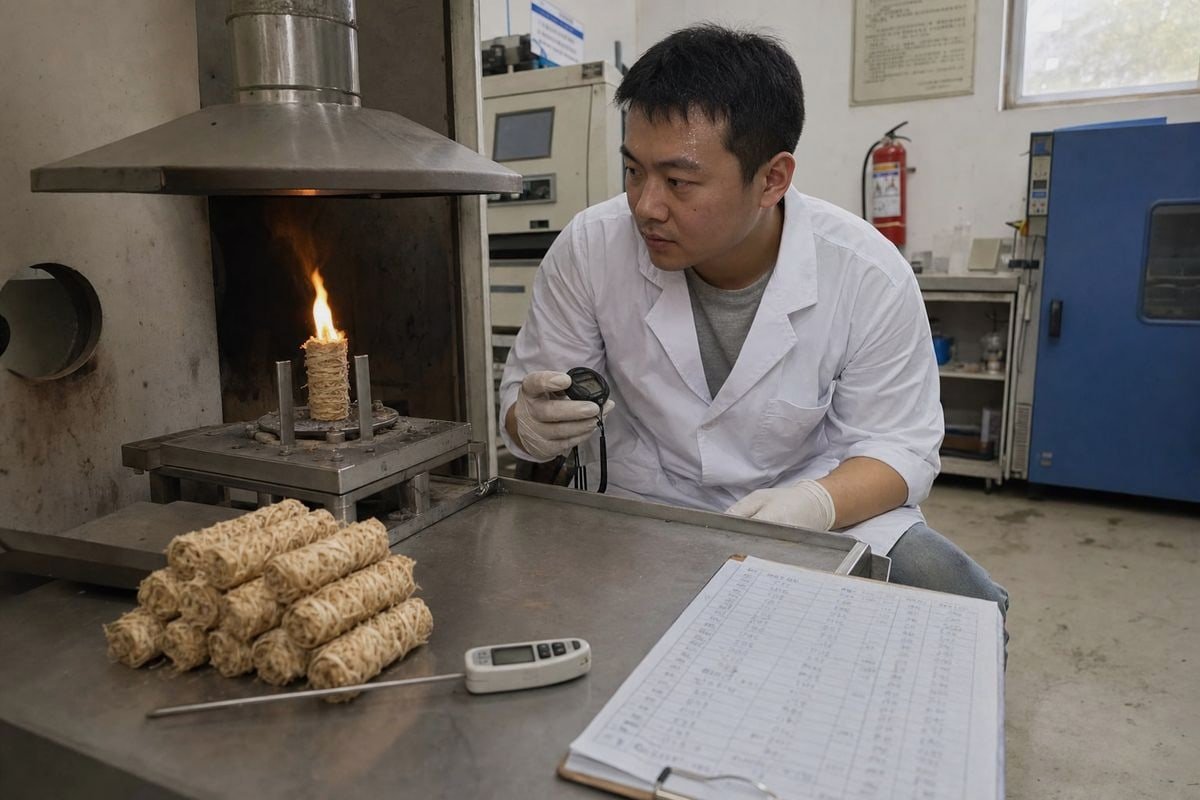
Accreditation is the foundation of the whole verification exercise. A test done by an unaccredited lab, or by the supplier's own in-house facility, may be technically fine. But it carries no formal weight with customs authorities, retailers, or certification schemes. DIN CERTCO 1's grill firelighter program, for example, explicitly requires a test report that meets ISO/IEC 17025 2 and routes testing through authorized laboratories. Our buyers in Germany, France, and the Netherlands almost always insist on this level of rigor, which is why we work with SGS and Intertek rather than shortcuts.
How to confirm a lab is genuinely accredited
Accreditation is public information. Each European country has one national accreditation body 3, and most publish searchable databases of accredited labs and their scopes. Follow this process:
- Find the accreditation body named on the report, such as DAkkS in Germany, UKAS 4 in the UK, or COFRAC in France. For Chinese labs, look for CNAS 5.
- Search that body's online database for the laboratory's name or accreditation number.
- Open the lab's scope of accreditation and confirm it covers firelighter or solid-fuel ignition testing, ideally naming EN 1860-3.
- Check that the accreditation was valid on the report's test date, not just today.
Types of labs and their standing
| Lab Type | Typical Standing for EN 1860-3 |
|---|---|
| Major international labs (SGS, Intertek, TÜV) | Widely accepted by EU retailers and importers |
| DIN CERTCO-authorized labs | Required for the DIN certification mark route |
| National accredited labs in EU member states | Accepted if EN 1860-3 is within scope |
| Accredited third-party labs in China (CNAS) | Often accepted, but confirm the scope carefully |
| Supplier in-house lab | Useful for internal QC only, not for compliance evidence |
One nuance matters here. A lab can hold ISO/IEC 17025 accreditation but not have EN 1860-3 in its scope. In that case, the report is still not properly accredited evidence for this standard. Always check the scope document, not just the certificate on the lab's wall.
How can I match a test report to the exact product batch I'm sourcing from my supplier?
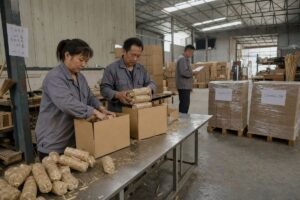
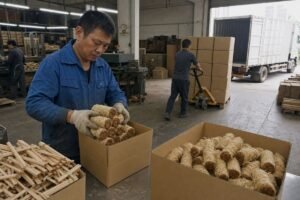
Batch traceability is where most verification efforts quietly fail. Our production line in Ningbo assigns batch codes to every run of wood firestarters precisely because buyers kept asking one question: how do I know this report covers my goods?
Match the report's product name, SKU, formulation, and packaging description to your purchase order and physical samples. Then request the batch code, production date, and the supplier's batch QC records linking your shipment back to the tested product configuration.

Here is the uncomfortable truth about test reports. Most EN 1860-3 testing is type testing. The lab tests one representative sample of a product design. The report then covers that design, not every carton that leaves the factory afterward. So your real question has two parts. First, does the report describe the same product you ordered? Second, has anything changed since the test?
Confirming the product configuration matches
Compare these details line by line between the report, your samples, and your purchase order:
| Detail to Match | Where to Find It | Why It Matters |
|---|---|---|
| Product name and model | Report header vs. PO and carton labels | A different variant may burn differently |
| Formulation (e.g., wood fiber and wax ratio) | Report description vs. supplier spec sheet | A changed wax type can alter ignition behavior |
| Physical form and size | Report photos vs. your sample | Size affects burn time and flame behavior |
| Packaging type | Report vs. retail box and inner packing | Packaging is part of the compliance context |
| Manufacturer name and address | Report vs. business license and invoice | Confirms the tested product came from this factory |
Bridging from type test to your shipment
A type test alone is not the full story. Ask your supplier three follow-up questions. When was this product last tested? Has the formulation, raw material source, or packaging changed since then? What internal QC checks link production batches back to the tested design? At our factory, we keep batch-level records for ignition checks, burn-time sampling, and visual inspection, tied to ISO 9001 6 procedures. That paper trail is what lets a buyer connect a 100-piece retail box on a shelf back to the original accredited test. If your supplier cannot produce that chain, the report floats free of your actual goods. Also request that your batch code appears on your commercial documents. It makes any future claim or recall far easier to manage.
What should I do if my supplier can't provide a valid EN 1860-3 test report?
A UK distributor once came to us after his previous supplier stalled for two months on paperwork. His container was ready. His compliance file was empty. That situation is avoidable.
First, ask whether a valid report exists under a different product name or older edition. If not, require the supplier to commission accredited testing before shipment, or switch to a supplier with current EN 1860-3 documentation. Never ship regulated firelighters into Europe without compliant evidence.
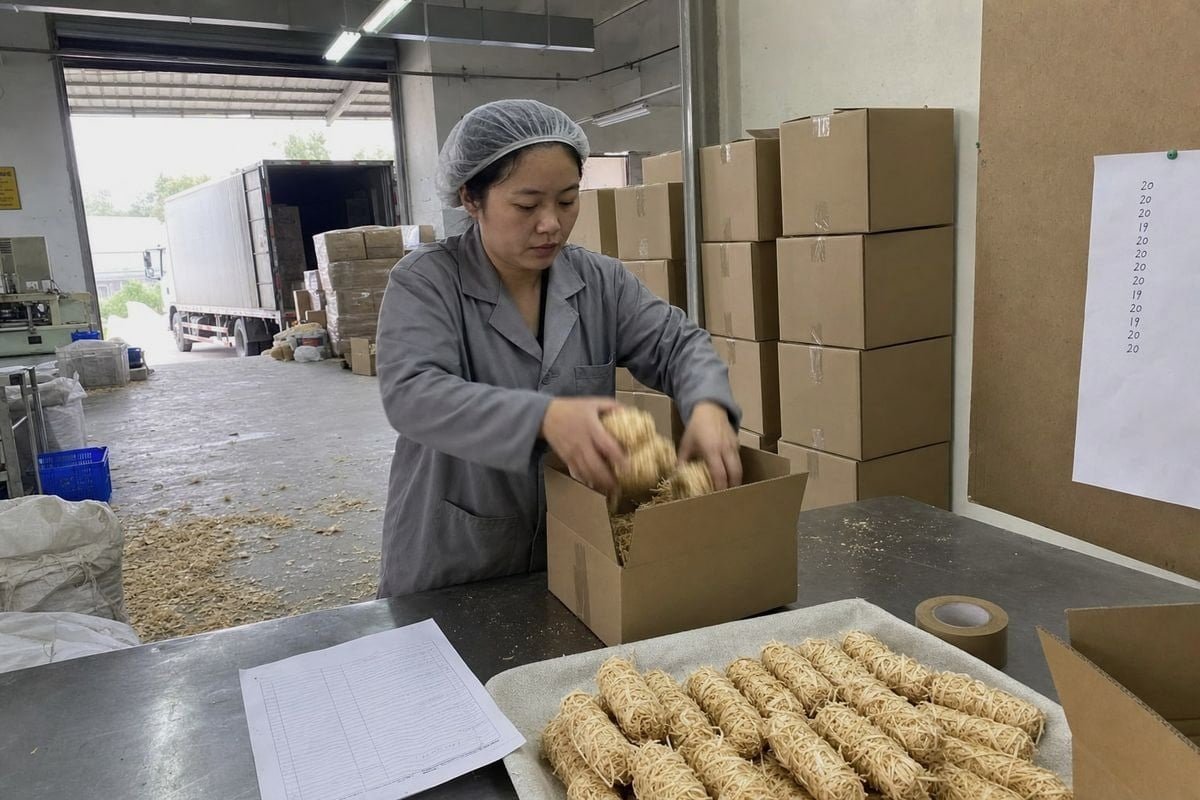
Missing paperwork does not always mean a bad product. But it always means unmanaged risk, and the risk sits with you as the importer, not the factory. Work through the situation in a structured way rather than accepting excuses or walking away too early.
A step-by-step response plan
- Clarify what actually exists. Some suppliers hold reports under a parent product name, an older standard edition, or a previous packaging format. Ask for everything and assess it against the checklist in the earlier sections.
- Assess whether existing evidence can be updated. A report to an older edition may be a starting point. The supplier can commission retesting to the current edition, which is faster than starting from zero.
- Require new accredited testing as a condition of order. Testing lead times are usually measured in weeks, not months. Build it into your production schedule and make payment milestones depend on it.
- Split the cost if needed, but keep the report in the supplier's or your name. A report tied to your private label strengthens your own compliance file, which matters for OEM buyers.
- Walk away if the supplier resists. A factory that will not invest in testing will not invest in batch consistency either. In our experience serving BBQ and fireplace distributors across the US and Europe, compliance posture predicts overall reliability better than any sample ever does.
Reduce the risk of repeats
Once resolved, change how you qualify suppliers. Make current EN 1860-3 evidence, ISO 9001 certification, and social compliance audits like BSCI 7 part of your onboarding checklist, not an afterthought. We hold ISO 9001, BSCI, CE, and SGS/Intertek documentation precisely because our buyers treat these as hard requirements. Also remember that EN 1860-3 does not cover everything. Chemical compliance such as REACH 8 for paraffin and additives, plus correct warning labels and barcodes, sit alongside it. A one-stop OEM partner should handle that full package, so your product reaches the shelf legally and stays there.
Conclusion
Verifying EN 1860-3 test reports means matching accredited labs, current editions, and exact batches to your goods. Do it before shipment, and paperwork risk stops being your problem.
Footnotes
1. Official site of the certification body whose grill firelighter program requires accredited testing. ↩︎
2. Defines the accreditation standard labs must hold for test reports to be considered valid evidence. ↩︎
3. Directs readers to the European accreditation network for verifying lab credentials like DAkkS or UKAS. ↩︎
4. Official UK accreditation body site useful for confirming laboratory scope and credentials. ↩︎
5. Explains China's national accreditation body, relevant for verifying Chinese lab credentials. ↩︎
6. Official ISO page explaining the quality management certification referenced as a supplier onboarding requirement. ↩︎
7. Official amfori page describing the social compliance audit program referenced as a supplier requirement. ↩︎
8. ECHA's official explanation of the EU chemical regulation mentioned alongside EN 1860-3 compliance. ↩︎

 English
  Spanish
  German
  French
  Arabic
  Portuguese
Join the Conversation