







Quoting bulk pricing for magic fire powder should be simple, yet I watch distributors lose camp contracts every season SGS/Intertek test reports 1. Their quotes confuse buyers instead of closing them — a fixable problem our factory sees constantly.
Quote magic fire powder bulk pricing using three MOQ tiers (trial, seasonal, multi-site), a per-bag price that drops 15–40% at volume, itemized freight, and a compliance packet with MSDS and CE documentation. Camps approve quotes fastest when product, shipping, and paperwork costs are clearly separated.
Below, I break down each piece of that formula. I will cover MOQ tiers, discount structures, compliance documents, and private-label options — the four areas where quotes are won or lost.
What Factors Should I Consider When Setting MOQ Tiers for Summer Camp Orders?
Last spring, a US camp supplier asked us for one flat price on 200 bags. We sent three tiers instead — and they upgraded to 1,000 bags on the spot.
Set MOQ tiers around buyer type: 50–100 bags for trial orders, 150–500 bags for single-camp seasonal stock, and 1,000+ bags for multi-site or district programs. Base each threshold on your carton size, production run economics, and freight break points, not arbitrary round numbers.

In our 17+ years producing color-flame packets in Ningbo, we have learned that minimum order quantity is not really about the seller. It is about matching how camps actually buy. A single summer camp running two campfires per week for eight weeks needs roughly 100–200 packets per season. A scouting council with six sites needs several thousand. If your MOQ tiers ignore that reality, your quote feels arbitrary to the buyer.
Match Tiers to Real Camp Consumption
Start by asking three questions before you quote. How many fire events per week? How many weeks in the season? How many packets per fire? A 25g sachet typically colors one campfire session. Multiply those numbers and you get a defensible tier, not a guess.
Anchor Tiers to Your Cost Structure
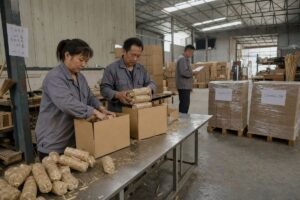
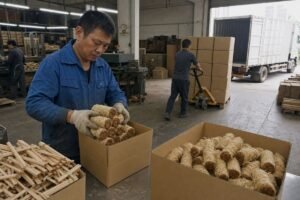
Your tiers should also line up with production and packing realities. We pack in master cartons, so quoting quantities that split cartons creates handling waste. Freight breaks matter too — a half-full pallet costs nearly as much to ship as a full one.
| Tier | Typical Quantity | Best For | Pricing Position |
|---|---|---|---|
| Trial / Sample | 50–100 bags | First-time camps, program directors | Highest per-bag price |
| Seasonal Stock | 150–500 bags | Single camp, full-season programming | Mid-range wholesale price |
| Multi-Site / District | 1,000–6,000+ bags | Councils, event companies, chains | Lowest per-bag price, negotiated freight |
One more point from experience: keep your trial tier genuinely accessible. Buyers at established importers tell us flexible MOQs for first orders matter more than a rock-bottom price. A camp that tests 50 bags this June often becomes the 2,000-bag account next April.
How Do I Structure Volume Discounts Without Sacrificing My Profit Margins?
The trade-off we weigh on every OEM quote is simple: how deep can the discount go before it stops rewarding volume and starts subsidizing it?
Structure volume discount tiers so each price break is funded by a real cost saving — fuller cartons, fewer setups, consolidated freight. Offer 5–10% at your seasonal tier and 15–25% at pallet volume, and always quote ex-works and delivered prices separately.

Discounts should never be generosity. They should be shared savings. When a buyer orders 5,000 packets instead of 500, our production line runs one long batch instead of stopping and restarting. Packing crews fill full master cartons. The pallet ships full. Each of those steps cuts our real cost per bag, and that saving is what funds the discount. If you give away margin that no cost saving supports, you are just training buyers to haggle.
Use Spend-Based or Unit-Based Breaks — But Pick One
Some sellers tie discounts to total spend, with breaks like 5% at $1,000 and up to 25% at $20,000. Others tie them to unit counts. Both work. Mixing both in one quote confuses camp administrators, who often need board or district approval for purchases.
| Discount Trigger | Example Break | Cost Saving That Funds It |
|---|---|---|
| Seasonal quantity (150–500 bags) | 5–10% off trial price | Full cartons, single production run |
| Pallet quantity (1,000–3,000 bags) | 15–20% off trial price | Consolidated bulk shipping logistics |
| Container share / district order (6,000+) | 20–25% off trial price | Negotiated freight, planned lead time |
Protect Margin With Structure, Not Stubbornness
Separate product cost from freight and special handling in every quote. Retail benchmarks around $1.39 per 25g pack make wholesale ranges of roughly $0.13–$0.41 per bag look dramatic — but the delivered cost per use is what a camp actually budgets against. When buyers push for the lowest headline price, I redirect the conversation to delivered cost, consistency, and on-time arrival before camp season. That framing wins more often than another two cents off.
Also remember timing. Suppliers filling production capacity in the off-season can offer better terms. Encourage camps to lock in seasonal pricing by early spring, and offer a modest early-order incentive instead of a deeper year-round discount.
What Compliance Documents Do I Need to Include When Quoting Group Event Buyers?
A German distributor once told me his camp clients read our SGS test report before they read our price sheet. That order of priorities has shaped every quote packet we build since.
Include a Material Safety Data Sheet, CE certification, third-party test reports (SGS or Intertek), clear usage and warning labels, and shipping classification details in every quote to camps. Youth organization procurement teams treat this documentation as a hard approval requirement, not an optional extra.

Camps buying flame colorant additives 2 for children's programs face a different approval process than a retailer stocking novelty goods. A purchasing manager at a youth organization must satisfy insurers, boards, and sometimes state fire safety regulations 3 before signing anything. If your quote arrives without documentation, it goes to the bottom of the pile while the buyer emails you follow-up questions. If it arrives complete, it can be approved in one meeting.
Here is what our export team packages with every camp-facing quotation:
- Material Safety Data Sheet. The single most requested document. It answers the insurer's questions before they are asked.
- CE certification and test reports. We hold ISO 9001 4, BSCI, and CE certification with SGS/Intertek test reports. For our US and European buyers this is a baseline, and camps inherit that expectation.
- Usage instructions and warning labels. Emphasize the toss-in protocol — packets go into the fire unopened, so counselors never handle the powder directly. This materially reduces perceived liability.
- Shipping and handling classification. State clearly how the product ships and any carrier documentation needed, so bulk shipping logistics never surprise the buyer.
- Purchase order accommodations. Many camps and nonprofits buy through tax-exempt purchase orders 5. Note in the quote that you accept them, and include your W-9 or equivalent paperwork proactively.
One caution I share honestly with buyers: do not let any supplier hand-wave universal safety claims. Regulations vary by state and country. A trustworthy quote recommends the buyer verify local fire safety regulations, and backs its own claims with real test reports rather than marketing language. Our packets are made from eco-friendly materials with no harmful chemicals, and we prove that with documents — which is exactly the standard a camp should hold every supplier to.
How Can I Offer Private-Label Packaging Options Within My Bulk Pricing Quotes?
Our design team recently turned a camp logo into co-branded sachet artwork in under a week — and the buyer told us the packets became the summer's best-selling camp-store souvenir.
Offer private-label packaging as a tiered add-on: stock packaging at base price, co-branded sachets with the camp's logo at a small per-unit premium plus a one-time artwork fee, and fully custom boxes or display packaging at multi-site volumes with negotiated lead times.

Private labeling is where a bulk quote stops being a commodity comparison and starts being a partnership pitch. As a true one-stop OEM/ODM factory 6, we customize sachet size, burn time, packaging format, warning labels, and barcodes — and that flexibility is exactly what camps and event companies can be offered through your quote.
Structure Private-Label Options as Clear Tiers
Present branding the same way you present quantity: good, better, best. Vague "custom packaging available" lines get ignored. Specific options with prices get chosen.
| Packaging Option | What the Buyer Gets | Typical MOQ Impact | Lead Time Impact |
|---|---|---|---|
| Stock packaging | Standard printed foil sachet or kraft bag | None | Fastest |
| Co-branded sachet | Camp or event logo printed on standard design | Moderate increase | Add 1–2 weeks |
| Full private label | Custom artwork, box or display packaging, barcodes, custom warning labels | Highest MOQ tier | Add 3–4 weeks |
Price the Branding, Not Just the Powder
Charge a one-time setup or plate fee plus a small per-unit premium. Branded and OEM wholesale listings consistently price above generic stock — buyers expect this, so do not absorb the cost silently. Then sell the upside: a co-branded sachet turns campfire activity supplies 7 into a memory-making souvenir that attendees keep or buy in the camp store. Some of our buyers even bundle packets with educational talking points about flame-color chemistry, turning a novelty into a STEM campfire moment.
Two practical warnings from our production floor. First, lock artwork approval before quoting the final lead time — revision cycles, not printing, cause most delays. Second, ensure custom labels still carry compliant warning text. A beautiful package that fails a retail or insurance review helps nobody. We build warning labels and barcodes into every custom job for exactly this reason.
Conclusion
Winning camp business means quoting clearly: honest MOQ tiers, cost-backed discounts, complete compliance packets, and structured private-label options. Build quotes camps can approve in one meeting, and volume follows.
Footnotes
1. Links to the third-party testing body camps rely on to verify product safety claims. ↩︎
2. Background on the chemistry behind flame-coloring agents referenced in the compliance discussion. ↩︎
3. Authoritative fire safety organization relevant to compliance requirements camps must satisfy. ↩︎
4. Authoritative Wikipedia overview of the quality management standard, replacing a 403-error official link. ↩︎
5. Government source clarifying tax-exempt purchasing rules relevant to nonprofit camp buyers. ↩︎
6. Defines the manufacturing model referenced when describing private-label customization capabilities. ↩︎
7. Consumer safety authority guidance relevant to novelty pyrotechnic-adjacent products sold to camps. ↩︎

 English
  Spanish
  German
  French
  Arabic
  Portuguese
Join the Conversation