







Pricing wood fire starters for end-of-season clearance is a question our private label buyers ask us every spring. Leftover stock ties up cash, storage fees climb, and panic discounts destroy margins we worked hard to build together.
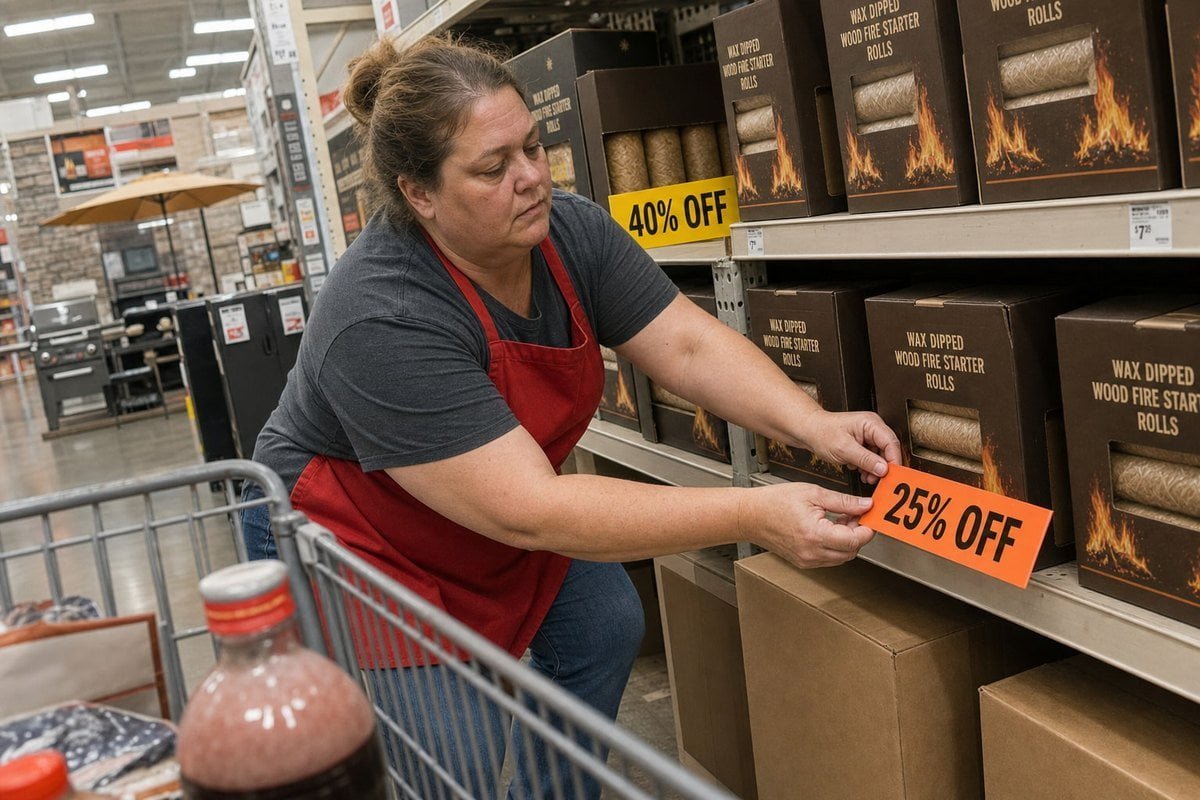
Price wood fire starters for clearance by calculating your full landed cost per unit first, then apply staged markdowns of 15–25% near season's end and 30–50% for final liquidation. Never price below landed cost plus a minimum contribution margin unless carrying costs exceed the loss.
That is the short answer. The longer answer covers discount ranges, supplier timing, MOQ flexibility, and the contract terms that protect you. Let me walk through each piece.
What discount range keeps my wood fire starter clearance profitable without hurting my brand?
Every winter, our production lines in Ningbo run wax-dipped wood rolls for dozens of private label brands. By March, some of those buyers call me about unsold pallets.
A 15–25% discount preserves margin when sell-through is still decent, while 30–50% off clears stubborn inventory before storage costs bite. Stay 20–40% below national brands during clearance, and never drop under your landed cost floor unless liquidation genuinely beats holding the stock.
The right discount depends on one number most sellers never calculate honestly: the true landed cost per unit. That figure includes your Cost of Goods Sold 1 (COGS), inbound freight, duties, packaging, marketplace fees, and a slice of overhead. Once you know it, the math becomes simple.
Build the discount ladder from the floor up
Use this three-line formula. First, landed cost per unit equals manufacturing plus packaging plus freight plus fees plus overhead. Second, your regular price equals landed cost divided by one minus your target margin. Third, your clearance floor equals landed cost plus your minimum acceptable contribution margin 2. Private label sellers typically aim for a 25–30% gross profit margin in normal conditions. Clearance can dip below that temporarily, because you are judging against contribution margin, not headline margin.
| Season stage | Typical discount | Goal |
|---|---|---|
| Late season (30–60 days left) | 10–15% or bundle deal | Protect margin, nudge conversion |
| Near end-of-season | 15–25% off | Accelerate sell-through |
| Final clearance | 30–50% off | Recover cash, free shelf space |
| Last-chance liquidation | At or near landed cost | Stop the carrying-cost bleed |
Protect brand perception while you discount
One trick I recommend to our fireplace accessories market clients: keep the original MSRP visible on the clearance tag as a psychological anchor. Shoppers see quality at a bargain, not a cheap product. Also consider shifting your messaging from box price to cost-per-start. A 100-piece box at 40% off sounds like clearance. Pennies per fire sounds like smart stocking-up for next year. Finally, hold higher price floors for premium variants. Our color-flame pinecones and clean-burn rolls carry lifestyle value that does not melt away when the weather warms.
How do I time end-of-season markdowns with my private label supplier's production schedule?
A German distributor once emailed me in April asking to rush a reorder — while his warehouse still held two pallets from November. That mismatch taught both of us to plan calendars together.
Time markdowns so clearance ends 60–90 days before your supplier's production slot for next season's order. Share sell-through data monthly, lock your reorder deadline first, then work backward: final liquidation should finish before you commit new capital to fresh inventory.

Seasonal demand fluctuations drive everything about fire starters. In our export experience across the US and Europe, retail demand peaks from October through January, softens in February, then shifts toward camping and fire pit use in spring. Your markdown calendar has to respect that curve — and your factory's calendar too.
Work backward from the production slot
At our facility, private label orders for the autumn season typically need confirmation by late spring or early summer. That covers custom packaging, printing, batch quality control, and ocean freight. Here is a practical planning sequence:
- Confirm your supplier's order deadline for the next peak season.
- Subtract shipping and receiving time to find your inventory-decision date.
- Set final clearance to end at least 30 days before that decision date.
- Begin staged markdowns 60–90 days before final clearance ends.
- Watch 10-day weather forecasts — a late cold snap can justify pausing markdowns for full-margin emergency sales.
| Month (Northern Hemisphere) | Demand signal | Recommended action |
|---|---|---|
| January | Peak heating demand | Full price, monitor inventory turnover rate 3 |
| February | Softening | Small promotions, bundles |
| March | Transition | 15–25% markdown begins |
| April | Camping pivot | Reposition messaging, 30%+ if slow |
| May–June | Reorder window | Final liquidation done; confirm next PO |
Pivot the message, not just the price
Before slashing prices in March, try repositioning. Winter home heating copy becomes spring camping and backyard fire pit copy. The product is identical. The buyer intent changes. Several of our BBQ distributor clients extend full-margin sales by six weeks this way, which improves their inventory turnover rate without touching the price tag at all.
Can flexible MOQs help me avoid overstock before my next clearance cycle?
When we quote a first-time buyer, the Minimum Order Quantity 4 (MOQ) conversation usually takes longer than the price conversation. There is a good reason for that.
Yes. A flexible MOQ lets you order closer to true seasonal demand, which shrinks leftover stock and reduces clearance depth. Negotiate a smaller trial order first, then scale reorders based on real sell-through data instead of guessing a full season upfront.

Overstock is not a pricing problem. It is a forecasting problem that pricing has to clean up later. The most reliable way to avoid brutal end-of-season markdowns is to buy less wrong in the first place, and MOQ structure is your main lever for that.
Why rigid MOQs create clearance pain
A rigid MOQ forces you to commit a full season of capital based on a forecast made six months early. If demand comes in 20% light, that entire miss becomes clearance inventory. Then inventory carrying costs stack up: warehouse space, insurance, capital tied up, and for online sellers, Amazon FBA storage fees 5 that spike sharply in Q4. I have watched buyers lose more to long-term storage surcharges than they saved by ordering a bigger, cheaper batch.
How we structure flexibility on our side
Because we run our own production lines rather than brokering through white label manufacturing middlemen private label manufacturing 6, we can split a season into a base order plus an optional repeat run. The trial order proves your packaging, your price point, and your channel. The repeat order — confirmed once you see October sell-through — covers the peak. This works for wax-dipped wood rolls, fatwood sticks alternatives, and color-flame add-ons alike, because the raw materials store well on our end.
A few negotiation angles that work:
- Ask for a lower trial MOQ in exchange for a committed reorder target.
- Ask whether the factory can hold printed packaging film for a second run.
- Ask for staggered shipments against one purchase order.
- Ask about mixed-SKU MOQs — combining fire starters with pinecones or torches to hit the minimum.
Smaller, smarter orders mean your clearance cycle handles a trickle of leftovers, not a flood.
What pricing terms should I negotiate upfront with my manufacturer to protect my margins on leftover stock?
Contract talks are where I see experienced purchasing managers separate themselves. The best ones negotiate the end of the season before the first container ships.
Negotiate fixed unit pricing across split shipments, reorder price locks, packaging held at the factory, clear payment terms, and rebate or credit clauses tied to reorder volume. These terms lower your effective landed cost and give leftover stock a wider profitable clearance window.

Your clearance floor is set the day you sign the purchase order, not the day you print markdown tags. Every dollar you shave from landed cost upfront becomes a dollar of markdown room later. So treat the negotiation as margin insurance.
The terms that matter most
| Term to negotiate | Why it protects leftover-stock margin |
|---|---|
| Price lock across split shipments | Lets you order lean without paying a penalty on the second run |
| Reorder price validity (6–12 months) | Prevents a repricing surprise that squeezes next season's margin |
| Packaging materials held at factory | Cuts lead time and cost on repeat runs, enabling smaller orders |
| Volume rebate or credit on annual total | Effectively lowers COGS retroactively, widening your clearance floor |
| Compliance documentation included | Avoids surprise testing costs; our buyers rely on ISO 9001 7, BSCI, CE, and SGS/Intertek reports as standard |
| Clear quality specs and batch QC | Reduces returns and unsellable units that inflate true unit cost |
Run a competitive price analysis before you sign
Bring data to the table. A competitive price analysis of national brands and other private labels tells you the retail ceiling your product can command. Work backward from that ceiling through retailer margin, fees, and freight to see what factory price makes the whole chain work — including a clearance scenario at 40% off. If the numbers only work at full price, the deal is fragile. I would rather tell a buyer that honestly at quotation stage than watch their liquidation pricing strategy fail a year later. Also negotiate branding details upfront: barcodes, warning labels, and display packaging done right the first time prevent costly rework that quietly eats the margin you planned to spend on markdowns.
Conclusion
Unsold fire starters drain cash fast. Calculate your landed cost floor, ladder discounts from 15% to 50%, time clearance around production deadlines, and negotiate flexible MOQs and price terms upfront. We help our private label partners plan exactly this way — season after season.
Footnotes
1. Explains foundational accounting term used to calculate landed cost per unit. ↩︎
2. Defines the key financial metric used to judge clearance pricing decisions. ↩︎
3. Explains the retail metric referenced when discussing markdown timing benefits. ↩︎
4. Background on MOQ concept central to sourcing negotiation strategy discussed. ↩︎
5. Official Amazon documentation on the storage fee structure mentioned for overstock costs. ↩︎
6. Background concept explaining the private label sourcing model discussed throughout the article. ↩︎
7. Authoritative Wikipedia entry providing a detailed overview of the ISO 9001 quality management standard. ↩︎



 English
  Spanish
  German
  French
  Arabic
  Portuguese
Join the Conversation