
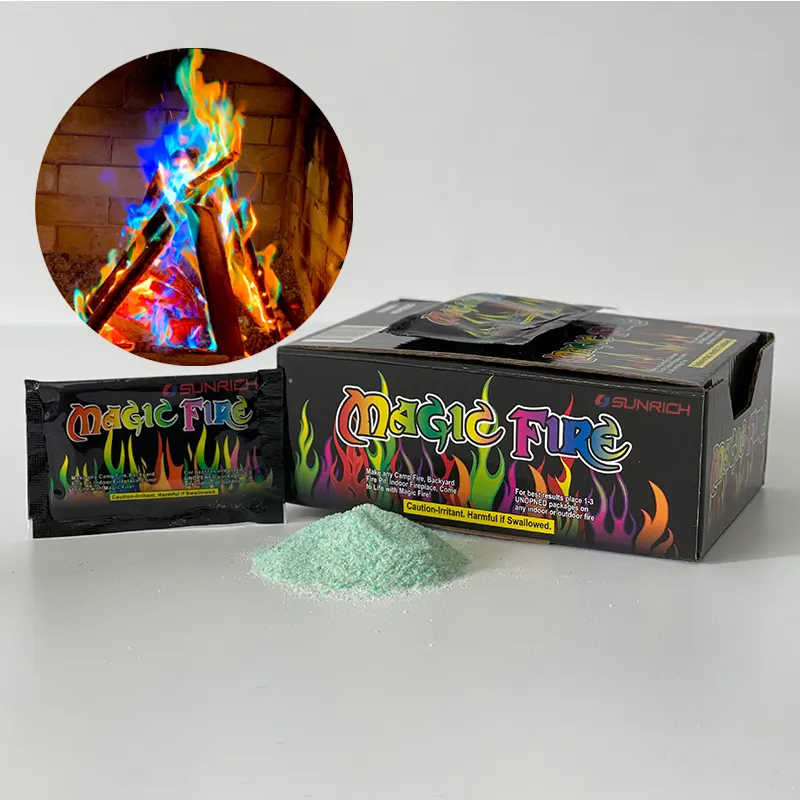





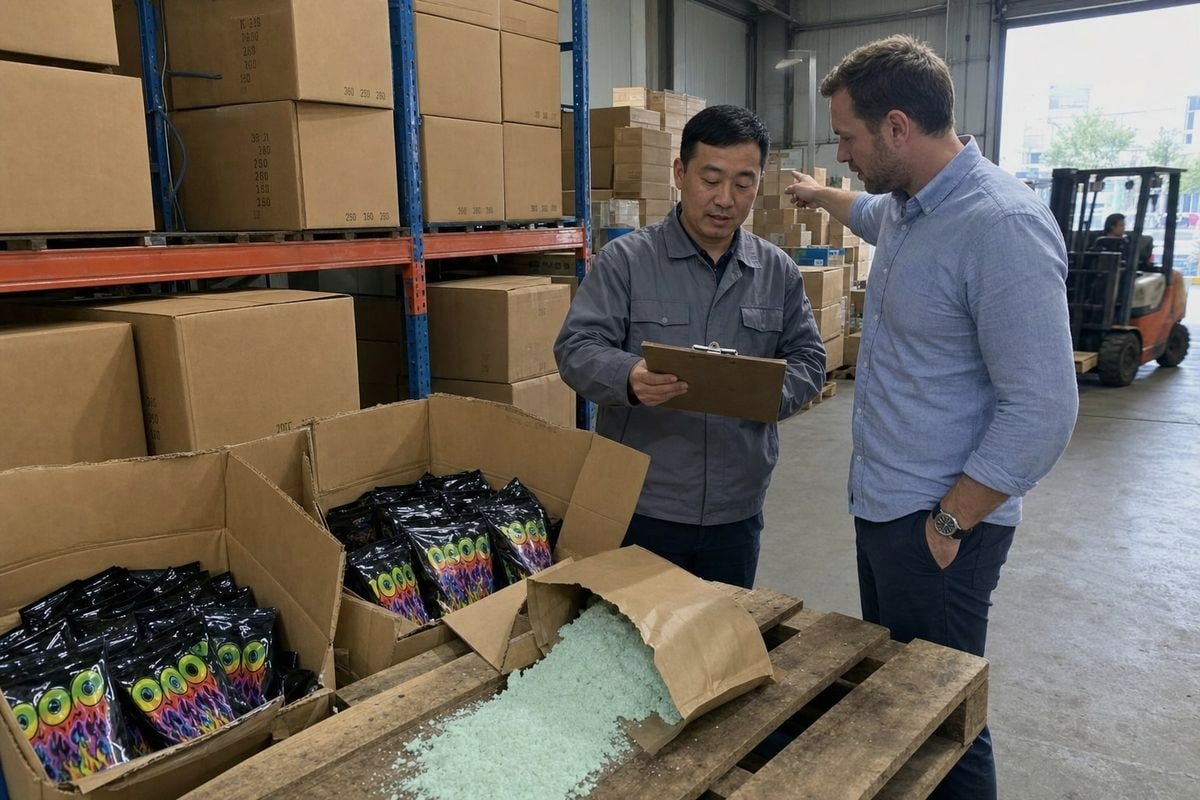
Standing inventory of Magic Fire Powder is a question I hear weekly at our factory. Buyers lose seasonal sales waiting on production runs. Stockouts cost more than storage ever will.
To negotiate standing inventory of Magic Fire Powder, offer your supplier a rolling demand forecast and a minimum annual volume commitment in exchange for reserved finished-goods stock, a written service level agreement on replenishment speed, and clear rules on ownership, storage costs, and reorder triggers.
That is the short version. The details decide whether you actually get faster lead times or just sign a longer contract. Let me walk you through how these deals work from the factory side.
How can I use standing inventory agreements to guarantee faster reorder turnaround from my supplier?
Last autumn, a German distributor emailed us in a panic. His Magic Fire packets sold out six weeks before Christmas. Our production line was already booked solid. He learned a hard lesson.
A standing inventory agreement guarantees faster reorder turnaround by requiring the supplier to hold pre-produced, buyer-allocated stock at agreed safety stock levels, so replenishment orders skip the production queue entirely and ship within days instead of the typical six-to-ten-week manufacturing lead time.
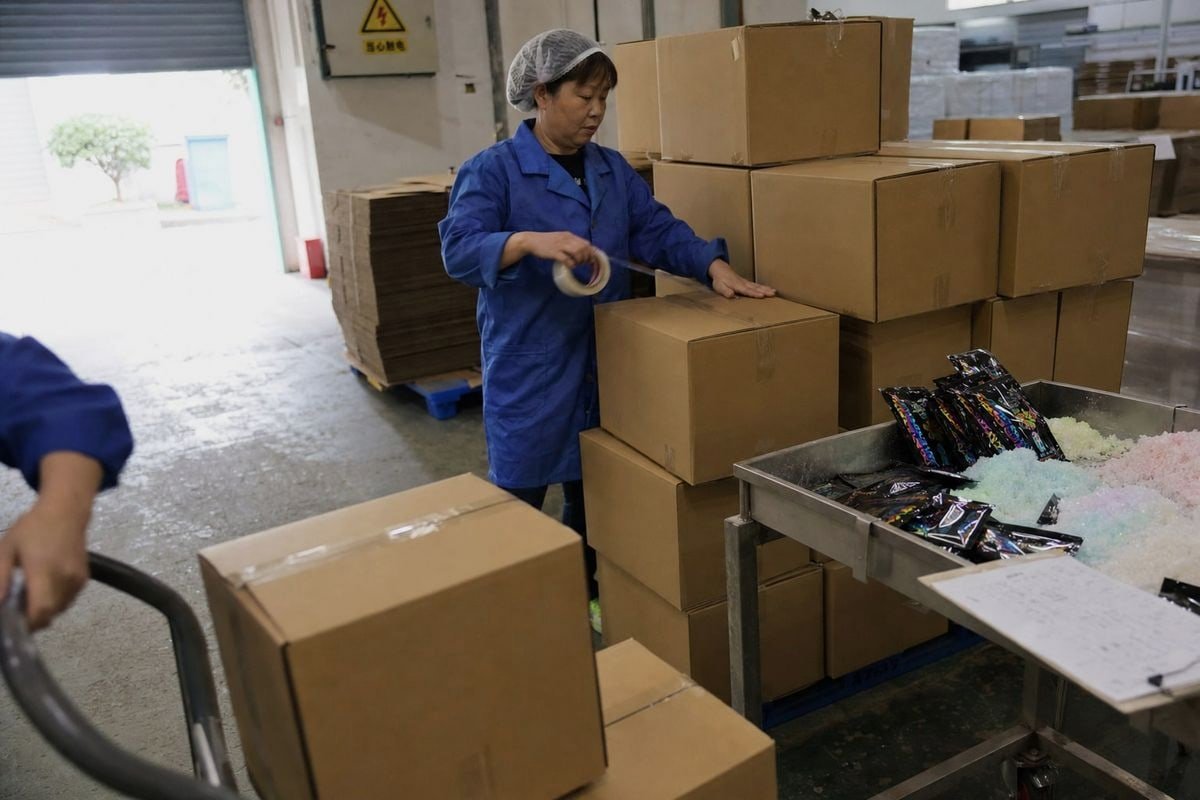
The core idea is simple. When you order reactively, you wait for production, packing, and export paperwork. When stock already sits on a shelf with your name on it, you only wait for shipping. But "standing inventory" is not one thing. It covers several commercial models, and each one changes who owns the goods, who pays inventory carrying costs 1, and who absorbs demand risk. Picking the right model is the first negotiation decision.
Choose the right inventory model first
| Model | Who owns stock | Where it sits | Best for |
|---|---|---|---|
| Reserved stock | Supplier until shipment | Supplier's warehouse | Buyers wanting fast ship-outs |
| Safety stock agreement | Supplier | Supplier's warehouse | Steady, repeat demand |
| Blanket purchase orders | Buyer commits, draws down | Supplier's warehouse | Predictable annual volume |
| Consignment inventory | Supplier until use | Buyer's warehouse | Immediate local availability |
| Vendor Managed Inventory | Supplier monitors and refills | Buyer's site or 3PL | Mature, data-sharing partnerships |
In our experience exporting color-flame products to more than thirty countries, most buyers do best starting with a blanket order plus a safety stock clause. It is easy to administer and does not require the systems integration that full Vendor Managed Inventory demands. Consignment inventory works well for large retail sourcing channels, but it needs trust built over several seasons first.
Make the commitment mutual
A supplier will not hold stock on a handshake. What unlocked reserved stock for our German buyer was a rolling twelve-month forecast, reviewed quarterly, plus a committed annual volume split into call-off orders. In return, we guaranteed a shipment window measured in days and gave him priority allocation during our peak Q3 production season. Both sides gave something. Both sides got predictability. That is the trade at the heart of every standing inventory deal: forecast visibility and volume commitment exchanged for speed and allocation priority.
What MOQ and payment terms should I expect when negotiating a standing inventory arrangement for Magic Fire Powder?
One trade-off we weigh constantly on our Ningbo production line: small custom runs are flexible, but they make reserved stock expensive per unit. That tension shapes every MOQ conversation.
Expect a minimum order quantity higher than a spot order—typically a committed annual volume drawn down in scheduled call-offs—paired with a deposit of roughly 20–30% on produced stock, balance on shipment. Suppliers trade lower per-release MOQs for larger total commitments and partial prepayment covering their cash-flow exposure.

The logic behind the numbers matters more than the numbers themselves. When we produce Magic Fire packets for standing inventory, our cash is tied up in raw materials, labor, custom private-label packaging 2, and warehouse space before you pay for a single release. Payment terms exist to share that burden fairly. If you push for zero deposit and 60-day terms while also demanding reserved stock, the cost will reappear in your unit price. Negotiate the structure openly instead.
Separate the three numbers in the deal
There are really three quantities to negotiate, not one:
- Total annual commitment. This justifies the supplier producing ahead of orders. Bigger commitments earn tiered pricing.
- Per-release MOQ. This is what you draw down each time. Under a blanket purchase order, this can be far smaller than a standard spot MOQ, because production is already batched efficiently.
- Standing stock level. The buffer held at all times, sized from your demand forecasting data, usually four to eight weeks of average usage for seasonal products like ours.
Structure payment to match risk
| Payment element | Typical range | What it covers |
|---|---|---|
| Deposit on production | 20–30% | Raw materials and packaging cash outlay |
| Balance on shipment | Per release | Standard export practice |
| Reservation or storage fee | Negotiable, often waived | Warehouse space beyond agreed period |
| Pricing review cadence | Every 6–12 months | Raw material and freight fluctuation |
One important tactic: ask for pricing that separates product price from any storage or reservation fee. That stops you paying twice—once through an inflated unit price and again through explicit inventory fees. And do not let unit price dominate the talks. A slightly higher price with guaranteed allocation priority beats a cheap price with ten-week lead times every single season.
How do I verify my supplier can maintain consistent quality and compliance across multiple production batches held in inventory?
A UK buyer once told me his previous supplier's second batch burned dull orange instead of vivid green and blue. The retailer pulled the whole listing. Batch consistency is where standing inventory deals live or die.
Verify batch consistency by requiring ISO 9001 certification, per-batch quality control records with retained samples, third-party test reports from labs like SGS or Intertek, documented shelf-life data for stored stock, and a contractual right to audit or independently test any inventoried batch before release.

Here is the uncomfortable truth about standing inventory: it multiplies your exposure to quality drift. With spot orders, you inspect each shipment as it is made. With reserved stock, batches may sit for months before you ever see them. If the supplier's process wanders between batches, you find out after the goods are already produced, paid for in part, and sitting in a warehouse. So verification has to be built into the agreement, not bolted on afterward.
What real verification looks like
At our Liuyang headquarters, every Magic Fire batch gets a burn test before it enters finished-goods storage—we check flame color intensity 3, ignition behavior, and burn duration against the approved golden sample. We keep retained samples from each production lot, so a dispute six months later can be settled against physical evidence, not memory. After seventeen years of doing this, I can tell you the first sample only means something if the factory's process control makes batch fifty match it. Ask your supplier to show you exactly that mechanism.
Your verification checklist should include:
- Certifications with current dates. ISO 9001 for process control, BSCI for factory standards, CE marking 4 where applicable. Ask for the certificates, not just claims.
- Third-party test reports. SGS or Intertek reports covering the actual formulation you are buying, including heavy-metal and safety screening. Compliance is a hard requirement for US and EU retail, not a nice-to-have.
- Batch traceability. Every sachet, kraft bag, or jar in standing stock should trace to a lot number, production date, and QC record.
- Shelf-life documentation. Crystalline flame colorants are stable, but foil-pouch seal integrity and moisture control during storage must be documented for goods held long-term.
- Classification clarity. Flame-colorant products can raise customs classification questions. Confirm your supplier ships with correct HS codes, warning labels, and transport documentation so stored stock does not stall at import.
Finally, write a rejection clause: any inventoried batch failing agreed specs is replaced at the supplier's cost, and does not count against your committed volume. A confident factory will accept this readily.
What warehousing and logistics options should I discuss with my manufacturer to make standing inventory cost-effective?
When we helped a US camping brand plan its first full-container program, the biggest savings came not from unit price but from where the stock physically sat. Location decides economics.
Discuss three main options: supplier-held stock in China with fast sea or air release, a bonded or third-party warehouse near your market for days-long delivery, or consignment inventory at your own facility. Compare each on carrying cost, transit time, customs handling, and who pays storage.

The right answer depends on your order rhythm and margin structure. Holding everything at the factory is cheapest but leaves ocean transit in every reorder cycle. Holding everything in-market is fastest but concentrates carrying costs on your balance sheet. Most of our long-term partners land on a hybrid, and that hybrid is worth negotiating carefully as part of your strategic sourcing strategy.
Compare the three warehousing setups
| Option | Reorder speed | Cost profile | Key negotiation point |
|---|---|---|---|
| Factory-held reserved stock | 3–6 weeks (sea) | Lowest storage cost | Free storage window before fees apply |
| Regional 3PL or bonded warehouse | 2–7 days | Moderate; shared or buyer-paid | Who funds the forward stock position |
| Consignment at buyer site | Same day | Supplier carries title risk | Usage reporting and payment triggers |
Practical levers that cut total cost
A few operational details make an outsized difference. First, consolidate SKUs. Standardized packaging 5—one pouch format, one kraft bag size, one jar—lets the supplier hold flexible buffer stock instead of fragmenting inventory across variants. Second, align replenishment with container economics. A high-frequency pull model reduces the bullwhip effect 6, but shipping quarter-full containers erases the savings; we help buyers time call-offs to fill 20-foot or 40-foot loads. Third, automate the trigger. A simple agreed reorder point with automatic release authorization removes the several days routinely lost to manual PO processing and email back-and-forth. Fourth, apply buffer stock management reviews quarterly: adjust standing levels up before your peak season and down after it, so you are not carrying Christmas-level inventory in February. Finally, confirm labeling early. Warning labels, barcodes, and retail-ready display boxes 7 should be finalized before goods enter storage, because relabeling warehoused stock is slow and expensive. We handle all of this in-house for private-label programs, and pre-positioned, shelf-ready stock is exactly what makes standing inventory pay for itself.
Conclusion
Slow reorders quietly kill seasonal sales. The fix is not haggling on price—it is trading forecasts and volume commitments for reserved stock, verified quality, and smart warehousing, all in writing.
Footnotes
1. Explains the financial implications of holding stock as discussed in the inventory model comparison. ↩︎
2. Industry insight into the growth and logistical requirements of private-label product programs. ↩︎
3. Provides scientific context for the quality control tests performed on color-flame products. ↩︎
4. Official European Commission page for the mandatory conformity marking mentioned in the compliance checklist. ↩︎
5. Authoritative overview of international packaging standards and technical requirements. ↩︎
6. Explains the supply chain phenomenon that standing inventory and high-frequency pull models help mitigate. ↩︎
7. Global standards for packaging designed for immediate retail sale without additional handling. ↩︎



 English
 Spanish
 German
 French
 Arabic
 Portuguese
Join the Conversation