







Sizing demo units of Magic Fire powder for in-store training trips up many buyers. Order too few, and staff train half-blind. Order too many, and our factory watches good product sit wasted.
Request one demo unit per store for a single training demo, two to three units per store if staff need a rehearsal plus a live customer demonstration, and add a 10–20% contingency buffer. For most distributors, a pilot of 3–10 total units is enough before scaling.
That is the short answer. The right number for your business depends on your store count, your training format, and your timing. Let me walk you through how we help buyers size this correctly.
What factors should I consider when deciding how many demo units to request for staff training?
At our Ningbo production facility, we pack Magic Fire in foil sachets, kraft bags, and jars, so the first question I always ask a buyer is: how will your team actually use each unit?
Base your demo unit count on five variables: number of stores, number of trainers, whether training is one-time or recurring, expected foot traffic during customer-facing demos, and how many pack formats you want to test. Multiply stores by demo events, then add a small safety buffer.
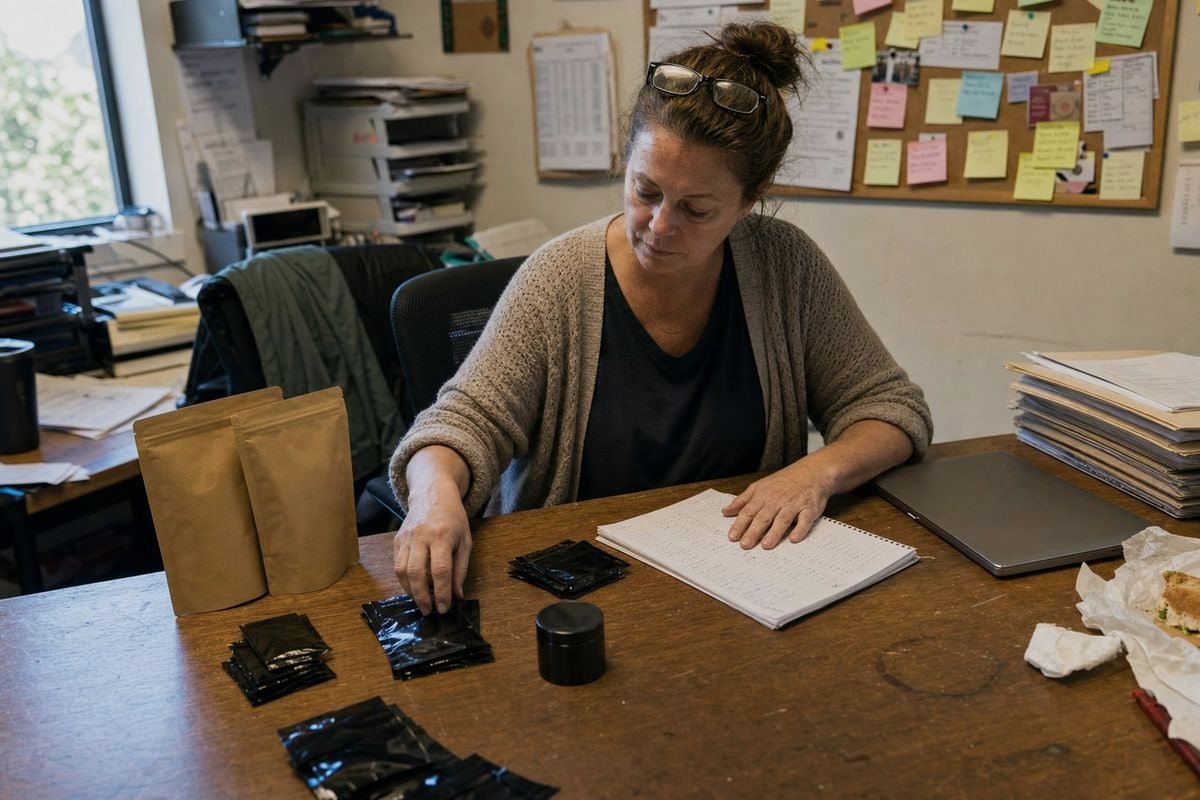
The math is simpler than most purchasing managers expect. One sachet, tossed into a fire, produces a complete visual demo. The color appears within seconds, and one to three unopened packets can sustain the effect for 30 to 45 minutes. So a single unit covers a full short-form training moment. You do not need bulk quantities to teach staff product knowledge.
But training rarely happens once. Seasonal hiring cycles mean new associates arrive in waves, and shift-change refreshers help incoming staff see the product live before their floor rotation. Each of those moments consumes a unit. In our experience exporting to distributors in the US and Germany, the buyers who plan for repeat sessions upfront avoid awkward emergency reorders later.
The core decision variables
| Variable | Question to ask | Effect on quantity |
|---|---|---|
| Store count | How many locations run training? | 1 unit per store minimum |
| Training format | Rehearsal plus live demo? | 2–3 units per store |
| Recurrence | One-time or seasonal refreshers? | Add units per cycle |
| Foot traffic | Peak-hour customer demos planned? | Up to 3 units per event |
| Pack formats | Testing sachet vs. jar vs. kraft bag? | 1 unit per format per store |
Why a buffer matters
We recommend a 10–20% surplus on top of your calculated base. Sachets get damaged in transit, a trainer fumbles a toss, or a regional manager asks for an unplanned second demonstration. A small buffer costs little. Running out mid-training costs credibility with your own team. One frontline rule many retailers follow: every employee should complete at least one successful live toss, because staff who have personally used the product sell it with far more confidence.
How can I make sure demo units accurately reflect our mass-production quality before ordering in bulk?
A German fireplace distributor once told me his previous supplier's samples burned brilliant green, but the wholesale procurement shipment barely flickered. That conversation shaped how we run batch control today.
Insist that demo units come from an actual production run, not a hand-mixed lab batch. Verify the supplier holds ISO 9001, CE, and third-party SGS or Intertek test reports, request the Safety Data Sheets, and compare batch codes between your demo units and your bulk order.

This is where a real factory differs from a trading company. Over 17+ years, we have built complete production lines with strict batch-to-batch quality control 1, which means the sachet you burn in a training session comes off the same line as the container load that follows. A trading company sourcing from rotating workshops cannot promise that. For a fire-related product, that gap is not cosmetic. It affects flame color, burn duration, and safety behavior.
A verification checklist before you scale
- Ask whether demo units were pulled from a live production batch. Get the batch code in writing.
- Request current certification documents: ISO 9001 2, BSCI, CE, and SGS or Intertek test reports. For compliant markets like the US and EU, these are hard requirements, not extras.
- Review the Safety Data Sheets 3 for the exact formulation you will import. Your retailers and insurers will ask for them.
- Burn-test the demo units yourself. Time the color onset and duration, and note consistency across two or three sachets.
- Confirm in your purchase agreement that bulk shipments match the demo specification for burn time, color intensity, and packaging.
We also encourage buyers to test demo units under realistic conditions. A packet that performs in a controlled backyard fire pit should perform the same way in a store's demonstration fireplace. If your locations sit at high altitude or in humid climates, run at least one test there too, because combustion conditions vary. Some buyers pad their demo request slightly for those environments, which is sensible. What matters most is that the demo tells you the truth about the production run behind it.
Should I request different demo formats to test which packaging works best in-store?
When we developed our current Magic Fire lineup, we ended up offering three packaging routes — foil sachets, resealable kraft bags, and plastic jars — precisely because retailers kept disagreeing about which one sells.
Yes. Request one demo unit of each packaging format per pilot store. Foil sachets, kraft stand-up pouches, jars, and display boxes each perform differently at the point of purchase, and a small format test costs far less than committing bulk inventory to the wrong pack.

Packaging is not a detail in this category. It is half the sale. Color-changing fire packets are impulse-friendly products, and visual merchandising 4 decides whether they move. A glossy black sachet with rainbow flame graphics grabs attention on a counter hook near the register. A kraft-paper pouch signals eco-friendly and fits an outdoor fireplace accessories aisle. A flip-top display box with a campfire photo inset works as a self-contained point-of-purchase display 5 near checkout. Each format tells a different story to a different shopper.
Comparing formats for an in-store pilot
| Format | Best placement | Training consideration | Merchandising strength |
|---|---|---|---|
| Foil sachet | Checkout counter, clip strips | Single-toss, easiest to demo | High impulse appeal |
| Kraft stand-up pouch | Camping and BBQ aisle | Resealable, multi-use demos | Eco-friendly shelf story |
| Plastic jar | Fireplace accessories shelf | Measured scoops for repeat training | Premium, gift-ready look |
| Display box with sachets | Endcap or counter display | Shows retail context to staff | Built-in POP presentation |
For a format test, the pilot-first logic still applies. Run one complete demo of each format at each pilot store rather than spreading a thin quantity across many locations. A complete test at fewer stores teaches you more than partial coverage everywhere. Then let sell-through and staff feedback pick the winner before you commit to private-label artwork 6, barcodes, and warning labels — all of which we customize once the format decision is locked.
One more practical point: staff react to packaging too. During training, let associates handle every format. The pack they find easiest to explain is often the pack customers find easiest to buy.
How many demo units do most distributors typically order before placing a full trial order?
A Canadian outdoor brand recently asked us this exact question during a sampling call, worried that requesting too few units would look unserious. The opposite is true, and here is why.
Most distributors request 3–10 demo units total before a trial order: one per pilot store for single demos, two to three per store when combining staff rehearsal with a customer event, plus a 10–20% buffer. They reorder after the first weekend rather than overbuying upfront.

I want to address the two opposing instincts we hear from buyers, because both have merit and both have limits.
The conservative buyer says: order the absolute minimum, because fire products carry safety, liability, and training considerations, and catalog descriptions cannot predict demo effectiveness. Fair. Chemical safety protocols matter here — this is an open-flame product 7, and small, controlled training quantities are genuinely more appropriate than high-frequency, high-volume use. Some retailers even designate a couple of low-cost units purely for practicing handling and extinguishing drills, saving the premium product for the visual demonstrations.
The aggressive merchandiser says: order enough for every store and every session immediately, so staff can train and run customer demos without waiting on replenishment during peak windows. Also fair, especially since demo timing matters — midday weekends and the late-summer-into-September window are historically strong sampling periods, and missing that window while waiting for a reorder hurts.
Our answer reconciles both: pilot first, replenish fast. Start with a modest test batch sized to your store count. Measure staff execution, customer reaction, and inventory turnover over the first weekend. If the demo drives sell-through, request a second tranche immediately — and time it to arrive alongside your seasonal fireplace or fire pit inventory so product knowledge stays fresh.
Scenario-based sizing guide
| Scenario | Recommended demo units | Notes |
|---|---|---|
| Small independent store | 1–2 units | One rehearsal, one live demo |
| Multi-store pilot | 1 unit per location | Complete test at every site |
| Training plus customer event | 2–3 units per location | Up to 3 for peak-hour sessions |
| Unknown execution quality | Modest batch, reorder after weekend | Measure first, scale second |
| Format comparison test | 1 unit per format per store | Sachet vs. kraft vs. jar |
Because demo product is consumable and fire-related, excess inventory carries more risk than in standard categories. The best number is the minimum that allows a full, safe rehearsal plus one customer-facing test. Bulk order discounts belong to the trial order stage, not the demo stage — and a supplier who pressures you to skip the pilot is telling you something about their confidence in their own product.
Conclusion
Undersized demos leave staff untrained; oversized orders waste consumable fire product. Request one to three units per store plus a buffer, verify production-batch quality, pilot, then scale with confidence.
Footnotes
1. Wikipedia entry for quality control, explaining the systematic process of maintaining standards in manufacturing. ↩︎
2. Official ISO page for the 9001 quality management standard mentioned in the quality verification checklist. ↩︎
3. Official OSHA Hazard Communication page providing SDS guidelines. ↩︎
4. National Retail Federation's site, providing authority on retail strategies like visual merchandising mentioned in the text. ↩︎
5. Wikipedia entry for point-of-purchase displays, explaining the retail merchandising concept used for product placement. ↩︎
6. Official site of the Private Label Manufacturers Association, relevant to the discussion of custom branding. ↩︎
7. Wikipedia entry for fire safety, providing context for the safety protocols required for open-flame products. ↩︎



 English
  Spanish
  German
  French
  Arabic
  Portuguese
Join the Conversation